



Vis uses a needle to erase his fingerprints. He penetrates his top skin layers, not only on the fingertips but on his whole hand. Then, he applies hard-to-remove superglue and glitter. “Because the scanners can’t capture that very well, anything reflective works,” he says.
All of that pain and self-harm is to avoid identification. Vis sees it as a response to police repression. He is a 23-year-old activist, fighting for action against climate change in Germany.
He used to do that full-time, in the nation’s capital, Berlin. One of his most prominent protests: a months-long forest occupation in the form of a treetop camp to block the expansion of Tesla’s giga-factory near Berlin in 2024.
Vis helped to erect treehouses, building up infrastructure to complicate police raids and social structures to sustain a small, semi-permanent community of campaigners. The result was an airy village up in the pine trees of eastern Germany, made of wood and tarps and ropes and progressive activists.
Banners stretched between the structures read “Water is a human right!” or “Forest instead of asphalt”. The camp’s inhabitants said they were fighting against the woodland’s destruction and the endangerment of the local drinking water due to the planned expansion of the nearby car plant.
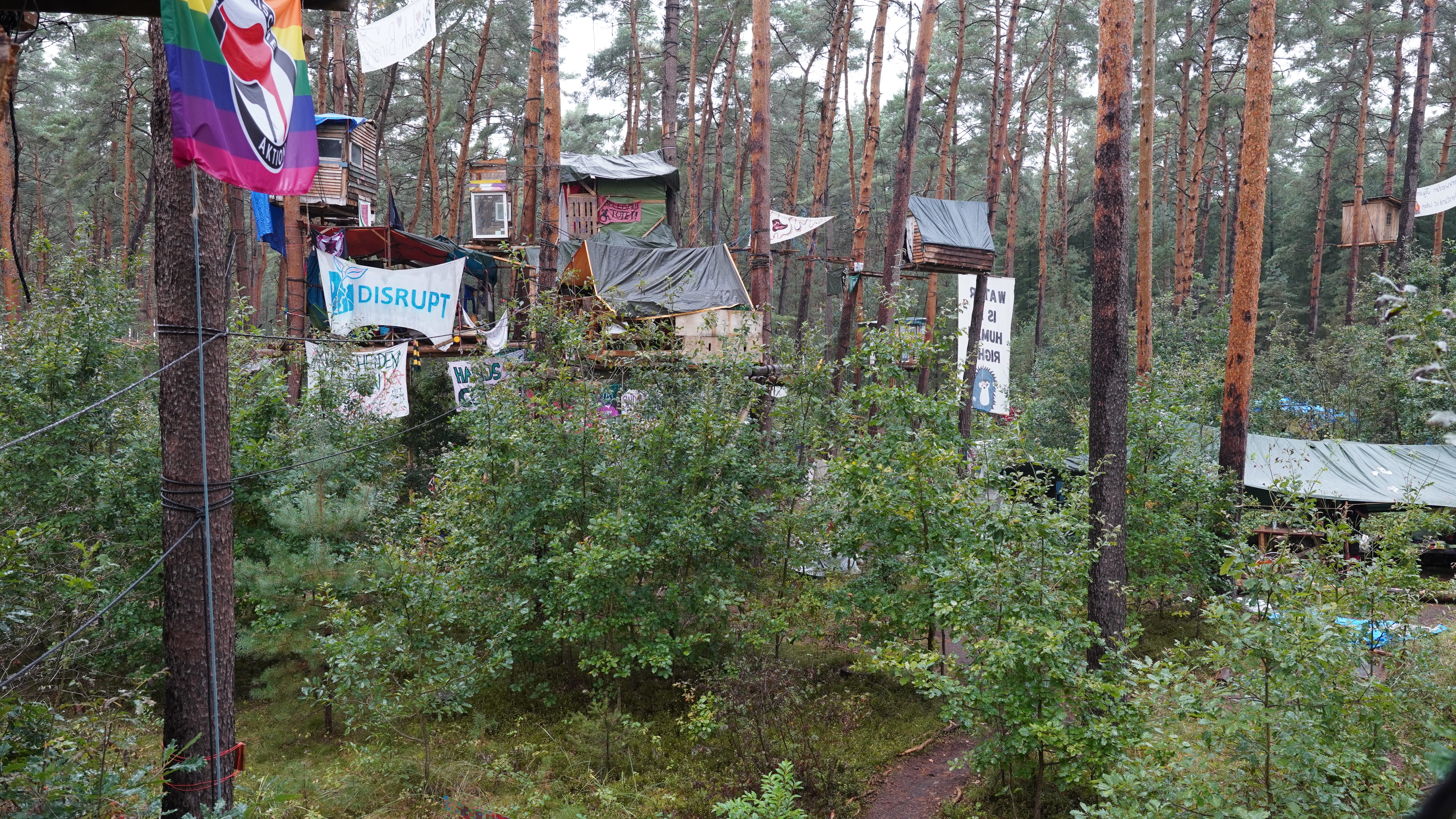
Vis spent some nine months in that forest holdout. His real name is not Vis. He spoke on the condition of anonymity.
His activism takes on many forms, and a lot of it is related to the climate crisis. He is driven by a deep sense of injustice. Injustice of police action, injustice of the wider capitalist system, and: injustice among generations.
Indeed, intergenerational justice is a hot-button issue in Germany right now. The country is publicly debating reinstating a mandatory military service for young people. The government took the first step in that direction in December 2025 and also agreed on a multi-billion euro pension bill, paid for by the younger population.
And, of course, there’s the looming threat of climate catastrophe. The nationwide Fridays for Future movement was very popular among young Germans at the end of the 2010s, especially with students going on “school strike for the climate”.
They shouted: “We are here, we are loud, because you are stealing our future!”
Intergenerational justice, meaning the fair distribution of societal burdens, freedoms, resources, and welfare between present and future generations, moves people across Europe. A 2017 survey found that on average, more than half of all Europeans feel that their generation is not treated fairly and that government decisions do not take into account the financial impact on future generations.
“Injustice was more of a feeling that I lived through,” says Vis. “There is anger towards generations that brought me into a position to have to stand up. And then to have the authority to push back and say that everything is fine as it is and that we should keep going like that.”
He describes his pain and frustration. “On the one hand, there is this great structural unfairness relating to exploitation and intergenerational justice. Futures are being ruined.
“But there is also the feeling of being abandoned,” Vis explains, “from society as a whole.”
Other climate activists have similar concerns about the treatment of younger and future generations. Pajo, 32, a German activist at Extinction Rebellion, warns that the effects of climate change are going to increasingly affect coming generations.
“And at that point the main contributors are already dead or simply very old,” he says.
Climate change is inherently linked to intergenerational justice. According to UNICEF, “we know that past and present generations have caused an accumulation of greenhouse gases, while future generations will bear the brunt of the impacts.”
And in 2022, the Intergovernmental Panel on Climate Change (IPCC) found that “beyond 2040 and depending on the level of global warming, climate change will lead to numerous risks to natural and human systems.” For Europe, these are heat, drought, flooding, and sea level rise.
That is why Vis was also part of the Last Generation, a climate protest group that dominated the German public discourse in 2022 and 2023. Their M.O.: gluing themselves to the asphalt, creating street blockades.
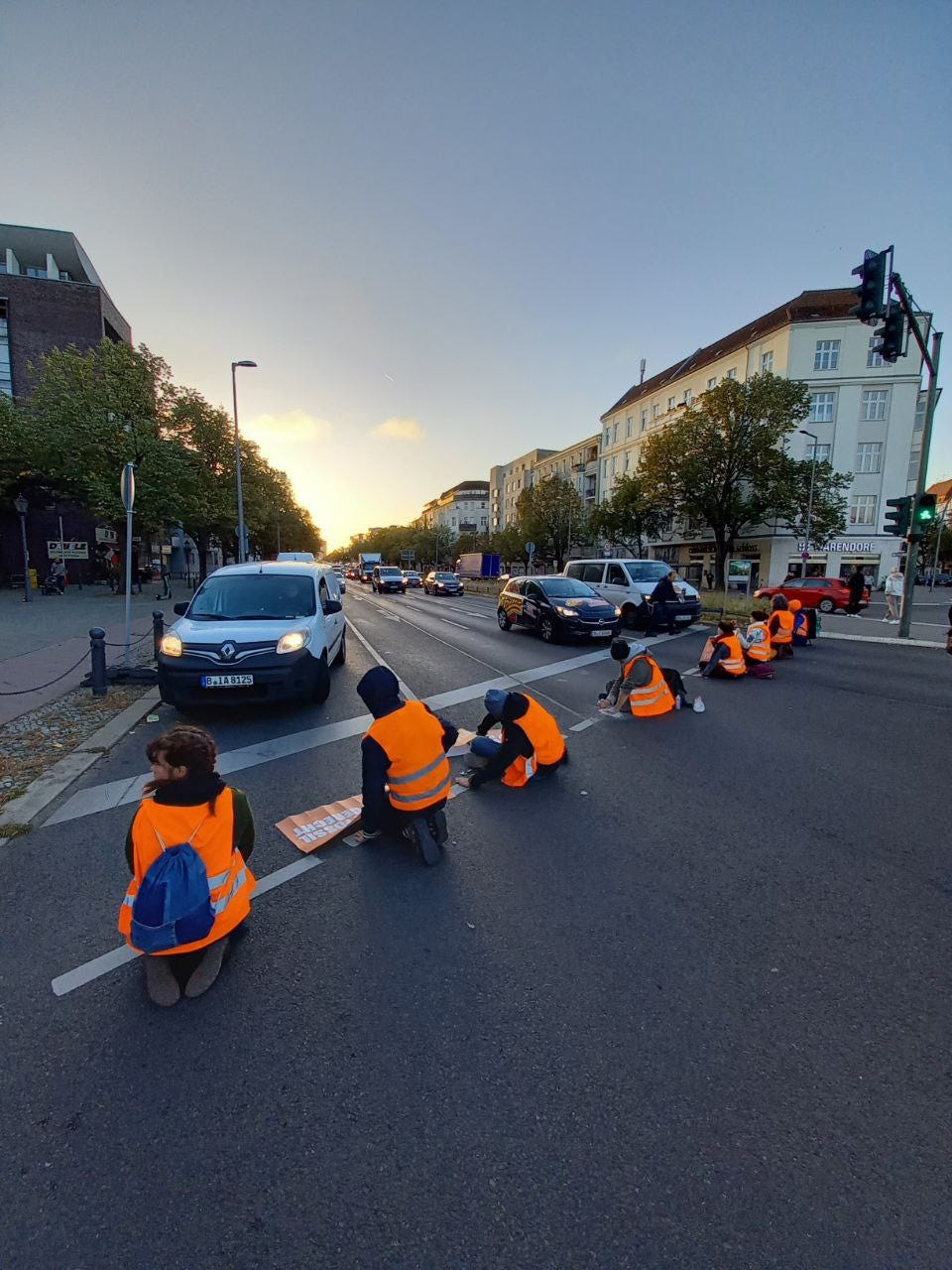
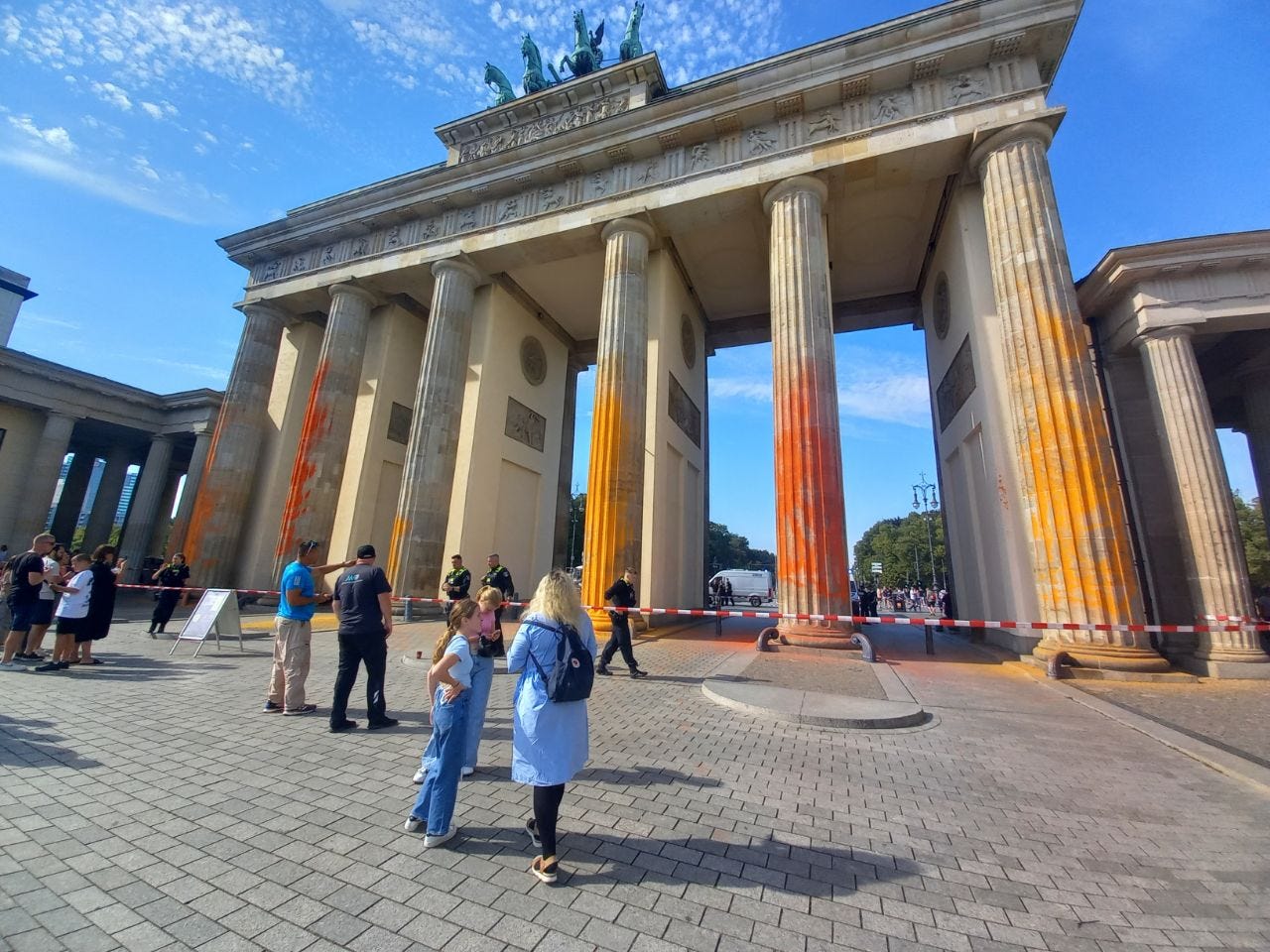
Dressed in orange high-vis vests, activists brought the capital’s traffic to a halt, temporarily paused airport operations, or spray-painted buildings in their signature orange—such as Berlin’s most famous landmark, the Brandenburg Gate.
The German state struck back with force. “There was a lot of police brutality in the form of pain grips, sexist searches, and just repression,” Vis recollects. “For example, there were cops taking off their badges and then just starting to beat.”
He says that added to his sense of injustice and desperation. Criminal prosecutions against the protesters practising civil disobedience were plentiful and resulted in fines and prison sentences.
But climate activists are oftentimes willing to accept repercussions in light of what they perceive to be an existential threat to humanity and nature.
Pajo advocates for violence-free disobedience. “We want to highlight a greater injustice. We know that we’re breaking the law, even if it is good in many parts.”
Vis says when it comes to extending his protest beyond legality, he draws the line at harming humans. But: “We are in a catastrophe in which human lives are at stake.
“That means, I think, that morally, property damage is definitely reasonable.”
In protest against Tesla’s Berlin giga-factory, a power pole was set on fire, temporarily paralysing the car plant. “I think that was effective,” says Vis.
However, he doesn’t think that the climate protest movement is necessarily turning more radical. “I think that would mean disregarding how effective repressions are.”
Although he thinks it’s difficult to assign blame for the situation in which the world finds itself, he says that older generations had a responsibility to rebel, like he does.
Fairness between generations isn’t discussed prominently enough in Germany, finds 18-year-old Laura Fabeck, who volunteers at the Foundation for the Rights of Future Generations.
“We contend that by now we are living in a gerontocracy,” a rule of the old. “Because political decisions and decision-makers are so much influenced by older voters,” Ms Fabeck argues.
“In some ways, gerontocracy and democracy are interdependent right now, because we simply have the majorities in the older societal classes,” explains Prof. Bernward Gesang, who teaches philosophy at the University of Mannheim.
In Germany, almost 30% of people are above 60, but only 19% are under 20, according to government statistics.
“We should think about whether we need to place younger generations under minority protection,” suggests Prof. Gesang.
The German constitution states that “the state protects, also in responsibility to the future generations, the natural basis of life,” and the Supreme Court ruled in 2021 that the state has “the obligation to protect life and health from the dangers of climate change,” also regarding future generations.
Prof. Gesang thinks the courts need to continue to deal with these questions.
“The most important thing is that we institutionalise intergenerational justice somehow,” argues Ms Fabeck. “That means we need to craft laws and rules that clearly state that there has to be intergenerational justice.”
The result of inaction would be particularly painful in the case of the climate crisis. The name of Pajo’s organisation, Extinction Rebellion, refers to the fight against literal extinction.
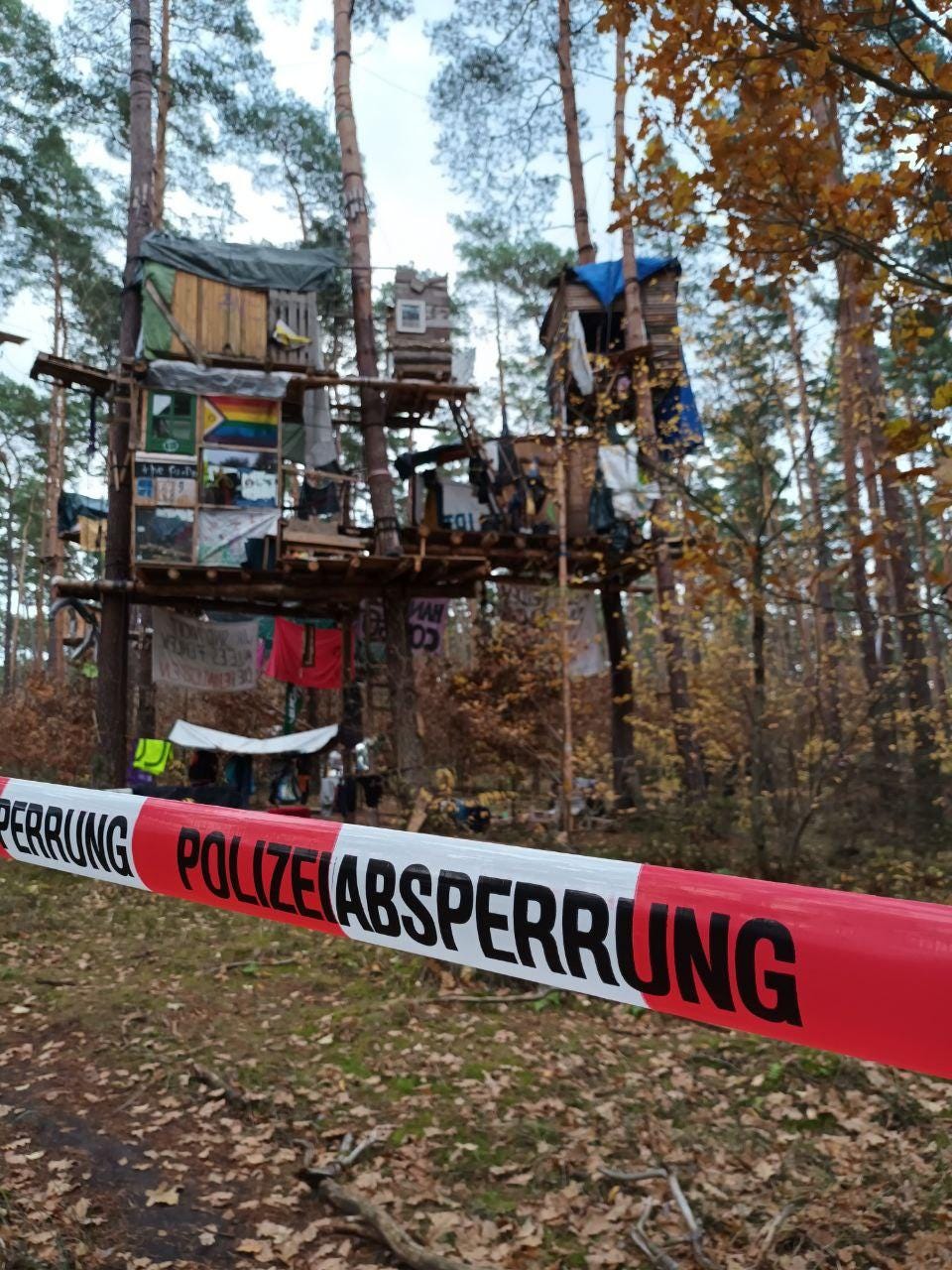
Vis, too, remains active. But: His anti-Tesla protest camp was raided by police in November 2024. Some of the protesters had to get dragged out of their tree houses by police climbers.
And the Last Generation officially ceased to do road blockades in early 2024. The activists have somewhat switched to different methods to pursue climate justice.
“I think justice is more of a process than a state,” says Pajo. “Especially when you look at it in such absolute, huge dimensions, between generations, there will never be total justice. But we should strive to create it in as many places as possible.”