


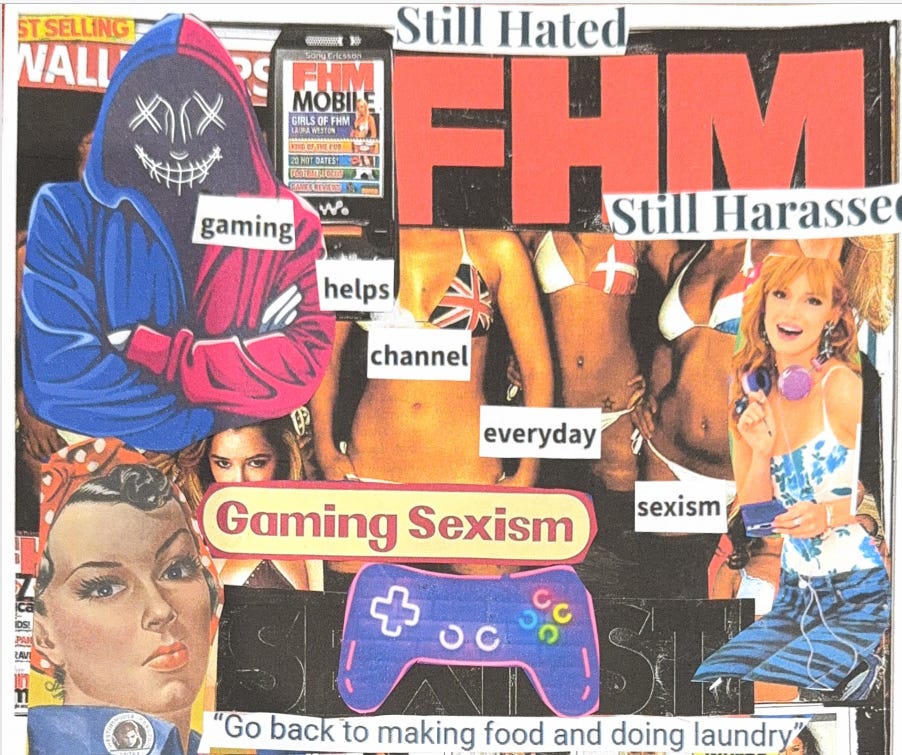
On March 11th 2026, louis Theroux released his highly anticipated Netflix documentary ‘inside the manosphere’, which explored the “red pilled” influencers that dominated the community. However, within the documentary there was little attention given to the consistent misogyny which continues to permeate the female gaming community and the lack of support available to them.
Comments like, “go back to making food and doing the laundry” or “I’d fuck you. Add me” are a daily reality for young women existing in the gaming world and often a universal one with a study revealing that 79.0% of participants reported that sexism is prevalent in the online gaming community and 63.3% of women reported being harassed whilst playing online video games.
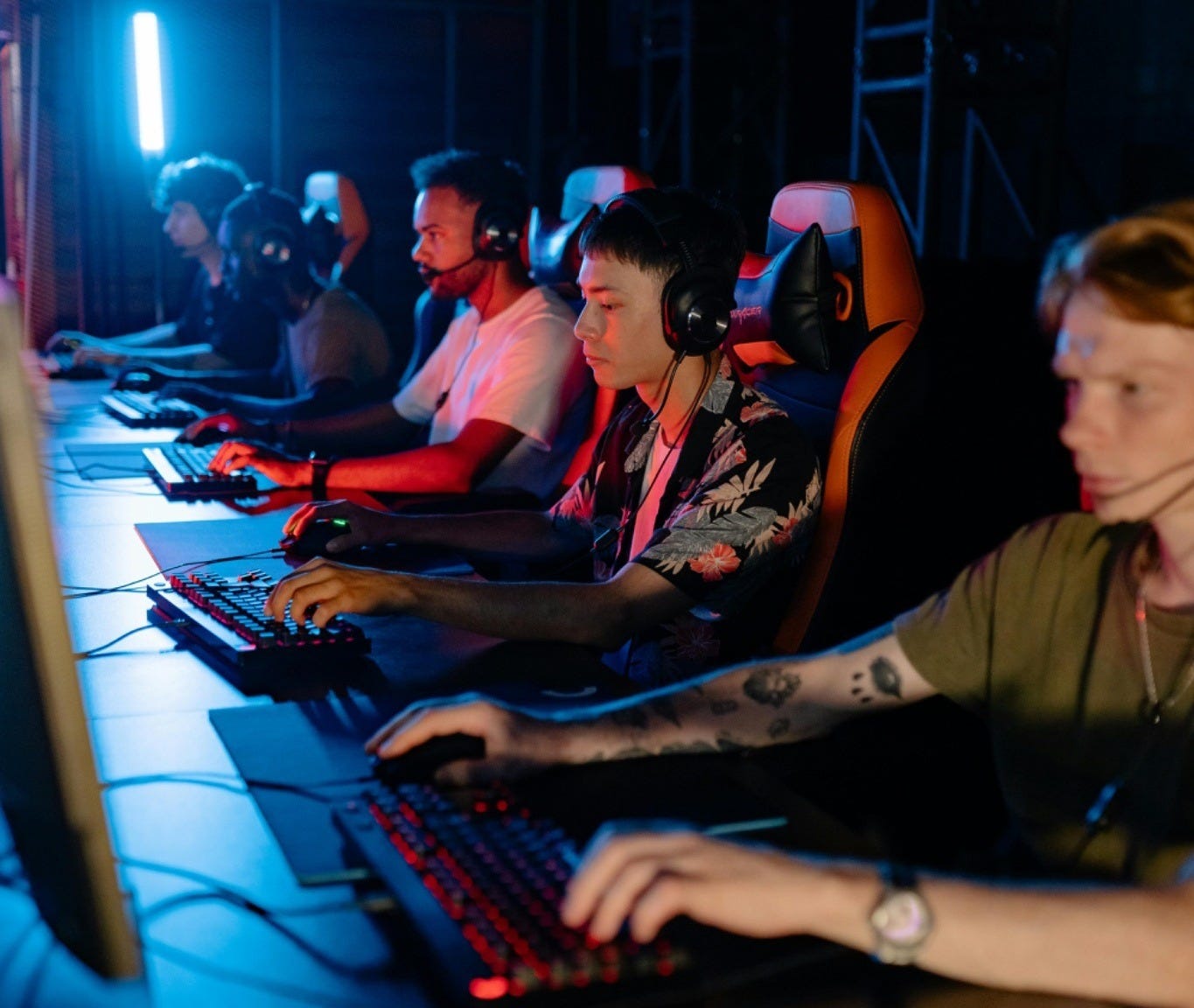
Men playing video games on desktops, Photo Credit: Pexels
In 2023 there was a new online safety act that was introduced to protect young children and adults online. The new set of laws puts new duties on social media companies and search services and places the responsibility on the companies to ensure user safety. Whilst the new act is commendable for the enhanced regulations for children’s safety it does less for adults, in particular women, who are often forced to hide their gender, in order to avoid harassment.
In order to better understand why this misogyny exists, I spoke to Yiyao Zhou co-author of the paper; women’s Experiences of sexual harassment in online gaming, to speak about her experience of misogyny in the gaming world. For Zhou, like many female gamers, gaming has been an experience she has enjoyed most of her life; ‘I started in like 6th grade or so, I started playing games like world of warcraft and all that. So since then, gaming has always been a big part of my life’ and as for her motivation for the paper, she noted the misogyny, harassment and threats she had witnessed in these online gaming communities.
In response to the lack of regulations online, zhou suggested that whilst companies ‘are trying to do better nowadays’ through regulating obvious violent threats like ‘go kill yourself’ or ‘rape threats’ but ‘for a very long time there wasn’t much regulation on that’.
Interestingly, Zhou suggested that in her experience it is often not the most experienced or eldest gamers that spew this hate but rather those that are inexperienced, young and impressionable that feel encouraged to. A survey conducted by Ipsos supports this revealing that as many as 31% of Gen Z men believe that a wife should “obey” their husbands. These attitudes are influential in gaming, as Dr Brianna Wiens in a collaboration with The Games Institute and the UW Women’s Centre revealed that the negative perception of feminism in our culture manifests a direct backlash in media spaces like the gaming world where “dominant groups believe that they own, and are owed.”
A similar experience is echoed by a prominent gaming figure, Alanah Pearce who was 21 at the time of the assault, revealing that a a young boy sent her an alarming tweet message threatening, that if he ever met her, he would rape her. Tired of the constant stream of abuse Alanah contacted his mother, and was later sent a letter of apology from the young boy. Sadly, for a lot of female gamers this abuse goes undetected and alarmingly over two thirds of female gamers turn their mics off to avoid being a subject of this harassment.
The anonymity of the gaming community can be seen to enable the abuse, leaving as zhou suggested players to feel ‘disconnected’ from their character. For gamers, Zhou hypothesised that a lot of these threats are spewed online hidden behind a character because “if you were to say something like that in real life, there could be consequences, right?” Therefore, in a game, players can say and do as they like, with little consequences. Whilst players may be banned from a game, they can easily set up a new username with a new email address and resume playing, revealing the little deterrence that exists in gaming companies.
A female student at Oxford Brookes university, echoed Zhou, suggesting harassment is very common in competitive games, particularly those with a public lobby where as she recalled; ‘the minute your male teammates realise your a woman, they instantly start saying derogatory things’ with some even ‘throwing a game’ (deliberately loosing) as they would ‘rather lose, than win with you’. When asked how she avoids this, she conveyed a similar story to those mentioned previously; ‘Often I resort to not speaking or just using the text chat which can be a bit annoying when you need to communicate something quickly.’ Therefore, the only protection female gamers feel is available to them is to withdraw their voice, and retreat to silence.
To remove their vocality, is not an acceptable solution for women existing in the gaming world. Often dismissed as ‘banter’ by fellow teammates reduces this misogyny as nothing more than an innocent joke that often goes unnoticed in the filter system. The seeming lack of accountability that exists within this abuse is widely recognised with the student gamer calling for ‘reports to be taken more seriously’ and urges companies to ‘actually investigate and penalise these peoples behaviour, but the sad reality is that someone has to experience this abuse, before action can be done’.
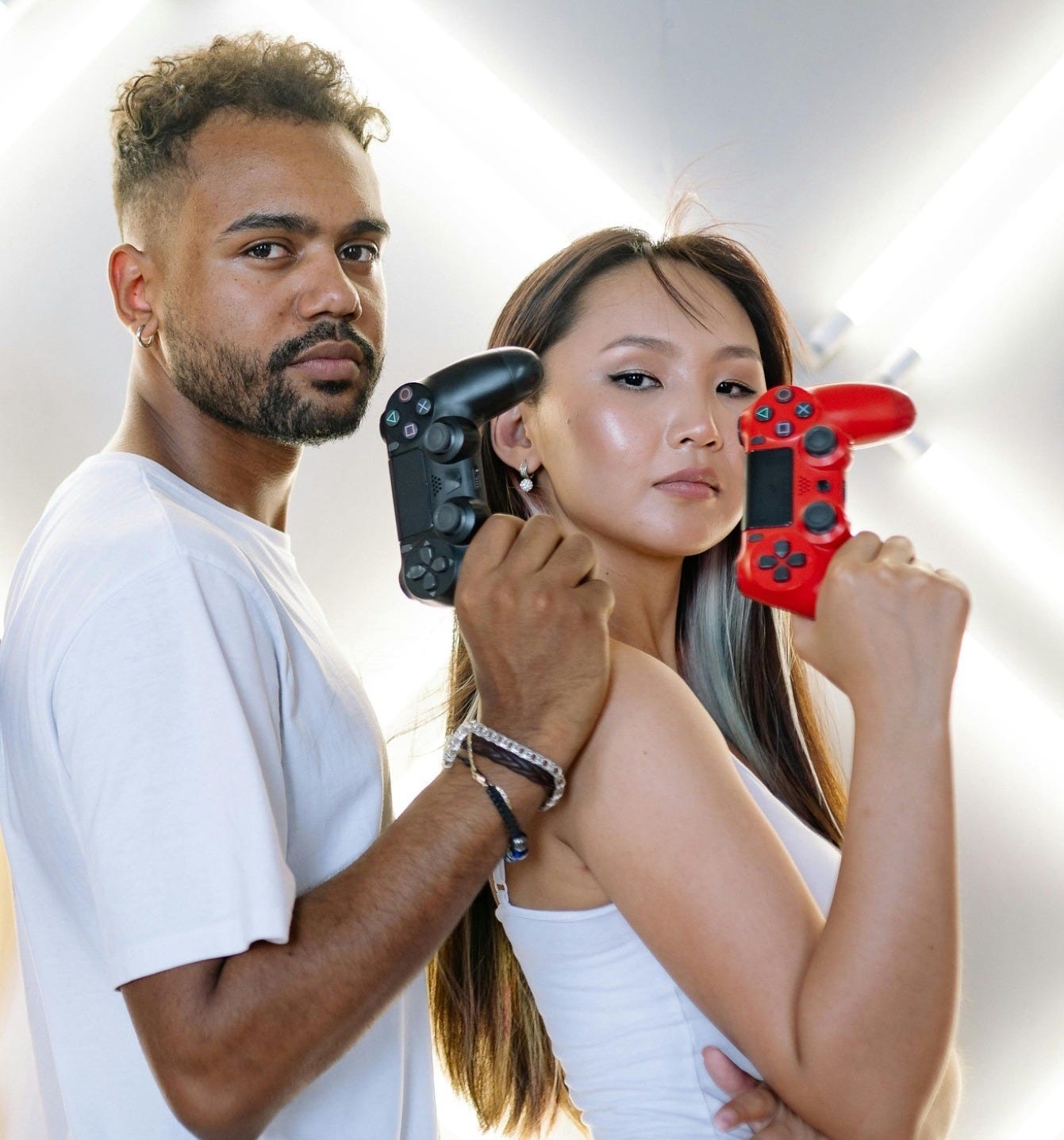
Man and women holding remote controllers Photography credit: Pexels
The future for female gamers remains uncertain and more concerningly, some of them are failing to recognise the abuse as harassment. zhou revealed a worrying result, explaining that over half of the 168 women that took part in her paper, ‘did not recognise the abuse they experienced as sexual harassment’ but rather reduced it to ‘banter’. The lack of vocality and awareness surrounding these issues is unacceptable, and more prominent gaming figures, particularly those with a male dominated audience should use their platform to encourage a more inclusive, safe and diverse gaming experience rooted in passion not gender.