


From red pill influencers to online feminist communities, young people are increasingly being exposed to opposing digital spaces. As voting intention data reveals notable differences across gender, age and social media usage, questions are raised regarding the relationship between internet culture, misogyny and political identity.
Gen Z, a generation who has grown up online, is becoming increasingly exposed to contrasting ideas about gender, and ideas of masculinity and femininity. Whilst some sides of social media promote women’s rights and feminist values, others are dominated by the manosphere: a network of online communities promoting traditional, outdated gender roles, anti-women attitudes and ultimately, to put it simply, misogyny.
The rapid growth in the visibility of red pill content and the manosphere, which encourages men to adopt specific beliefs and ideals about masculinity, relationship dynamics and women’s roles in society, has resulted in questions raised about its great influence on young people’s attitudes. But could these increasingly divided online communities also reflect increasingly divided differences in political identity?
Recently, YouGov data from June 2026, suggests that Britain’s political landscape has a very clear divide, not just by age, but also by gender.
The Gender Divide
According to YouGov’s June 2026 survey, looking at the most left-leaning compared to the most right-leaning, Reform UK receives 29% of voting intention amongst men, compared with 21% among women. On the other hand, the Green Party attracts 18% of women, compared with 13% of men.
Although these figures do not objectively suggest that all women are leaning towards left-wing politics or that all men are leaning towards the right, they reveal a significant difference in support for parties occupying contrasting sides of the political spectrum.
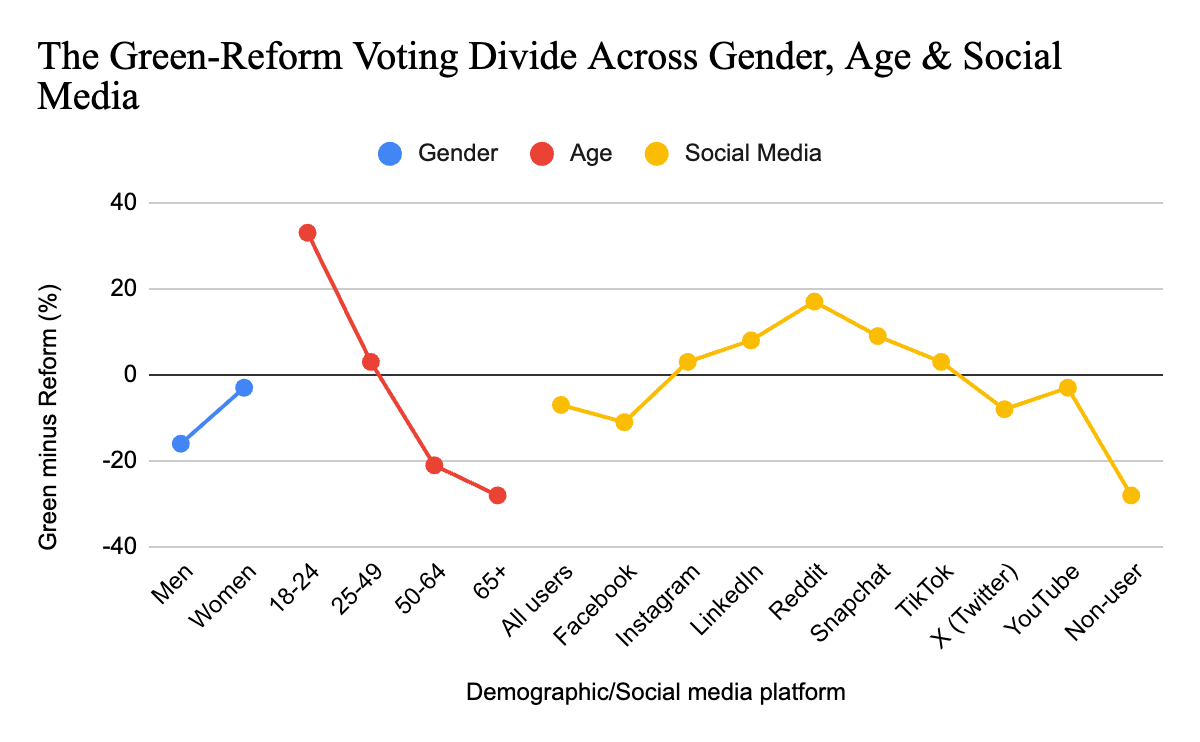
The distinction becomes even clearer when comparing Green and Reform support. Calculations using YouGov’s data show a 16% point lead for Reform over Green amongst men, compared with a 3% point lead amongst women.
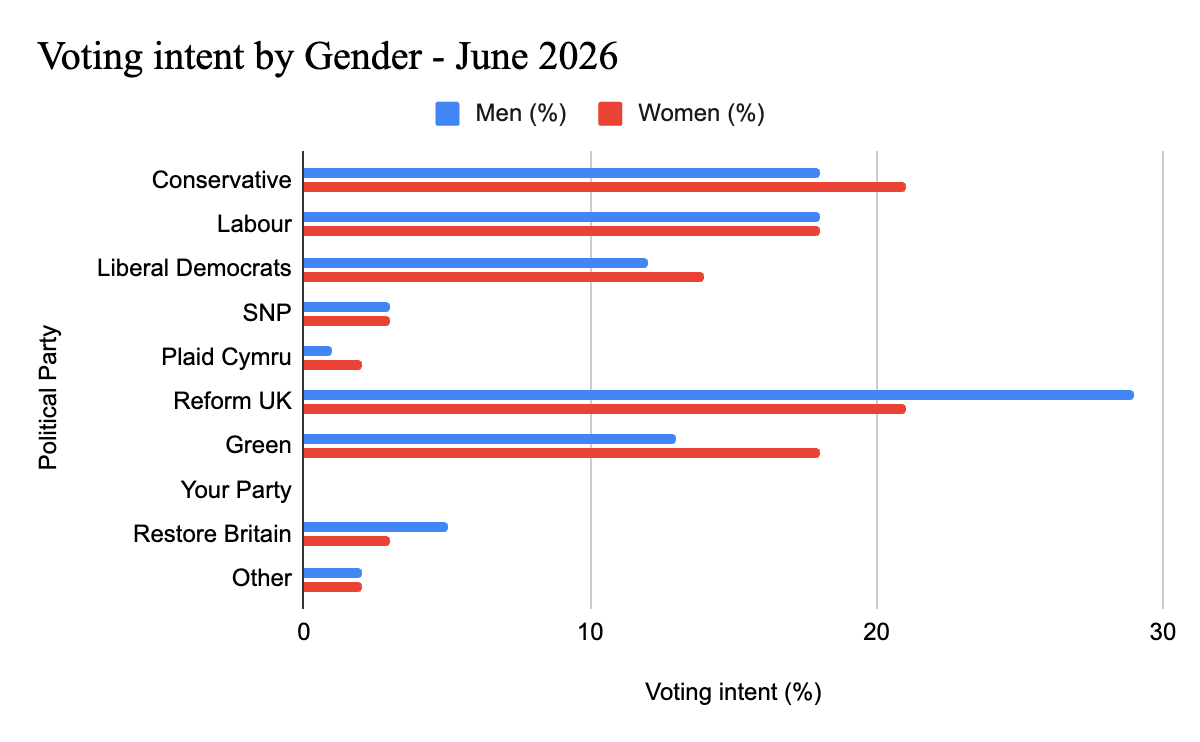
The difference seen here is not entirely new. There has been a general distinction between women leaning towards the left side of politics and men leaning towards the right side of politics for a very long time; this is evident in online spaces. These latest figures therefore suggest that the gender divide persists, although they do not establish an objective shift for each gender towards opposing political identities.
The Generational Divide
Age reveals an equally striking contrast. Amongst 18-24 year olds, the Green Party receives 39% of voting intent, compared with just 6% for Reform UK. Amongst those aged 65 and over, the figures are almost completely reversed, with Reform UK receiving 33% and Green receiving just 5%.
This represents a 61% point difference between the youngest and oldest groups when comparing the Green minus Reform measure.
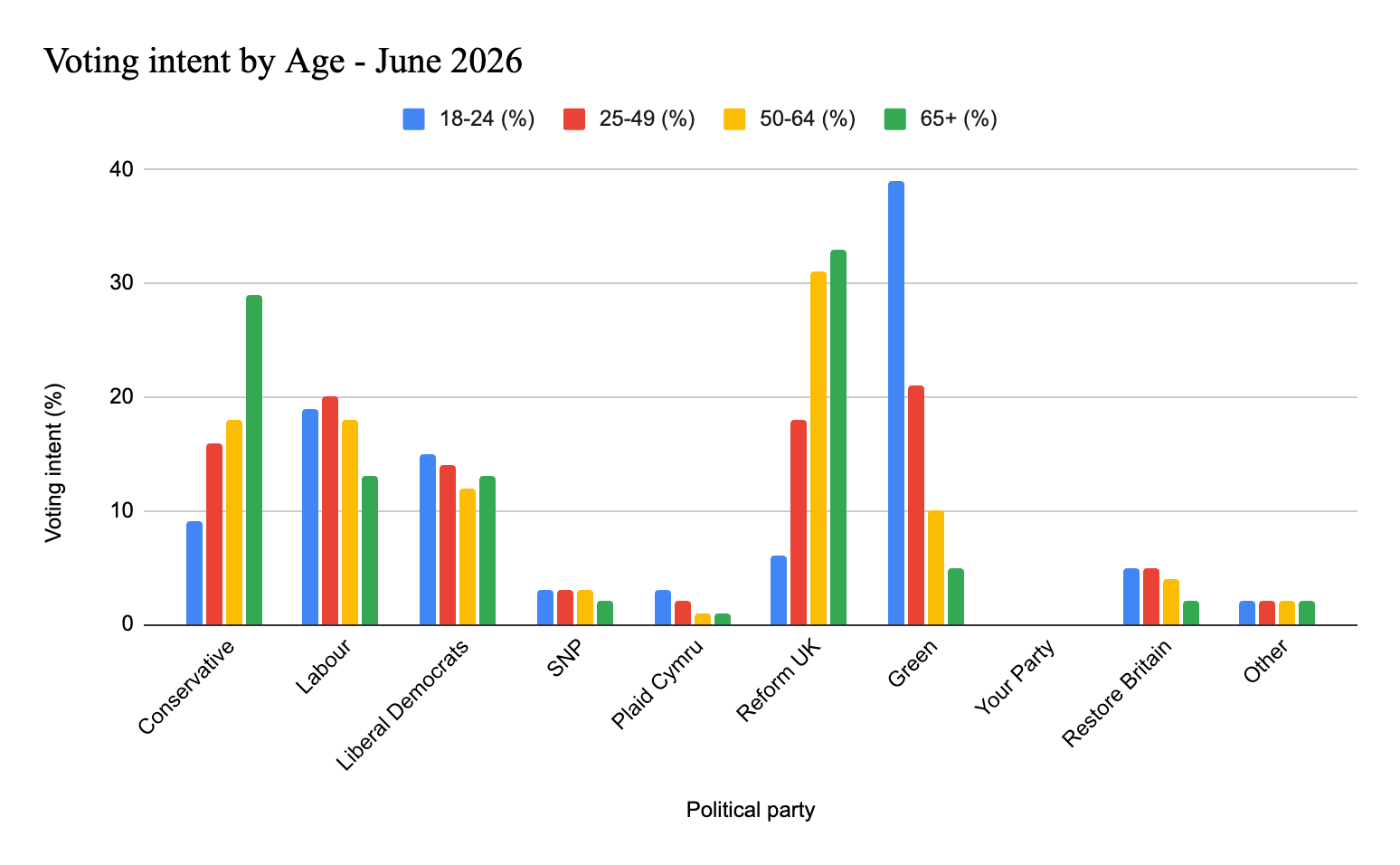
This generational divide raises further questions about the political and cultural environments in which young people are growing up. Social media has become a significant space for political discussion, identity formation and exposure to new and different perspectives. However, voting intention alone cannot objectively explain the reason for these generational differences.
Into the Manosphere
For Zoe Semeha, a law student at the University of Winchester, the fast-growing visibility of manosphere content is particularly concerning. Having repeatedly encountered red pill videos when scrolling through her own social media accounts, she believes that their influence extends far beyond the screen.
“ I think that the “red pill” agenda is extremely harmful and dangerous as young boys/ men are being brainwashed,” she says. “This agenda pushes misogyny, harmful views against women and also reinforces harmful gender stereotypes.”
Zoe is particularly concerned about the way these attitudes might affect relationships between young men and women. She believes the consequences could extend into educational spaces, friendships and everyday life.
“Men my age discuss women as if they are disposable and not worth anything,” she says, adding that she finds it alarming that similar attitudes are appearing among secondary school boys.
Her concerns reflect a wider debate about the role of social media algorithms in distributing harmful content.
The Algorithmic Divide
YouGov’s social media breakdown provides another perspective on Britain’s political differences. Among Reddit users, 29% intend to vote Green, compared with 12% for Reform UK. On Facebook, however, Reform receives 25%, compared with 14% for the Green Party. X users also show a higher amount of Reform support, at 23%, compared with 15% for Green.
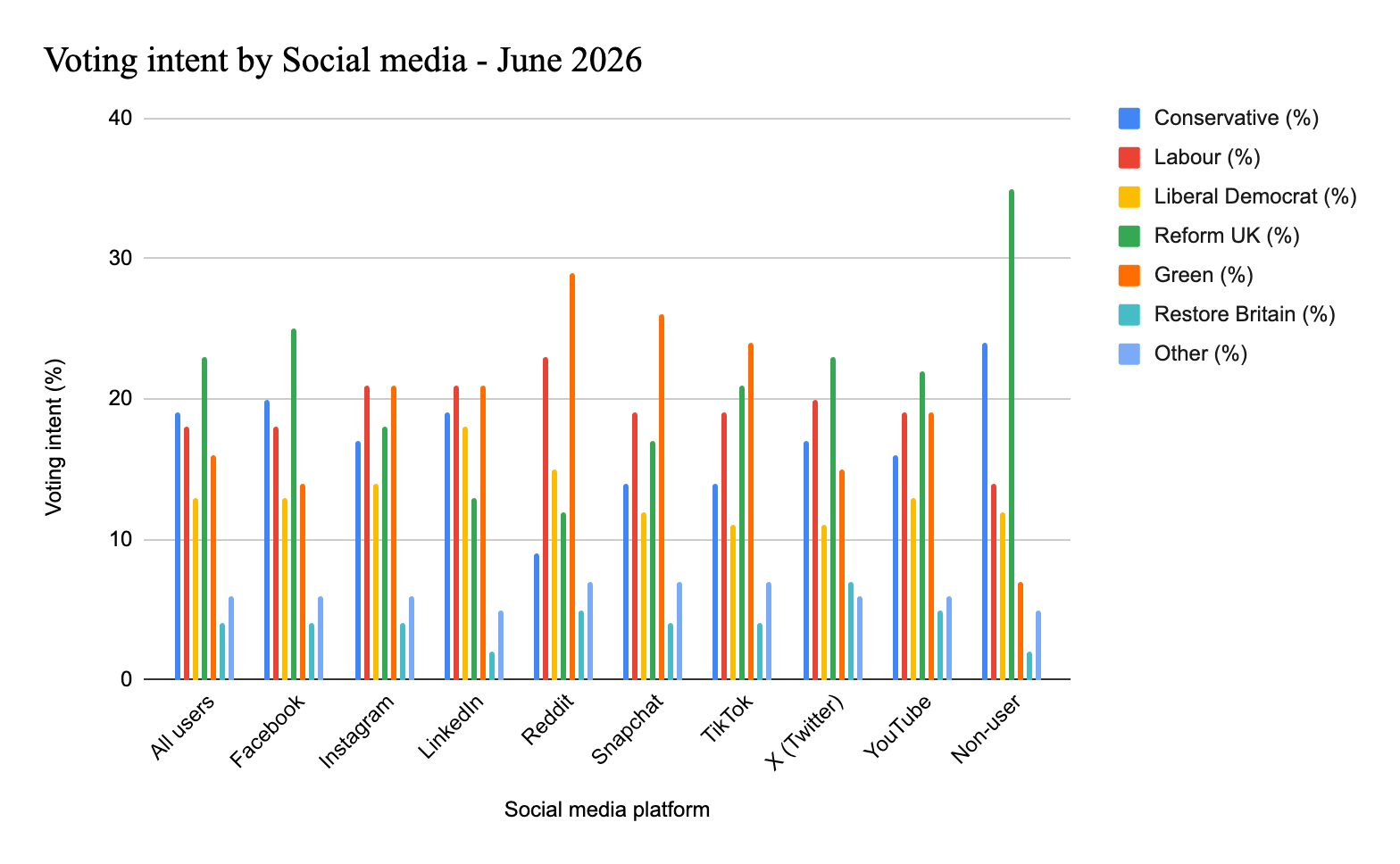
These differences are interesting, especially considering how algorithms recommend content based on user engagement and how algorithms recommend content based on users engagement. Zoe believes this can reinforce existing attitudes.
“If more and more men are interacting with ‘red pill’ content, then it is inevitable that they’ll find themselves engaging with even more content,” she says. “Content like this pushes gender stereotypes, while women encounter feminism and independence related content.”
She also acknowledged that the manosphere can provide a sense of belonging for young men who might otherwise feel isolated. She also acknowledged that the manosphere can provide a sense of belonging for young men who might otherwise feel isolated. “The manosphere does create a sense of belonging and community where young boys can share their opinions,” she says.
However, YouGov figures should be interpreted carefully. platform users are not necessarily consuming the same content and the survey does not measure exposure to manosphere online content. Nor does it establish that social media use causes particular voting preferences. Past circumstances and other factors may also help explain the differences. Past circumstances and other factors may also help explain the differences.
Stepping Offline
Beyond the screen, the political consequences of online misogyny extend beyond political preferences. From Zoe‘s perspective as a lost student, the normalisation of discriminatory attitudes raises concerns about how women are perceived and treated in everyday life.
She believes education is essential and challenging harmful narratives arguing that young people should be taught to recognise misinformation and question the ideologies and morals that she believes education is essential and challenging harmful narratives arguing that young people should be taught to recognise misinformation and question the ideologies and morals they encounter online at are promoted to them online.
This data offers a glance of a country where voting intentions differ considerably across generations, gender, and social media usage. Although they do not prove that the manosphere and red pill content are driving these differences they provide a reason to further investigate the relationship between online communities and political identity more closely. although they do not prove that the Manosphere and red pill content are driving these differences they provide a reason to further investigate the relationship between online communities and political identity more closely.
As young people continue to navigate increasingly personalised digital environments and algorithms, the question is no longer simply what they are watching but how those online spaces might influence the way they understand the people around them.