


When I think of a hotel, I think of luxury and special occasions. When I think of houses and homes, I feel safe at the thought of warmth and privacy. So, when both of these nouns are planted in front of detention centres to make them seem less daunting, I grow cold at the thought of no special occasions, no warmth, and no privacy.
Although I have never been to Campsfield House, it lingers in the back of my mind.
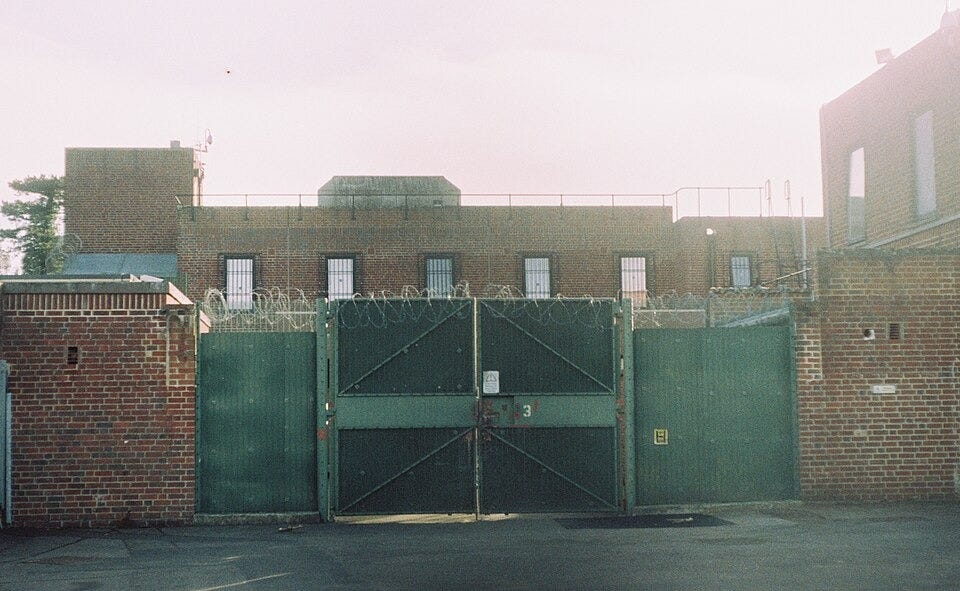

I have the privilege of only picturing the outside: tall, barbed fences surrounding it, keeping the inhabitants locked away as if they are a danger to society. But, through the heavily guarded gates, people stay, confused as to why the land they always thought of as a haven is treating them like animals to be herded on a stranger’s whim.
Campsfield House reopened in December after a 2018 closure due to protests over its welfare management. ‘Protest’ is a small word to describe the mass hunger strikes, inhabitant abuse, and cases of suicide all happening under the management of Mitie. Now, 400 people will make their way into the detention centre, with no judge to decide how long they will be held or how to connect to the outside world.
Nobody is fighting for the justice of these people as much as Emma Jones, Communications Coordinator at the charity ‘Asylum Welcome,’ who is also on the board of the ‘Coalition to Keep Campsfield Closed.’
Passionate is the word that comes to mind when I met Emma. Her knowledge of the asylum system is extensive, and through articulacy and careful explanations, she is relentless in breaking the negative discourse surrounding the minorities. She has been with the charity since the autumn of 2022, but before that was involved in sanctuary hosting.
When I asked about the misinformation the media feeds us, she reacted with the vehemence of someone who will never give up her fight against injustice.
‘Where do you start? There’s so much. One kind of bugbear is this idea that asylum seekers are illegal immigrants. Seeking asylum is legal under the 1951 Refugee Convention – Britain helped write that convention after the Second World War. Asylum seekers have to be here, physically on our soil, to claim asylum – that’s the paradox. People are wondering why they are coming here, but it’s the only way they have to exercise their right to asylum in the UK. There’s no rule that says they have to apply in the first safe country; that’s a myth.’
‘Its a myth that all asylum seekers are young men. There are two hotels in Oxfordshire that are family hotels, single women, and families. Often, though, the men travel first because the journey is dangerous and they don’t want to put their families through that. So they travel in the hope that they’ll be able to apply for a family reunion.’
The Home Secretary, Shabana Mahmood, recently announced major asylum reforms that significantly undermine the security and wellbeing of people seeking safety in the UK. Written in a government paper called ‘Restoring Order and Control’, refugees will now have to wait 20 years, renewing the ‘core protection’ status eight times before they can apply for indefinite leave to remain, instead of the current five years. There will be no automatic right to refugee family reunion under ‘core protection;’ government plans to ‘prioritise access [to benefits] for those who are making an economic contribution to the UK.’ These are key points amongst many other changes.
Emma’s voice wobbled. ‘It just seems so cruel and so mean. It’s pointless cruelty right? Because you’d have thought that for a functioning society, you’d want people to be as integrated as possible and to feel, you know, that they can put down roots here.’ She laughs in disbelief, ‘I don’t know what the point is. I’m not even sure that they do beyond getting some headlines.’
The iPaper has just discovered British vigilantes travelling to France to pose as fake journalists ‘harassing migrants and slashing small boats.’ They are doing this in the name of Christianity, despite high profile bishops calling it ‘unacceptable.’ The group, which has close connections to Tommy Robinson, claims more than 5,500 men signed up within 24 hours of their recruitment site going live.
A considerable majority of the discourse surrounding asylum seekers and refugees is that they are an economic ‘burden,’ in the words of Shabana Mahmood. A ‘burden’ that makes up 0.7% of the UK’s population and accounts for less than 5% total migration.
‘Economically, I think there’s a strong argument against immigration detention,’ Emma explains, ‘the amount of money that’s paid out every year in compensation for people who are wrongfully detained, that’s quite eye-watering.’
Data from the Home Office suggests that detaining one person for a year costs the taxpayer £44,500. £122 per day. In 2024, Harmondsworth Immigration Removal Centre, near Heathrow, had a damning report filed against this claim by Charlie Taylor, the Chief Inspector of Prisoners. In an interview with the Guardian, Taylor said, ‘The level of chaos that we found at Harmondsworth was truly shocking, and we left deeply concerned that some of those held there were at imminent risk of harm.’
‘Nobody should be detained in an immigration removal centre unless they are going to be removed quickly from the country, yet around 60% of detainees were released from the centre, with only a third deported, which begs the question of why so much taxpayer money was being spent keeping them locked up in the first place.’
Refugees contribute outstandingly to public finances, taxes and the NHS. A study by the PCS union and the charity ‘Together With Refugees’ reveals that every refugee accepted in the UK would contribute £266,000 to the UK economy if fair and humane changes were made to the asylum system.
Emma continues, ‘There’s this paradox for our clients – when they are asylum seekers, they are at least accommodated. Whereas when you get your refugee status, the government recognises that you have a valid claim for protection, but it’s no longer obliged to house you. People are given 28 days to find somewhere to live, after which they have to leave the hotel.’
Twenty-eight days is not a lot of time to kickstart a new life, so lots of people end up on the streets, homeless. People like Miriam, who was forced to flee Afghanistan after the war broke out. Emma sighs as she recounts her story.
Miriam had a high-powered job as a defence lawyer that made her a target for the Taliban. When the evacuation happened, chaos broke out, and Miriam was left behind, forced to find her own way to safety. She risked her life to reach France and cross the Channel in a small boat.
When she arrived, she was placed in accommodation in Oxfordshire, where her mental health deteriorated as she had to wait 11 months to get her refugee status. When she was granted refugee status, before Christmas last year, there was a mix-up with the hotel – they hadn’t informed her about their impending eviction. So, she ended up on the streets, sleeping roughly. Fortunately, she reached out to ‘Asylum Welcome’ and received assistance from their emergency accommodation services.
Miriam’s story is one of many that cross the Channel but are refused a voice as the right-wing tabloid continues to only report the ‘illegal immigrants’ rather than the plethora of experience that they also bring with them – like Miriam’s defence lawyer background.
However, all hope is not lost. Emma continues to highlight the positive changes happening in society, ‘I mean, whenever the government announces some new awful policy, we notice that there’s a small upkick in people wanting to support our charity, which is moving, and it shows there are a lot of people that don’t feel represented by that type of rhetoric.’
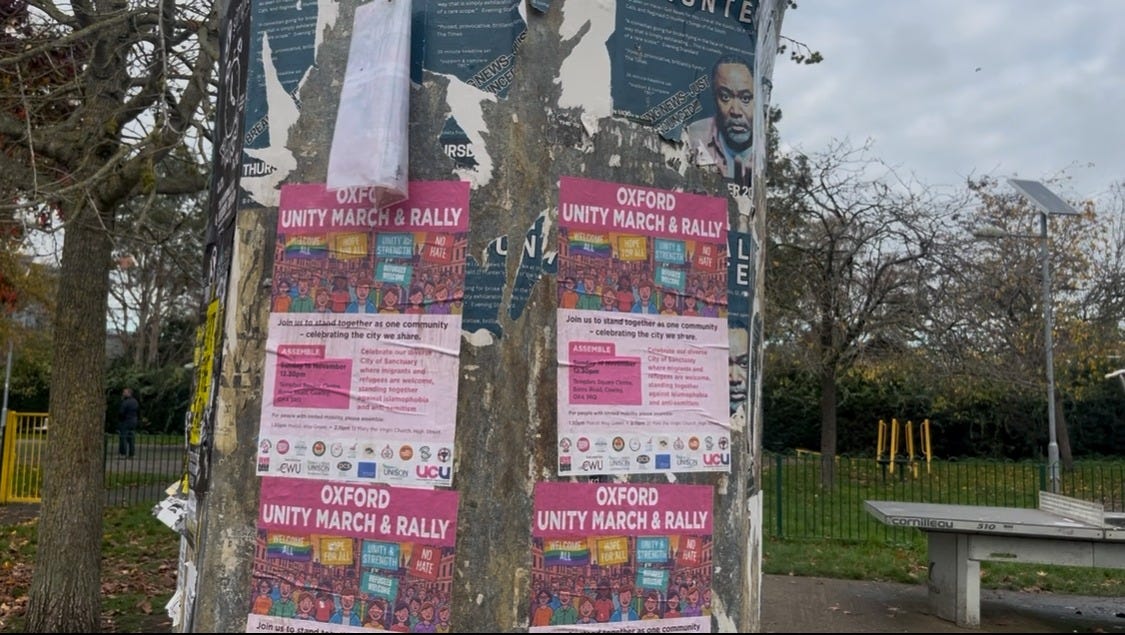
With the 30th anniversary of ‘Asylum Welcome’ approaching, Emma reflected on the positive change the charity is undergoing, saying that they’ve ‘grown vastly’ since the pandemic and are at maximum capacity with volunteers. Their winter appeal highlights the positive impact that the charity has had on vulnerable people.
We will continue to battle against the negative discourse, debunk the stereotypes, and support the vulnerable because although many are being forced into detention houses and hotels, there will always be a home where compassion wins.