



Census 2021 marks the point of clear decline for Christianity in England and Wales, where it became a minority religion for the first time. However, Census 2021 also marks the point for significant increase in ‘other religion’ followers.
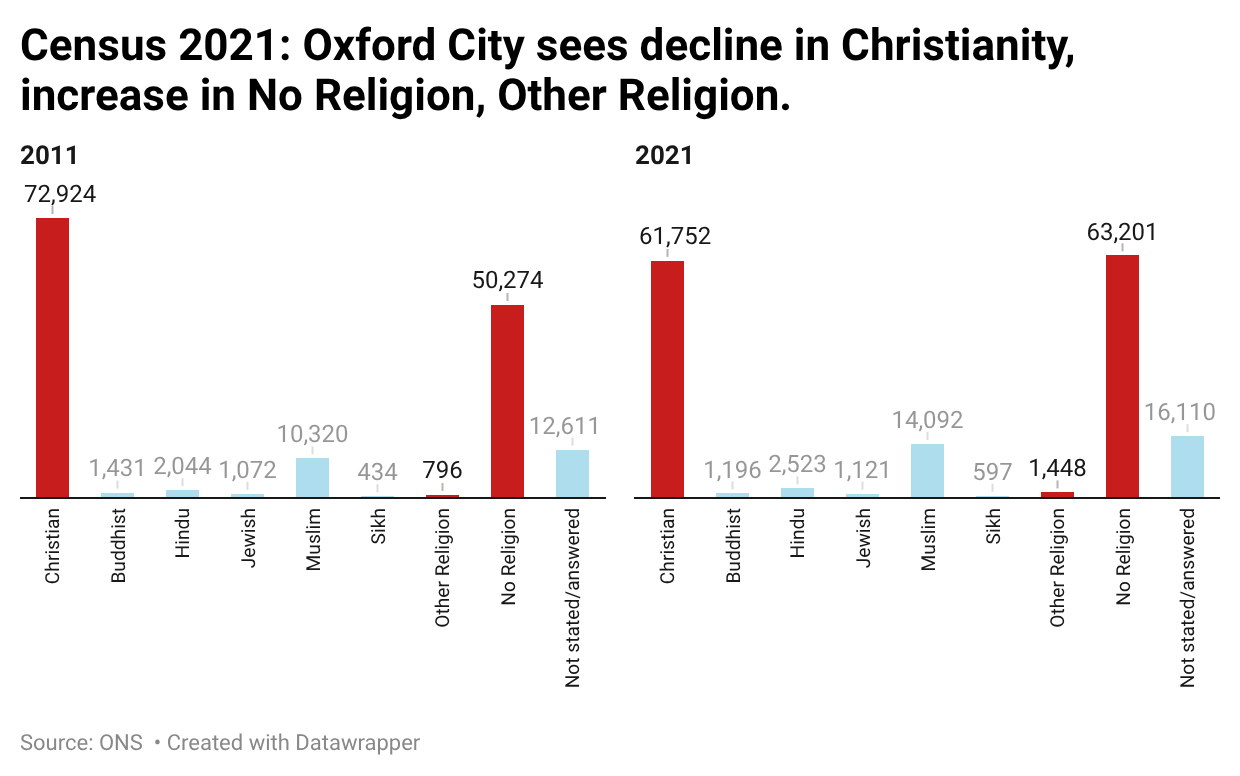
For our very own Oxford city, although constituting only 1% of the population, ‘other religion’ followers represented an increase from 796 people in the 2011 Census to 1,448 people in the 2021 Census.
Religion was added as a voluntary question in the UK’s Census in 2001. As per Office for National Statistics (ONS), this is the religion with which people connect or identify, rather than their beliefs or active religious practice. As a voluntary question, ONS recommends caution while comparing data from different years and/or areas.
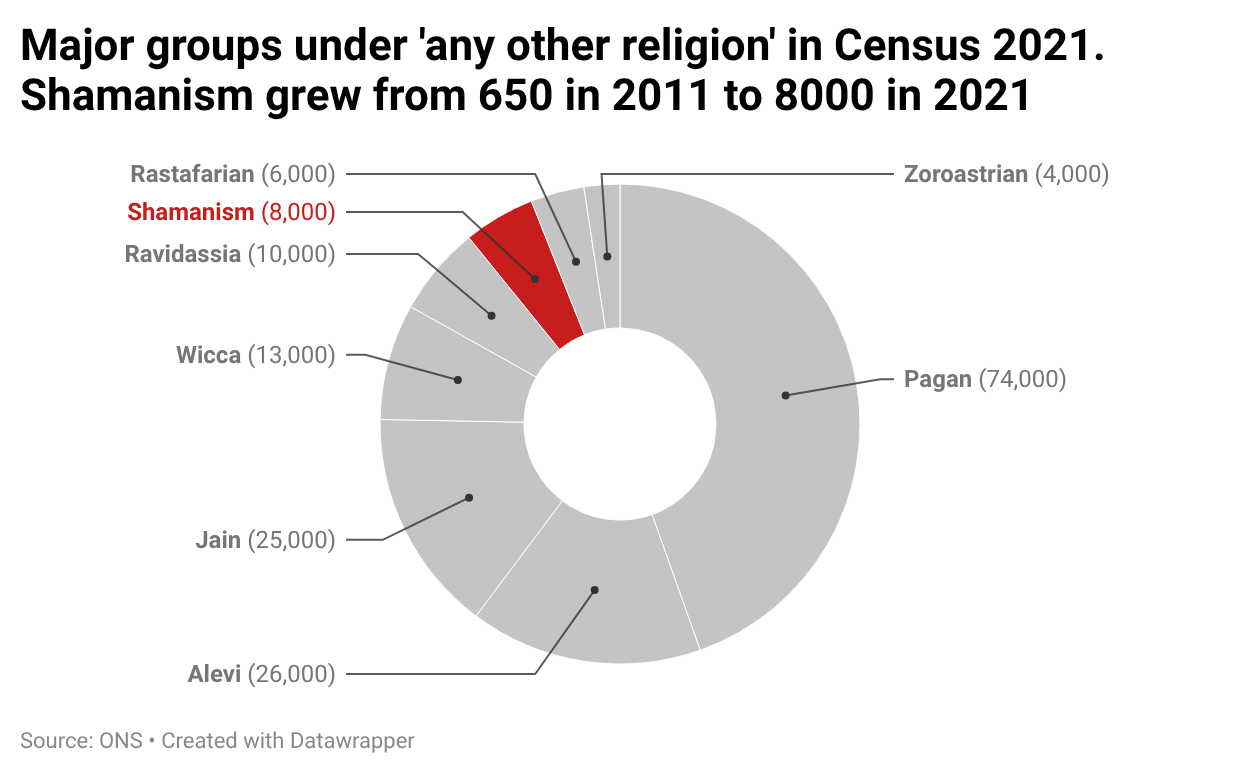
Keeping this caution into consideration, Oxford’s trend in ‘other religions’ is reflective of England and Wales’ census data for religion. Those who chose to write-in a response through the ‘Any other religion’ category, the largest increase was seen in those describing their religion as ‘Shamanism,’ increasing more than tenfold to 8,000 from 650 in 2011.
Unpacking Shamanism
The term ‘shaman’ originally came from the Siberia and Mongolia region, referring to the spiritual practices and beliefs of the indigenous Evenki people. Shamanism has been described by Paul Francis, founder of the Three Ravens College of Therapeutic Shamanism, as ‘applied animism’.
Whether they use the term ‘animism,’ contemporary western shamans hold diverse beliefs about the cosmos that generally affirm that things other than humans — plants, bodies of water, and mountains — have souls and are just as conscious as humans.
The dividing line between animism and shamanism is a matter of debate, and in common use, the terms ‘animism’ and ‘shamanism’ are often used interchangeably.
Western shamans often resist the idea that they belong to a religion and say that shamanism has no sacred text, priesthood, official institution, or ruling body (See more here)
‘Data lies’ – Real numbers could be much higher
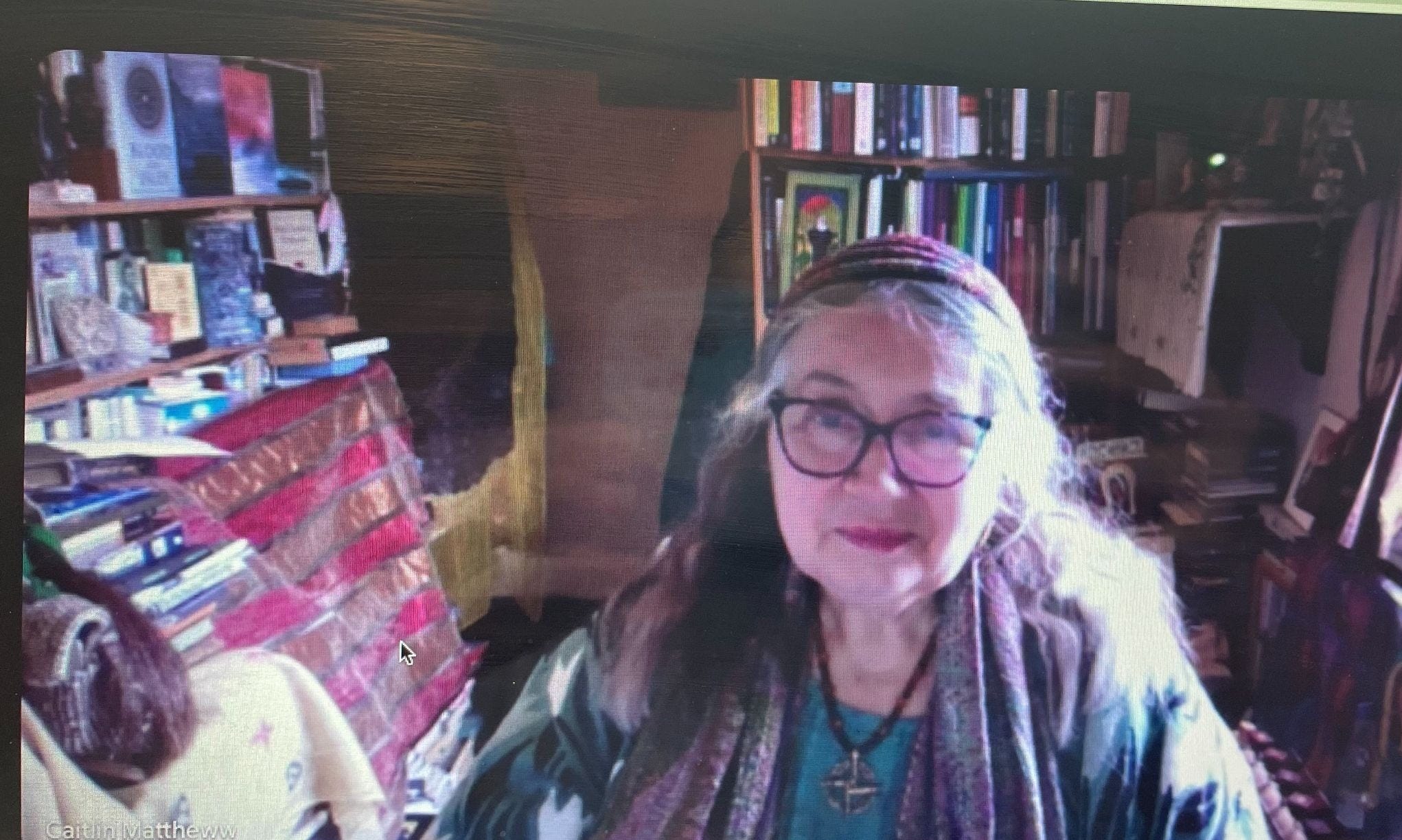
Caitlín Matthews, is an internationally renowned Shamanic practitioner based in Oxford. She has been a Shamanic healer for 30 years, with several books on Shamanism under her belt.
She believes this Census data is just the tip of the iceberg; the real numbers could be much higher. She believes people don’t feel comfortable to always say who they are and what they follow.
‘Shamanic and animist traditions are in all five continents. Since temples were closed at the end of 4th century here and replaced by churches, Shamanism has been the bottom most strata in animism.
‘Also some people will constitutionally refuse to say what it is they do, because of the history of the West, it’s considered still to be an embarrassment. And so you keep it covered. They don’t want to be known for their religion.’
Caitlín says she and other practitioners under the umbrella organisation Pagan Federation advocated for years for Shamanism and other such religions to be included in the UK’s census (PaganFed).
‘Shamans are the last piece of the jigsaw puzzle.’
‘In the ‘70s, a famous Heineken beer advert said that Heineken refreshes the parts, other beers cannot reach. And I would put Shamanism in that’.
Caitlín says she sees people who would earlier be called as suffering from ‘hysterical illness,’ but it’s now called a ‘functional neurological disorder.’ She claims cases are quite often referred by psychiatrists to her, as their science cannot help beyond a point.
‘These are the people that are always on that threshold point. You never find shamans in the marketplace. You find them on the edges. And when people run screaming towards the edge, we are the people they meet. I don’t advertise my practice. I don’t need to.’
Rise of Shamanism, rise of ‘No Religion’, decline in Christianity – connected dots?
Census 2021 data for Oxford city also shows a significant decline in followers of Christianity by 15%. Again, this is in line with the country level data for England and Wales. It would be hard to establish any clear connection between decline in Christianity and increase in ‘no religion’ (25% increase) and increase in other religions in Oxford.
Many Shaman believers could have possibly ticked on the ‘No Religion’ category, as they may not associate Shamanism with any institutionalised religion.
At the time of filing this report, data was not available to further analyse the age groups which might explain the rise of other religions like Shamanism.
However, the census data is clearly a telling sign that people in Oxford city, as in the rest of England and Wales, might be seeking alternative answers beyond the traditional religions’ boundaries.