


Just 1 in 4 children and young people enjoy writing in their free time, according to new research from the National Literacy Trust, marking the lowest level recorded since the survey began 15 years ago.
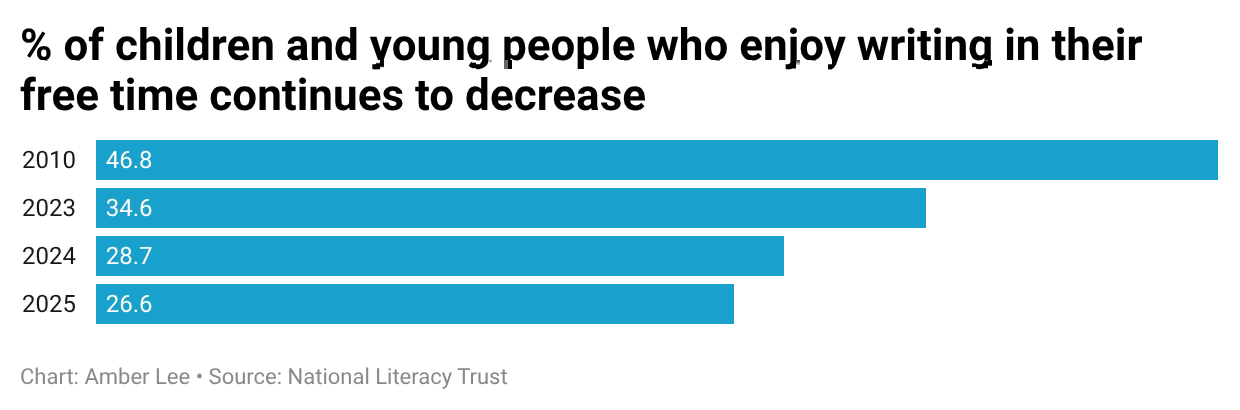
After a long day at school, often the last thing children want to do is more ‘work’ after leaving the classroom. But perhaps that is the issue: writing has become associated with work rather than pleasure. Fewer children are choosing to write in their free time, raising concerns that creativity and self-expression are being overshadowed by the pressures of the classroom and the distractions of the digital world.
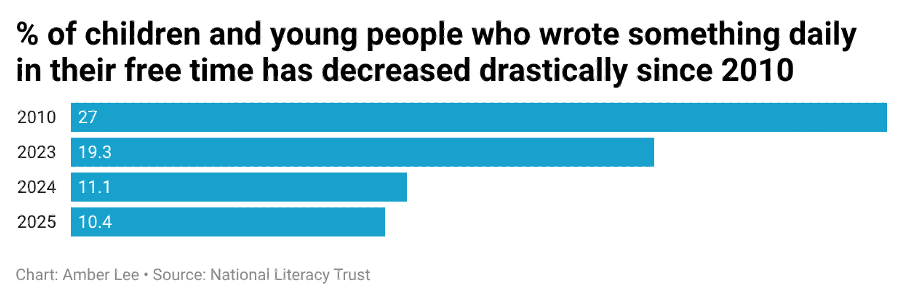
The survey conducted in 2025 by the National Literacy Trust, which had 114,970 responses from children and young people aged 5 to 18 in schools across the UK, found just 1 in 10 wrote something daily in their free time. This is the lowest level recorded since the survey began in 2010, with figures almost halving over the past 15 years, highlighting a worrying decline in children’s enthusiasm for writing outside the classroom. This decline was particularly prevalent for primary-aged children, with enjoyment for this age group dropping by 6% over the last year.
However, the report found that children who continue to write in their free time are motivated by creativity and self-expression. Many said writing allows them to use their imagination, express their thoughts and feelings and create stories of their own. Others also described writing as a way to relax and escape everyday life, highlighting as well as academic, there are many benefits.
As the data shows children and young people’s lack of enthusiasm for writing, it is no surprise that the number of them who write daily in their free time has also decreased drastically since 2010.
Speaking to a primary school teacher, she said “it’s been noticeable in the last few years that children rarely seem to choose to write at home, except for when completing set homework. Fewer children write thank you letters to family- using phone calls or messages instead.” With the growth of the digital age, writing is not disappearing completely, but the way we communicate it changing. The teacher added, “text messages, emails and video calls are replacing writing for everyone, including children, which does impact writing progress.”
While young people are arguably writing more than ever through text messages, direct messages on Instagram and replying to social media posts, these forms of communication are very different from creative writing. These digital interactions are quick, require less thought, leaving less opportunity to develop storytelling, vocabulary and longer-form writing skills.
The National Literacy Trust said, “while there is no single solution, it is clear that writing enjoyment must be positioned as a meaningful, personal and empowering part of children and young people’s lives.” The key is changing children and young people’s mindset from seeing writing as work to something they enjoy and voluntarily want to do.
As technology continues to shape the way young people communicate, the challenge for parents and teachers is ensuring that creative writing does not become a forgotten skill.