


With the rise in streaming services, cinemas are being forgotten for their high prices and their increasing closures. Emerging figures from the UK Cinema Association and Ofcom's Annual Media Nations report suggest that cinemas haven't fully recovered from Covid-19 as streaming services took over.
Cinemas date back 130 years; the first cinema was established in Paris in 1895. Since then, this activity has transformed with the rise of technology, now offering 3D, 4D, and the latest invention: 360° immersive screens. Streaming video on demand (SVoD) wasn’t invented till the early 1990s, giving cinema its moment of glory. SVoD took off in 2007 with the introduction of Netflix; this changed the game for at-home viewing.
According to Ofcom’s report, 68% of households have/use an SVoD service in 2025, with 59% subscribing to Netflix, making it the most subscribed streaming service in the UK. The ease of at-home viewing is what makes streaming services so appealing; you can watch content anytime, anywhere, with anyone. However, with prices increasing and content swapping between platforms, people are cancelling their subscriptions, some even going back to cinemas.
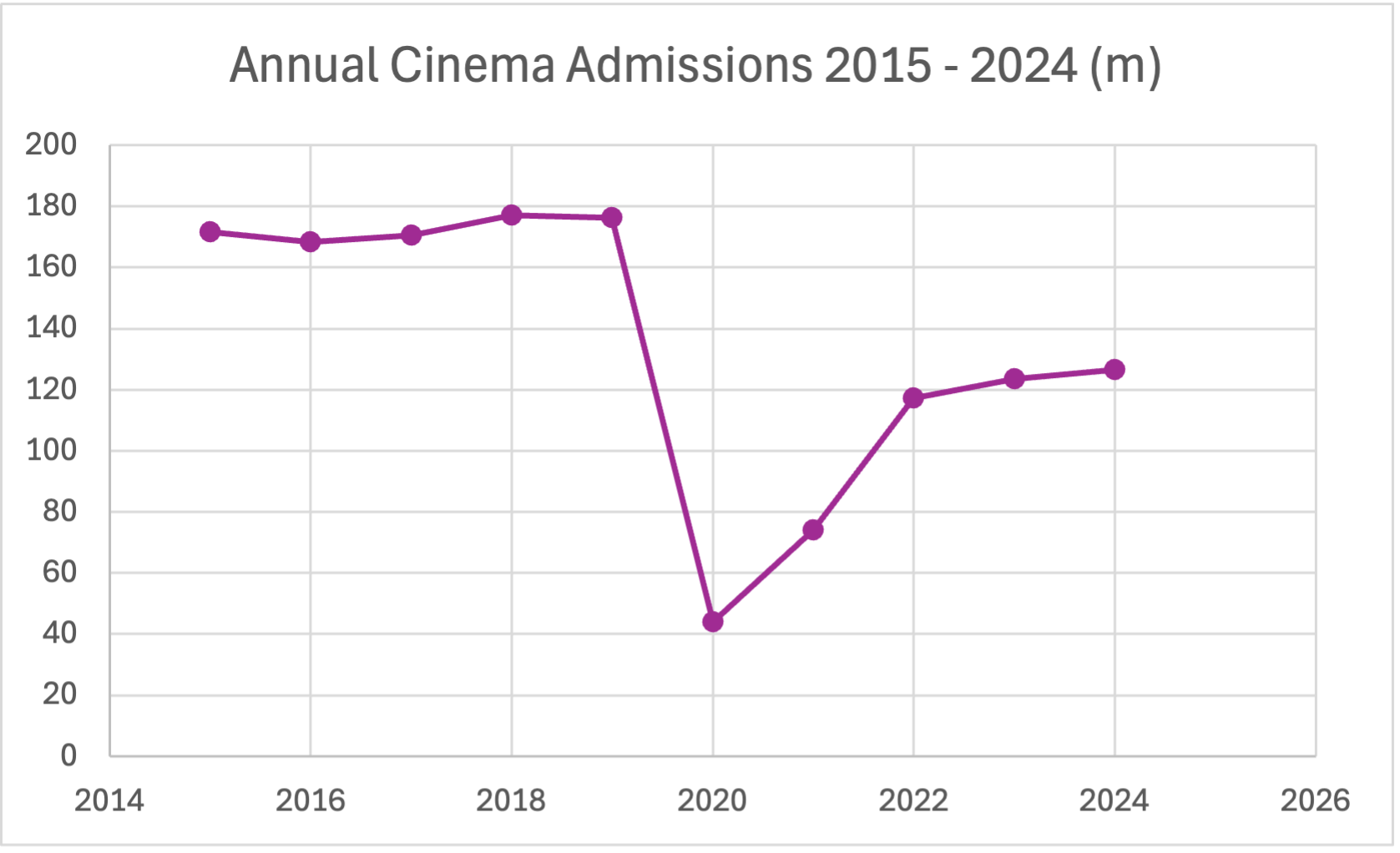
In 2024, 126.5 million people visited the cinema; this is a 2.35% increase from 2023. With COVID-19 finally in the past, cinema figures are starting to recover; they are slowly increasing but have yet to reach pre-pandemic figures. As seen in the graph below, the prolonged cinema closures during the national lockdown massively impacted the cinema industry, with a flatline of attendees as everyone subscribed to streaming services for entertainment. Following these events, some have gone back to watching films in cinemas, whilst others now prefer the comfort, conveniences and cost of at-home viewing.
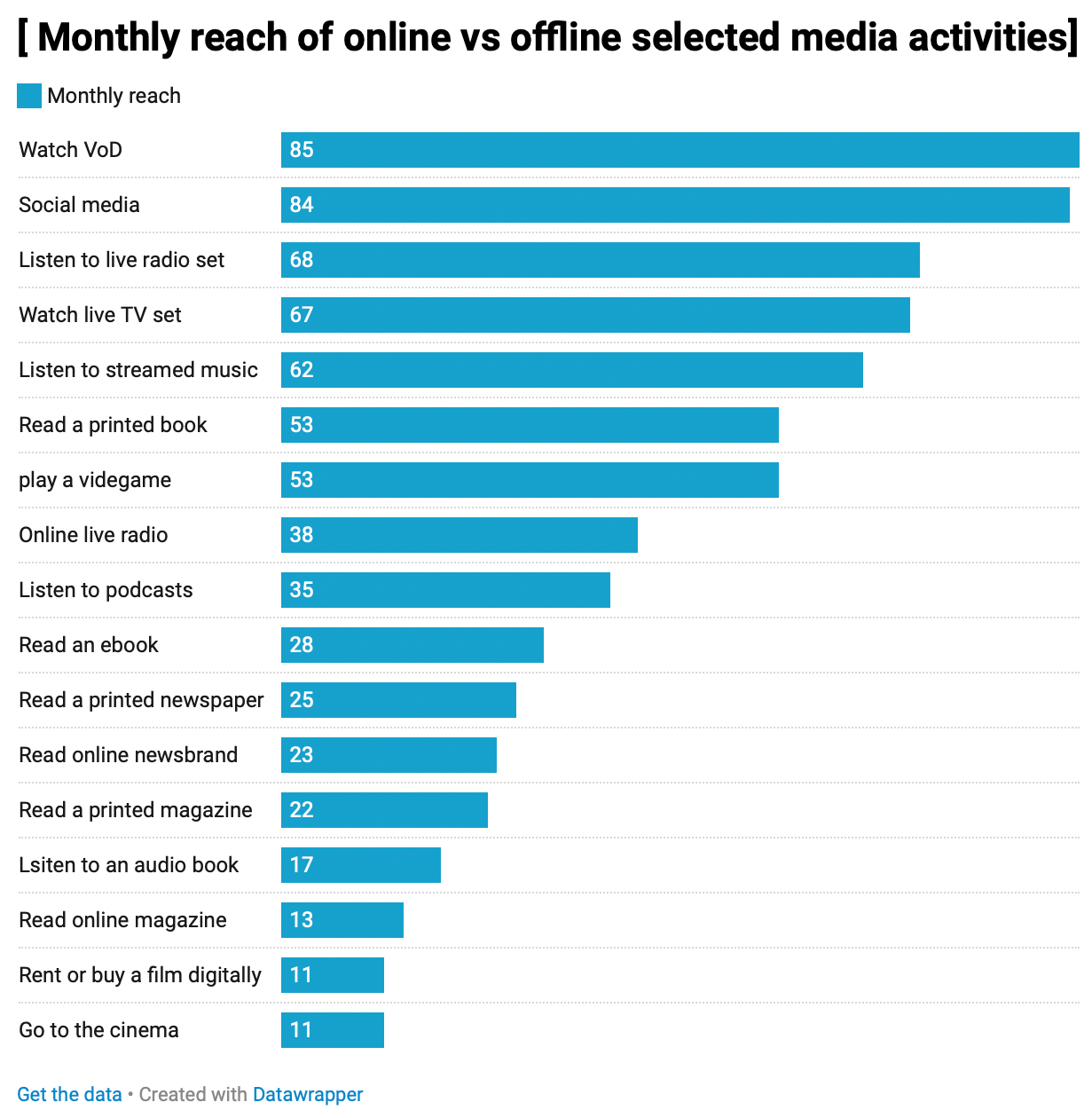
In Ofcom's report, when exploring monthly reach on selected media activities only, 11% of people reported going to the cinema, whilst 85% admitted to watching VoD monthly. This is a substantial difference, suggesting that the usage of VoD is more frequent and that going to the cinema is occasional. In the figure below, there is a clear trend for on-demand content being more favourable to the audience. This is a factor that cinemas can't compete with, especially in today's digital viewing world.
When asking Oxford Brookes media students whether they prefer streaming services or going to the cinema, one student, Billy Foster, states that he “prefers the cinema as there is an atmosphere that cannot be replaced”. Going to the cinema every few months, Billy last saw The Conjuring: The Last Rites in September. Billy shares that he “goes to the cinema every few months when a film he wants to see comes out”. However, Billy is subscribed to multiple streaming services, including “Netflix, Disney+, Amazon Prime and Now TV” and uses them on a weekly basis. Billy went on to share that if the price of cinemas decreased, he would be more inclined to go, and stated that the price was the only thing stopping him from going more frequently.
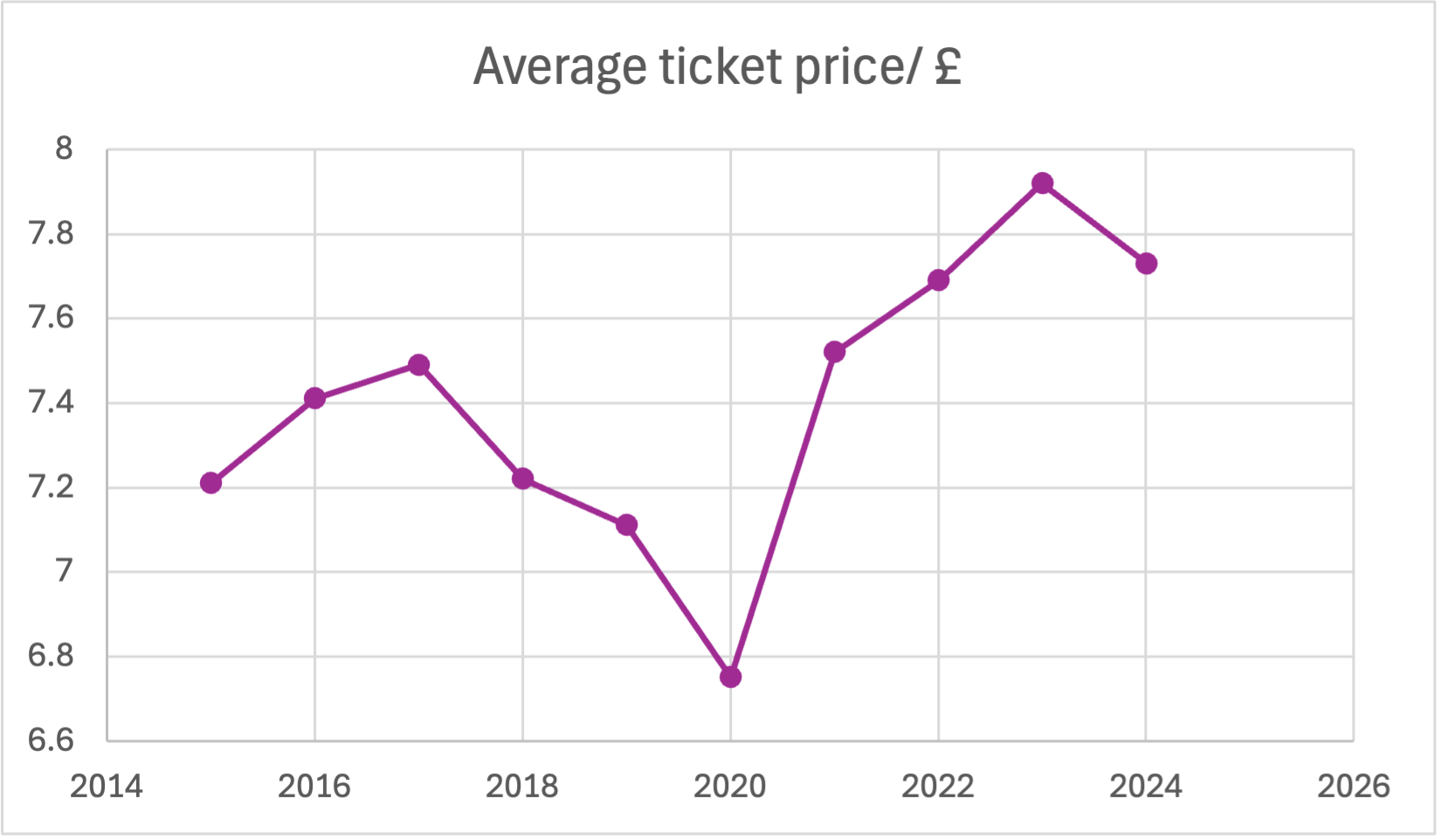
Cinema prices have marginally increased over the years, as seen in the graph below. In 2025, the average ticket price was reported to be £7.73, although -2.4% from last year; that is 0.62p more expensive than pre-COVID-19 prices. In comparison, Netflix’s standard subscription with adverts costs £4.99; for less than a cinema ticket, you can watch unlimited films and TV shows with ads for a month. Billy admitted that if the cost of cinema tickets decreased, he would be more inclined to go. The average annual spend per head has decreased since COVID, but is slowly rising again. With 2024’s average spend being £14.45, indicating that, annually, people are attending the cinema twice. This is a 23% decrease from the pre-COVID spend of £18.72. With prices increasing and spending decreasing, although cinemas have reopened, audiences’ spending has not recovered. In a cost-of-living crisis, consumer demand is decreasing.
The prices are not only rising for cinema tickets but streaming services too, with a Netflix premium subscription now being £18.99. Netflix officially launched in 2012 in the UK, starting at just £5.99, offering unlimited streaming ad-free on a single device. In comparison to 2025, this subscription module is now £12.99, although you get access on a total of 2 devices; you are now effectively paying for two of the original subscriptions. In February of 2025, it changed from £10.99 to £12.99; this surge in price is what is driving customers away. However, these costs are still cheaper than cinemas and better value for your money.
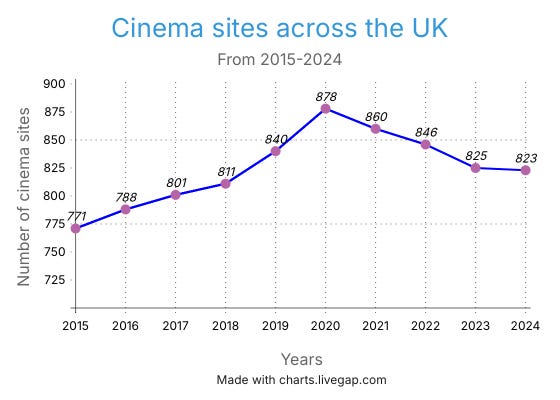
With the rising operating costs and the increase in streaming services, cinemas are closing nationally. This year alone, 10+ cinemas have closed, 7 being Cineworld and 3 being Odeon. This doesn’t account for the local cinemas that also weren’t able to keep up with increasing costs and the shift towards streaming services. However, according to the UK Cinema Association in 2023, there were 825 sites compared to the 823 sites in 2024. This small decrease is due to the opening of new cinemas, so although there is an increase in closures, there is hope for the fact that new cinemas are opening. This, however, still doesn’t match the peak in 2020, when the UK had 878 cinemas; this displays the impact of COVID-19 and the increase in at-home streaming.
For Oxford locals, this became a reality with the Odeon on St George’s Street closing down after being a cinema site for 113 years. On January 28th 2025, the Odeon had its final showing. Originally named the Cinematograph from 1912 to 1935, in 1936 it was rebuilt into the Ritz cinema and finally transformed into the Odeon in 2000. It has served the public greatly, and after a century of entertainment, the site is being demolished and rebuilt into aparthotels.
When asked if the closure of St George’s Street cinema affected them, student Lily Bailey expressed, “Initially, I wasn’t sure that the closure would impact me as I don’t often go to cinemas and tend to wait for films to become available on streaming platforms. However, I have noticed recently that I miss that cinema in Oxford. I miss being able to go and experience a film with my friends in the city and making a trip out of going.” Its convenient locations and affordable prices are what make it such an accessible cinema to students. When asking students who preferred streaming services over cinemas, they expressed that the closure did not affect them directly and that if they wanted to go to the cinema, the location isn’t what is stopping them, but the price.
The future of cinema is unknown and dependent on the state of the economy. Going to the cinema is transforming into a premium experience; with the closure and rebuilding of cinemas, the seats are getting bigger, and the prices are increasing. This immersive experience won’t go out of style but will lose its audience if its prices continue to climb. Although streaming services have impacted the usage of cinemas, streaming services are also declining; it seems that with the climbing prices, lack of content and this generation’s short attention span, people may not be watching as many films as they used to.