


Oxford is routinely ranked among the most expensive cities in the UK, with students having to bear the burden of costly rents and high expenses for everyday needs.
Before we dive into the cheapest places to get groceries in Oxford, let’s take stock of how we got here.
The cost of living in Oxford
The city’s cost of rent is only trailing London in many analyses, with average monthly rents for a single bedroom ranging from £1,450 to £2,500 (depending on which ranking you look at).
But aside from accommodation, Oxford’s high cost of living is propelled by daily expenses such as grocery prices. According to the Numbeo Groceries Index 2026, the UK belongs to the more expensive half of European countries when it comes to the cost of food.
Since the pandemic, prices have risen sharply. New research by the Energy and Climate Intelligence Unit (ECIU) shows that UK food prices are on track to be 50% higher this November than they were five years ago.
Projections aside, from November 2020 to November 2025, the cost of food increased by almost 40%, according to House of Commons Library calculations based on ONS data. Meanwhile, the overall inflation for the same period was only about 30%.
Reasons for the increase
“Trump’s war in the Middle East is set to drive shopping bills higher as oil and gas prices spike,” said ECIU food analyst Chris Jaccarini in a press release. He explained how climate change contributed to rising grocery prices. “Three of England’s worst harvests on record have been in the past five years.”
He said another key reason for the price hikes in recent years was, of course, Russia’s war against Ukraine, which is oftentimes called Europe’s breadbasket.
Other factors contributing to food inflation are high energy and fertiliser prices, supply chain shocks such as during the Covid-19 pandemic, or trade barriers.
But: Inflation of food prices is now slowing down, reports the ONS. From April 2025 to April 2026, they rose by 3%.
Still, consumers feel the shift in grocery cost. According to the ECIU, even when adjusting for average wages, food prices have risen by 11% compared to five years ago.
As a result, 37% of UK adults say they now spend less on essentials, found the House of Commons Library. Low-income households, including many student households, are even more affected by high food prices.
Oxford’s supermarkets compared
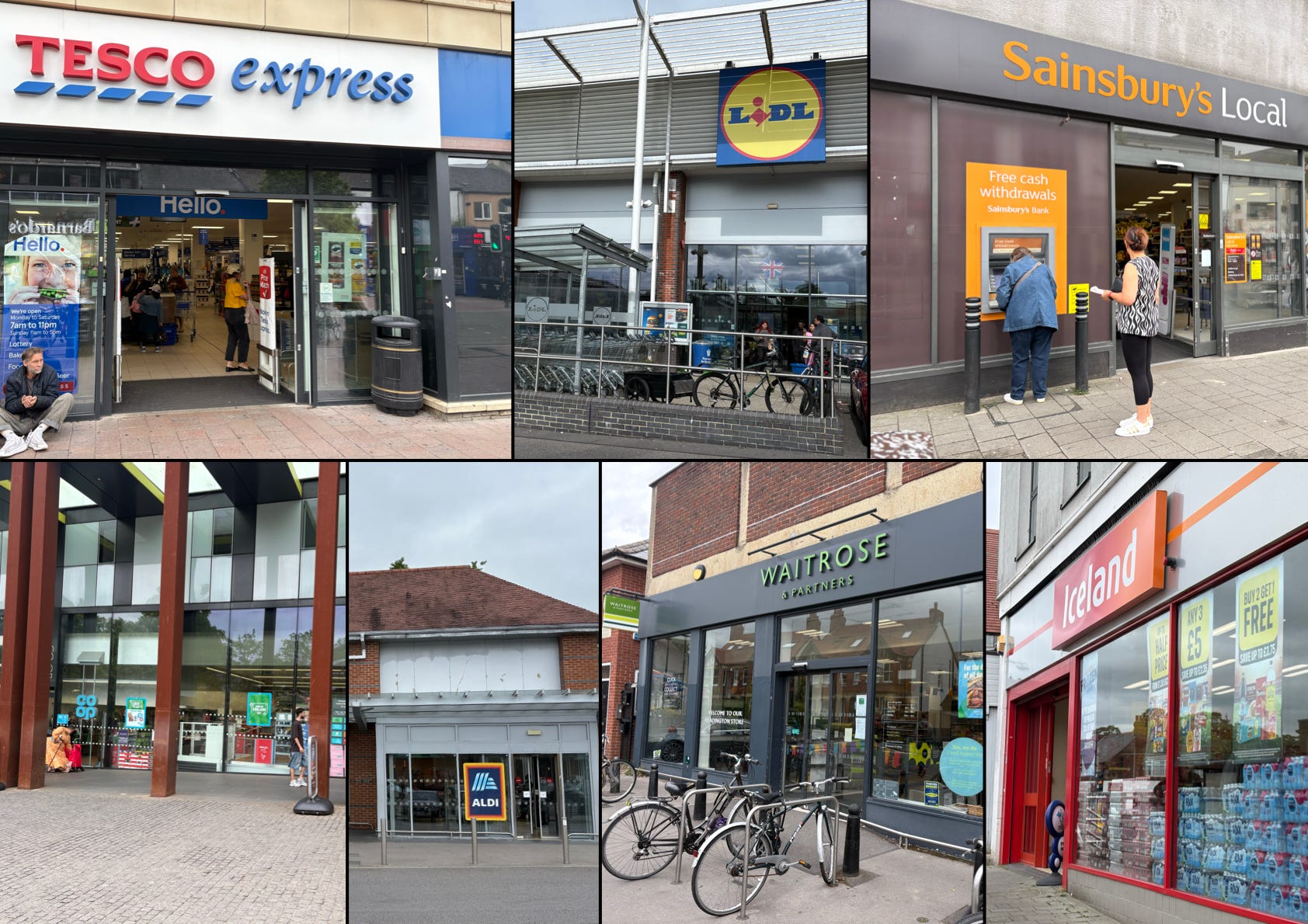
So what’s the most affordable place in Oxford to get your groceries in June 2026? Hybrid Magazine ranked major supermarkets closest to Brookes’ Headington Campus.
To estimate the prices, we noted the cost of an exemplary food basket. When the ONS does that to calculate consumer price inflation in the UK, they look at dozens of items.
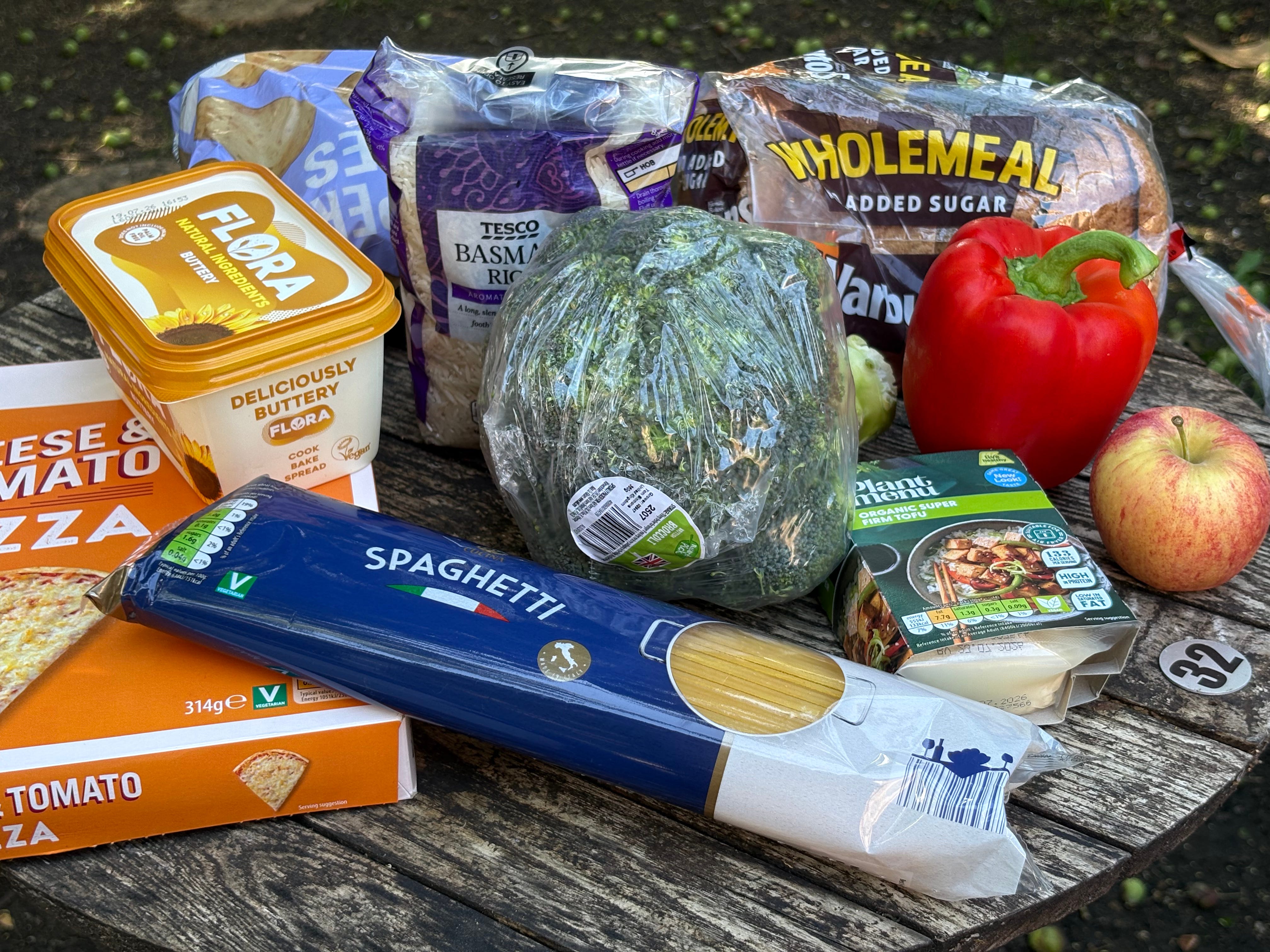
For this article, however, we will look at a basket of 10 products (because our author lives vegetarian, they don’t include any meat products): buttery spread, bread, pasta, pizza, rice, six apples, potatoes, a bell pepper, broccoli, and a block of tofu.
Bear in mind that this test only represents a snapshot on one specific day, for one specific store location each, and of somewhat arbitrarily selected products. Their weights and sizes sometimes varied slightly. It should only be used as an indicator for how prices compare generally.
The list, from cheapest to most expensive:
Aldi (£8,76)
Lidl (£9,84)
Tesco (£11,39)
Waitrose (£12,47)
Sainsbury’s (£13,71)
Iceland (£14,02)
Co-op (£18,95)
(Iceland and Co-op didn’t carry any tofu when the experiment was conducted. The average price for tofu charged by the other supermarkets was added to their bills. Co-op also didn’t have any bell peppers and broccoli in store, so the prices were taken from their website. The Headington Tesco was closed due to a safety incident on the day of the experiment. The Cowley Road Tesco was used instead.)
While Aldi and Lidl are the clear winners of this spot check, they are further away from the Brookes campus than their competitors, an estimated 10 minutes by bike each, according to Google Maps.
To many, Waitrose’s position so high up the list might come as a surprise. Likewise, Iceland’s weak performance does not match their public image. Co-op’s high price for a pizza was one contributor to its placement at the bottom of the list.
One notable omission from this list is Nisa, located in the Clive Booth student village. However, they didn’t carry a large enough selection of grocery items to be included. The same goes for the M&S Simply Food on the premises of John Radcliffe Hospital.