


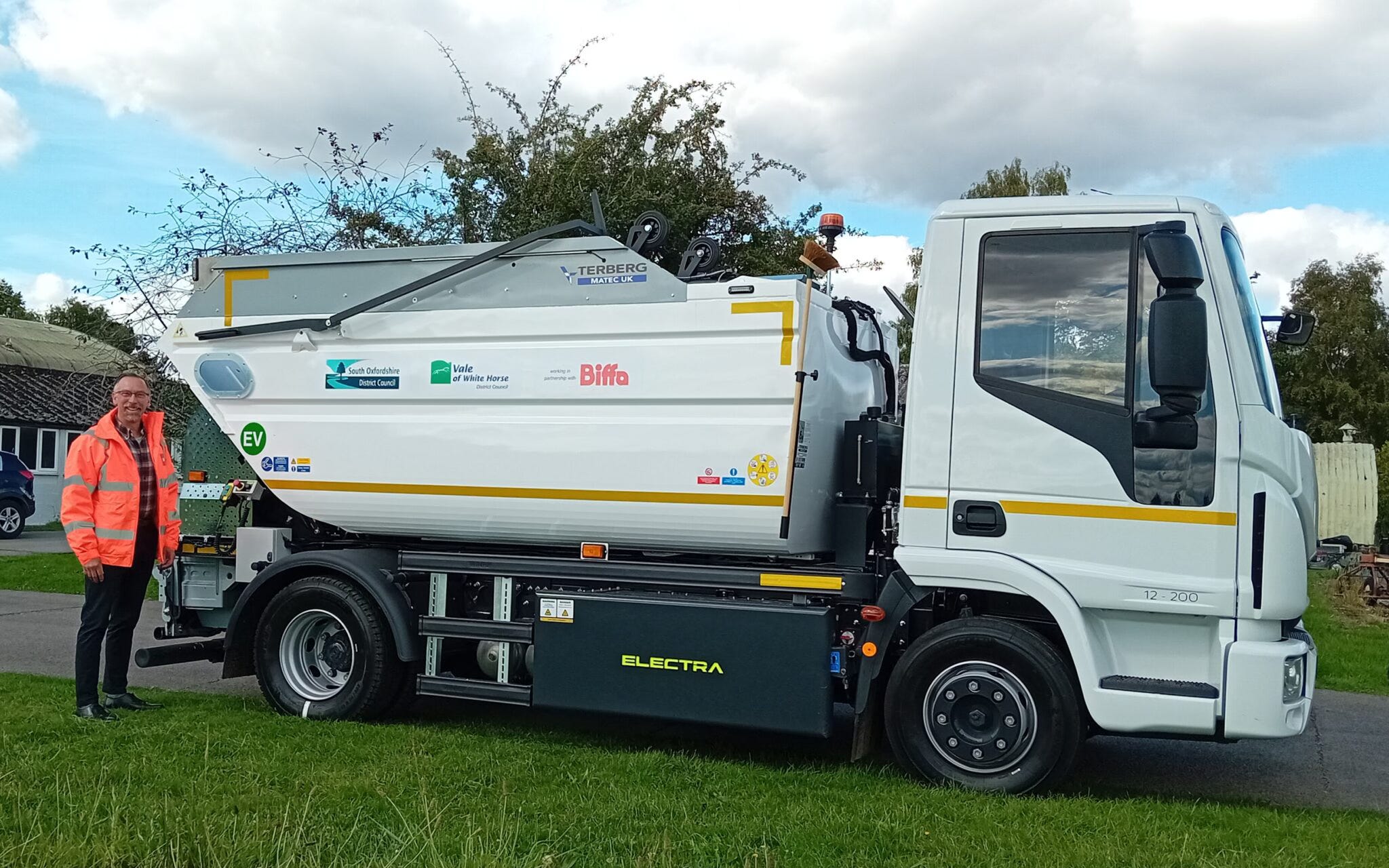
The two councils say that the new vehicle could save more than 20 tonnes of CO2 equivalent a year, twice the average amount a person in England emits annually.
“It is a great day for us to take delivery of the first EV in our fleet of waste vehicles”, said Councillor Mark Coleman, “it is our proud ambition to provide a reliable and robust waste collection service for our residents and cut council carbon emissions at the same time.”
Alongside the environmental impact, the council say their new waste truck, a Terberg EV ORUS, will be quicker and quieter than the current diesel vehicles.
With the capability to compress food waste during its rounds, the electric truck will not need to empty its load at Wallingford’s food waste facility as often, meaning it will cover fewer total miles than the 26,000 driven by diesel trucks each year.
Both councils plan to make their districts carbon neutral in the near future, with Vale of White Horse setting a date of 2045 to achieve this, while South Oxfordshire council is aiming for 2030.