


Image from Unsplash
In the first 15 minutes of Euphoria’s third season we see the following: two young women frantically gagging as they attempt to swallow down several lubed-up bags of powdered fentanyl; women intending to retrieve these bags from their faeces using a colander on the other side of the border; women dying from an overdose due to the balls bursting; women farting from stomach pain; women with faeces trickling down their leg when they don’t make it to the colander in time; and then, as if this wasn’t enough, a dog licking the faeces off of the woman’s leg.
Welcome back to TVs most unsettling show- kind of. The HBO teen drama has never been an easy watch, in Season 1 its target audience was disputed due to a single scene which included a total of 30 penises, but it seems the creators are going to extra lengths this new season to create shock value on drugs. The trailer is centred around the objectification and sexualisation of women, Cassie is dressed up as a baby with her legs spread in the air, and in another scene she’s a dog on a leash being told to perform acts as part of her OnlyFans content, before being shamed by boyfriend Nate as a “Prostitute”. Leaving the question: Are we watching fetish content without even knowing it? University student, Markela Thomaidou, reflects on the season’s focus on shock value over developing a story.
“Some aspects feel less like a critique and more like they are reinforcing the very issues the show originally set out to challenge, particularly in how the female characters are portrayed.”- Markela Thomaidou
We see sex work as a theme in almost every plot line: Hunter Schuffer’s character Jules is a sugar baby; Cassie is performing borderline Pedophilic content for instagram, while considering a career on OnlyFans, which Alexa Demie’s character Maddy seems to be helping her achieve and Rue toys with the idea of becoming a pimp.
Image from Unsplash
“It can feel like female experiences are being used for dramatic effect rather than being explored genuinely” - Markela Thomadiou
Aside from that, there are an array of sex workers who appear in a strip club in the scenes in Tijuana. What’s noticeable is these scenes aren’t shot from the perspective of the sex workers themselves, but instead from the men who are hiring them. We don’t hear their experiences or comprehend their reasons; we don’t humanise or empathise with the women. Student, Markela, also reflected on this: “They are merely props, not even plot devices that contribute in any way to the episode’s story. Their sole purpose is to enhance the show’s visual appeal and perverse provocation.”
Director Sam Levinson has responded to criticism about his portrayals of sex in the past, in 2023 he told Vanity Fair: “We live in a very sexualised world. Especially in the States, the influence of pornography is strong in the psyche of young people. We see this in pop music.” But, from what we’ve seen so far, his work isn’t critiquing it, it’s reflecting it.
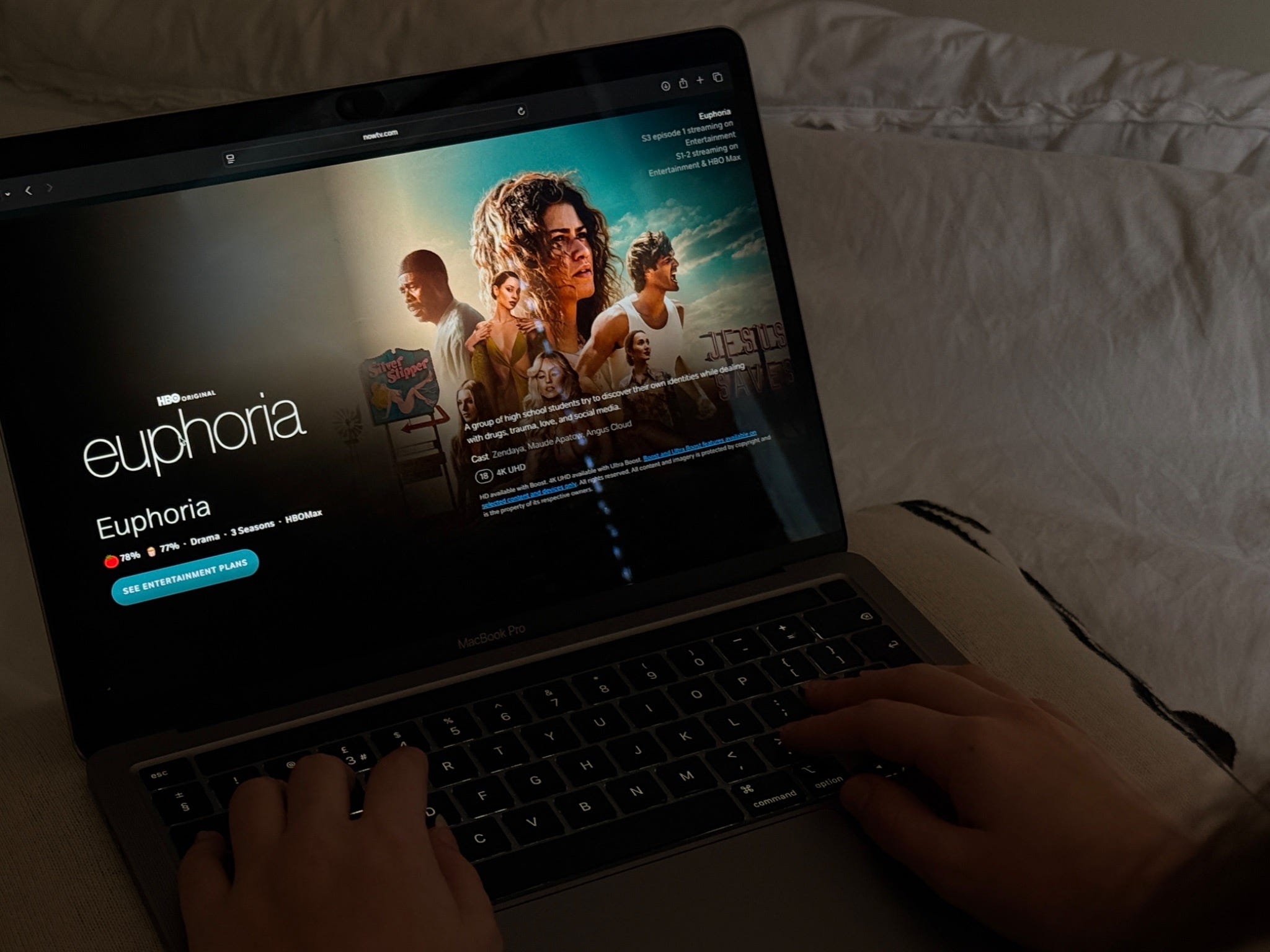
Image by Caitlin McDonagh
Over a Google Meet call I had the chance to sit down with Mia McNeill-Filmer, a young Gen-Z woman, who describes herself as a “lover of all things media and culture”. I asked Mia what ‘Euphoria’ is to her today:
CM: Hi! How are you?
MM: Good, How are you?
CM: Good thank you. When did you first watch Euphoria and what were your first impressions of the show’s themes?
MM: My first impression was remembering that it was very intense. It reflected real life, but it was very dramatized, to the point where it didn’t feel like normal teenage representation.
CM: How would you describe the show in three words now, ahead of the new season, to someone who’s never seen it?
MM: I think intense would be one of the words, unsettling, definitely for a lot of scenes and stylized, like I said, it’s the aesthetic that is a big part of why the show is successful.
CM: Do you think that the show is empowering young women, or does it create a kind of pressure or glorify a certain lifestyle?
MM: I think that’s one of the main discourses, isn’t it? I think in season one, it was more about self expression and exploring different styles of women and how these very different women express themselves. With the new seasons the show’s creators are kind of taking advantage of a shock factor. Instead of empowering and showing diversity, now it’s showing all these women under a very sexualized perspective and light that perhaps wasn’t as strong as the first seasons.
CM: Some critics and general conversation around the show say that euphoria glamorizes more taboo subjects such as sex, drugs and mental health. What do you think of this? What is your opinion? What would your input be?
MM: I can see why people would say that. I think the visuals and the way that the show portrays these topics is so stylized and aesthetic that it can make a lot of serious issues and not necessarily healthy things in life look almost beautiful and encourage almost individuals towards certain choices.
CM: If you had to sum it up, do you think euphoria is more harmful or helpful, and why to audiences?
MM: I would say it’s a mix, but definitely, maybe a bit more harmful. It’s helpful in starting conversations about mental health or identity and self expression, I would say, but it could glamorize some harmful behaviors and create unrealistic expectations in a lot of cases, especially when it comes to its aesthetic. So yeah, it could be, It could come off as harmful for especially younger audiences.
For us viewers it’s quite clear the level of degradation Sam Levinson wishes to present- and it’s hard to stomach, almost as much as those lubed-up fentanyl balls.