


A person’s cultural heritage can be a rich source of inspiration for creative pursuits. Whether this self-expression is through art or dance, our culture shapes the way we experience life and what connects us to others.
I’ve always found that my culture informed a lot of my creative decisions. Walking the streets of Southall and letting my hand sift through all the colourful and intricately embroidered sarees allowed thoughts of creating my own clothes to blossom in my mind. Hazy memories of my Ba (Grandma) at her sewing machine, the kind they don’t make anymore, sewing saree blouses for her customers.
This connection to clothing and the physical act of making clothes connects me to the many other women, in the generations before me, who also sat on their floor handstitching garments.
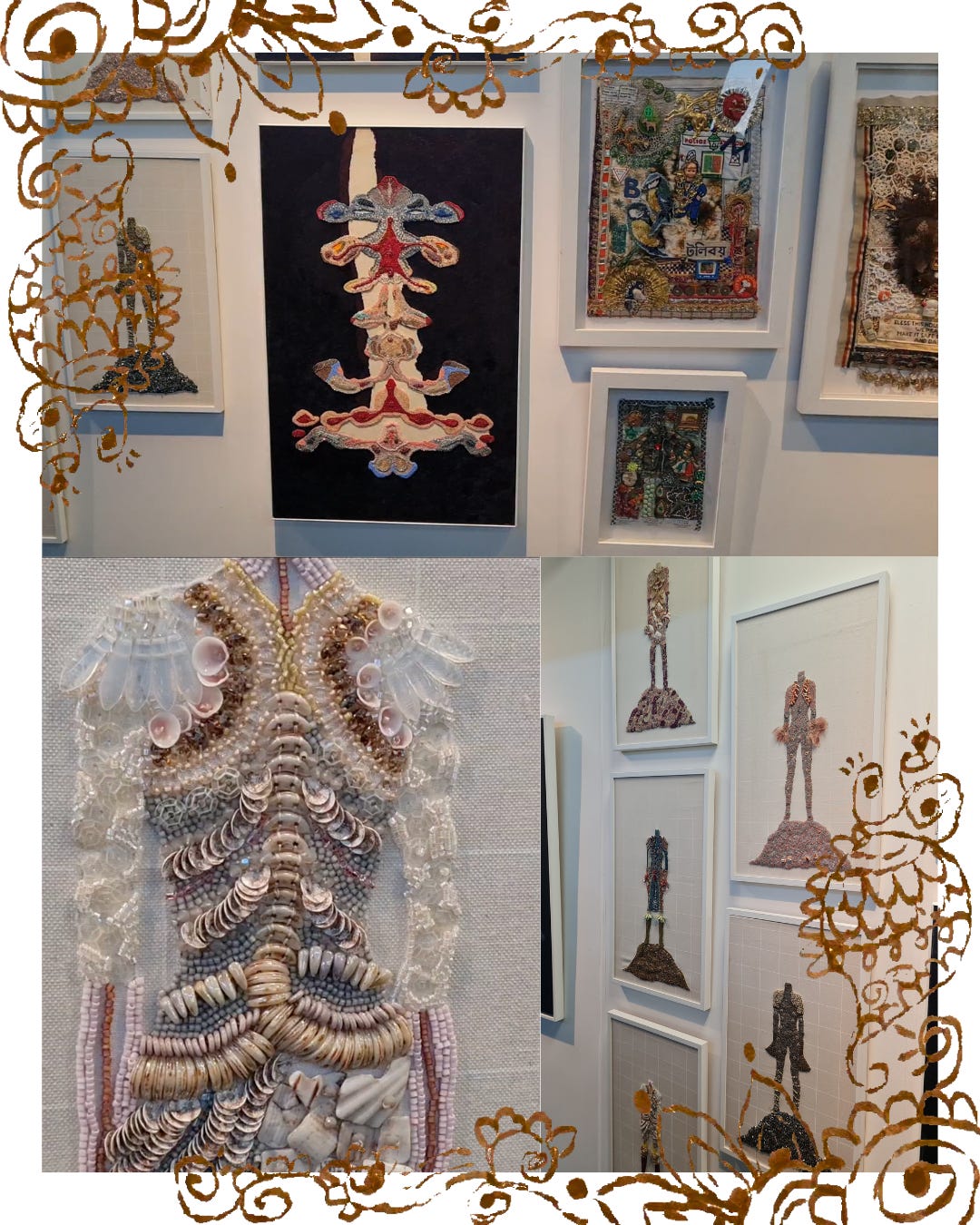
This is something that Palvinder Nagla, a textile artist, and I have in common, as his grandmother also introduced him to textiles.
“You know, generationally, I think we understand textiles. It’s really close to us… It’s so integral to our communities”
Indian textiles remain imbued with a deep sense of history and cultural significance that dates back around 6,000 years. The vivid dyes, silks and cotton, and techniques that have been passed down through generations are still popular today.
“These fabrics that we put on our body… they have a story, and they’ve travelled and so have we”, Says Palvinder. A poetic way of putting it, I think, but I agree. The silks of Southall are light to the touch but symbolically hold the weight of thousands of years of printing and weaving techniques.
Exploring and learning about heritage
Palvinder talks fondly and enthusiastically about his art work, he refers to it as being reflective and self-healing and mentions several embroidery terms I’m left having to look up after our conversation.
When I ask him about how his heritage and culture have influenced his textile art, he mentions how he is still exploring what that term means and art “are kind of [his] own self-enquiry of [his] own heritage”
The idea of self-exploration is particularly interesting to me. As a third generation immigrant who has never been to India, my understanding of my culture is through the media I have consumed and through my family. Rather than having experienced it myself, I am relying on the input of other people’s thoughts and attitudes through a screen or through the filter of their memory. My version of my culture is formed through the. Perhaps I am still exploring my connection to my heritage, too.
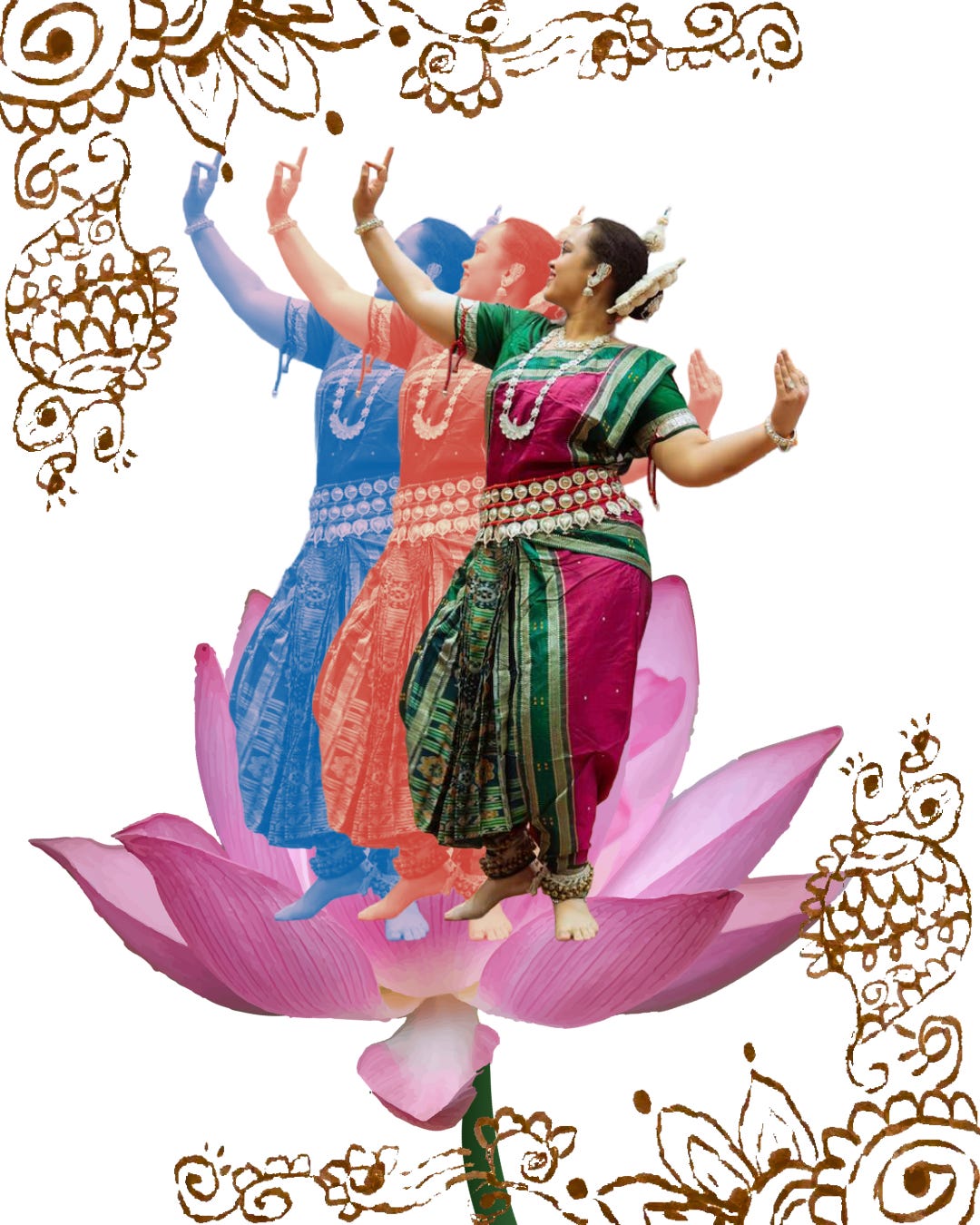
Puravi, an Oxford University student, took centre stage at a creative showcase held by OxSaas (Oxford South Asian Arts Society) and performed the Indian Classical dance Odissi. She was dressed in green with bells on her ankles that chimed every time she moved.
“I’ve learnt so much about India from the languages (Odia and Sanskrit) to various temples and Hindu deities”, She mentioned. She takes great pride in her dancing and sees it as a tool of self-expression.
Art as Storytelling
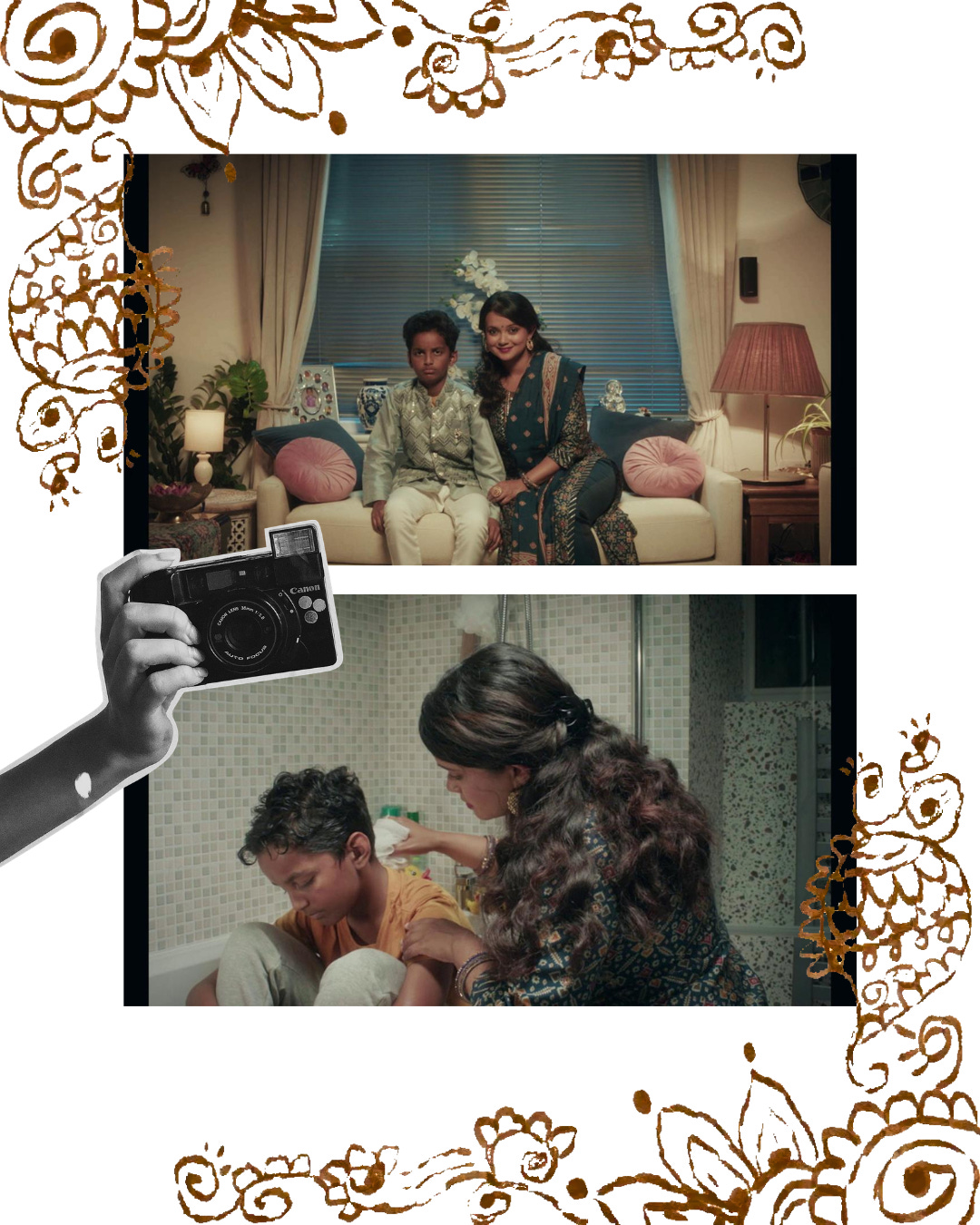
Art in all its forms is a way to convey a message. To connect with whoever might see it, no matter where they see it from. Filmmaker, Shubh Garharwar said, “I was always told that filmmaking is inherently empathetic because you sit down and watch someone else’s life for one and a half to two hours”
His film The Lunchbox touches on his own experiences growing up as a British-Indian and reflects the universal feeling of not fitting in. He talks me through the process of writing the script, filming and other projects that are coming up.
“The way that the arts and creativity connected me to my culture was learning about other artists from the same culture as me”, he mentions filmmakers and painters and adds that he still relates to the same things that were filmed in the 60s.
Going beyond culture
While chatting to Shubh, he emphasised that while South Asian creatives can take from their culture and history, it does not need to be the main focus of every project.
“I think it’s also really exciting to find creatives that don’t have to be tied down to their heritage”
He referenced the popular Netflix Show ‘One Day’ that stars Ambika Mod, whose character is completely separate from her South Asian identity.
While I love to draw from my culture, I recognise that sometimes the art we produce or are a part of does not necessarily need to be influenced by our culture and heritage. A person’s culture and identity are a huge part of them and often made up of many facets, including the different countries and people that we meet.
This sparked an interesting point about not only being known for or ‘typecast’ for creating or participating in art that is related to an individual’s culture, when it is such a vast and complex idea.