


Maureen remembers the chairs before she remembers the words. They were set out in a loose circle in a small room in Solihull, a room filled with quiet courage. She didn't know anyone there yet, and she didn't know what she was supposed to say. At just 46 years old, breast cancer was still new, heavy in her mouth. Still, she sat down.
Around her, the conversation moved gently, names and stories folding into each other whilst the other women listened. For the first time since her diagnosis, Maureen felt there was a space where she did not feel completely isolated.
But she didn't go back. At the time, the weight and rawness of other people’s fear felt too close to her own. She wanted distance from the illness, the language around it, and anything that made it feel permanent.
‘I only went to one meeting, because I felt that everybody that was there was dwelling on their illness, and I just wanted to forget about it, and I didn't want to think about it, which I haven't done a lot of in the last 30 odd years,’ she tells Stylist.
Before the chairs and tea, before the early meetings that would later become Breast Friends Solihull, there was the appointment she was sent away from. At first, doctors told Maureen the concerning lump in her breast was a cyst; nothing to worry about. She went home and tried her best to believe though doubt lingered. Two weeks later, she was checked again. This time, she lacked the same reassurance from the first appointment. She was sent straight to the hospital, the decision sudden and final, to have it removed and to begin chemotherapy.
With treatment came changes she could not keep completely private. Hair loss became one of the hardest parts of the diagnosis, a visual reminder of her journey. For Maureen, it was not vanity that made it difficult, but the way it announced her illness to the world before she had the chance to tell her own story.
The speed of it all left little room to think about what the next step held, or where to turn for support. With two heartbroken children and a husband to consider, she had to brave through. At the time, survival meant moving forward, not sitting still.
In the weeks that followed, Maureen focused on treatment rather than talking about it. Daily routines fell from what was once a lifestyle of work, children, and life to facing treatment. Chemotherapy became something to endure, not something she felt she had to explain. There were appointments to attend – on top of side effects to manage – and children to reassure. Normality, even if it was just a version of it, was something worth protecting.
Treatment did not stop life completely. Maureen and her family went to Florida in the summer. Doctors told her to wear the maximum sun protection to the radiation area, which was factor 30 at the time. She remembers applying it religiously, reapplying in the heat, conscious of herself in a new way. It was one of the small ways treatment slipped into daily life, even in carefree moments.
Looking retrospectively, she understood why the group felt too close to her fear that she was trying to keep at bay. In this process, though, Maureen undeniably felt partly isolated, with no one to relate to.
Back then, support was informal and uncertain, something you sought out rather than something you were guided towards. There were no social media groups, no communities waiting online. Finding other women who understood often meant turning up in person, hoping the room would hold what you needed.
Today, that landscape looks very different.
Across the UK, breast cancer support has moved beyond hospital appointments and helplines into community-led spaces shaped by shared experience. Coffee mornings, charity walks, and small events organised by women who have, or know someone who has lived through it themselves. The charity Maureen once knew 34 years ago in Solihull has developed into a space that is a peer support group run by women who understand the realities of diagnosis and aim to raise money for the cause.
For Maureen, groups like this reflect the kind of support she didn't feel ready for at the time, but now recognises as vital. What once felt overwhelming now feels necessary, a place where women can sit with fear, humour, and honesty.
Maureen says the community seems to have grown. ‘Before it was just – people sitting around discussing their illnesses. Now it seems a completely different thing, with events, collecting money for charity, and supporting these women who are affected.’
On a wintery evening in mid-November, Maureen walks into a room where a different kind of Breast Friends meeting is taking place. Sitting quietly, I watch as women greet each other with hugs, laughter filling the space before the event even begins.
At the centre of the room is Sophie Bullivant, the owner of a Solihull hair salon, who has turned her professional skills into something more. She moves easily between the women, welcoming them on arrival, the atmosphere warm and relaxed. Cakes, drinks, music, what could anyone want more? This is Sophie’s idea, a space where hair loss is not something to hide, but something that can be spoken about openly.
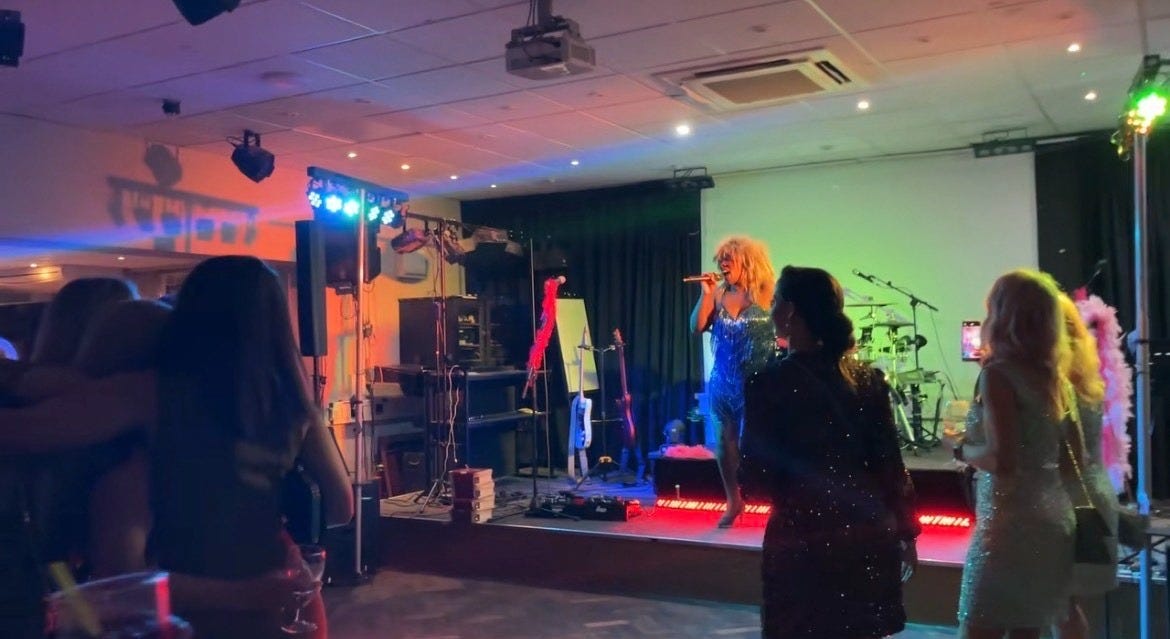
It is not a support group in the traditional sense. There is no circle, and no introductions. Support shows itself in smaller exchanges: a shared laugh, a dance, a knowing glance. One woman I spoke to tells me she was diagnosed last year and has never attended anything like this before. ‘I didn't want it to feel sad,’ she says. ‘Tonight I don't.’
For Maureen, watching the event unfold is peacefully moving. It is a space that feels lighter than the one she remembers. The room was lit with pink lighting, with women wearing sparkly outfits, and glamorous makeup, representing their proud femininity. As the Tina Turner tribute was warming up, I took the opportunity to interview the women behind the glitter.
Sophie says the event grew naturally from her work. ‘We're a hair salon, and breast cancer is obviously a really serious thing . . . everybody knows someone who’s been affected,’ Sophie says. Running a female-only salon, she wanted to create a night that felt familiar, like a party and celebration rather than a support meeting.
While fundraising is a key element of the evening, she explained that awareness matters more. ‘If people leave tonight thinking more about checking their breasts more frequently, then we've done the right job.’
By the end of this magnificent evening, £4,700 had been raised for Breast Friends Solihull, which will go back into local peer support for those affected by breast cancer.
Events like these reflect a wider change in how breast cancer support is experienced. While medical treatment remains central, more women are turning to these spaces that focus on life after diagnosis. Breast cancer is the most common cancer among women in the UK, with around one-in-seven diagnosed in their lifetime, according to Cancer Research UK. It is now highly treatable too, with survival rates improving steadily over the past decade. Today, around nine-in-ten women survive breast cancer for five years or more after diagnosis.
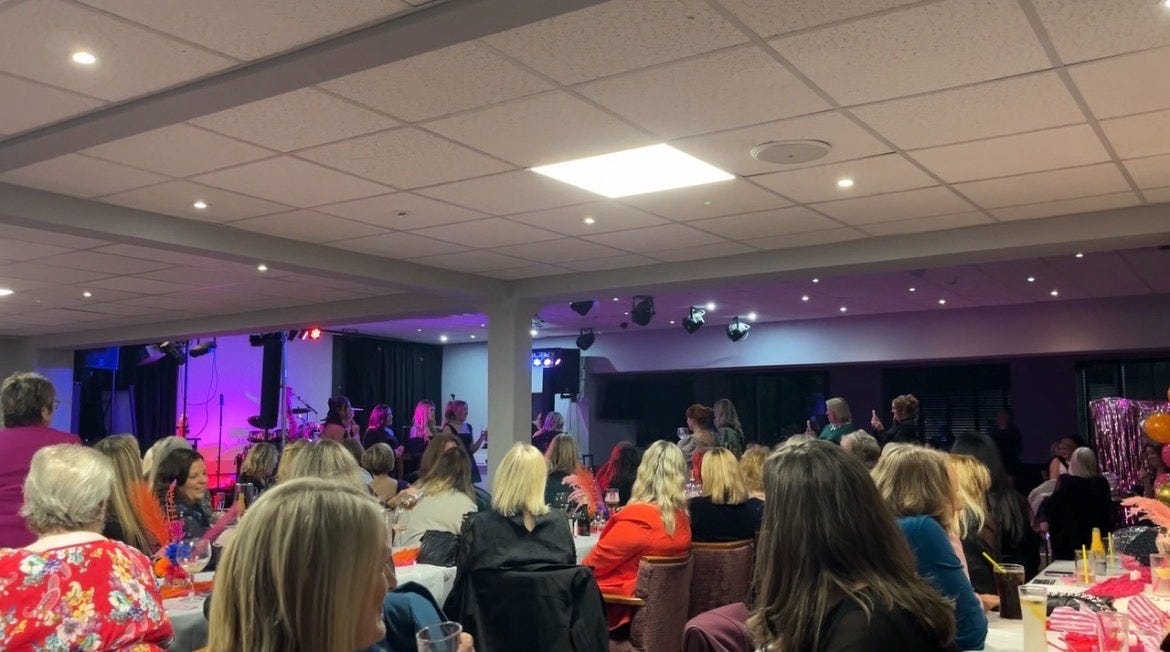
According to Breast Friends, peer-led support plays a crucial role alongside medical treatment. A spokesperson for the charity explains that many women struggle most after treatment ends, when hospital appointments slow down, but the emotional impact remains. Community spaces allow women to reconnect.
For Maureen, especially, seeing that shift first-hand brings a sense of reassurance. The chairs, the tea, and the once daunting meeting no longer look like something to avoid, but something to grow into. Treatment that brought hair loss also brought visible reminders of her experience, but at the event, those markers became part of a collective story – shared rather than hidden.
After asking if she would tell her past self anything, Maureen told me, ‘I would. I’d explain that being around other women in a community at this moment does matter. It feels very different to what I remember – lighter.’
The chairs are still set out. Drinks are still poured. Conversations still begin between strangers. But the room Maureen walks into now feels elevated. It is louder, lighter, filled with music and dancing. What has changed is not breast cancer itself, but the way women are allowed to exist around it. Support is no longer confined to quiet rooms and careful conversation. It is loud and celebratory.
The meeting Maureen once left behind no longer looks like something to avoid; it looks like something that holds value – support. Support, she has learnt, does not have to be heavy to be meaningful.
Thirty years on, they don't sit with fear. They are celebrating survival together.
To recognise symptoms of breast cancer early and improve the chance of successful treatment, some key symptoms include:
A lump or swelling in your breast, chest or armpit.
Change of skin of your breast, like dimpling or redness.
Change in size or shape of one or both breasts.
Any unusual nipple discharge
Change in the shape of your nipple or rash on it
Pain in the breast or armpit that does not go away