


Queueing with friends outside a once industrious building, waiting for the moment where you fly through the doors and into the unknown. Music blaring, lights flashing and dancing until the early hours of the morning, it’s been part of British culture for decades. Clubbing in Britain has been a staple of teen and early adulthood for generations, and it now has an uncertain future.
All forms of hospitality in Britain have seen declines over the last decade however, none have been affected quite like the nightlife industry. With the world coming to a standstill in 2020-21 due to the COVID-19 pandemic, we saw the early signs of life without clubbing. Huge venues not hosting a soul for over a year was both financially and culturally devastating.
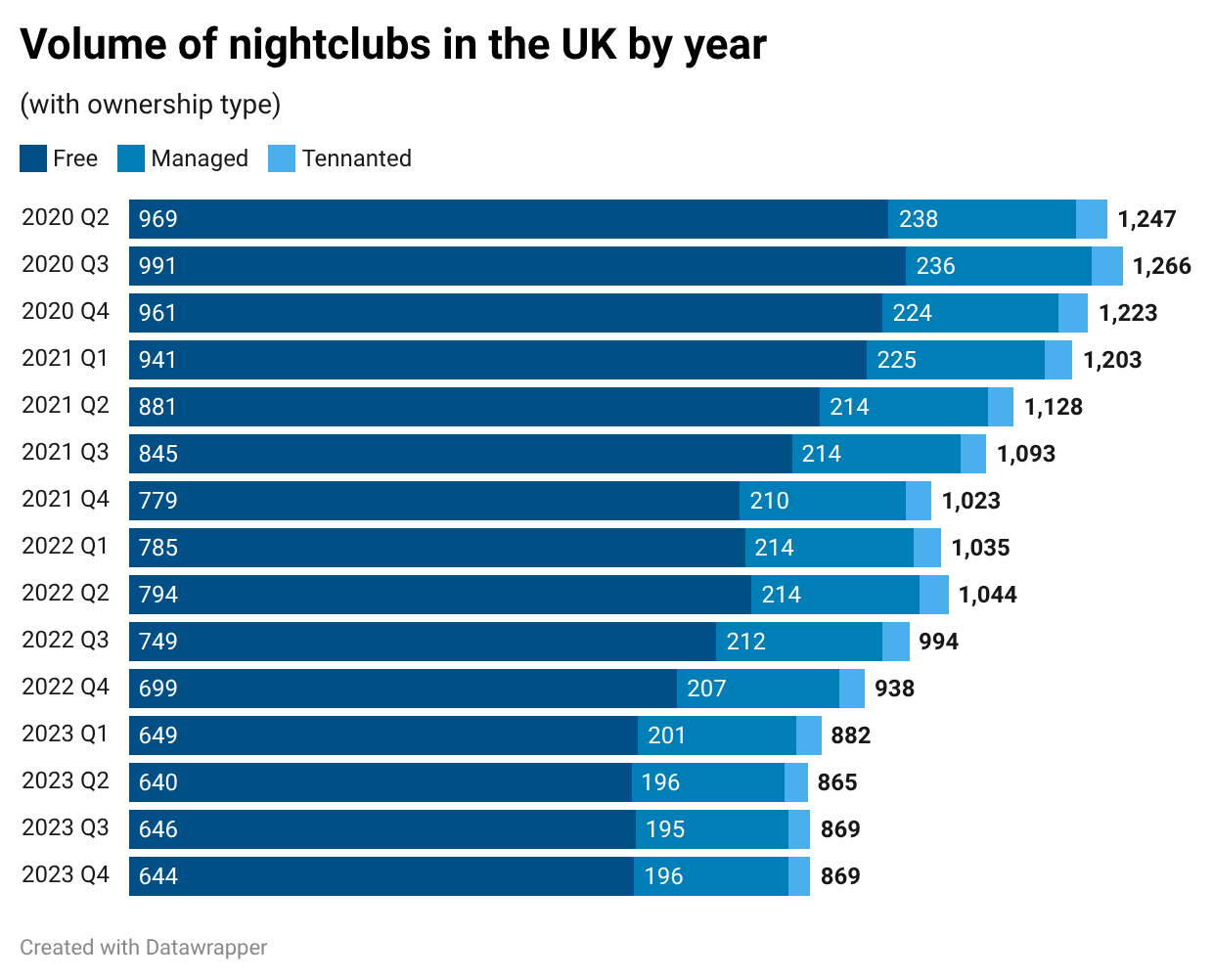
Those affected the worst were nightclubs operating independently ‘free’ from any ties to promotional or booking companies. Without any financial backing, these independent clubs start to fold with a loss of 33.95% from 2020 through to 2023. The smallest losses were for clubs with external management companies, only losing 17.65% of clubs with this system.
Nearly one-third of all UK clubs closed from the period 2020-2023. Is the strobe lighting being dimmed and the music turned off?
The nightlife scene is dying, not through lack of effort but because it’s being slowly bled dry. The NTIA believes that the last club in the UK will be shut by 31/12/2029.
Why is this?
The hospitality industry is still recovering from the long-term effects of the pandemic. With the whole world in lockdown, people weren’t going out, and venues closed as a result of this. However, the long-term repercussion is recovering from the debt. Clubs need money to book talent to attract customers. Without the capital to invest into booking, it’s hard to get feet through the door.
The most successful clubs in London, like Fabric and KOKO, have been able to stay open for the last two decades through bringing in consistent talent. Clubs struggling after the pandemic could not afford to continue to compete and, as a result, saw the biggest quarterly loss in 2022, with 56 clubs closing in between quarters 3 and 4 and another 56 into the first quarter of 2023.
Shortly after the pandemic came the cost of living crisis. When the nightlife scene was already down, the second wave came and washed it away. Clubs are now forced to raise their prices to match the rising running costs, raising the prices has pushed young people away, and keeping prices low runs the risk of losing money.
Clubs are stuck between a rock and a hard place.
People of an older generation are putting it down to young people not going out enough. However, most young people would love to go out as much as their parents did, but it’s simply not possible in this economy.
The cost of living has made going out an occasional luxury rather than a normal part of your social life. Costs have risen for clubs, and drink prices have risen with this, and it has become disproportionate to most young adults’ earnings.
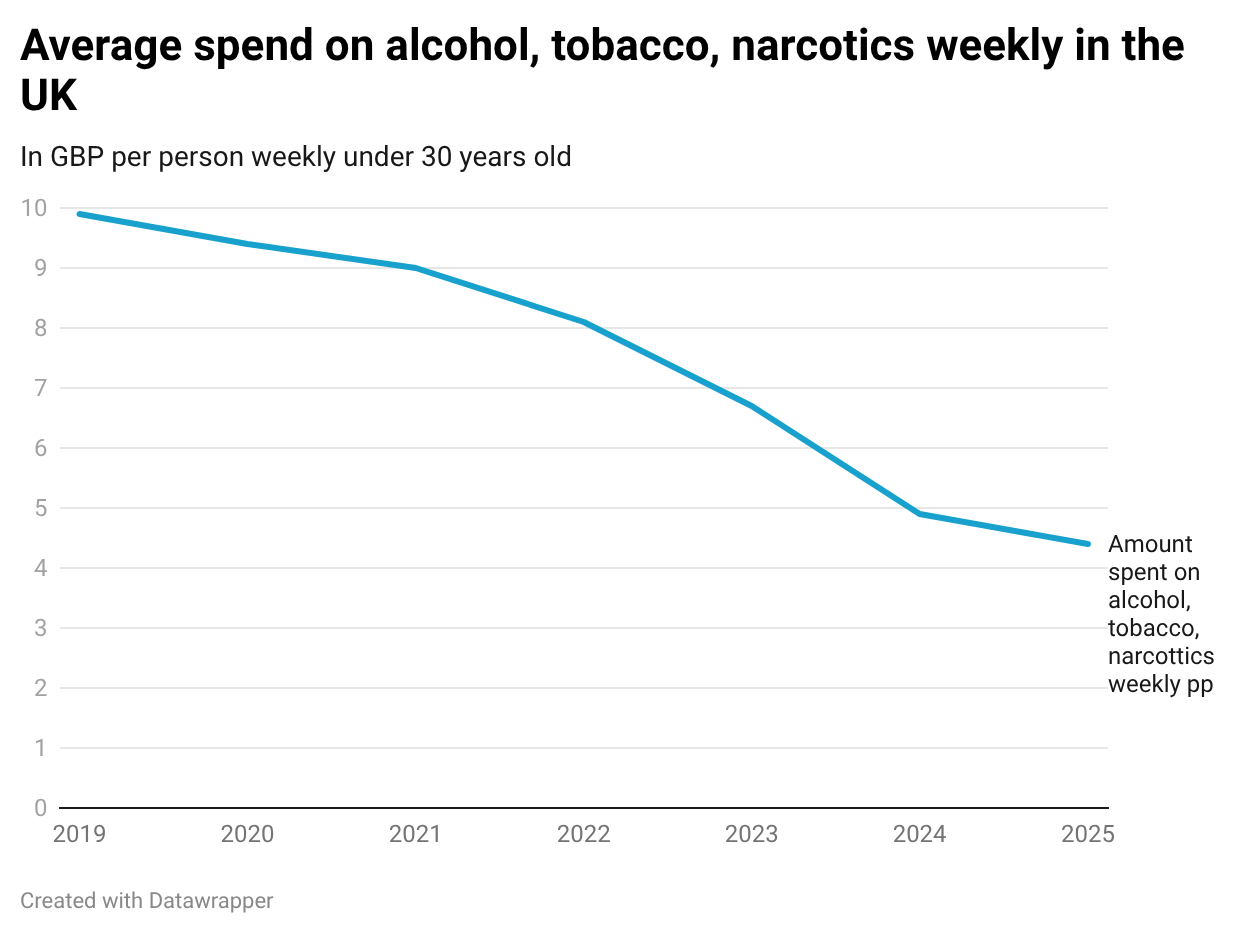
The steep rise in the cost of living has left young adults with little to no disposable income, and the amount people are spending on alcohol has reflected this. The amount people under 30 are spending on alcohol has cut in half in just 6 years.
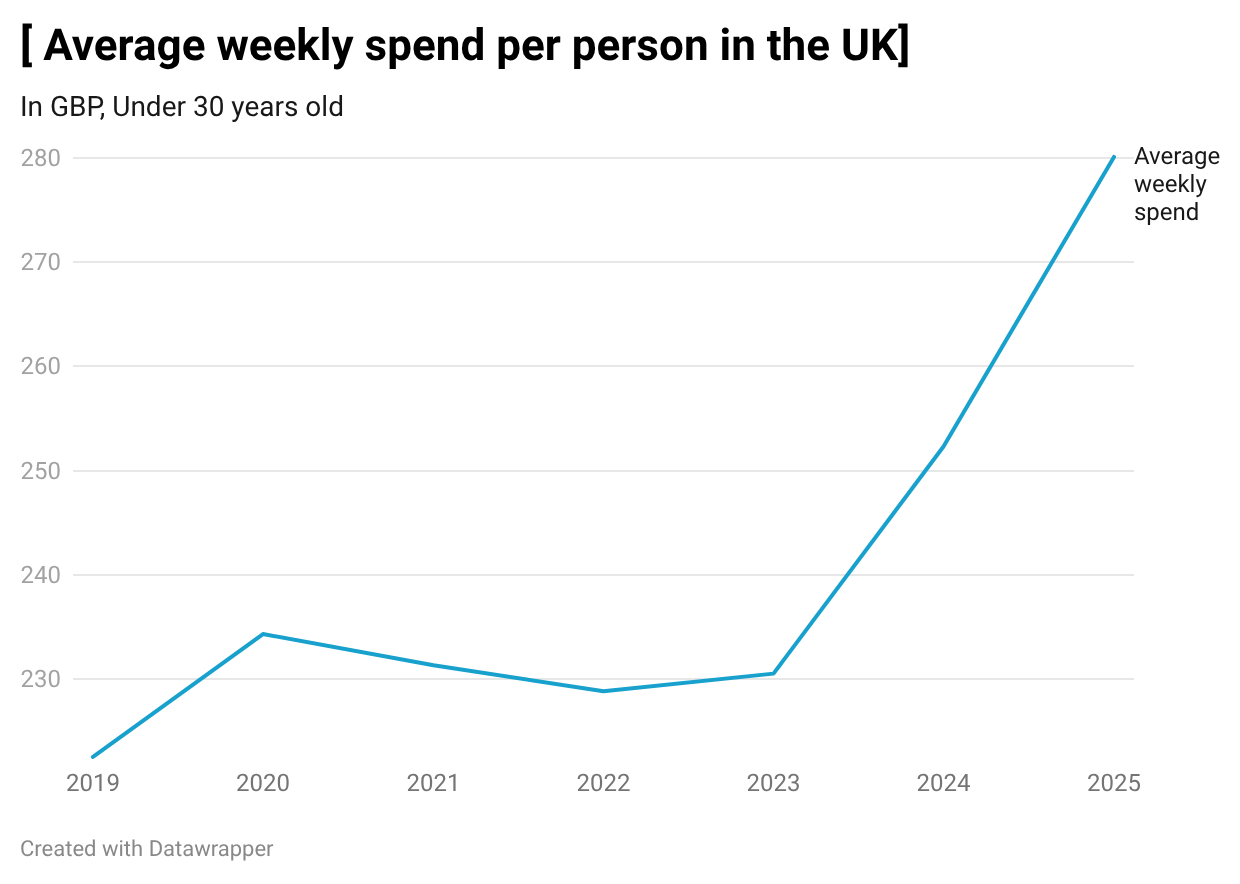
It’s no secret that the hospitality industry makes their money on drink sales. For years it’s held the largest margin, tickets cover the talent, and profit will come from the bar. With most young people buying just one drink, out of the profits are starting to dry up. Drink prices have also risen, with the average pint in London costing a staggering £4.52, according to the British Beer and Pub Association.
Along with the cost of living and recovering from the pandemic, the nightlife industry is one of the most underappreciated by the government. High VAT and licensing fees have added to the already mounting pressure.
Councils supporting residents in complaints against clubs have kept clubs from opening late, with most venues stuck with 11pm or 2am closing times. When the party ends in England, it’s only just getting started in Europe.
Amsterdam has taken one of the most modern approaches to the nightlife. ADE is an annual festival in the Dutch capital where parts of the city like bakeries, trams, rooftops and even cranes are turned into parties. A unique five-day party experience in the heart of the nation. This is what can happen when a government approaches nightlife with open minds. With the right infrastructure, it can be a benefit to the economy rather than just a nuisance to residents.
What can be done?
There have been some positive signs with some politicians pushing to support nightlife. Responding to moaning residents in Soho, London mayor Sadiq Khan took to X: “complaining about nightlife when you checks notes choose to live in Soho is like living in South Kensington and complaining about the museums.” However, with the recent budget setting out that the economy needs ‘breathing room’, it’s unlikely that there will be any support put in place any time soon.