



The Leaders of China, Russia and the United States have met for their first ever trilateral summit, to discuss matters involving Ukraine, nuclear arms control and the US-Iran conflict.
Held in Shenzhen, China, the talks consisted of 90 minutes of thorough discussion between the three major leaders. The historic meeting follows the annual APEC (Asia-Pacific Economic Cooperation) meeting, which saw a packed schedule of summits between various countries including Malaysia, Russia and South Korea.
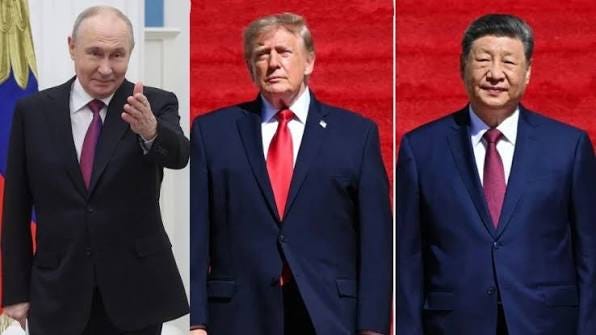
The summit has seen the beginning of a coherent relationship between the three leading countries within industry, technology, and military defence.
Relations between the US and Russia have been tumultuous in the past, with the US President Donald Trump stating that he was ‘disappointed’ with Putin’s response to the Ukraine conflict.
The summit has since seen a reformation in the connection between the two, with Trump referring to Putin as ‘a friend,’ potentially indicating a cooperation between the two in future, with conflicts impacting both countries’ trade and economy.
Why is this happening?
The summits are an annual integral method of negotiation between countries that may conflict on issues of trade, politics or warfare. Holding organised, closed-door summits allow for disputes and tensions to be aired, bringing them closer to agreements, such as the trade negotiation between the US and China, during last year’s APEC meetings.
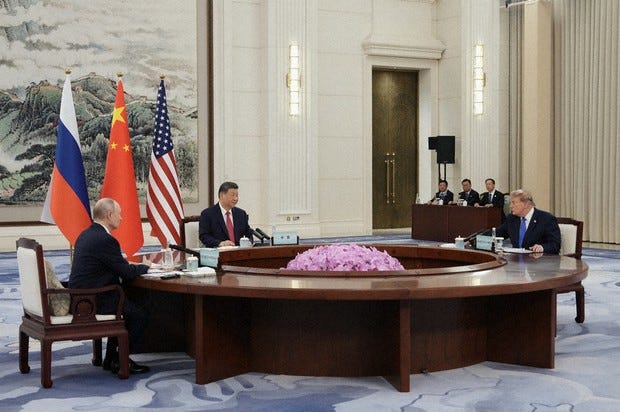
This summit is particularly important because it is the first ever summit amongst US President Donald Trump, Russian President Vladimir Putin and Chinese President Xi Jinping, bringing together the world’s two largest economies and three biggest nuclear powers amid major global conflicts.
The Russian President proposed discussing issues such as global and regional economics, food and energy security, as well as the resolution of regional conflicts, including the war in Ukraine. Officials have noted concerns amongst smaller nations and European allies over great powers shaping regional outcomes, with some comparing the optics to the 1945 Yalta conference.
Knowledge: The original Yalta conference included the leaders of the UK, US, and Soviet Union, that took place in the Crimean City, to discuss the post-war reorganisation of Europe.
During the meeting, Putin stated that the three countries share ‘joint responsibility’ for ‘maintaining international peace and security.’
What does this mean for students?
For many young people, the prospect of the world’s largest nuclear powers meeting behind closed doors feels both historic and unsettling.
The three leaders have pledged to support ‘stable energy flows,’ particularly in regards to the Ukraine and Iran wars, which have disrupted global fuel markets. The stability of energy and supply chains directly impact student living costs, from rent and heating to everyday goods.
Conversely, the optics of the summit, and Western sanctions tied to Russia’s war in Ukraine, keep academic ties heavily restricted, limiting exchange programme opportunities and joint research within these regions.
Further, opposing opinions on diverging artificial intelligence (AI) signifies a fragmented technological landscape, where data privacy, AI and academic guidelines will differ depending on where you study.
As one student at Oxford Brookes put it: ‘I’m interested in hearing what they have to say to each other about the role that they have to play on both a global and economic scale. ’
While another interviewee revealed: ‘I just can’t see them moving towards a major breakthrough. I think they’re all so unpredictable, and so I think reaching firm agreements will be difficult for them.’
The future of nuclear weapons
This morning, Trump referenced the three countries’ nuclear capabilities, saying that they are ‘uniquely positioned to discuss how to reduce the number of nuclear weapons on Earth.’
It is ‘vital’ that they cooperate to ‘combat the threat of nuclear proliferation in other countries around the world,’ he said, adding: ‘We’re not going to let Iran have a nuclear weapon.’
‘Putin and I hope the other side would like to see an end to that war.’
The joint statement from China, Russia and the US has revealed that the three leaders have agreed that ‘nuclear war cannot be won and must never be fought.’
Xi stated that nuclear weapons should be ‘comprehensively banned and completely destroyed,’ adhering to their agreements within strategic stability and international security.
Putin has since stated: ‘The discussion took place in a completely open atmosphere, which allowed us to understand one another better. Overall, it was very useful.’
On the discussions of Ukraine, he says Kyiv and Europe are not yet ready to make compromises to resolve the conflict.
News agency Ria Novosti also reports that Putin has expressed confidence that Trump seeks to resolve the Ukrainian conflict, and to restore relations between Russia and the United States.
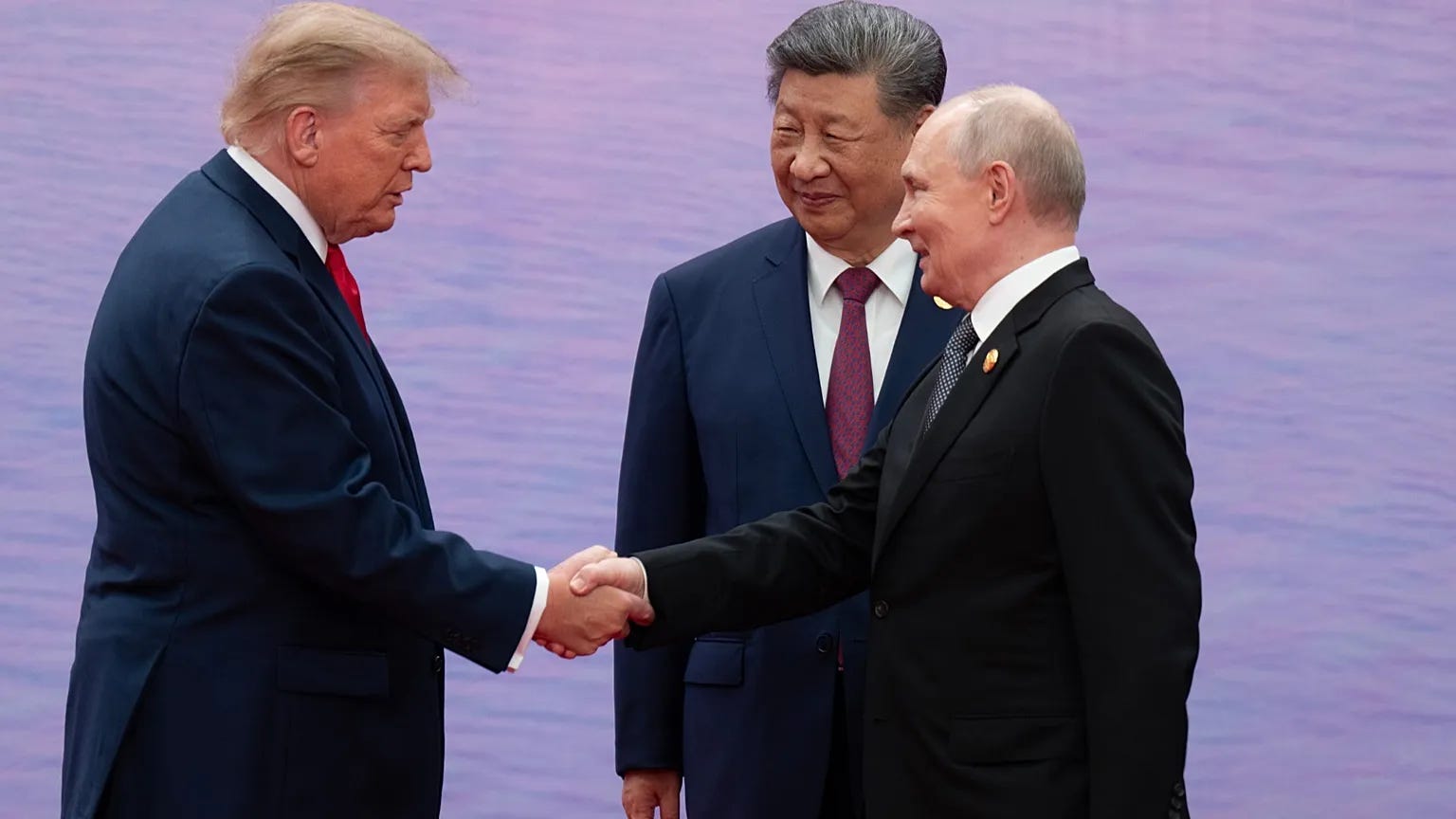
Ultimately, while the leaders have framed the Shenzhen talks as a step towards global stability, the long term impact on international research and diplomacy remains uncertain. As students at Oxford Brookes and other universities navigate an increasingly divided global landscape, all eyes remain on Shenzhen to see if dialogue can bridge the gap for years to come.