



International trips have always been a key priority for many UK citizens. However, recent statistics have shown that travel habits are changing significantly, with many Britons choosing to travel to Europe instead of flying further afield to long-haul destinations.
The Office for National Statistics (ONS) UK Estimates of Visits and Spending Abroad dataset has revealed that visits to Europe increased by 9.54% between Quarter 2 (April, May and June) of 2024 and Quarter 2 of 2025. Alongside this, travel to North America, a long-haul journey from the UK, has declined by 44.34%, as well as other countries outside of Europe, which decreased by approximately 14.67%. However, despite these changes, overall worldwide travel still increased by 2.09%, with holiday travel specifically rising by 17.2% from last year.
These figures show that Britons are not necessarily travelling less but are simply travelling differently. This shift towards shorter journeys, which often are more affordable, could be due to many reasons, such as rising travel costs, exchange rate fluctuations and the increasing financial pressure on UK households.
European travel has seen a strong influx in the number of visits between 2024 and 2025, in comparison to North America, which experienced the largest decline of any region in this dataset. Along with this, other long-haul destinations including Hong Kong, India, New Zealand, Jamaica and Brazil have also become less popular, indicating a clear overall movement away from long-distance travel, and a distinct change in travel behaviour.
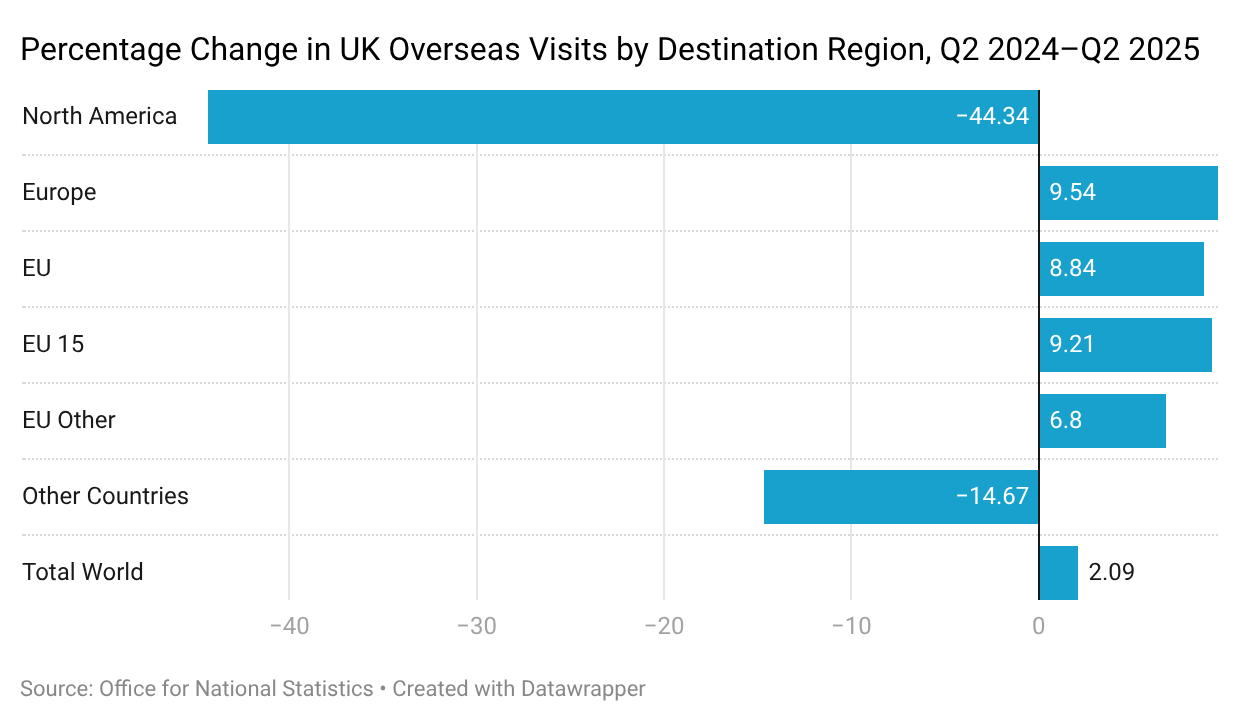
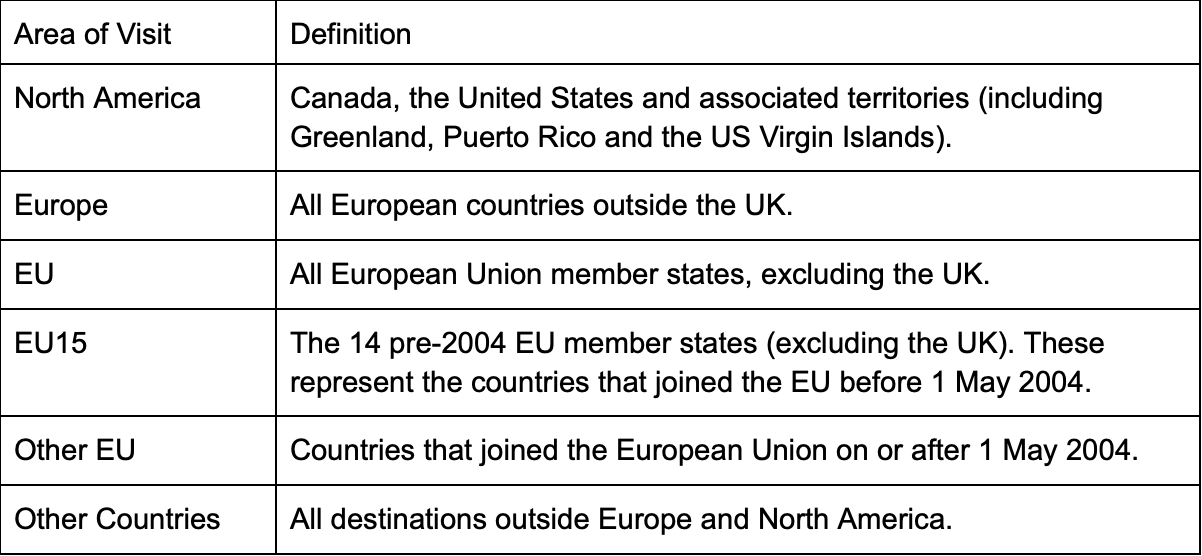
This graph indicates that proximity is a key influence in travel decisions. Europe and the other EU categories have all experienced an increase in visits for a range of purposes, including holiday travel, business trips, visits to family and friends, and for miscellaneous trips, while both long-haul categories (North America and Other Countries) have seen a percentage decrease. But why is this?
European countries offer shorter flight times, lower travel costs and greater flexibility. Long-haul destinations often require longer periods away from the purpose of the trip, due to longer flight times and more time-consuming processes at the airport, and are much more expensive. In addition, with holidays being the primary reason for travel, accounting for 49.01% of the total overseas visits across the world in 2025, travellers will want to choose destinations that offer them the best value for money as well as the least amount of effort to get there.
As previously mentioned, one of the biggest factors behind the pattern is the rising cost of long-haul travel.
Airlines across the world are continuing to face higher operating costs due to their increased fuel prices, labour costs and airport charges. The International Air Transport Association (IATA) has calculated that the weekly average jet fuel price has risen by 1.2% up to $192.44 per barrel of fuel, and is predicted to continue to rise each week. These expenses mean that airlines must charge higher prices to passengers to travel abroad in order to break even, often making the tickets unreasonably priced and unaffordable to some British holidaygoers.
In addition, there are fewer airlines that operate long-haul journeys, which reduces competition between flight options and limits the opportunities to find cheaper fares. The most popular airlines that dominate the transatlantic market are British Airways, Virgin Atlantic and Tui Airways, all of which offer the most long-haul flight options out of the UK per day. However, European flights are provided by many different budget airlines, including Jet2 Holidays, EasyJet, WizzAir and Ryanair, and tend to offer multiple flights each day, giving passengers the chance to compare prices and find low-cost flights that fit their budget.
On top of the increased ticket prices in long-haul travel, travellers also face additional costs before they even reach their destination. Airport parking, baggage fees, transport to airports and expensive food and drink can significantly increase the total cost of a holiday, particularly for large families with children. A parent of 3 children, who wished to remain anonymous, said airports have a ‘captive audience’, meaning food and drink retailers ‘can charge what they like’. Combined with travel insurance and different modes of transport to the airport, ‘families can expect to pay at least £500 more just getting there, back and having a basic meal at the airport.’
Travelling within North America has also become increasingly costly.
Accommodation prices have risen by 4.3% in the USA, according to the U.S. Bureau of Labour Statistics, which, added to the price of restaurant meals, attractions, transportation and shopping, means tourists are required to increase their travel budgets much more than what they would in Europe. A 26-year-old traveller who recently visited Canada for a three week road trip claimed that he paid ‘much more on food every day than he did on fuel’ as food is ‘much more expensive than in Europe’.
Currency exchange rates may also be a key influence on the decision to avoid travelling further across the world. The value of GBP against the US Dollar has fluctuated throughout 2026, with the highest value being $1.3858 in January and the lowest value being $1.3142 in June. The overall decrease of 1.8% in value by October weakened the pound, meaning tourists receive far fewer US dollars for each pound exchanged. This makes all recreational expenses within North America much more expensive, as travellers will get less for their money.
Furthermore, despite holiday travel increasing overall by 17.2%, many households are still reporting financial struggles and pressures, particularly with higher mortgage repayments, rising rents and energy bill costs. According to the ONS, 55% of adults in Great Britain reported an increase in their costs of living in August 2026, with 94% explaining that it was caused by the rising cost of food shopping. 29% of those who reported financial difficulties have reduced non-essential travel to save money, but there is still an indication that some adults are determined to take a holiday. Many travellers are reducing their travel costs by either taking one annual trip, a shorter trip or travelling to a nearby location, which could explain why European countries have benefited regardless of the wider economic challenges.
Finally, shorter flights to European destinations produce significantly lower carbon emissions than long-haul flights, which is becoming a key consideration in young travellers who have shown a growing interest in sustainable tourism and environmentally friendly travel. Particularly with the growing awareness of climate change, some are choosing to interrail across Europe instead of flying. Although sustainability alone is not the only reason for the increase in European travel, it may reinforce decisions that are already being considered due to financial pressures.
To conclude, the recent ONS travel statistics have shown a clear trend in the changing British travel habits. Holiday travel still remains a priority for many UK households, having already increased by 17.2% between 2024 and 2025, but the destinations they choose to travel to continues to change.
Higher flight prices, expensive exchange rates and rising household costs are key influences in the British public’s decisions to travel to European destinations instead of long-haul destinations to North America and beyond. Sustainability may also play a supporting role, especially for young travellers.
Overall, it is clear that Britons are making more calculated and realistic decisions about where and what they choose to spend their disposable income on, rather than giving up on international travel altogether. Europe offers a better balance between affordability, convenience and value, making it the destination of choice for an increasing number of UK travellers.