


GAME DAY
It’s a ritual.
On colder Saturday afternoons the jumpers are extra thick, but the football shirt will always take prime position above the surface of layers. Coordinated with jackets, scarfs and hats, preferably all flashing the club’s badge, swarms of fans will descend on their football stadium in time for the 3pm kick-off.
The football shirt is part of the ritual.
With the 2026 World Cup less than two months away, spanning across Canada, USA and Mexico, protests involving demonstrators blocking a highway for a make-shift football match have already arisen in Mexico City against the heavy spending for the tournament. Organisers, clad in Mexican football jerseys, are claiming the government is ignoring the ‘shortages of housing, water, transport and electricity’ in the country, according to Reuters Institute. The commercialisation of football has been a steady controversy over recent years by fans, and this demonstration marks a symbolic moment for football supporters, who are working to reclaim the sport’s social culture and identity, starting with the football shirt.
PRE-MATCH
Bus, train, car or by foot, coloured bodies grow increasingly dense on the approach to the football ground, joining in on chants and songs, meeting at pubs and swarming the club shop. These individual fans, spread out across a radius from the club, will converge as one solid wall in support of their eleven players for the next 90 minutes of play. A solid wall of colour that is provided by the football shirts they wear.
The piece of clothing has been an immutable part of football culture, although it has adapted quietly throughout the years. In the 19th century, players wore heavy leather boots and thick cotton shirts, with goalkeepers even wearing woolen turtlenecks to distinguish themselves from the players. In the 70s and 80s, retro v-neck collared jerseys and ever-so-short shorts became the trend, evolving into the 90s with boxy, oversized shirts consuming football attire.
Although changes have been minimal, football kits have always adapted to their eras. The now lightweight, breathable kits of the 21st century have also become functioning advertisements, generating huge amounts of money for clubs from sales and sponsorships. The global football merchandise market size was valued at 15.9 billion USD dollars in 2025, and is expected to grow to 17 billion in 2026. Even Reform UK has utilised the iconic, money-making garment and released a set of branded football shirts signed by Nigel Farage, with an RRP of £99.99, to promote their party ideals.
With annual redesigns of the heavily sponsor-clad shirt increasing sales for these clubs, continuous debates have formed over whether the football shirt has lost its social and cultural meaning for fans.
KICK OFF
However, supporter chants, cheers and claps as the players walk out and the whistle blows to confirm kick-off is vital in driving the passion and atmosphere for a game, and social media manager and merchandise developer for Oxford United Football Club, Lily Chiang, confirms the importance of the club’s fan culture in their work.
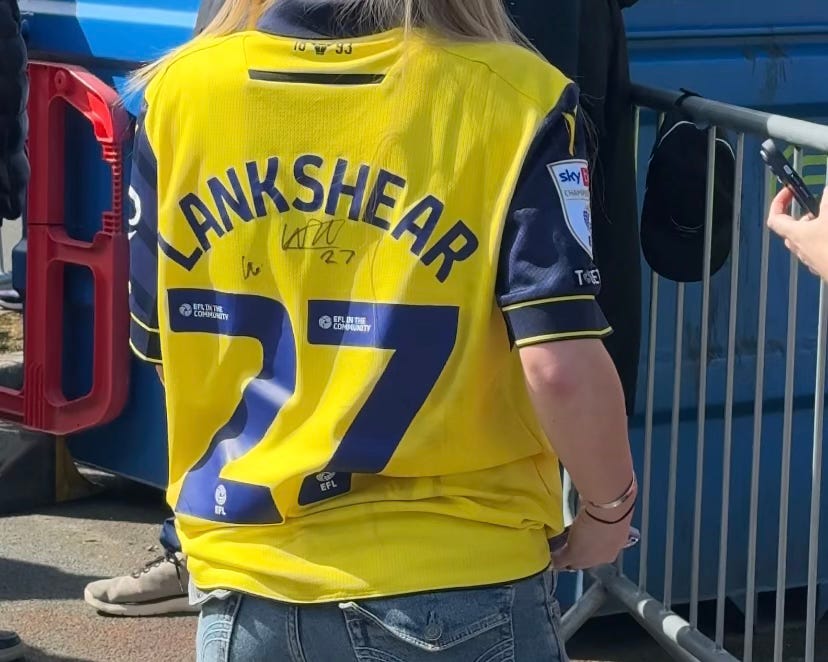
Chiang argues that “fan preferences is definitely part of the process” in shaping the clothing lines that the club releases.
“At the end of the day, they’re the ones that will wear and buy the kit, so their feedback definitely plays a role in shaping the design. I think by combining the club’s identity and its history and what fans love, I think that all together we aim to create shirts that are both modern and also true to the club.”
Chiang also noted how the club has introduced casual-wear into their merchandise line to suit the type of clothing that fans enjoy.
“I would say that some of our most impactful merchandise lines have been our casual ones, to be honest. I think it’s particularly ranges like, you know, Manor Leisure and The Icons Collection. I think their success largely comes from their everyday wearability. You know, it’s not just for match days, but pieces fans can incorporate into their day-to-day lives, really.”
It becomes clear that the football shirt has become a form of identity for supporters, to demonstrate their background, their pride and community. Chiang echoes this, “I think making the club part of their lifestyle is through embedding the club’s identity into everyday fashion. Then it’s sort of allowing the supporters to express their connection in ways that they feel that’s both modern and still culturally relevant.”
In recent years, the football shirt has continued to demonstrate its relevance as a form of social identity and justice, with the No Room For Racism sleeve badges present on the Premier League’s teams kits ever since the 2020-21 season, involving every individual into the game.
POST- MATCH
As crowds disperse from the stadium, conversing over the tragedies or successes of the game they just witnessed, it goes without saying that they will return next week. Football culture and support is a symbol of constancy and durability, and fans continue to exemplify this identity through their football clothing.
Retro shirts have grown in popularity in recent years, with online sites like Classic Football Shirts facilitating the surge and selling more than 300,000 jerseys annually. These second-hand jerseys loved by football supporters perhaps represent a return to the retro values of the game.
Fans are reclaiming the traditional, nostalgic spirit of football, prior commercialisation and political interference, and the Mexico protests against the FIFA World Cup emulate this perfectly, rescuing the social aspect of the game with the demonstrators playing an intimate make-shift match in the streets of the city.

Charlton Athletic fan photographer Rhea Spencer Newell agrees that “the feeling of nostalgia definitely plays a huge part in football culture, especially for older fans who reminisce on the ‘good old days’.”
“Whilst consumerism is still very much part of the football merchandise industry, fans will always find a way to express themselves through their clothes, and their love for their club is always present in what they wear.”
Fans will long be wearing the shirt for years to come, proudly demonstrating their identity, culture and social values.