


I recently received my first ever Dinked Edition of a record (Nieve Ella’s Romance is a Desert) and since I first started building my record collection, getting indies and exclusives where I can, I was intrigued as to how these contributed to sales of records.
Having picked up on trends of people collecting special editions or racing to be first on the website to get them after social media announcements I assumed that special editions were becoming more popular, whether that is a ploy for reselling or artists to make more sales, or purely just for fans interested in having limited copies of their favourite records.
Personally, I have been growing my record collection since about 2020 when I first started becoming really invested in what I was listening to and integrating myself into fan bases. I wanted to use vinyl so that it felt like I owned the music I related to and cared about, it was something I could physically have instead of feeling conceptual. For me, I think this aligns a lot with the coronavirus pandemic and people wanting more control in an uncertain time joined with a need for excitement, in the form of new belongings in this case.
Vinyl as a percentage of physical album sales by year.
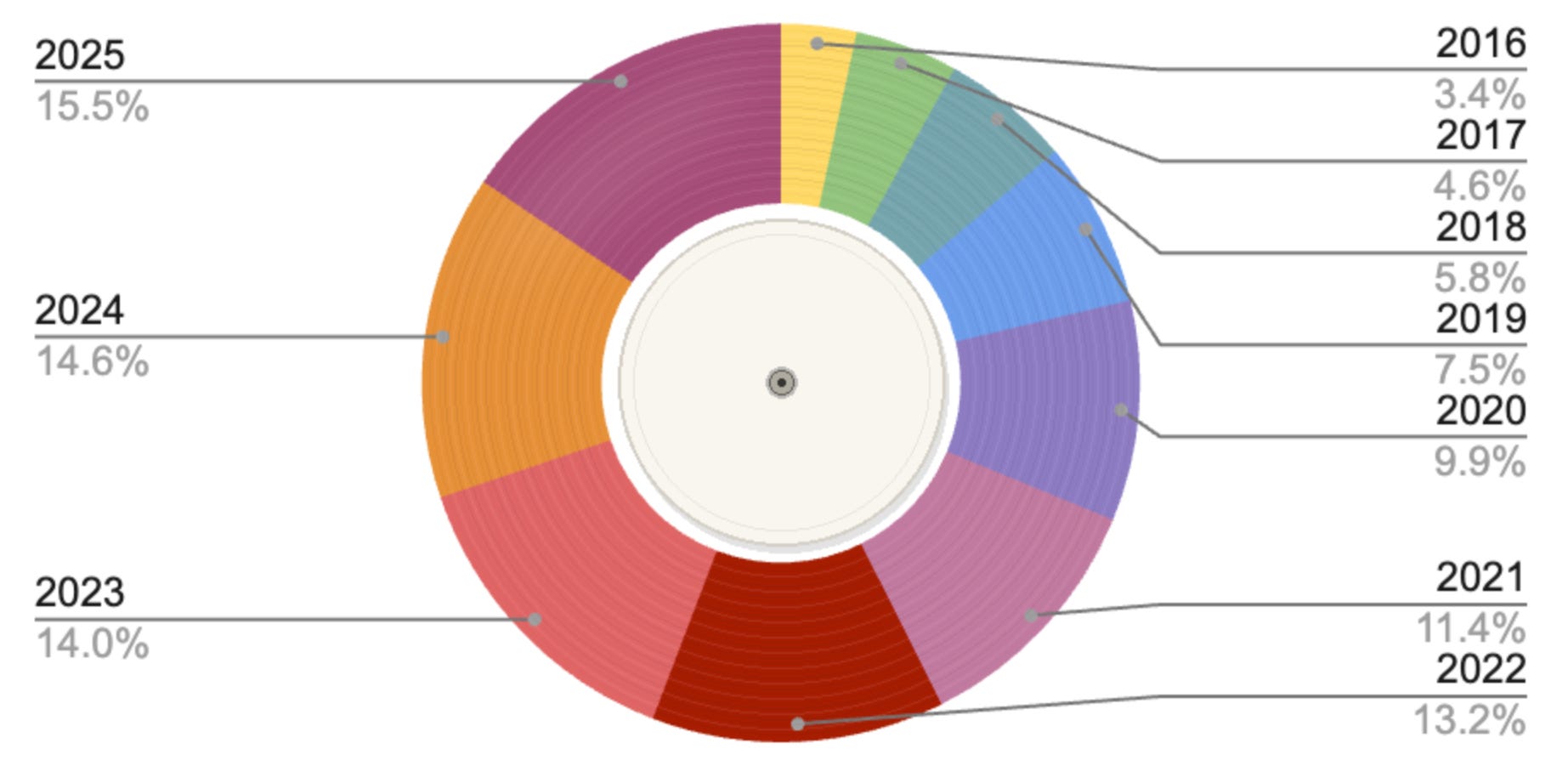
As seen in the graph above, vinyl sales have been undoubtedly increasing for the last ten years, whether this is a testament to consumerism or increasing passion for music I do not know. However, data from the Entertainment retail association (ERA) shows that the value of physical music has also been increasing year on year, potentially highlighting an increased interest in the products, reaching a wider audience and more people investing in physical media.
An article from Forbes highlights Gen-Z as ‘bringing back physical media’. One of the explanations for this is the concept that physical media allows individuals autonomy. It allows consumers to choose one album, in this case, and listen to it in its entirety without the distraction of streaming adverts or distraction of playlists or the urge to doomscroll instead of actually choosing a specific piece of media to consume. In my opinion, this is entirely fitting. A primary reason for owning vinyl for me, is the ability to focus on one album and listen to it the entire way through as intended by the artist who created it- it is an art form at the end of the day and deserves to be appreciated in the format it was created in.
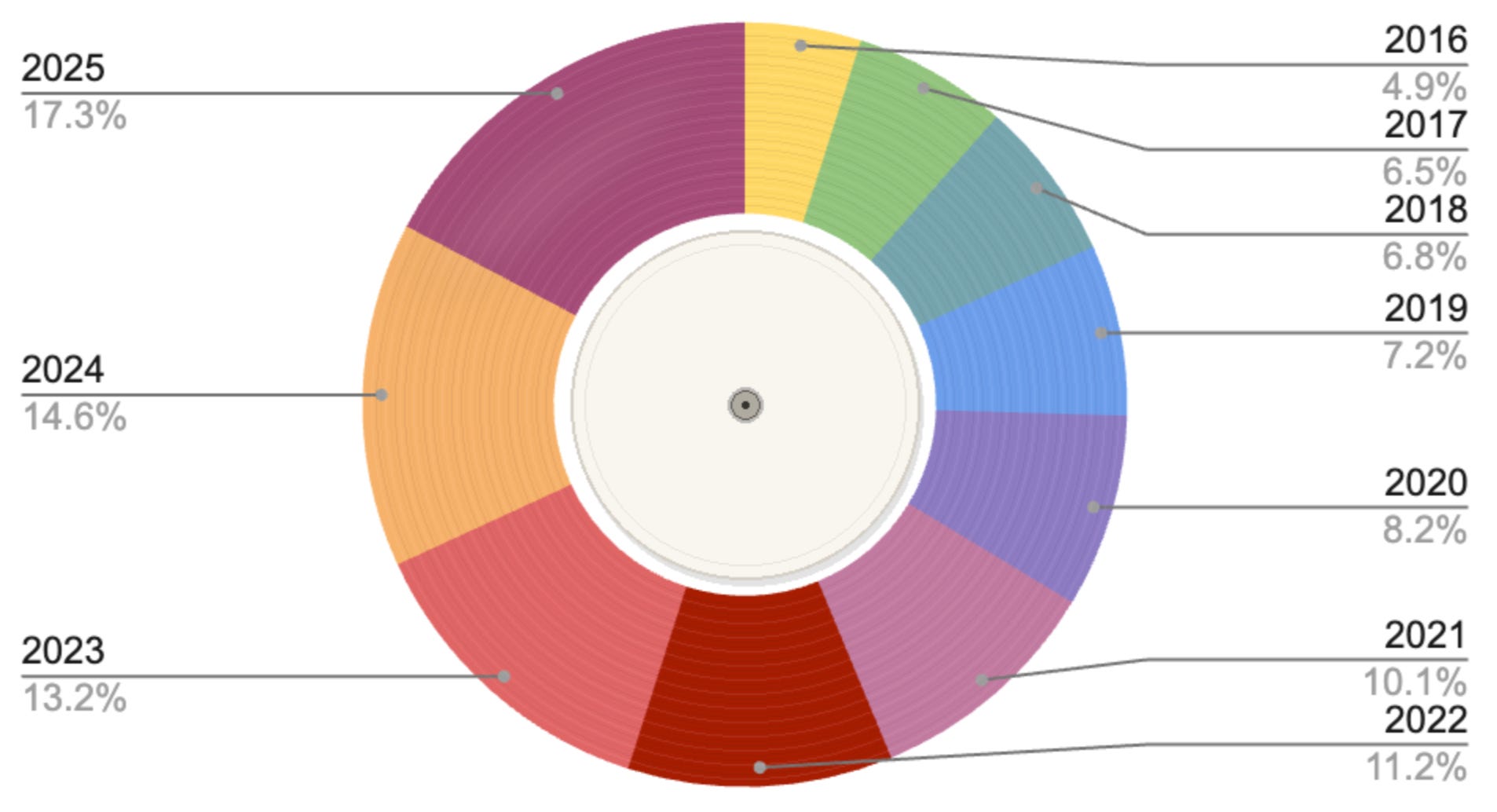
This theory slots in line with the increasing market value of physical music rising over time, with its market share having over quadrupled in the last ten years. As social media and streaming platforms continue to consume our time, people are grasping for their own time and decision making back, hence a rise in the consumption of physical media.
Market value of vinyl in physical music sales by year.
As people begin to enter the world of vinyl and collecting, it is interesting to look at how special and limited editions become more popular. Experiencing this first-hand and having spoken to industry professionals, there is a pattern when people start investing in their collections that they start to seek out limited editions of records that they are looking to purchase. It provides that bit of extra excitement.
Speaking to Carl, manager of independent record store Truck on Oxford’s infamous Cowley Road, he agrees with the importance of vinyl being its sentimental value. The notion of physically making space in your home for something that you truly adore is unbeatable, and that is exactly what records do. Let alone those that are special not only to an individual personally, but because they are either limited or one of a kind. These albums being harder to purchase bring a new element to both their emotional and financial value - an integral feature to a collector.
Percentage of vinyl sold as specialist units by year.
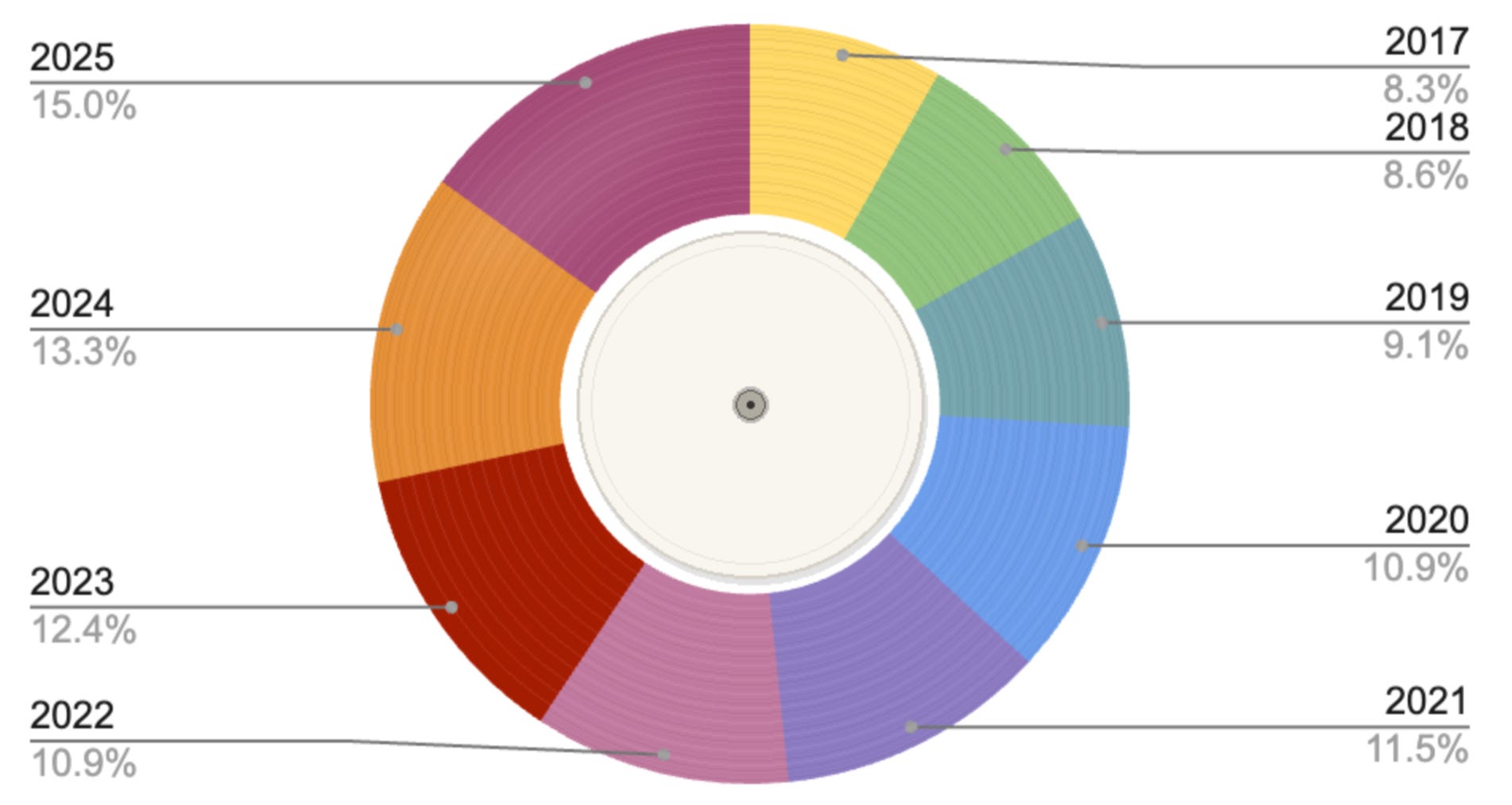
Specialist units include those sold as limited edition runs, or ones pressed onto different colour vinyls separate from the standard pressing. As a big vinyl nerd and collector I personally love collecting these. They are novelties to my collections and to many others.
Blood Records and Dinked Records were both founded in 2018 and have become some of the most popular producers of these kinds of records, releasing limited runs of albums upon their release. They are often hard to come by but are worth the internet battle, the beauty of the records are often intertwined with the artists’ own vision for the record and are subsequently more important to fans. I could talk all day about my favourite records in my collection, where I got them, whether they’re signed or limited editions, and the list goes on.
Record collecting, as with many other collectables, is not just a hobby but a passion. They are more than just physical copies of music, they often mean a lot more to the people buying and keeping them.
A part of this is the experience of purchasing them. Records are being increasingly bought from independent shops as this provides a more nurturing and memorable experience. Carl also told me about his experience working in a record store and witnessing this every day. These spaces are made for people who are passionate about music, they provide community spaces and further chances to connect with the things you are interested in.
For example, one of the latest editions to my collection is Fontaines D.C’s latest album Dopamine Chamber. I was lucky enough to have been able to pre-order the album in addition to attending Truck’s listening party for the album, where I got to hear the album a week before it’s official release (and I got lots of goodies including a branded Fontaines tote bag which I now take everywhere). This whole experience is now tied to my record, increasing its value to me personally and reflecting the importance of the atmosphere that records are purchased in.
Percentage of vinyl units sold from independent stores by year.
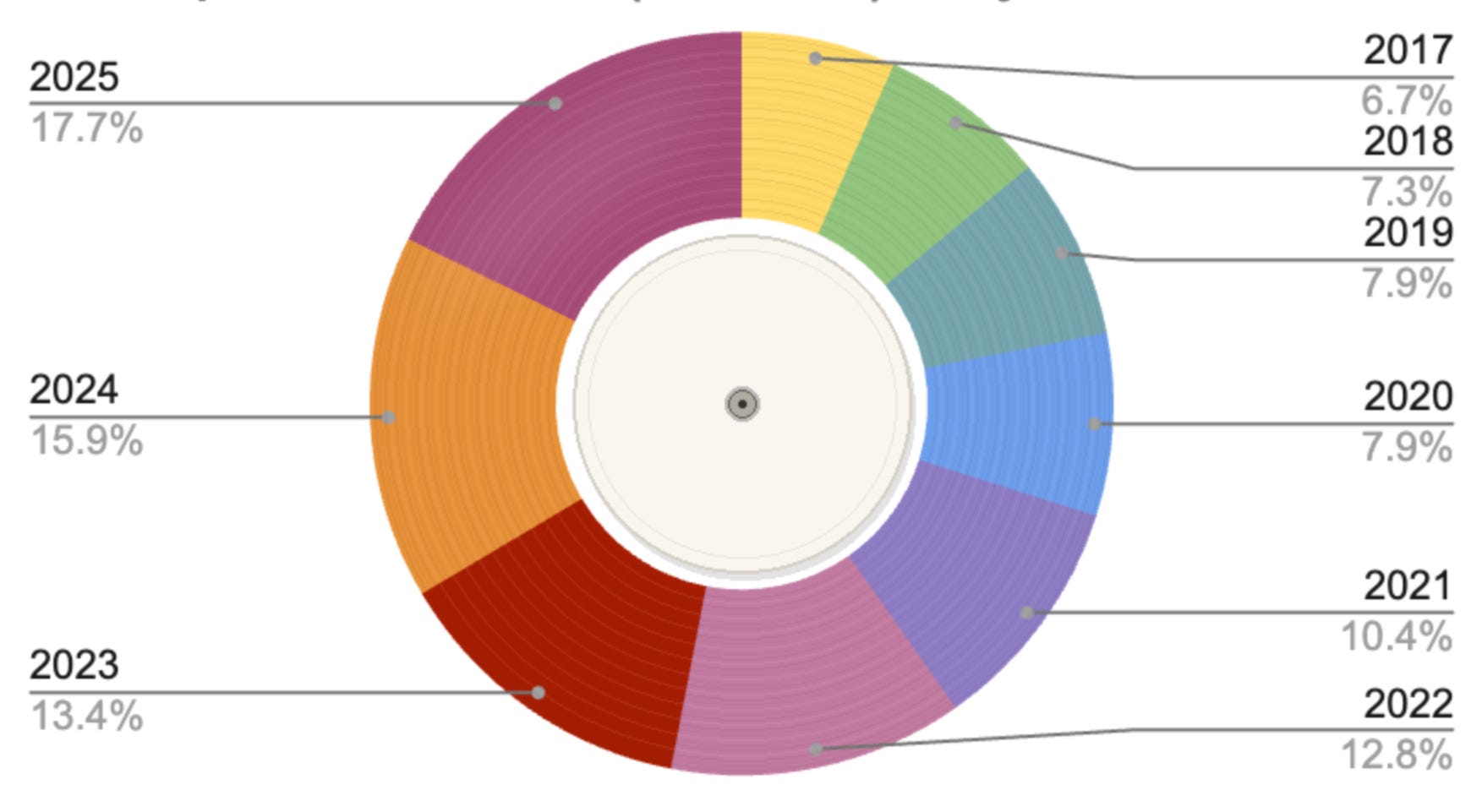
Similarly to most other vinyl statistics, independent units of vinyl being sold are also increasing year on year. This reinforces the testament that buying independent and supporting artists is becoming ever more important to consumers, in line with the original idea that buying vinyl is a way to move away from mainstream platforms and companies.
Whilst statistics of vinyl sales increasing as a whole indicates growing popularity of people purchasing records it is important to compare this wider figure to where editions are sold and the market values. Records sold in independent stores have slightly higher markups than those purchased from Amazon for example.
Large corporations can afford to have minimal mark up prices on their items due to the mass volume of products that they sell. Their profit is spread over a wider variety of products and distribution networks. In comparison, independent record shops need to deploy higher mark ups on their products as these are the only vessels of sales, so need a higher profit margin in order to maintain stability.
So, the increase in purchases from independent stores is a very positive change as it mirrors changing attitudes of record collectors as a whole. People are thinking about where they buy from, rather than just convenience and slightly lower prices. It shows the consideration for where people buy their records from and in turn, the value they attribute to their collections.
Remember, the value is not just what the record is physically worth, but what it means to the person who bought it.