



(Image by Stephen Pusey from The Brixton Society)
Former UK Prime Minister Rishi Sunak once stated that “this United Kingdom is also the most successful multi-ethnic democracy on earth.”
Was he right?
And if so, how did we get here?
And where are we going?
Census data, such as the Office for National Statistics (ONS) have been providing us with rich sources of data for decades, and now it’s being used to study the generations of people who were born in England and Wales, and people who have migrated to the country in search for a better quality of life.
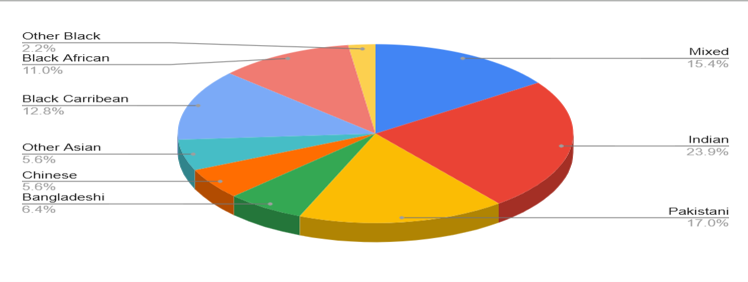
Source: 2001 census commissioned table with Google Spreadsheet
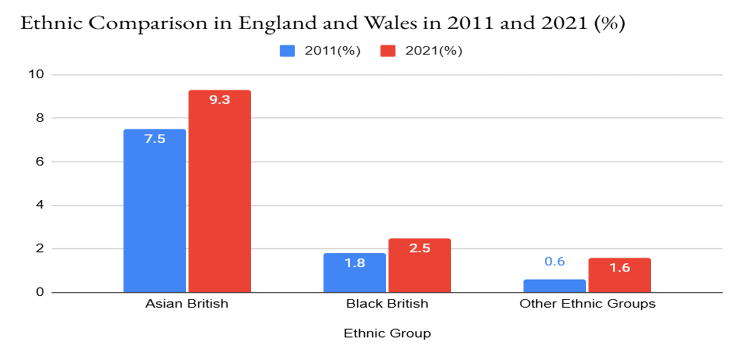
Source: A statistical look at London’s ethnic communities in 2024 with Google Spreadsheet
In the 2001 census provided by the ONS, 4.4% of the population identified as Asian, with Indian, Pakistani and Bangladeshi making up the majority figure. By 2021, this number had increased by almost 5%, reflecting the growing number of migrants as well as British-born generations.
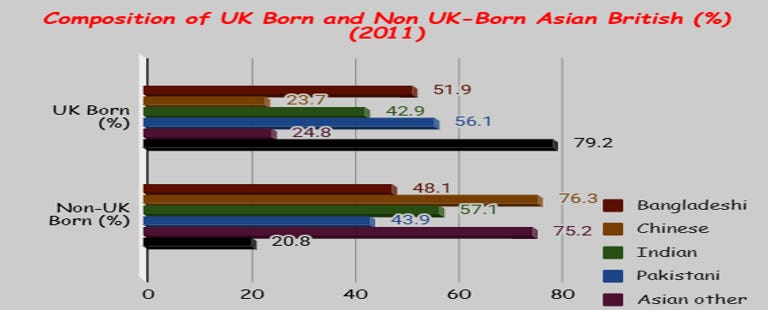
Source: People born outside the UK with Google Spreadsheet
The dominating presence of southern Asian identifying Brits dates back to post-war migration and immigration policies.
The British Nationality Act 1948 allowed citizens from any British colony to legally live and work in the UK which attracted mostly male citizens from India, Pakistan and Bangladesh, which was then referred to as East Pakistan until 1971, into working in textile, construction and public transport jobs.
It was the 1962 Commonwealth Immigrants Act that allowed the wives and dependent children from both Pakistan and Bangladesh to reunite with their husbands and fathers in the UK, explaining the strong presence of UK born British Indian, Pakistani, Bangladeshi and mixed White/Asian individuals today.
Since their mass arrival during the 1960’s, an undoubtable everlasting mark has been left on modern British culture. This is indefinitely visible in food, with predominately Indian cuisines, and Pakistani and Bangladeshi curry houses adapting to British identity across the country.
In 2001, former Foreign Secretary Robin Cook crowned the Indian delicacy, chicken tikka masala as “a true national British dish”. His speech acknowledged how migration can construct new patterns of national identity rather than forming separate traditions to meet certain cultural “standards” to an already existing society.
These numbers also reflect cultural and religious traditions connected with Islam, Hinduism, Sikhism, Buddhism and other faiths celebrated in the public hemisphere, with the expansion of mosques and temples across the nation.
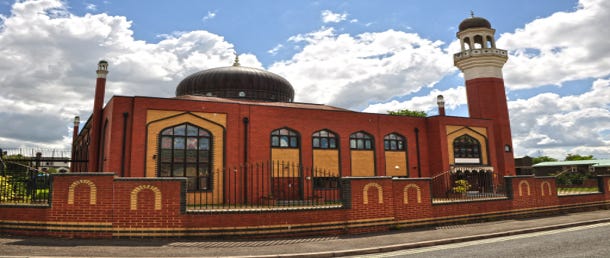
A mosque based on Manzil Way in Oxford.
Demographic statistics have also helped depict the state of education, income and employment, health and family households as long as the research is carried out with careful consideration of different backgrounds of certain individuals rather than stereotyping the experiences of certain ethnic groups.
According to statistics found from GOV.UK, around 1.4 million people of Indian heritage lived in the UK in 2011.
The census confirmed that less Indian British households were made up of lone parents with dependent children and more married couples than that of White British households.
British Indian pupils also achieve higher than White British pupils in education before University, such as Primary education, GCSE’s and A-Levels, and also earn higher income rates of £34,700 a year or more compared to White British workers.
These figures alone establish that more Indian British pupils have a higher chance of succeeding in education compared to White British pupils making it more likely for these pupils to find themselves in high income employment and therefore provided with the opportunity to fund for a stronger and larger family unit compared to White British families, resulting in an increase of Indian British citizens in the UK due to higher birth rates in their more comfortable and affordable family networks.

Commuters on the London Underground (AFP)
The false representation of ethnic groups has also remained relevant with the term “Asian British” or “British Asian” ranging from multiple nationalities, religions, cultures and migratory backgrounds. ONS Census analysis of ethnicity and religion of 2011 recorded that over half of Kenyans, Tanzanians and Ugandans, and over a quarter of Iranian migrants born in their respective nations also identified as Asian.
East African identifying Asians trace back to descendants who had migrated from the Indian subcontinent to East Africa throughout the British colonial administration before settling in the UK.
In response, Asian identity in the UK should not primarily be identified through the direct migration of over-represented Asian citizens in the UK such as Indians, Pakistanis, Bangladeshis or Chinese, however, should also acknowledge ancestry that extends across East Africa and the Middle East.
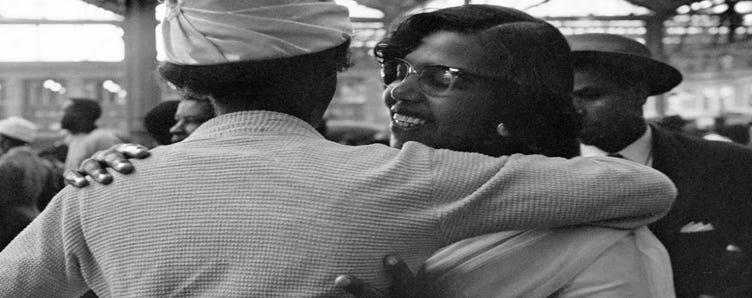
(Image by Howard Grey on BBC)
Britain’s Black population has participated in an incredible growth between 2001 and 2021, with the percentage of British citizens identifying with a Black ethnic group in England and Wales increasing from 2% to 4%.
This is quite a substantial growth considering that the percentage of people of Black Caribbean heritage has stayed the same throughout those twenty years and that the Family Reference Persons (FRPs) who identified under the Black ethnic group proved to have the highest proportion of lone-parent households, estimating up to 51%.
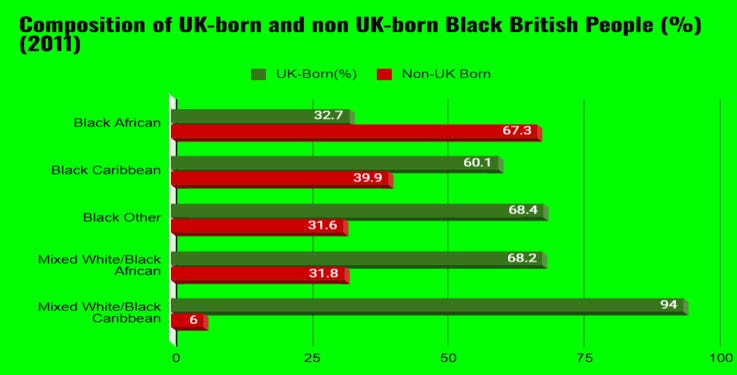
Source: People born outside the UK with Google Spreadsheet
Judging from the statistics above of the percentage of Black British individuals in 2021 and 2001, the clear factor towards Black British growth points towards the identification of British Black African people, making up over half of the Black British population.
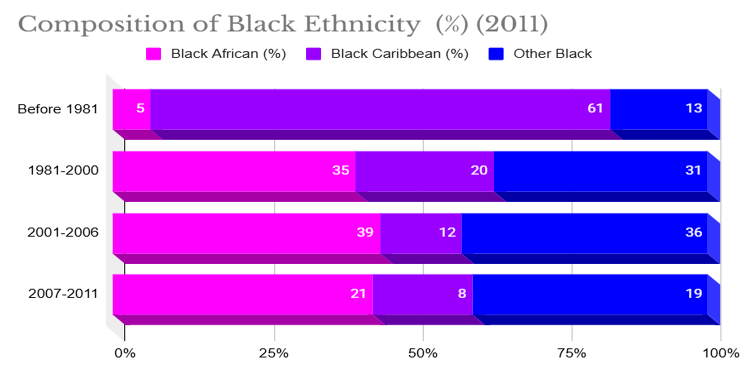
Source: Ethnicity and religion of the non-UK born population in England and Wales with Google Spreadsheet
The Census reveals that the number of non-UK born British Black Africans who arrived throughout 1981 to 2006 almost triples the number of British Black Caribbeans.
The majority of non-UK born British Black Caribbeans arrived in England and Wales before 1981, associating with the mass arrival of the Windrush generation after 1948.
According to Tim Stokes on BBC News, 500 out of 1,027 passengers who disembarked from the MV Empire Windrush at Tilbury Docks were Caribbean migrants.
The migration witnessed Caribbean men and women becoming responsible for the contribution of rebuilding the country after the Second World War, working in construction, public transport and health practicing jobs, including the newly founded NHS.
Since then, Black Caribbean identity has embodied British culture. For example, Claudia Jones’s carnival in 1959 laid the blueprint for the yearly organised Notting Hill Carnival, celebrating Caribbean culture from music such as reggae, jungle and grime, food such as jerk chicken and curry goat, and language.
The early migration has allowed Black Caribbean communities to settle and gradually construct multigenerational family units, explaining the 94% of mixed White and Black Caribbeans being born in the UK compared to the 68.2% mixed White and Black Africans, identifying the rapid increase and acceptance of multiracial and multicultural relationships.
These statistics mirror how migration steadily transforms national identity across generations.
It is important to confirm that the percentage performance of particular ethnic groups on a census form should not self-label an individual within that group as any member who identifies with a certain group can suffer setbacks with migration, discrimination, adoption and belonging differently to another who share their identity.
Modern Britain over the past century has become a nation built by migration. By understanding the history behind the data, we can understand what British identity means to all of us who are sharing this small land together.