


A student city like Oxford is always in the dreams of students afar. Though it is a dream for many with pubs and parties all over the year, why do students still feel lonely?
Though sometimes people grow out of their shell to face the real world outside, it is not as easy as it seems to be. The city that feels physically crowded. Yet, there is a specific kind of isolation that only happens in a crowd. A feeling of being surrounded by thousands of people while realising that none of them actually see you.
The “Nicer Outfit”
When a student moves into a new place looking forward to new experiences, they are required to make a performance along as well. Thinking of it, the best coined name could be a “nicer outfit”– a rehearsed version of ourselves that we put on every morning. We dress up our exhaustion as an “intellectual rigour” and isolation as “independence.”

“It can increase the loneliness inside”, says Ms. Gisela Lockie, an Integrative Psychotherapist (UKAHPP registered) and a specialist counselor with many years of experience.
“Because you’re no longer in contact with how you’re feeling inside… it creates a sense of ‘false self’ rather than growing your genuine self.” According to Ms. Lockie, maintaining a facade isn’t just tiring – it’s a barrier to the very thing that cures loneliness: connection.
“It would affect your ability, maybe, to make friends,” she explains, “because you’re longing so much to be where you’re not.”
The so-called “Best Years”
Part of the problem is the cultural script we are handed the moment we receive our offer letters. University is marketed as the peak of our social lives – a nonstop carousel of lifelong friendships and transformative experiences.

“There is a stereotype about what one should feel at university,” Ms. Lockie notes. “It’s really hyped up to be the biggest party of your life…but actually it isn’t. For some people, it’s a struggle to be on your own or away from your family.”
When reality fails to meet the hype, students often internalise the gap as a personal failure. If everyone else seems to be thriving the “buzz” of the city, we assume there must be something wrong with us.
The fear of displacement
For those who have travelled across oceans to be here, the loneliness is often compounded by a loss of “history.”
We start everything in a hustle or maybe with very precise planning. But, it does change. I read an online comment that said, “If you’re planning to move away, be prepared for the worst, for nobody will truly be there.” Though it sounds scary, it is the reality. We may find a sense of belonging somewhere, but the feeling of emptiness remains.
Ms. Lockie moved from Scotland to England as a student, recalls how even small sensory shifts – the sound of a specific accent or the smell of a familiar food – can trigger a profound sense of being “out of place.”
“You want to be put in a place where you feel comfortable, where you know you have a history.” She says, “You’ve got none of that if you’re across the other side of the world. I mean, that’s a big, big deal.”
If age could solve everything, was it easy for the older?
Ajish Antony, a mature international student with a wife and child back home, describes his experience as a quiet disconnection rather than visible isolation. “It feels like being present in a place but not fully belonging to it,” he says.
His days are structured, with lectures, assignments and routines, but the absence of shared moments always linger. “There’s no one to share small things with. Even simple things like cooking or walking feel quieter than they should.”
For him, distance is not just physical. It reshapes identity. As a husband and father, being away creates what he calls a sense of “incompleteness,” which intensifies during moments that would normally be shared, such as family events or even a video call where change becomes visible in real time.
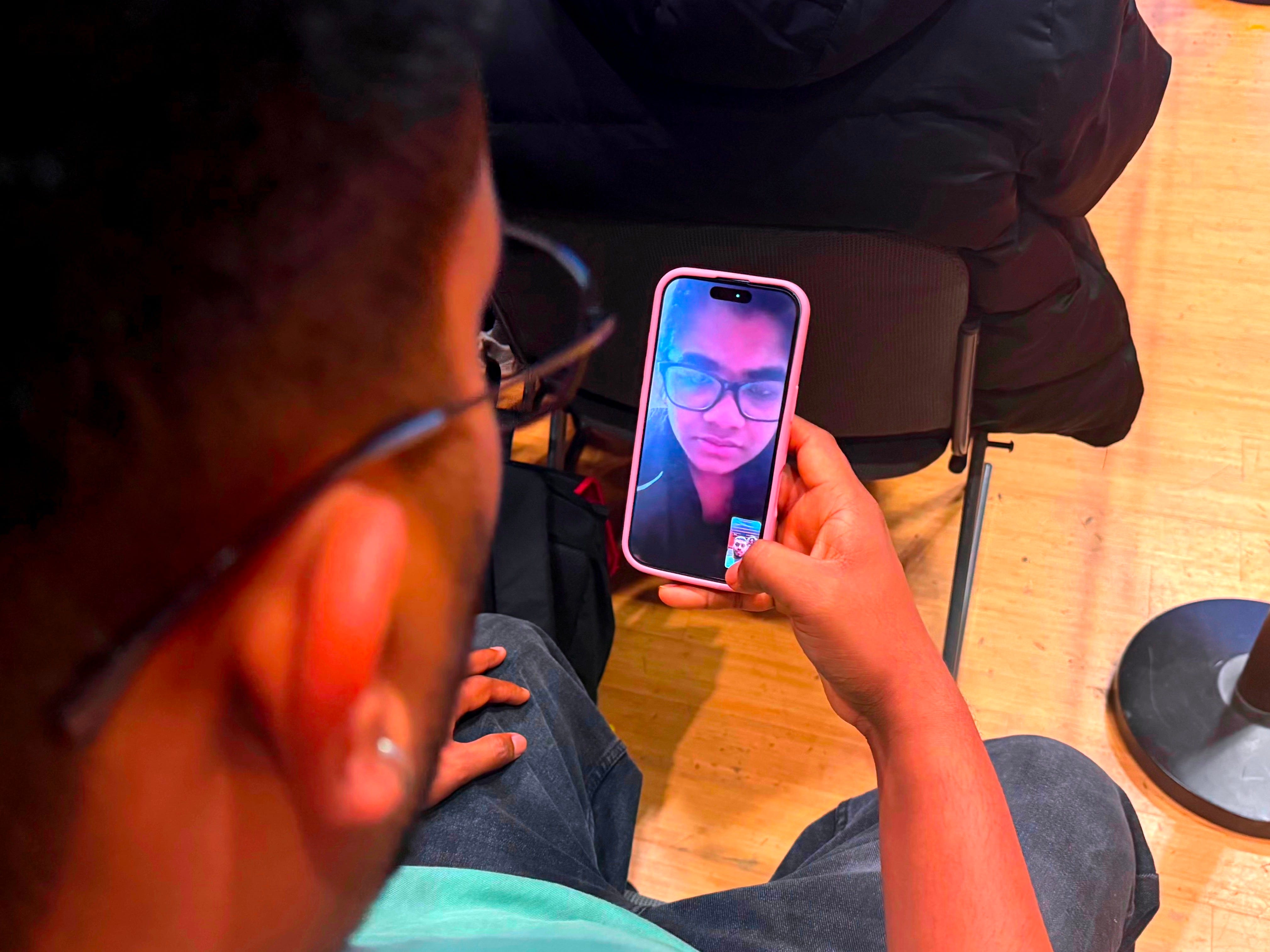
Despite this, coping becomes deliberate. Regular calls home, staying engaged with studies and maintaining routine offer some stability. But the gap remains.
“It’s like standing in a crowded train station,” he says, “watching everyone move while you stand still, part of the scene, yet separate from it.”
It is not a “Sin”
If there is a takeaway from the clinical perspective. It is that loneliness is a biological signal, not a character flaw. It is an experience that we are meant to learn how to navigate, bit by bit, though it often throws us into the deep end without a life jacket.
“It’s okay to feel lonely,” Ms. Lockie emphasises. “That’s not a sin. It doesn’t mean you’re a failure. It doesn’t mean you’re not going to be a success. We all feel lonely at times.”
Perhaps the first step to feeling less alone in a city this full is admitting that the “Nicer Outfit” is starting to feel a little tight, a little too tight. After all, it’s hard for someone to see the real you if you’re always hiding behind a facade of being “okay”.
And to be in a realistic thought, if you’re always hiding behind something, at some point in life, we start feeling suffocated or worse, we forget our true self.