


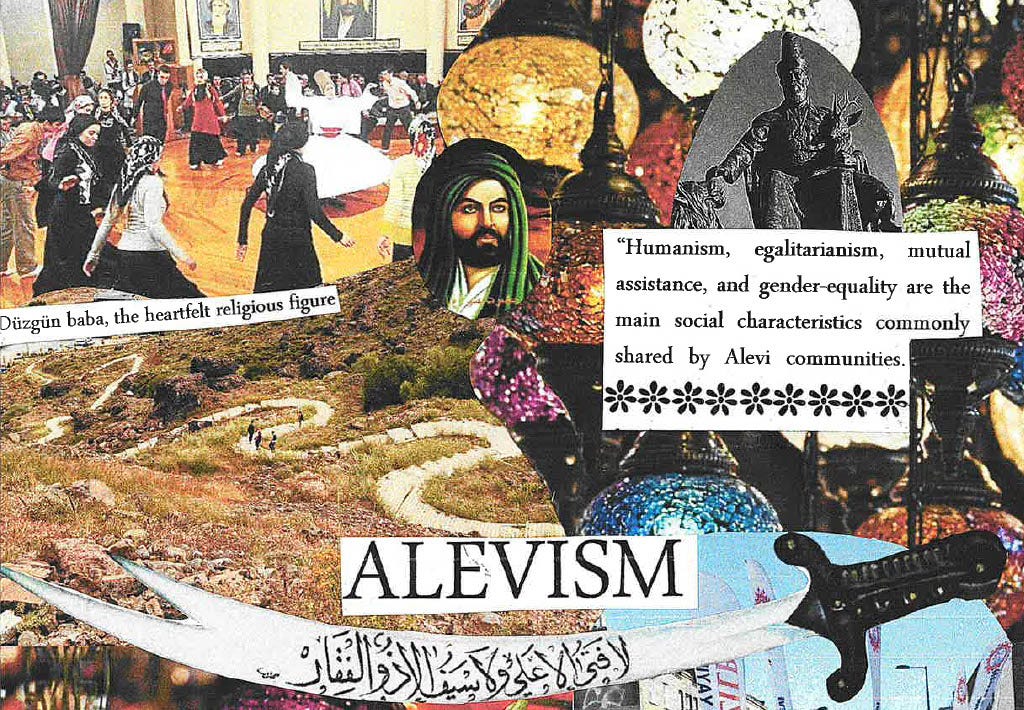
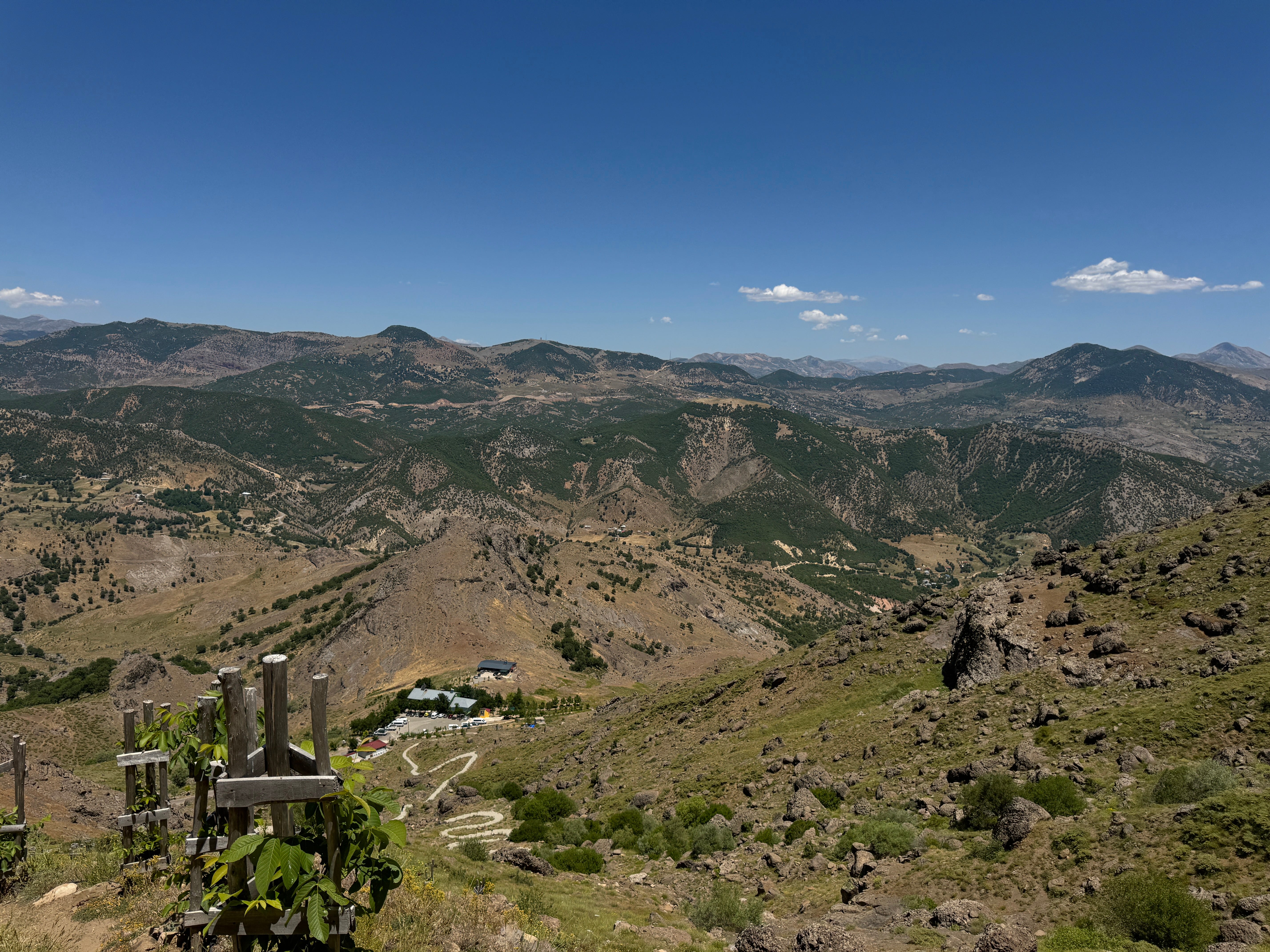
In June 2025 I traveled through a road trip around Turkey to see my fathers hometown, Dersim. Climbing our sacred place, Duzgin Baba mountain and seeing worship places of cemevis educated me further of my religion of Alevism and how it still stands despite being marginalised.
Growing up as an Alevi Turkish/Kurdish in the UK developed identity barriers in my life. From lack of RE sessions taught about my religion in primary school, to struggling to provide a straightforward definition of what my religion is to someone in University. But this is not a form that I’m unaware of or untaught of my religion that I can’t express myself, rather Alevism is what has built me to be who I am today through its egalitarian beliefs. Alevism has always raised me to be empathetic, respectful and shaped my politics to be against racism, fascism, and always to recognise animal and human rights.
UK Alevis, especially second-generation Alevis, have struggled with their identity perspective of Alevism due to its oppression and its lack of recognition. This is rooted in the history of colonisation and massacres my ancestors in Turkey have endured, which has left an oppressed, scarring colonial mentality that Alevism should be hidden or distraught, as it’s a “negative identity” to the radical Islamist perspective. The ongoing systemic discrimination among the Alevi communities in Turkey has left an everlasting scar for the religion to be fully recognised or for Alevis worldwide to learn the culture officially.
Why is it challenging for Alevis to carry their identity? How did a historic colonisation dating back 600 years effectively damage the modern Alevis ‘ ability to learn the religion? Why is it hard for Alevis to identify themselves in the modernised world? Well, Alevis find it hard to explain their religion truly because “Alevism is a lived religion. You live Alevism… there is not a book to sit down and read” according to Lecturer and Researcher of Westminster University, who dedicated his research to Alevi community and identity issues, Dr Umit Cetin.
Persecution effects
Looking back to the era of the 1300s, since the Ottoman Empire was established in Turkey, Alevis were persecuted and punished by the Turkish government and high authorities just because they were different from Sunni Turks. A report in 2013 records that there are 82,693 mosques in Turkey, and only 937 cemevis, mainly built by Alevis with no funds for government support. Massacres were one of the most common punishments Alevis in the 20th century endured, particularly the Dersim Massacre (1937-1938), which was renamed as Tunceli, for the government to demonstrate Turkish military administration and power and that rebellion is impossible for the Alevis. According to Bianet, it was found that estimates of 20,000 to 70,000 people of Dersim were killed by bombing, poisonous gas and village raids.
Dr Cetin says the history of Alevi persecutions has left Alevis thinking of their identity as “primitive” and should be hidden due to the massacres that left a colonised mentality of fear to the Alevis. “Because you are Alevi, you are not a human being, you are not a proper individual, you are not a modern citizen…you can’t be a nice, proper human being when you are Alevi”, said Dr Cetin. The challenges of a colonised mentality in a religion have reached many effects of people not wanting to associate with the religion due to fear, such as Dr Cetin identifies, Alevi parents in fear of their children identifying as Alevi’s, as they may experience a form of hate and discrimination, which shocked him as he is openly passionate about Alevism.
I asked an Oxford Brookes University student if they know Alevism in Turkey, and Dr Cetin response whether the information online about Alevism is accurate:
Second-generation identity Crisis
After Alevi migrated from Turkey to the UK in the 1980s with now 300,000 living in the UK, the history of colonisation and persecution has caused far damaged evolvement to modern second-generation Alevi born or living in the UK. Dr. Cetin says that because Alevis hide their identity due to fear they have experienced in Turkey, the first generation that moved to the UK either perceived religion would be irrelevant in a modernised country, or failed to transfer the information about Alevism to their children. “There was a gap, and this gap caused a lot of problems. I meant it caused a lot for the Alevi second generation, and now we talk about the third generation. And some of them were killed by suicide, some of them were disoriented, they were alienated…”. The lack of identity has also led to second-generation Turkish and Kurdish Alevi young men to be involved in gangs and crime, and the rise of anomic suicide rates in the UK, a subject where Dr Cetin has expertise, researched paper among the suicide rates and the factors that may have caused the rise.
Alevi Turk, Yildiz expressed how her parents taught her the values to take in her daily life, but still struggles to embrace her identity: “I struggle with having/finding representation, and it makes it hard to relate to people due to it being a minority group….I found it difficult to find information or express it to others.”
Building through community
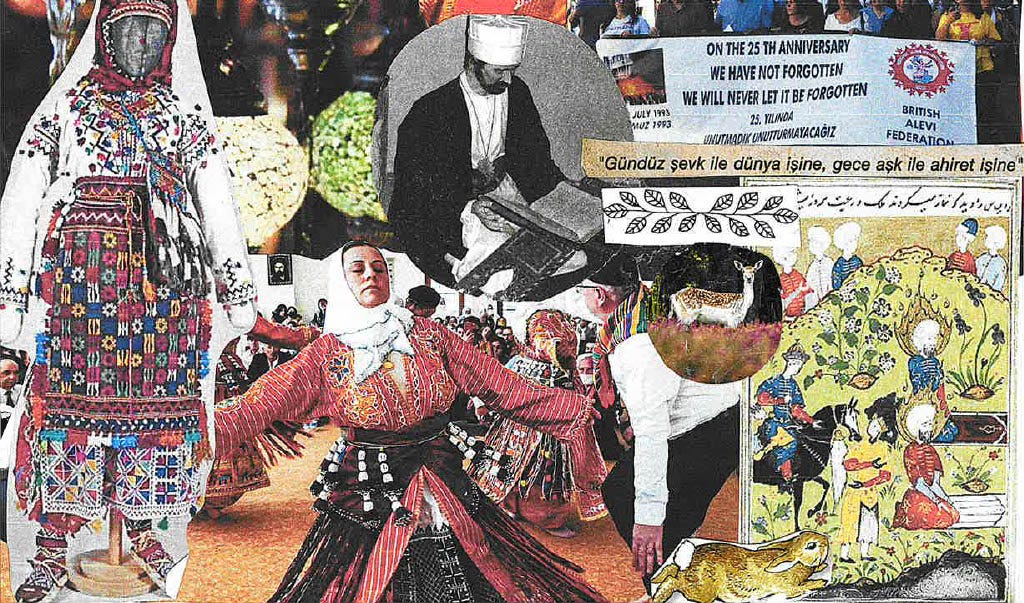
Despite the struggle of identity, there has been a positive witnessing shift over the years of Alevis across the UK, mainly London, slowly but swiftly building to repair the struggle of identity of historic persecution scars in the form of a strong sense of community. Charity organisations such as the British Alevi Federation, have established seventeen Alevi Cultural Centres and Cemevis that serve events and protests and support for all Alevi people in the UK. Dr Cetin states he’s seeing a positive development in terms of the second-generation starting to claim their identity and that a strong sense of community is what helped the religion “survive”. “Alevism doesn’t encourage individuals. It encourages collectivity”