


Sat at my desk in the warmth of the early heatwave we experienced in Oxford this year, graduation photos began flooding my social media feeds. As I scrolled, I saw friends who had worked hard and were finally able to proudly receive their robes and caps and accept their certificates for their degrees.
I noticed, especially with my female friends, nearly everyone was carrying a bouquet of flowers. Was this a new trend or an engrained tradition that I had missed? The bunches of flowers were beautiful to look at. After dwelling on it however, I settled that I certainly would not be asking anyone for flowers or buying them for myself when the day would come and it’d be my graduation.
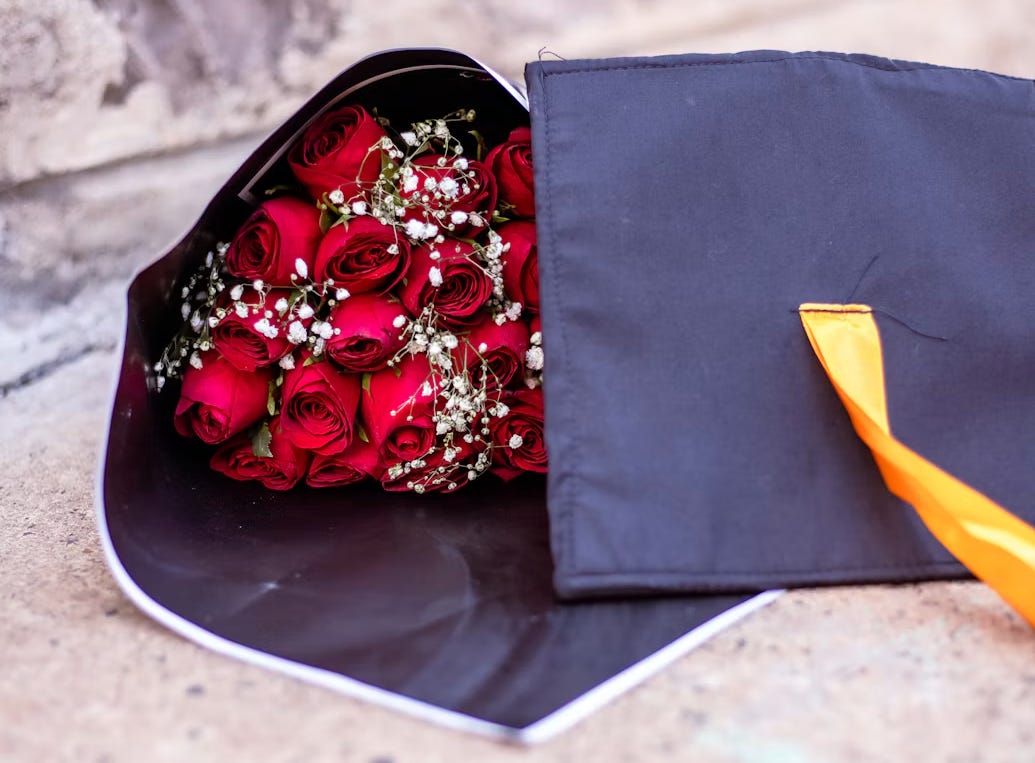
Flower bouquets are easy to love, but the practicality of carrying round a bouquet – all day – on graduation? No, thank you.
I would need my arms and hands free for hugs, picture taking and of course handshakes. That was already three reasons why they wouldn’t be a good idea on a personal level.
Subsequently, it made me think outwards, what sort of effect does graduation flowers, and in fact cut flowers for all occasions, have on the planet?
What is the true cost of traditional flower giving versus the cost to humans and the Earth?
So, what are the figures?
Since 1998, flower imports into England and Wales have almost doubled, rising by 94-95% according to the Department for Environment, Food & Rural Affairs (DEFRA).
These numbers matter.
They show how we’re meeting our demand for flowers – whether that’s by supporting farms and businesses here at home, or by relying on cheaper overseas suppliers whose lower price tags often come with higher environmental costs.
Every year, DEFRA publishes its Horticultural Report, covering the imports and exports of everything from food to flowers.
This year’s report is no different from previous ones: it tracks the money but says nothing about the environmental impact of this trade, either now or at any point since trade records began.
The graph below visualises the raw data.
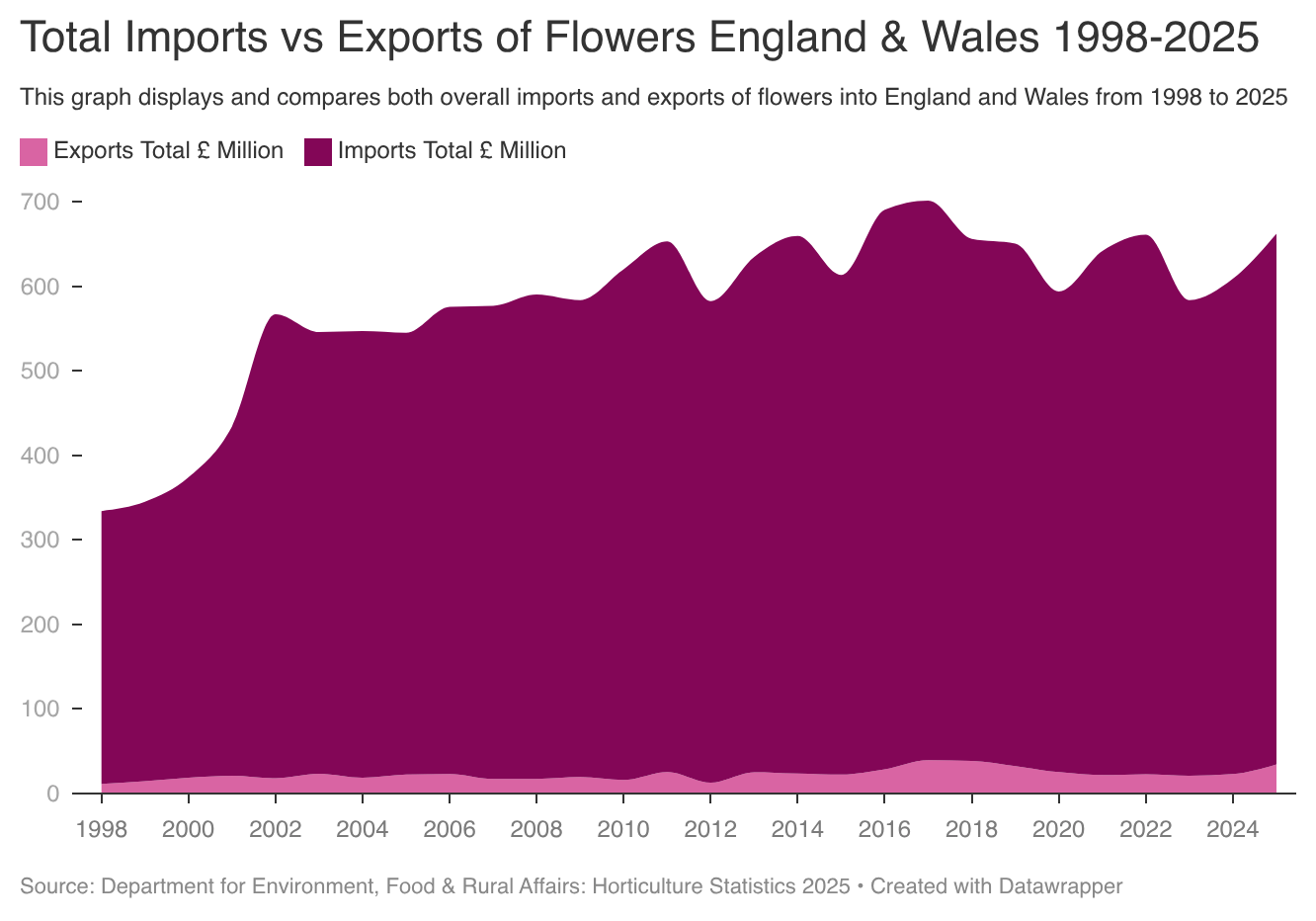
The thin lighter pink band at the bottom shows how much England and Wales earn from selling cut flowers abroad, while the much larger darker area shows how much we spend on imports.
Looking at imports alone (below), the long-term rise is clear from 1998 to 2025 the figure has nearly doubled.
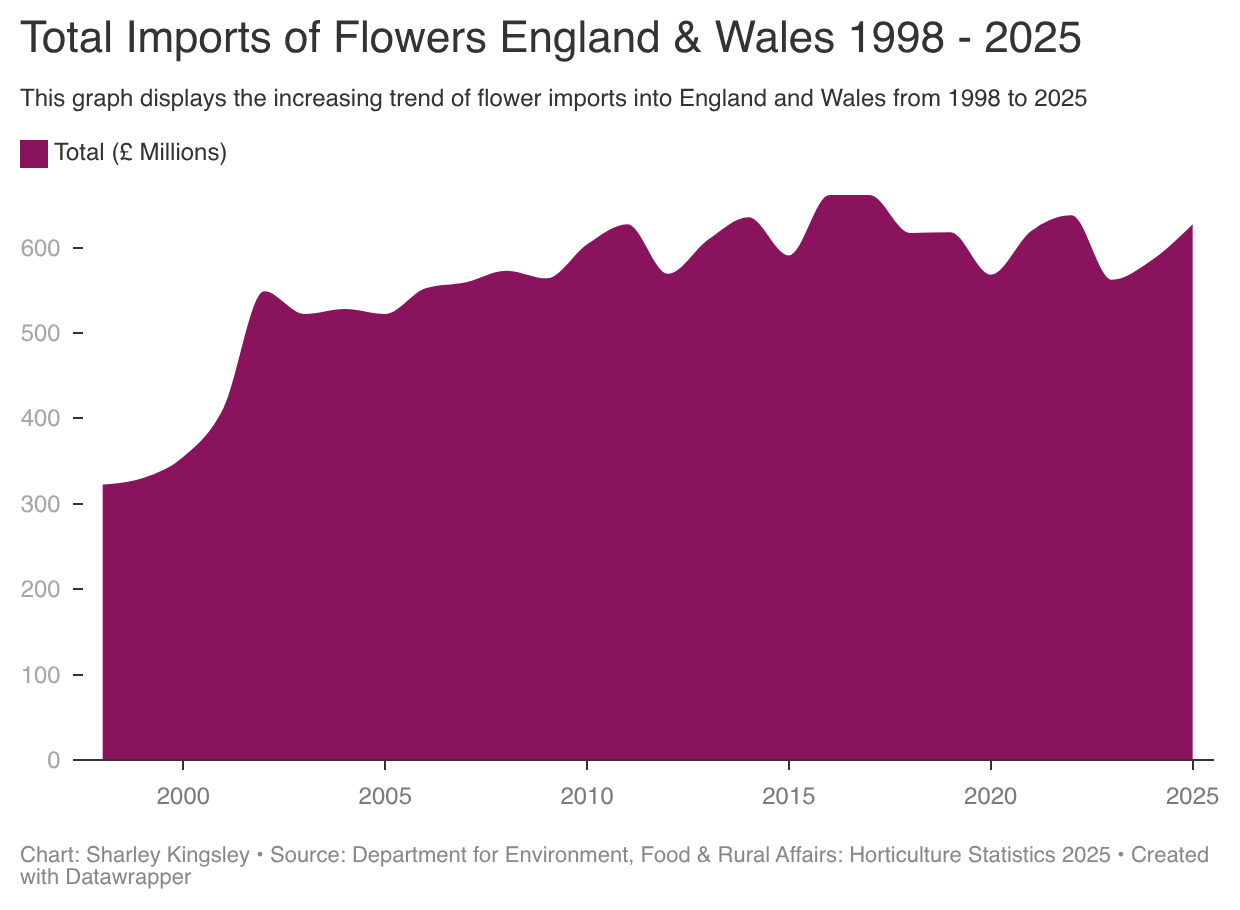
It begs the question. If the trade has grown by that much, why is there so little research into the carbon footprint of the product?
Cars, fast fashion and electronics are routinely monitored and regulated. Flowers, it seems, are not.
At least one person reading this may be scratching their head at this point, and wondering, how on earth could cut flowers be that destructive to the environment?
The Environmental Impacts
The environmental cost of floral production is rarely the first thing people think about when choosing which bunch of flowers to buy.
Most shoppers focus more on the immediate things like the type of flower, the colour, the size, and (sometimes most importantly) - the price.
Independent bodies are sprouting up (in their own time) that provide guidance and reassurance for florist businesses in their aims to become more sustainable and protected in trade.
The Sustainable Floristry Network (SFN), is an “independent education and membership organisation for florists” based in Australia, and identifies nine significant factors as to what amounts to the carbon footprint made by commercial flowers as below:
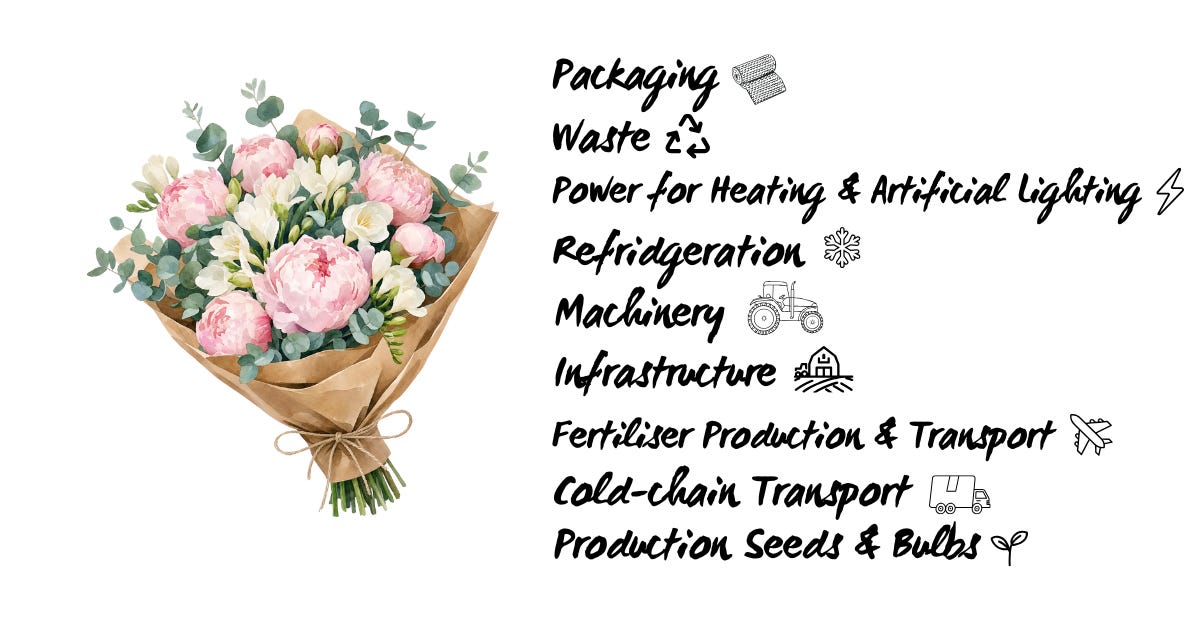
The Sustainable Floristry Network recognises that only a handful of studies (not enough!) have actually measured the carbon footprint of a standard bouquet.
One of the few is by PhD student Becky Swinn, whose award-winning research at Lancaster University used Life Cycle Analysis (LCA), a method that calculates the total environmental impact of a product from start to finish.
Swinn found that an imported mixed bouquet produces roughly ten times more carbon emissions than a British-grown one, and that the British flowers also last longer on average.
For more information click here.
The Humanitarian Impacts
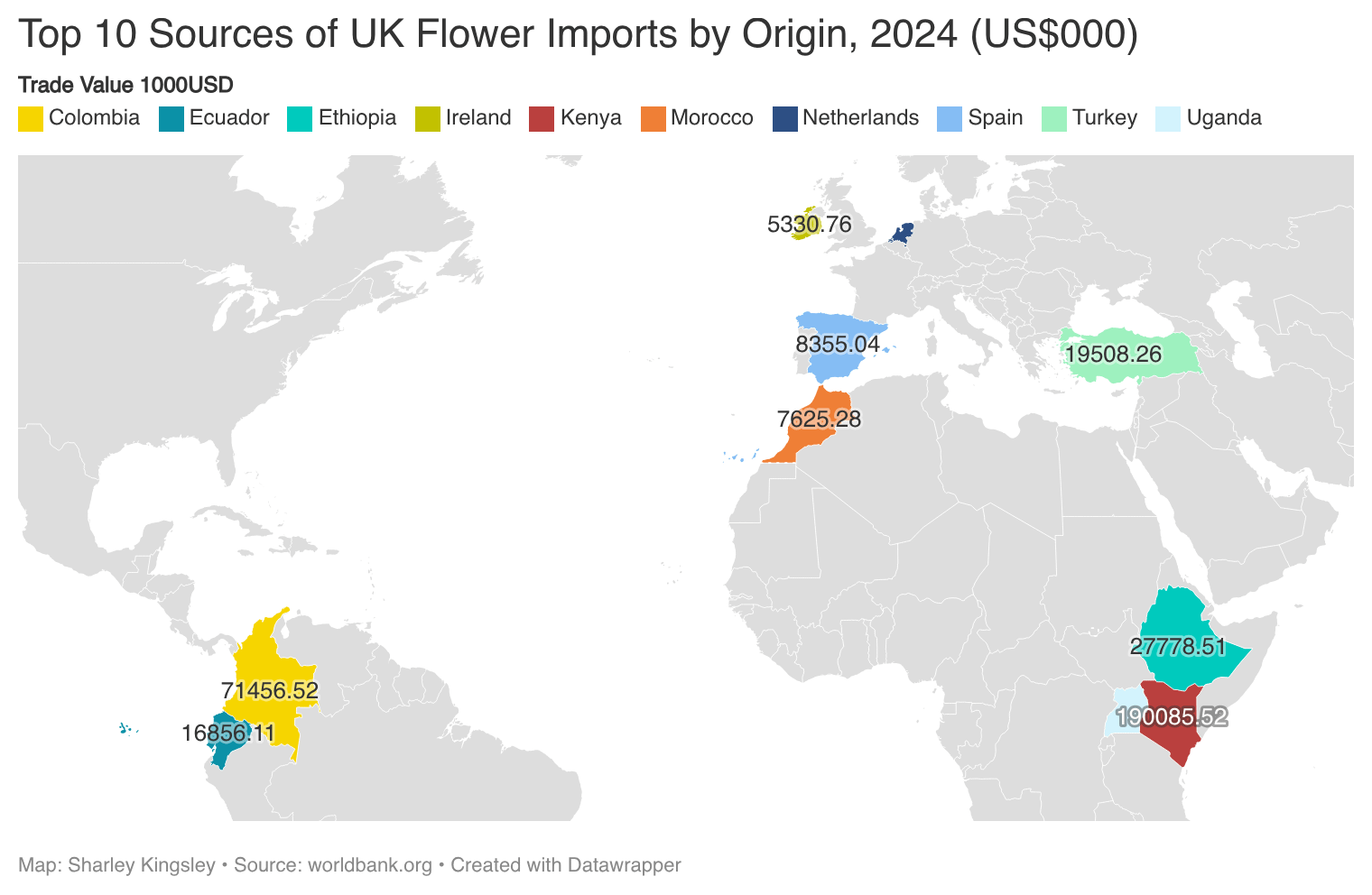
This is a map visualisation of where the UK imports most of its flowers from.
1. Netherlands
2. Kenya
3. Colombia
4. Ethiopia
5. Turkey
6. Ecuador
7. Spain
8. Morocco
9. Ireland
10. Uganda
Flower production is a double-edged sword.
Whilst it creates jobs and exports revenue, the industry can take a heavy toll on both the land and the people who depend on it.
Our reliance, in the UK generally, on the imported flowers has real, lasting consequences in places many of us never think about.
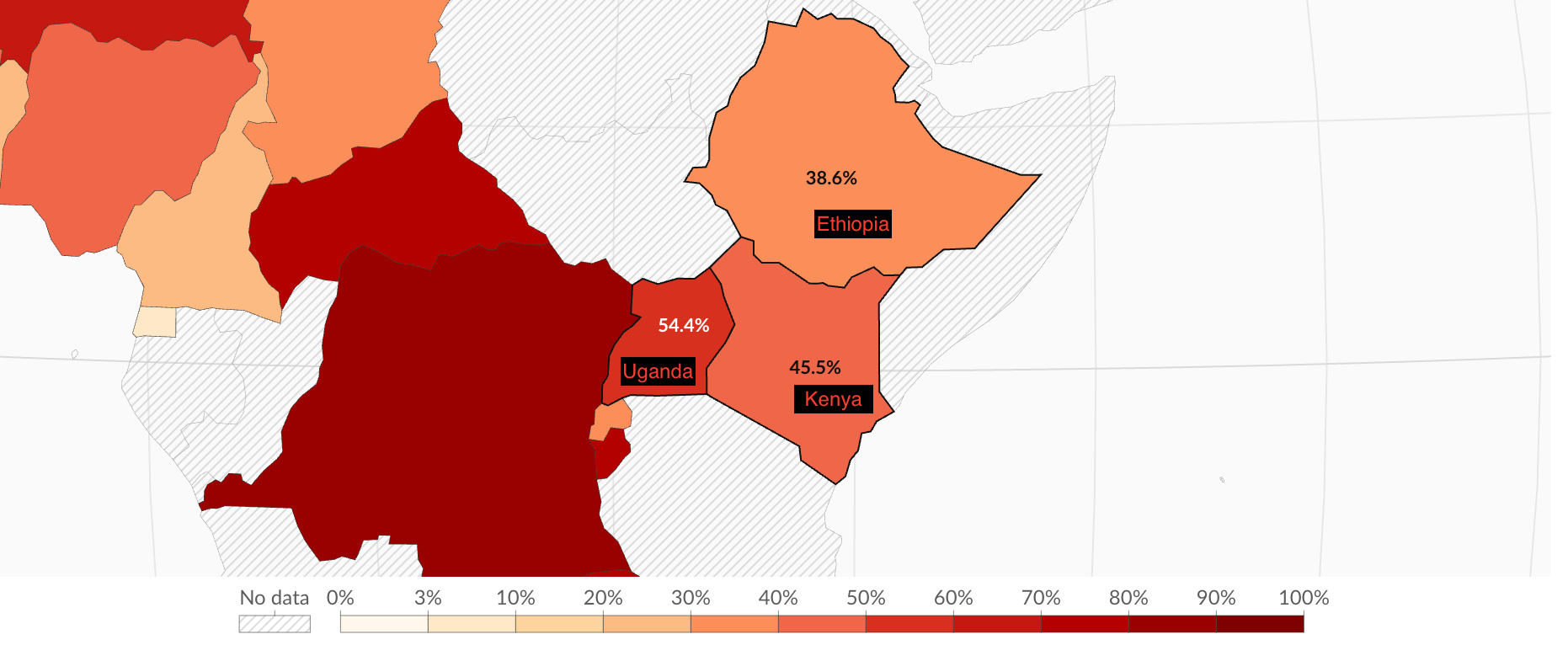
Three of the top ten countries that the UK imports from – Kenya, Ethiopia and Uganda – still have large shares of their populations living in extreme poverty, with rates ranging from roughly 39% to 54% according to Our World in Data.
In countries facing such widespread poverty, the pressure to keep production costs low can create the conditions for exploitation, poor working settings and, in some cases, more serious forms of abuse.
In Kenya, this five-month undercover investigation revealed how multinational floral corporations were mistreating some the country’s most vulnerable workers, exposing the human cost behind the flowers that end up in UK shops.
The investigation additionally revealed that floral farms in Kenya have even been utilising chemical fertilisers which have been banned previously by the Stockholm Convention. Links exposing workers to serious sickness, infertility and miscarriages.
The documentary also highlights something which I found significant, that many of the big flower farms in Kenya are actually Dutch-owned, so these get counted as Dutch rather than Kenyan in trade data.
That skews the numbers, as the flowers are grown in Kenya, with Kenyan workers doing the labour, yet on paper it looks as though the Netherlands is the main grower when in fact it is mostly acting as the middleman.
What can be done?
Since writing this article, I have found that many of the woes in the floriculture industry are still very much alive.
That said, as someone who genuinely loves flowers – and whose camera roll is 99% pictures of them – I never wanted to make anyone feel like this is their personal fault.
My aim is to simply raise awareness and offer some practical, more sustainable tips for the next time you buy flowers.
Top Tips for Sustainable Flowers
1. Buy British (if possible)
Buying British grown flowers means that each stem hasn’t had to travel thousands of miles to get to you, most likely giving it a lower carbon footprint plus it supports local farmers and businesses
These ensure that wherever your flowers come from, the workers are getting treated and paid fairly
3. Choose Simple Packaging
If you aren’t nipping to Tesco to buy a bunch, rather a florist, then try to ask for simple, recyclable packaging like rustic paper, and no extra plastics like ribbons
4. (Extra Mile!) Write to your local Supermarket and/or MP
If you have now noticed that in your local supermarket/area that there are no options for Fairtrade or B Corp flowers, a single, short email from a local customer or constituent can go a long way in improving product choice and increasing visibility of the matter
So, what is the true cost of traditional flower giving – to both people and to the planet?
It’s a challenging question to answer fully, and this article only scratches the surface of the floriculture industry as a whole.
The real expense of giving someone a bunch of flowers for graduation, as an example, still isn’t completely clear, partly because evidently successive governments have shown little interest in the issue.
We import hundreds of millions of pounds worth of flowers every year, yet that doesn’t mean the environmental and human costs are insignificant.
The figures included here should matter, and if they encourage even a few people to shop a little more thoughtfully the next time they need flowers, then this piece will have done its job.