


While this issue has been a cause for concern in Japan for the past decade or so, the tide of depopulation and an ageing population in rural areas shows no sign of abating. According to an annual survey on population growth/decline rates conducted by the Ministry of Internal Affairs and Communications in 2024, population decline in the countryside was particularly steep, led by Akita (-20%). The only two places that recorded growth were Tokyo (+6.6%) and Saitama (+0.1%). What, then, is needed to revitalise and bring people in rural areas?
Local Community and Local Cultures
Concerns arising from population decline are the shrinking of local communities, and consequently the loss of deep-rooted traditions. With a declining birth rate and an ageing population, some regions have been struggling to pass on the traditional craftsmanship to the next generation. The number of people working in the traditional crafts industry has fallen by approximately 83% over the past 40 years. Whilst cultural facilities such as museums and art galleries are barely managing to maintain their numbers, community centres, which serve as gathering places are in steady decline.
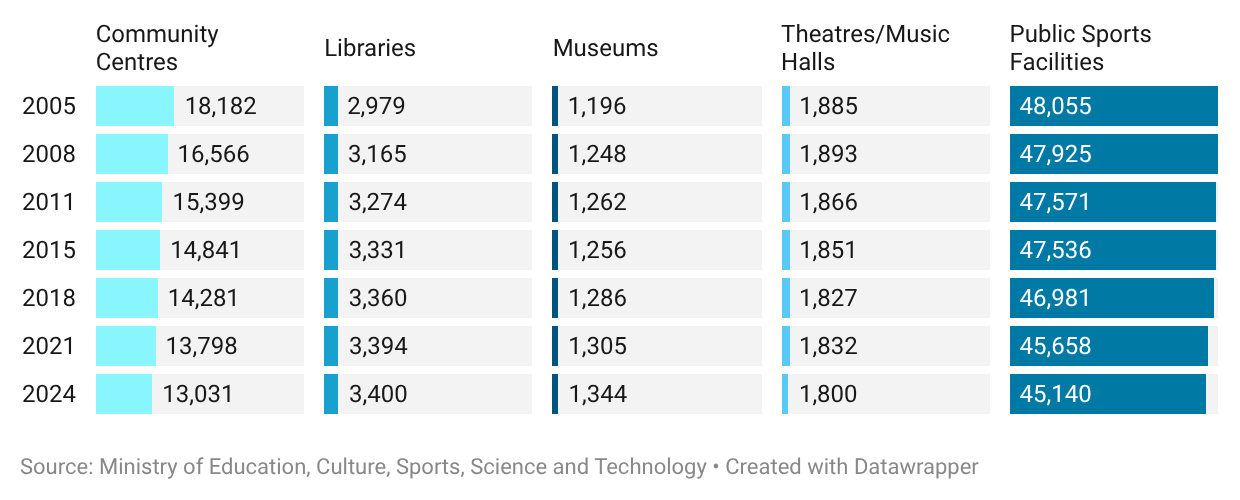
[Figure 1 Numbers of Cultural Facilities 2005-2024]
Those data indicating a decline in such cultural facilities seemingly implies a decline in culture. However, an analysis of the usage patterns of community centres refutes this assumption. A regional survey of participation rates in community engagement programs revealed that several regions significantly exceeded the national average. Tokyo, with a total population of 14 million, Kanagawa and Osaka, the second and third-largest city, recorded the lowest rates in the nation at just 0.7%, 1.1% and 1.6% respectively. Whereas in Shimane and Fukui, which have much smaller populations, just less than 30% of residents were participating in the programs.
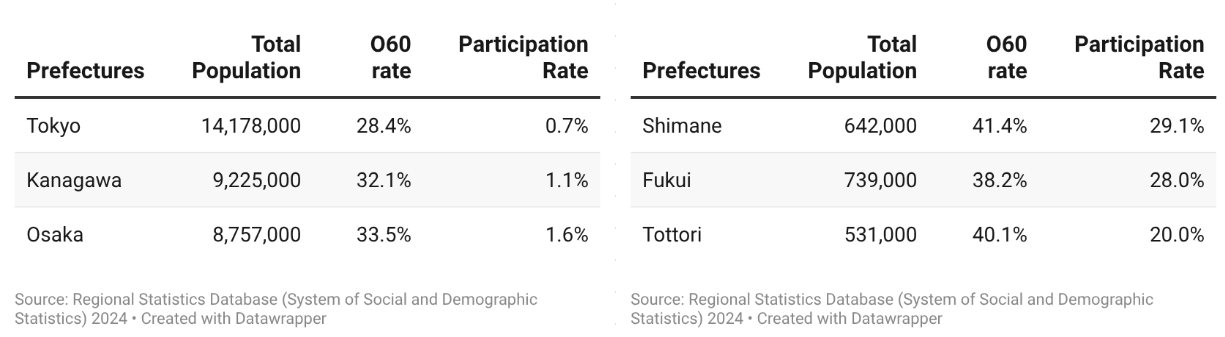
[Figure 2 Comparison of regions by total population, over-60 ratio to population, community centre participation rate]
Although it is impossible to gauge the state of local communities and indigenous cultures solely on the basis of community centre participation rates, these findings do suggest that the simple equation whereby social participation weakens in areas experiencing population decline does not hold true.
Engagement with Culture: Consumption and Participation
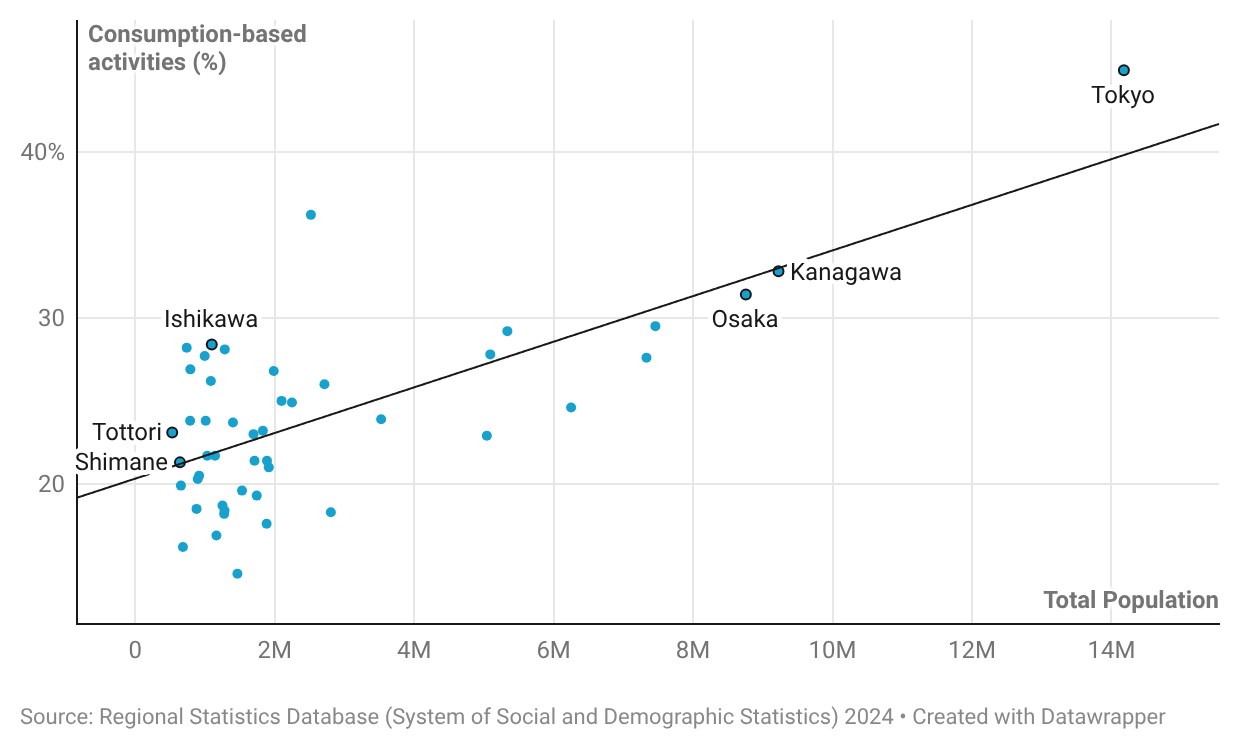
[Figure 3 Scatter plot: total population and participation rate in consumption-based activities]
By comparing depopulated areas with urban centres and focusing on people’s cultural activities, distinct differences in how they engage with culture have come to light. According to a 2021 survey, participation rates in consumption-based cultural activities (art exhibitions, theatre performances, concerts, etc) are exceptionally high in urban areas. This could be attributed to the market potential and well-developed commercial infrastructure therein.
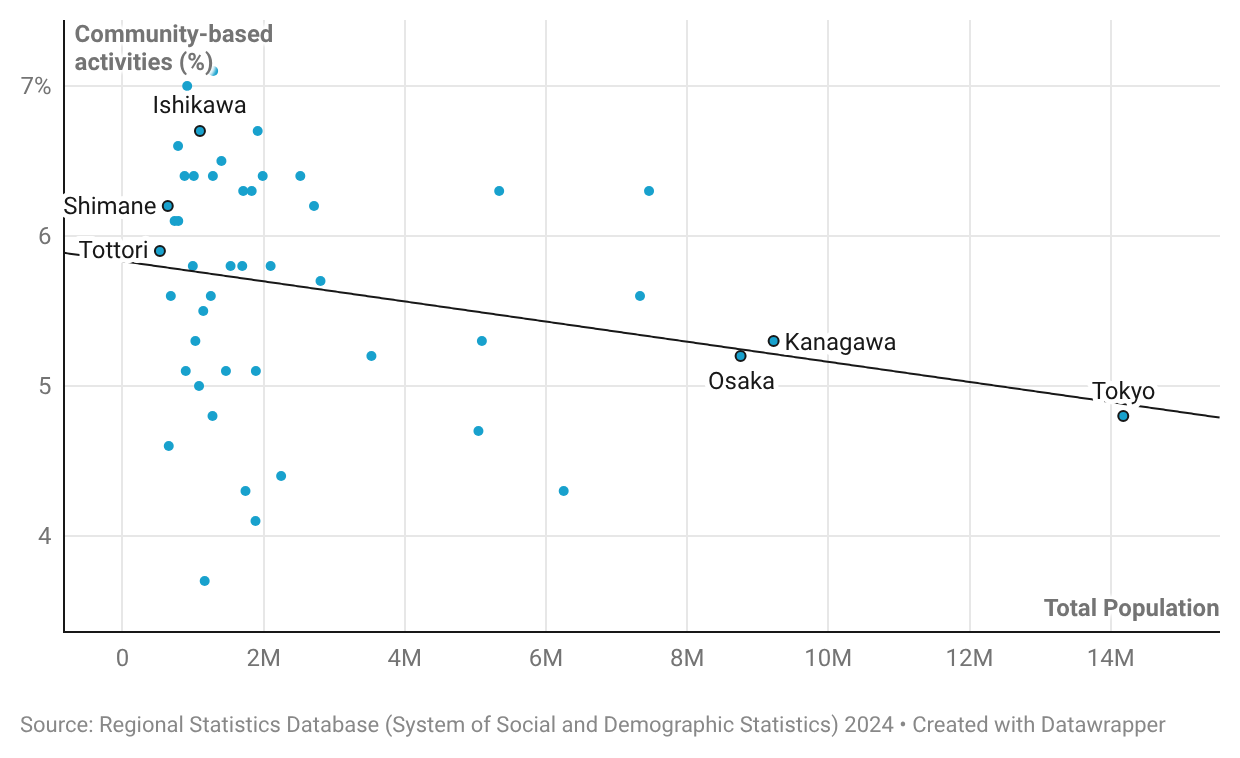
[Figure 4 Scatter plot: total population and participation rate in community-based activities]
Conversely in depopulated and ageing regions, while cultural consumption is not particularly active, participation rates in community-based cultural activities are high. The main examples of such activities are traditional Japanese ceremonies like calligraphy, ikebana (flower arrangement) and the tea ceremony, namely lifelong learnings. Unlike consumption-based cultural activities, these are premised on continuous participation in classes and lessons, and on the building of interpersonal relationships. All areas where the participation rate (of community hall programs) is 20% or higher exceed the national average for such community-based activities, indicating strong ties between the community centre and those activities. This suggests that in depopulated areas, cultural activities are not merely undertaken for the sake of consumption, but rather serve as the foundation of public welfare that underpins the community.
Can Art and Culture Revitalise Regions?
Now it has become apparent that cultural activities in rural areas are closely linked to the local community. So, what role do the arts and culture play in regional revitalisation? Prof. John Williams, who specialises in Art and Regional Revitalisation at Sophia University in Tokyo, acknowledges the Japanese government’s efforts to promote regional regeneration through culture have achieved a degree of success, but points out that the focus is too heavily centred on tourism.
“The Japanese government is putting a lot of money into the idea that art and culture can help regional regeneration. The main aim of the government is tourism.” He continues, “it can work in some places, but all of Japan cannot suddenly be a tourist destination.”
What he values highly in regional revitalisation is “to try to work and create things with the community,” and “to see different ideas about the futures for the place by creating things with them.
Prof. Williams also reflects on his experience of making films with the local community in Kitaushima, Sado. “[After the screening with the locals,] some people said to me, ‘what can we do next?’ I think there was a little local pride that came back.”
Because of Covid, people were scattered and the community was experiencing a great isolation, according to Prof. Williams. But the filmmaking and screening made it possible for the community to think about the futures of Kitaushima, together again.
In areas where community-based cultural activities were thriving, there was a system that enabled the local people to meet regularly and build relationships. Prof. Williams suggests that the cultural activities can be the ‘reason’ for people to come to the place, while mentioning the possibility of establishing regional hubs for educational/cultural/artistic activities.
“One of the things we are trying to do is to build a place where people can stay, or young people can come and learn about farming and the environment. And maybe we can combine it with other things like art and film theatre so it’d be like a campus in a village.”
The project needs a lot of funds, but being dependent on government financing is a problem, and this is not a problem unique to Japan, he says.
“In the north of England, coal mining all stopped and there’s no employment. The area’s very beautiful, but young people can’t find jobs. There was a group of people up there who set up a film collective. Their main ambition is to try to get money from the government, and I think it’s very similar to the Japanese countryside. If there was an independent way of doing it, I feel that’s better.”
The future of traditional crafts is in doubt, and cultural facilities are shrinking. But at the same time, the series of data shows that people are still participating in cultural activities. Regional culture will continue to survive, albeit in different forms, as long as people remain engaged with it. Perhaps the countryside, struggling with depopulation, needs mechanisms that enable people to connect with each other, rather than new cultural facilities.