



Dating is meant to be simple. The price no longer is.
Dating in the UK often begins on a phone screen. Messages move back and forth, plans form, and someone suggests keeping things low pressure. A film and a drink sounds easy. The cost can still surprise people.
So has a basic date become more expensive, or does it only feel that way? The data gives a clear answer. A simple UK date costs 26.10% more than it did ten years ago.
That rise sits within a decade of higher prices across daily life. Housing, food, and bills dominate most cost of living debates. Social spending draws less focus and dating sits in that gap. It is optional, yet it adds up fast.
This article looks at how the cost of a straightforward night out changed over time. It uses price data from the Office for National Statistics. It compares the cost of the same date in 2014 and 2024. The focus stays narrow by design. The aim is to show how much a familiar plan costs now.
What counts as a ‘simple’ date
This analysis uses a strict definition of a date. It avoids special occasions and grand gestures. The goal is to reflect something many people recognise.
The date includes two cinema tickets, one pint of draught lager, and one 175ml glass of wine. The cinema covers the activity. The drinks cover the conversation after.
These items appear often in early or casual dates. They suit weeknights and weekends. They appear consistently in official price records, which allows comparison across time.
All prices come from the Office for National Statistics average price series. The figures reflect UK-wide averages rather than city prices. Some datasets list prices by quarter. In those cases, the method uses an average of the available quarters.
The basket leaves out meals, taxis, and dating apps. These costs vary widely by place and habit. Leaving them out keeps the comparison stable. It keeps the focus on a lowkey plan many people would describe as simple.
What the numbers show
In 2014, this date cost £20.04 on average. By 2024, the same plan cost £25.27. That change equals a 26.10% increase over ten years.
Cinema tickets make up the largest share of the total in both years. Two tickets cost more than the two drinks combined. Ticket prices rose across the decade, and this rise drives most of the overall change.
Drink prices rose too. The pint increased over the period and the glass of wine followed the same direction, but at a slower pace. Each rise looks modest on its own. However, together, they push the total higher.
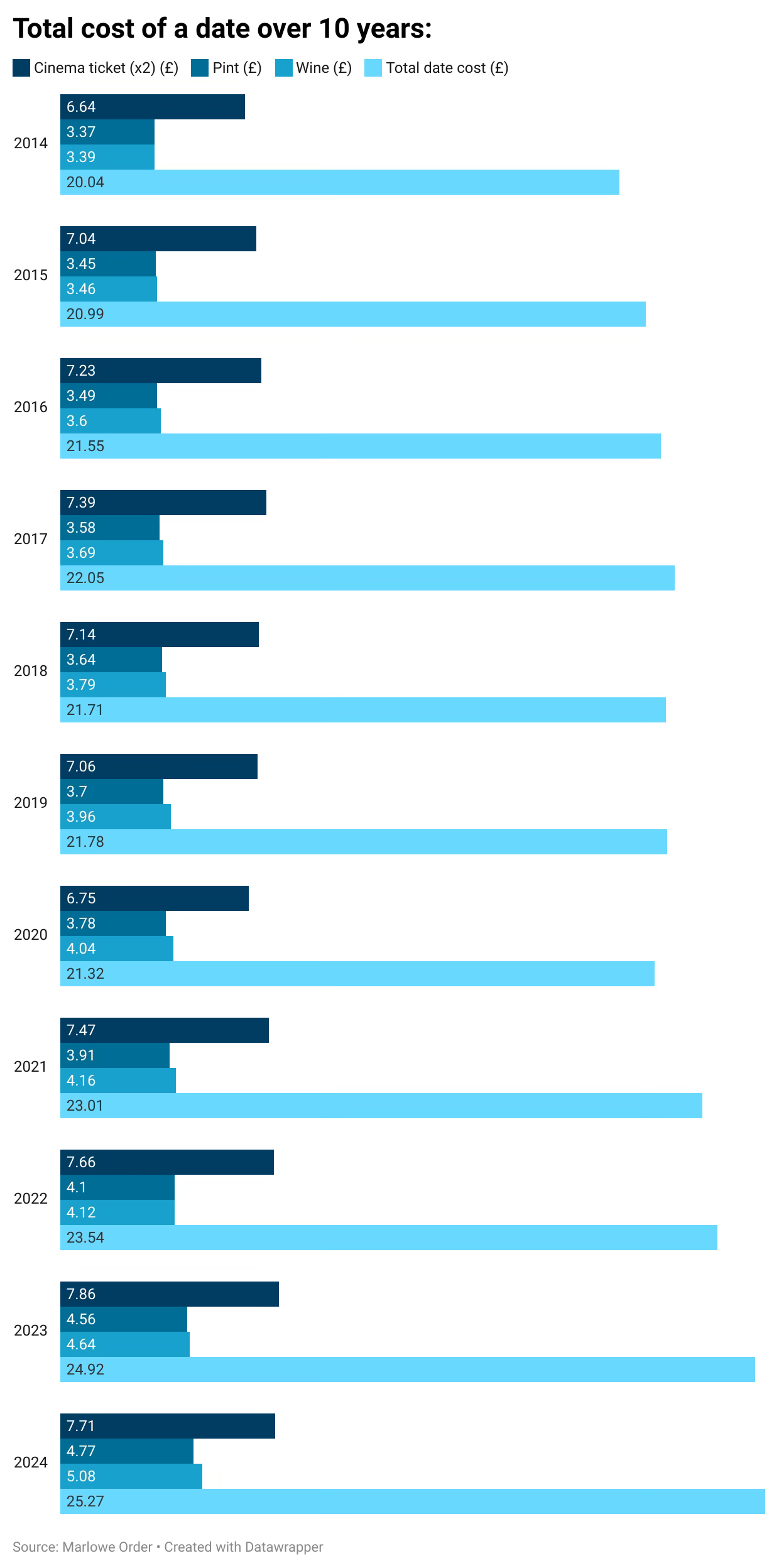
The chart shows the shift clearly. Over the last 10 years, we can see an increase for every item. Cinema tickets account for most of the gap with the drinks adding a smaller but steady rise. This comparison uses the same items every year. It does not adjust for income or lifestyle showing what the same plan costs at two points in time.
How this fits into wider prices
Prices across the UK rose steadily between 2014 and 2024. Leisure prices rose across the same period with cinema tickets and alcohol falling within that category.
Pay rose during the same period, but growth differed across sectors. Some workers saw steady increases. Others saw slower growth in take-home pay, especially in lower-paid roles.
Dating sits within discretionary spending. People often adjust this part of a budget first. They go out less often or choose cheaper plans. A rise of 26.10% does not turn dating into a luxury. It does change how often people go out and what they choose to do.
The total cost here remains lower than major household bills. It still matters. Repeated spending builds over weeks and months. Small increases gain weight through routine.
This context explains why dating can feel more expensive, even when single prices look manageable.
What this means for dating today
Dating culture changed in several ways over the past decade. Apps reshaped how people meet and work patterns shifted how people plan evenings. Prices reset expectations around spending.
A cinema date still signals effort without excess. A drink after still offers space to talk without pressure. Putting those two together now costs more than it did in 2014.
People adjust in quiet ways. They meet earlier. They skip a second drink. They choose weekday screenings. These choices rarely attract attention. They show up in habits.
The figure here does not tell anyone how to date. They show what sits behind a familiar plan. On paper, the increase looks manageable. Seeing it added together makes it harder to ignore.
Conclusion
This comparison shows a clear rise in the cost of a simple UK date. This basket increased by 26.10% between 2014 and 2024. It includes two cinema tickets, a pint of lager, and a glass of wine.
The rise spread across the decade rather than arriving at once. Cinema prices led the increase. Drinks added to it. Each part stayed familiar.
Dating remains part of everyday social life. Prices shape how people plan more than they did ten years ago and while a simple night out still feels simple, it just no longer costs the same.