


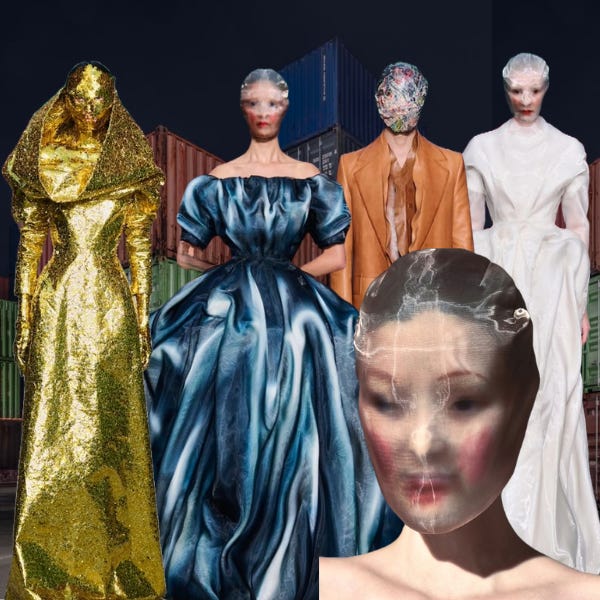
Maison Margiela’s Autumn/Winter 2026 was their first runway show outside of Paris since it was founded in 1988. It took place on April 1st in an industrial shipyard in Shanghai and showcased their ready-to-wear and artisanal pieces together for the first time.
This marks the beginning of a new initiative called the Maison Margiela/Folders that allows people to explore the four codes of the fashion house – Artisanal, Anonymity, Tabi and Bianchetto.
Following the fashion show came four pop-up exhibitions in four cities around China. The Artisanal exhibit in Shanghai brought together 58 couture pieces from 1989 to the present day. Next was Anonymity, an exhibit in Beijing that focused on masks. First introduced in their debut 1988 show and now a staple of Margiela, the veil-like masks have evolved but still play on identity and self-expression.
Following this was a Tabi collectors’ exhibit in Chengdu. The iconic split-toe shoes were displayed in an exhibition that recreated the collectors’ wardrobes. Lastly, the Bianchetto experience in Shenzen. Bianchetto refers to the white overpaint technique that leaves visible brush strokes that was introduced by Martin Margiela himself. Maison Margiela invited people to paint an item of their wardrobe using this technique.
It all started with their fashion show in Shanghai. The collection was designed by Glenn Martens who became creative director in 2025.
Maison Margiela used materials of shattered porcelain, beeswax, and organza to create a collection that looked like an antique shop come to life with ‘living dolls of porcelain; destroyed tapestries and distressed dresses too fragile to repair.’ Martens builds on the legacy of avant-garde and non-conformity that began in Paris in 1988 and this collection shares a similar tone to his first Autumn/Winter Artisanal collection in 2025 with its anonymising masks that draw attention to the clothing and the repurposed materials.
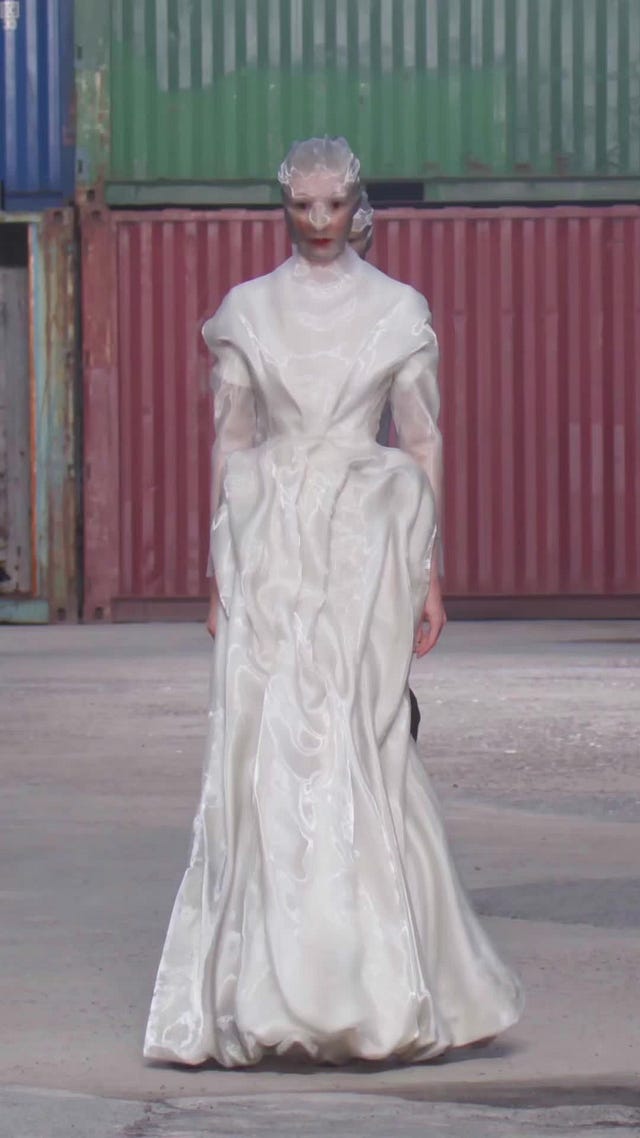
Several designs were created by layering organza and airbrushing the fabric with colour to achieve a glazed porcelain effect, similar to that found on antique porcelain dolls. This took approximately 140 hours to create, and the effect was well worth it. The models look like dolls come to life, their exaggerated makeup visible under the organza covering their faces.
 Tiktok failed to load.
Enable 3rd party cookies or use another browser
Another notable look was the design created with 500 pieces of shattered porcelain. Ceramic pattern pieces were fired and glazed before being broken and attached to the dress. The piece of clothing took 300 hours to make and was accompanied by a mask that was fashioned with the same technique. The model looked like a statue that had been broken and glued back together again.
Adding to the distressed and thrifted tone of the collection, one look was inspired by an Edwardian mourning gown with its high neckline. It was then dipped in beeswax. This effect added dimension to the dress and created a stillness that further associated it with porcelain dolls.
The most memorable feature was the masks. Erasing the features of the model and replacing them with eerie organza masks with the impression of blurred faces underneath. The models are uniform in their anonymity. Other masks have ceramic pieces stuck to them or latex with the iconic Bianchetto effect.
Margiela showcased their Ready To Wear and Artisanal collection together blending together the wearable items with the art. Tuxedo jackets, dresses, and knitted garments can find their way into the consumers wardrobe while the ceramic dress and beeswax gown reflect the hundreds of hours of meticulous work that went into the show. They are symbolic of the Parisian flea market that Margiela aimed to recreate. The use of innovative materials and techniques to create the couture pieces show the artistry and detail behind the fashion house.
The Ready To Wear garments share elements with the couture, like the Edwardian touches of high necklines and lace finishes but in a more wearable manner. It allows the consumer to bring the creative flair of the Margiela fashion house into their everyday wardrobe.
 Tiktok failed to load.
Enable 3rd party cookies or use another browser