


Martha Stewart, the American businesswoman and TV personality, worth US$400m, posted an Instagram post of her wearing a beanie, ripped jeans and dirt smeared over her face. She held a sign reading “I AM HUNGRY HELP ME!!”.
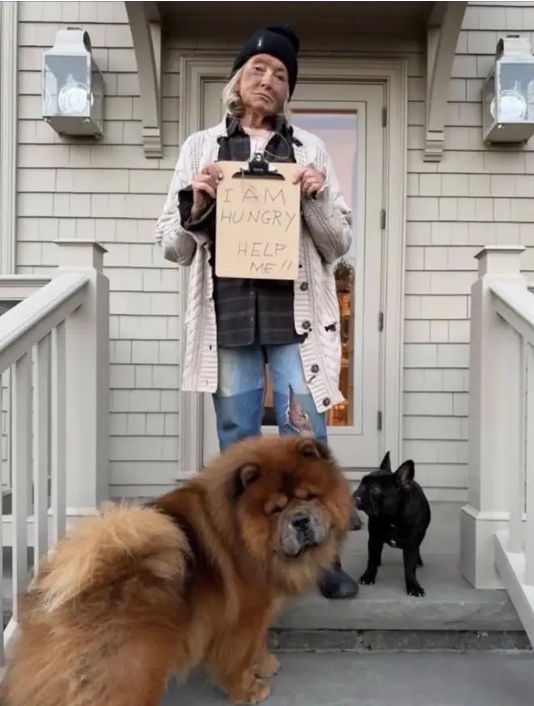
Stewart holds up a sign reading ‘I AM HUNGRY HELP ME!!’. Picture: Instagram
The post was deleted after a wave of criticism, with commenters posting “What in the let them eat cake is this costume?” Stewart first said her costume was “intended to bring more awareness to the very serious subject of homelessness”. Hours later, Stewart apologised saying it was “not funny” and “insensitive”.
Although the row played out in America, it still raises a general, topical question. People are now dressing up as socioeconomic crises, reflecting society’s political and economic nature.
In England, homelessness has risen by 14% in the last five years. Recent data suggests that under-25’s are the only age group where the numbers have fallen but this may because they are slipping through the gaps.
1 in every 153 people
The housing charity, Shelter, estimates just over 380,000 people in England are homeless. That’s 1 in every 153 people. In London, it’s 1 in every 45. In just four years, the number of people recorded as homeless has increased by 39% by 2025.
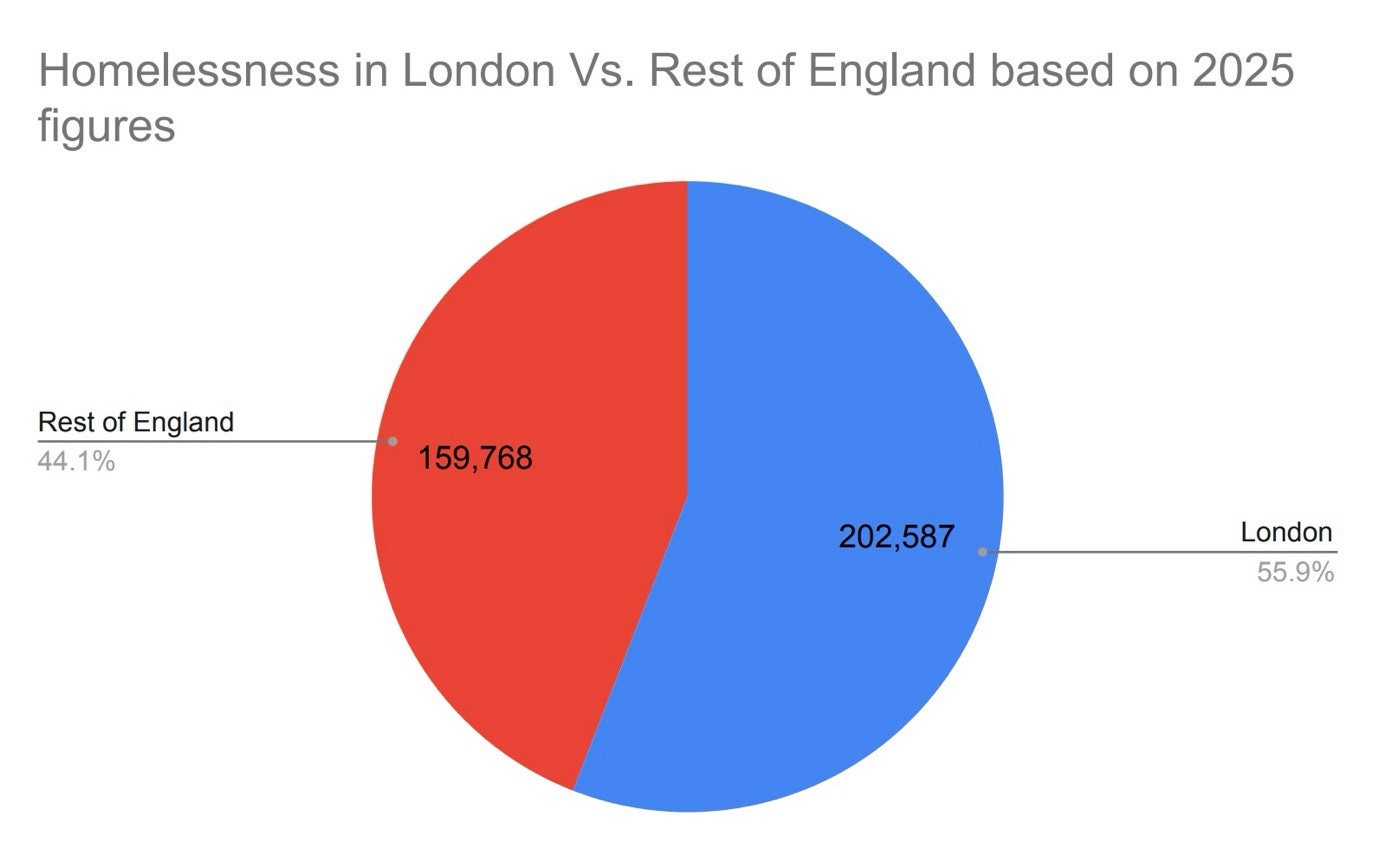
Figure 1: Chart 1: Share of people recorded as homeless in England, London vs rest of England, 2025. London accounts for 55.9%. Source: Shelter, Homelessness in England 2025.
Over half of all people who are homeless in England, are from London, not a surprising figure considering London’s soaring rents and house prices . Most people counted were not sleeping on the streets, however a vast majority are living in temporary accommodation such as hostels and Air B&Bs. Shelter says even these numbers are an underestimate because hidden homelessness like sofa surfing is not included.
In England, councils have a legal duty to help anyone who is homeless or at risk of becoming homeless. A “prevention duty” applies when someone could lose their home within 56 days, and a “relief duty” applies once they already have.
330,410 households in England were owed one of these duties in 2024/25. An increase of 14% since 2019/20 according to government figures. Immy Starling, an Undergraduate property development student at Oxford Brookes University comments, “the idea of moving and living in London after graduating, when knowing how expensive living in the city can be, and the risks involved in that is scary and off-putting”.
What age groups are mostly affected?
That 14% rise was not shared evenly across age groups:

Chart 2: Percentage change in applicants owed a homelessness duty, by age group, 2019/20 to 2024/25. Source: government statutory homeless figures
The steepest rise was among people aged 55 and over, up by 42.1%. Within that group those aged 65 to 74, who were owed help rose by 58.8%. People aged 35 to 44 were up by 26.9%- and 45–54-year-olds up 18.4%.
For working-age adults, one of the main triggers of homelessness is losing a private tenancy, the same kind of rental many students move into after halls of residents. Just under 39% of prevention cases were caused by the end of a private tenancy, not a surprising causation considering England’s soaring rents and inflation rates. The only age group that went against this trend were under 25s where it dropped by 4.3%.
Are young people doing better?
The steepest drop owed help was among 16- and 17-year-olds, down by 39%. Generally, there is more support from children’s services when it comes to dealing with child homelessness. The 2009 Southwark Judgment made by the House of Lords for example, requires children’s services to house homeless 16- and 17-year-olds. The principle is that children’s law takes precedence over housing law.
But a fall in the figures does not necessarily mean a fall in youth homelessness. Coram’s report ‘The door is Closed’ found that many homeless 16- and 17-year-olds are still being left unassessed. Young people may be struggling to get help and so never appear in the data. Sofa surfing and “hidden homelessness” also are not recorded.
The main causes of youth homelessness
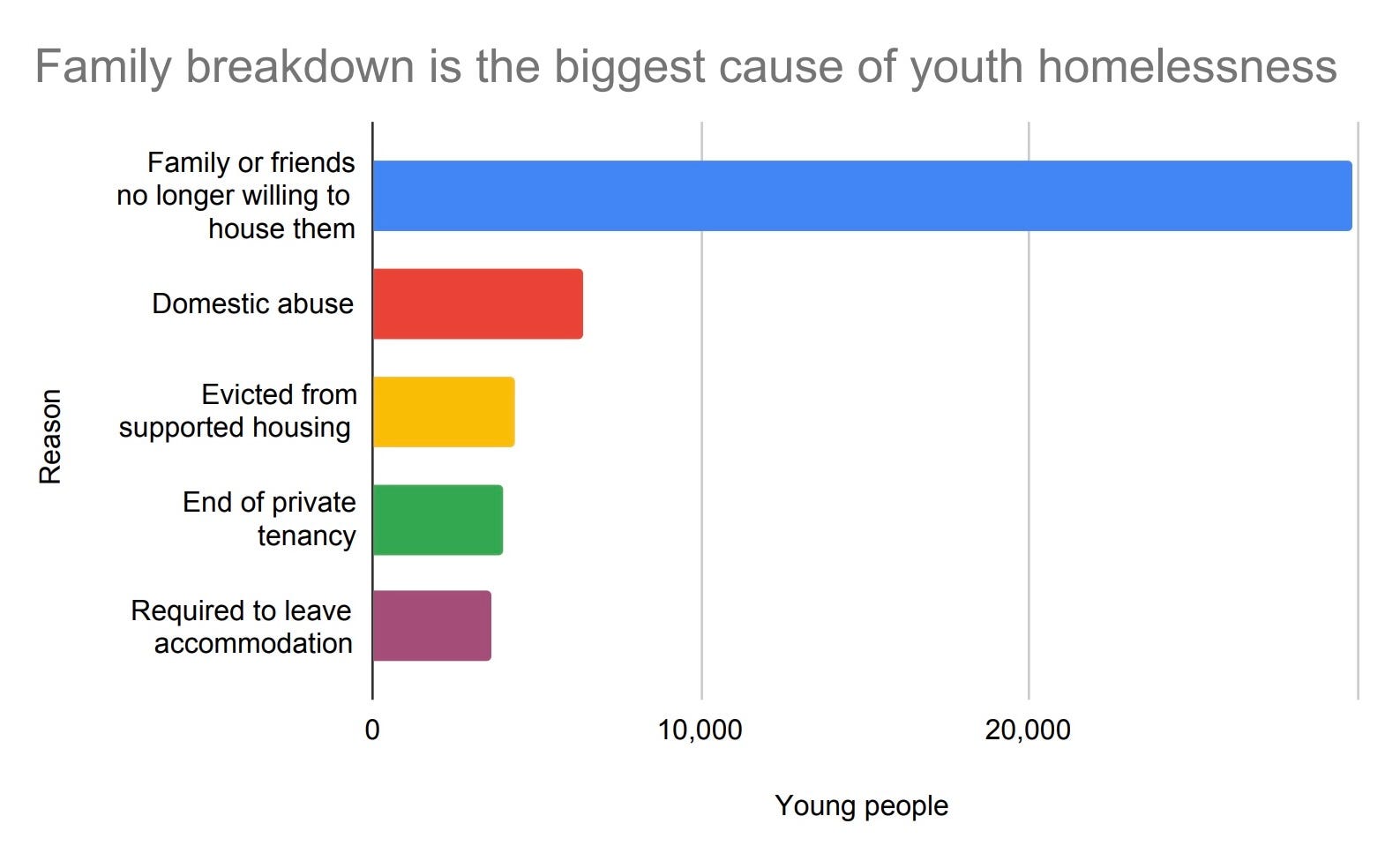
Chart 3: Main reasons young people were homeless or at risk of homelessness, England, 2024/25. Source: Centrepoint, Youth Homelessness Databank 2024–25.
For young people, the end of a private tenancy is only 6.8% of prevention cases. 51% of young people are far more likely to lose their home through family breakdowns, followed by domestic abuse at 18%.
The Renter’s Rights Act and improving homelessness
Since 1 May 2026, the Renter’s Rights Act has banned Section 21 “no fault” evictions, meaning landlords in England must now give a reason to evict tenants. Shelter estimates the ban will save around 2,000 households a month from becoming homeless. However, landlords can still evict if they want to sell the property.
Students in shared houses (HMOs) face an expectation known as Ground 4A. It means landlords can use it to take the house back between 1 June and 30 September and re-let it to the next group of students, if they warn the tenants in writing before the tenancy began. Private tenants will have more security and more control over their home which is good news, however whether the Act will slow down homelessness will only become clear in next year’s 2026 figures.
So, in a way, Martha Stewarts Halloween costume did bring awareness, but not for the reason she intended for. It shows the extraordinary gap between people who are one eviction away from losing their home and those who are wealthy enough to cosplay it for one night.