


Milly Goldsmith, or according to The Sunday Times, the possible Gen Z Bridget Jones, is an influencer and entrepreneur, who went viral on TikTok sharing the deepest and most vulnerable parts of her life. After being approached by Penguin Random House to basically make her videos into a book, she started her journey as an author, writing things I told my notes app.
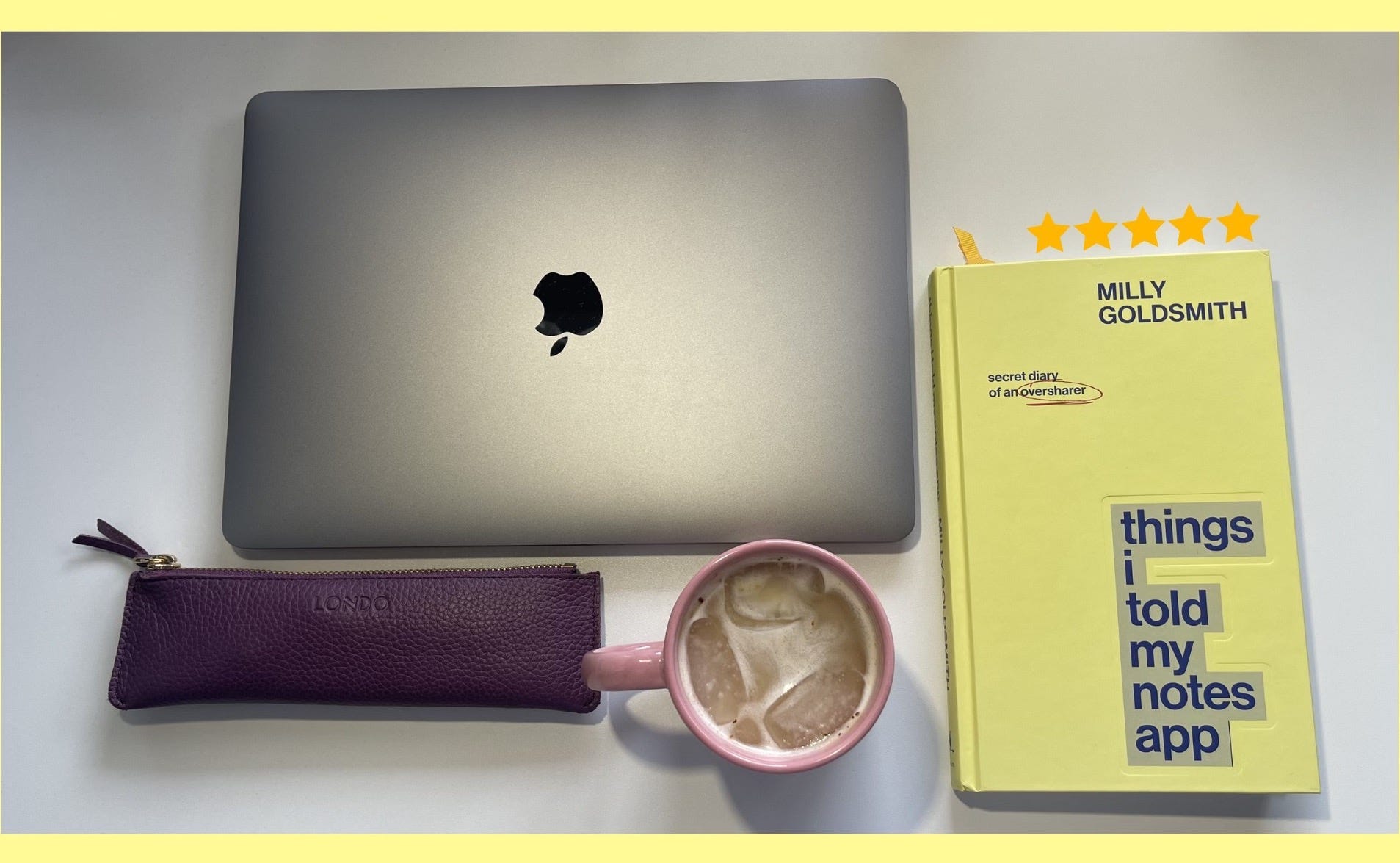
Before the chapters start, Milly greets her readers with an introduction, so even those who are not familiar with her content can get a glimpse into what led to her writing this book. Without dragging it out for too long, she summarises how writing healed some parts of her, and she hopes that it does the same to others as well, and that readers will hopefully be able to see themselves within these pages.
In a world where social media is just a never-ending slide show of every single person’s best moments, Milly’s content stands out. She posts about her chronically single life filled with Hinge dates, disappointments, and insecurities. Basically, things that most people would never even dare to publicly post about. Things I told my notes app is an extension of these videos, where she opens an even bigger can of worms, and looks at issues she hasn’t had the courage to face before. As she says in her book, you can only heal ‘when you embrace the parts of yourself that aren’t ‘cool’ or ‘acceptable’ by the world’s standards’.
Milly goes back to her 13-year-old self in her peak Justin Bieber and One Direction fan era. While I was reading this part, I already knew in my head that I would write down how, interestingly, Milly doesn’t only write about her past experiences that are connected to relationships. But then she drew such an intriguing parallel, how being a fangirl and longing for the love of these superstars alongside millions of other girls instilled the idea in her head that ‘love was all about waiting for a boy who you like to notice you’, and that she had to give her ‘entire self away in exchange for being wanted by someone’. Even though she knew there wasn’t much possibility of her actually being with either Justin Bieber or any of the members of One Direction, a picture of what love is supposed to be like was already painted in her head at such a young age.
In-between chapters, Milly adds in light-hearted dividers, such as thoughts on what love can look like, ‘Dating Life Wrapped’ in bullet points, and a recipe on the key ingredients to creating ‘unrealistic expectations of love’. These act as humorous bookmarks, making the book unique, and truly notes app-like.
Milly brings the readers through her journey of growing up through her education, friendships, good dates, and bad dates, and as a result, she slowly lets the readers in. What she does in a smart way is explain why she is the way she is, and how her early-on experiences shaped her approach towards love and relationships, and she does this without falling into the trap of overexplaining. Every chapter feels like you are listening to a podcast episode-like voice message your best friend sent you. In some places it’s deep, in some it’s funny, but it’s definitely a good mix, and it definitely works.
Milly often mentions conversations she’s had with her therapist in the book, and the book itself feels like a therapy session too, and I don’t mean this in a bad way. As she expresses in the introduction, she wrote this book for herself, but for those too, who see themselves in her. The way she writes about her complicated relationship with food, her parents, and love allows audiences to find pieces that fit their lives as well.
It feels like she wrote this book for those who are trying to be seen, because she wasn’t.
A really interesting topic Milly discusses, is the topic of embarrassment. She perfectly explains, and comes to an epiphany while writing it, that in short: people care more about themselves and how they look to the public than they do about others. Embarrassment comes from our own insecurities, which is why the word embarrassment is not in the vocabulary of a person who is confident. She describes it with the example of doing something embarrassing at a party, overthinking it for days, and thinking that everyone else is doing the same, when in reality, they probably forgot about it 2 seconds later:
‘It was a moment of recognition for them, not a whole story. What feels like a lifelong intrusive memory to me is usually just a passing moment in someone else’s day.’
Another thing Milly does successfully, is to recognise the flaws in herself. This book could have easily become a collection of diary entries where she lists all the things that made her who she is today, therefore blaming everything and everyone in her life for the mistakes she’s made. But instead, she takes responsibility, and admits when she is at fault. One of the biggest things she became famous for was the fact that she is 28 years old, and she’s never had a boyfriend. In Chapter 7: Just Call Me Milly the Serial Dater, she admits that she is part of the problem, as she self-sabotages, and repeats patterns she should instead be breaking.
The book is brave, as Milly lifts the curtain, and lets the public see the not so glamorous parts about her life. But that is what makes her relatable. Because, realistically, when does anyone ever have it all figured out?
The chapters are exactly like note entries, and she doesn’t hold herself back, as she openly talks about her eating disorder that she’s battled with for many years, while also discussing her relationship to sex, and her struggles with acne. Even though these topics could be viewed as taboos, she dissects them with details, and it doesn’t feel weird at all. I was a stranger reading the book, yet it still felt like I was reading a friend’s thoughts. It was also a clever choice to leave in abbreviations, swear words and elongated words, so that the readers can really tell what Milly’s tone would be while saying those sentences out loud.
Interestingly, as Milly put pen to paper, she wasn’t only discussing things she was already aware of, but it could clearly be seen that she was realising a lot of things while writing them down. The book feels like somewhat of a silent therapy session; even though the readers were not actually talking to her, they were helping her heal while she wrote her thoughts down.
Throughout the book, Milly continuously recognises that just because she’s writing this book does not mean she will magically be healed after. She’s definitely made progress while writing the book, and she’s in the process of healing, but healing is not linear, and it’s definitely not that easy. She does, however come to the epiphany, that in every situation she mentioned in this book, she was looking for control. And even if not fully, by the last chapter, she accepts the fact that in order for her life to change, she needs to let go of that control.
Things I told my notes app works in every aspect: it is deep, real, funny, emotional, and most importantly, honest. Milly gives a true depiction of a girl trying to navigate her twenties to her best abilities, and her honesty allows readers to resonate with her, feel for her, root for her, and to find themselves in both her flaws and virtues.