


How much would you invest in a country if you knew it could ask you to leave in 30 months? Would you go out of your way to integrate into the society, its culture, food, language, talk weather, have small talk with the barista or neighbour, and make friends with the locals ?
But what if you are fleeing political persecution or a deadly conflict in your home country, and this new country is your only hope for surviving and thriving?
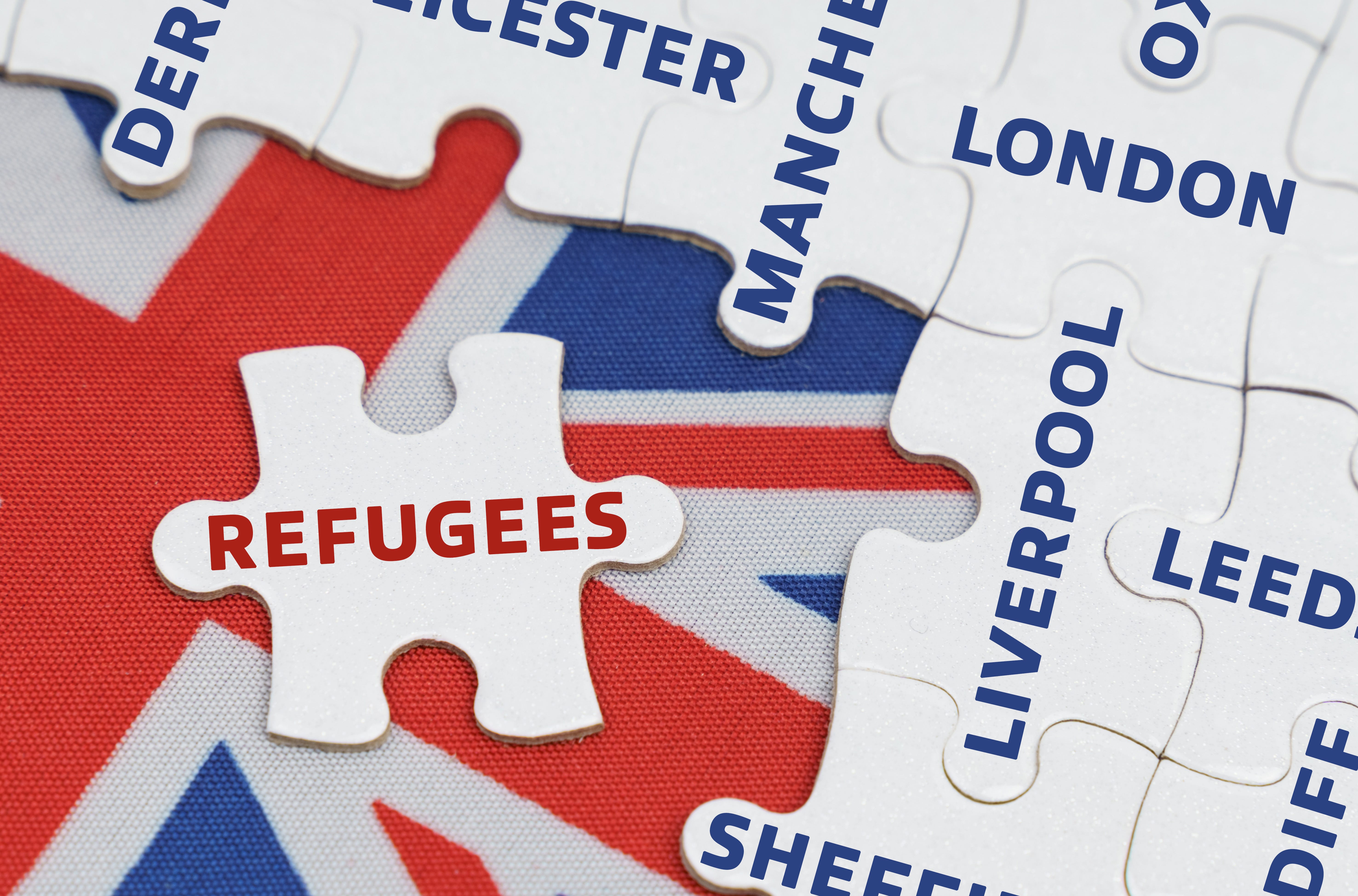
The UK government has made refugee protection temporary for 30 months or two and a half years. Where does that leave refugees and their life in the UK?
Fahmi Sidou, 40, is no longer a refugee. He is a British citizen. Despite the powers and freedom that come with this passport and nationality, he has not returned to his home country Syria since he left a decade ago.
“Every Syrian person would like to be back in Syria, but they know what’s happening, it’s not safe, and the government is not good.”
Aleppo to Oxford– not a silk route
Fahmi is Syrian, Kurdish, British. He wears his multiple identities lightly, but his journey from Syria to Oxford has been anything but light. Originally from Afrin, a Kurdish majority region in Aleppo governorate in western Syria, where Kurdish language and identity was prohibited by the Assad regime for decades.
“Kurdish people if we live in Syria or Iran, if we don’t say we are Kurdish, it is fine. But it’s a problem if we say Kurdish. My name is Arabic, not Kurdish. I don’t have a Kurdish name.”


Working in the car battery business, he earned £2000-3000 per month, a significant amount in pre-war Syria time.
“I was travelling so much within Syria, my job was good, I knew people, and people knew me. Here I don’t know my neighbour, but in Syria, I knew the entire city”.
Fahmi was one of the many who protested against the Assad regime. He says the photograph of him at the demonstration (featured above) could have gotten him killed in Syria a few years ago. Tragedy did strike Fahmi’s family with a missing brother in law, and one of Fahmi’s brothers was killed by the Free Army in Daraa governorate in southern Syria (later Yarmouk Martyrs’ Brigade, a group affiliated with ISIS). Soon, he and his brother’s family decided to leave Syria.
Syria to Jordan to Egypt and finally to the UK in 2017. Fahmi and his brother’s family were supported by the UN on medical grounds, as his brother needed urgent dialysis for his kidneys. 20,000 Syrians were rehabilitated in the UK between 2017-2020.
Fahmi fondly recalls the support he received from the charity Asylum Welcome. “Everything was ready in the house, the ID, refugee card for 5 years.”
‘If you said hello to me in English at that time, I wouldn’t have understood that!’
Fahmi was provided with English language lessons at a college in University of Oxford. One of his first jobs was as a cleaner in a restaurant. After a couple of stints in restaurants, he applied for a job as a maintenance worker.
The only problem– he did not know what ‘maintenance’ meant in English! But he did know the answer to the most important question in the interview– between a broken water pipe and electricity issue, which problem should be addressed first. He has been in maintenance work since 2022.
In 2018, Fahmi met his partner, also a Syrian, and previously a refugee.
‘It’s good when you work, you build connections, you know people. I have Syrian friends, Kurdish friends and English friends. Now I have more English friends.’
Plunging refugees into uncertainty with no durable integration to the UK
The United Kingdom, the safe sanctuary for many asylum seekers fleeing all kinds of circumstances, has left asylum seekers in dire straits. Inspired by the restrictive Danish model, to reduce irregular Channel crossings, and reduce ‘pull factors’ to the UK, every 30 months, or two and half years, a refugee could potentially be sent back to their home country, if the country is deemed safe. If not safe, the refugee file will be reviewed every two and half years, making any real and durable integration for the refugees in the UK challenging.
“30 months is no time at all to be offered protection. It offers no stability at all for the migrants to stabilise their current circumstances, their living arrangements, their plans for the future, and normalise their lives”, says Dr. Tamsin Barber, Associate Professor in Sociology, and Chair of the Migration & Refugees Network at Oxford Brookes University.
She also foresees that “existing communities in the UK would have to play a much larger role, much more reliance on existing ethnic diaspora in the UK, and step up and take a much larger role in supporting the arrivals.”
‘If people are lucky to have those affiliations, these will be ever more important’
Dr. Barber reflects on the safety aspect, “Two and a half years is not sufficient time for things to have improved in their home countries. And local relationships perhaps would have also gone awry. And the situation back home wouldn’t have settled down, and exploitation and threat would still be there in the communities.”
Fahmi’s hesitation to return to Syria, reflects this concern of safety. Ironically, despite protesting against the Assad regime, he says the current regime is more complex for people like him with multiple identities of Syrian and Kurdish.
“There is another problem now between Sunni, Alawaite, Kurdish, Druze, and Christians. In Syria, earlier we never had such problems. I worked with Sunni, Shia, Alawite, Christians, and we never asked when we met who is what.”
Dr. Esteban Devis-Amaya, Senior Lecturer in Spanish and Latin America Studies at Oxford Brookes University believes this change in refugee policy is ethically wrong.
“These people would have made a lot of connections their whole lives, would have been here, their families would have been created here, spouses, children. I think this anxiety is going to affect not only the refugees, but also those that are close to them, family members, friends, co-workers, etc.”
Dr. Esteban fortunately sees a silver lining and foresees that the administrative, social and cultural drawbacks for the Home Office will be so significant, that the policy change could be repealed later.
‘Firstly, it’s safe. People are kind. If there’s a problem with the government, you can speak to the government and question the government.’
Fahmi says he would still come to the UK, even if it was temporary.