


Successful shooting, from a British pickup, of a Russian Drone on the Front Line Video: Arnie
Russian warfare using drones is now a daily occurrence in Ukraine and not just on the front line. Drone warfare gives greater distances from which to operate but for the target there is little or no warning of the attack.
Driving Ukraine, a small charity, is making sure help gets to where it is most needed.
In the UK we have pain at the increase in Gas prices but there is a gain for Ukraine with South Oxfordshire farmer Guy Hildred. Using an anaerobic digestor (AD) he generates biomethane and injects it into the gas grid. This enterprise has benefited from gas price increases but Guy is keen to give back.
Guy Hildred is about to embark on his 5th departure to Ukraine, taking supplies and vehicles.
Guy explains “Russian’s invasion of Ukraine had just been announced. I walked up to the top of my hill … and felt so angry that I thought I need to do something to help. I felt incensed that Russia was taking away life and livelihoods from innocent hard working people. This invasion meant there were dwindling gas supplies coming into Europe from Russia so the gas price I was supplying into the grid was going up. I needed to give back from the benefit I was gaining”.
Driving Ukraine
Guy volunteers with Driving Ukraine which organises monthly convoys of vehicles, “I bought two from Mapledurham Farm Sale a few weeks ago” he says. These vehicles are loaded with supplies. Both supplies and vehicles are left in Ukraine ready for a further purpose. Pointing to a storage unit he explains ‘that’s crammed full with out of date NHS supplies. This saves the NHS money as they would have to pay to dispose of it all”.
Jacob Simpson from Driving Ukraine, based in Oxfordshire, said “Guy has been to Ukraine more than any other volunteer, he buys and donates the vehicles, he has involved all his friends, Guy is a community leader, he has championed the cause. Indirectly he has contributed to almost 20 vehicles”
Jacob continues “I spoke Russian so when the full scale invasion began I felt I had to do something. I had a friend, Fynn Watt, who also felt compelled to help. He had cancelled his 21st, bought a vehicle and then left it out in Ukraine. He was then given a fire engine land rover from Biggen Hill airfield, rang me asking “what are you doing this weekend?” and the rest is history. Driving Ukraine was on the road.
Vehicles have a different life ahead of them
These vehicles have a different life ahead of them as they get used for a variety of uses.
Combat medic vehicles “Stas lost his leg 2 years ago and was extracted by a British pick up – this saved his life”;
gun transporters to shoot down drones “these vehicles allow them to quickly change position”;
mobile hospitals “she drives to the front and stabilises the wounded soldier”;
body repatriation vehicles “Ukrainians have a deep respect for the fallen”;
special operations and bomb disposal.
You can tell Guy remains angry when he says “the Russians launched a kamikaze drone strike with a Shahed on a kindergarten in Kharkiv. There was nothing nearby that could have any military significance. Luckily everyone escaped this time but small children were traumatised in amongst explosions and fire. They’ve just massacred 15000 pigs with a drone flying in and blowing them up. As a Father and a Farmer this really gets to me.”
Final preparations – largest convoy to date
Guy is joined by two friends and a brother-in-law for his 2064 km journey to Lviv. As they cram every last box they can manage into the vehicles, they jostle each other for the one pack of reflector stickers for the lights. The ones left without are resigned to finding a pack in a petrol station before they leave UK!


Have they each got personal insurance? No, their insurance companies won’t cover them for visits to Ukraine. Phil, Guy’s brother-in-law, has the answer “I contacted Visit Ukraine and for a three day visit within Ukraine you can get a policy for £15.” Having just regaled his driving mates with a story, from a previous trip, of near death on the Ukrainian roads, “all road signs and markings have been removed”, it looked like there were going to be three more policies bought before departure!
“My relatives are on the front line”
The rest of the convoy assembles in Heyford the night before. All with one intention to give back and do something purposeful. Buddy Wilkes 19, a student from Los Angeles studying history at St Andrews said “I want to stay on the right side of history”. Liudmyla Kear (49) a Ukrainian living in the UK is on her third trip and explains “it’s important to help – my relatives are on the front line”.
Six o clock the next morning Jacob and Fynn ensure the hand held radios are working, “each vehicle has one”, and that each car has it’s vital documents. “Whatever you do, do not lose the V5C, it’s your car’s passport, this is more important than you, if this gets lost or damaged the vehicle cannot get into Ukraine.”
The briefing is in full swing “we have a recovery car. It is the red hi lux. It has tools, it has oil, coolant, towrope, jumpies. Speed limit for the vehicles is 70 mph, some of them are over 20 years old and we need to be nice to them.
“Make sure the WhatsApp location is on at all times. Co-drivers are the most important people in the car. We don’t need vehicles going like veins across Europe in all different directions.”
This convoy has a total monetary value of £52,400 but as Jacob says, “message all your friends” as cash donations can still be made whilst in transit.
On the road “it gets serious from here on in”


A rough ferry crossing with overnight stop in Dortmund and onwards the next day for 850 km to Katowice. The WhatsApp messages include Saturday 09:08 “all vehicles still running after 100 miles, one puncture, one check engine light (not serious) one loose bonnet, one timing belt warning light …long day yesterday but not hard driving, motorways long and straight and mostly smooth (except some older concrete ones) …. It gets serious from here on”. 20:46 that same day “we’re here”.
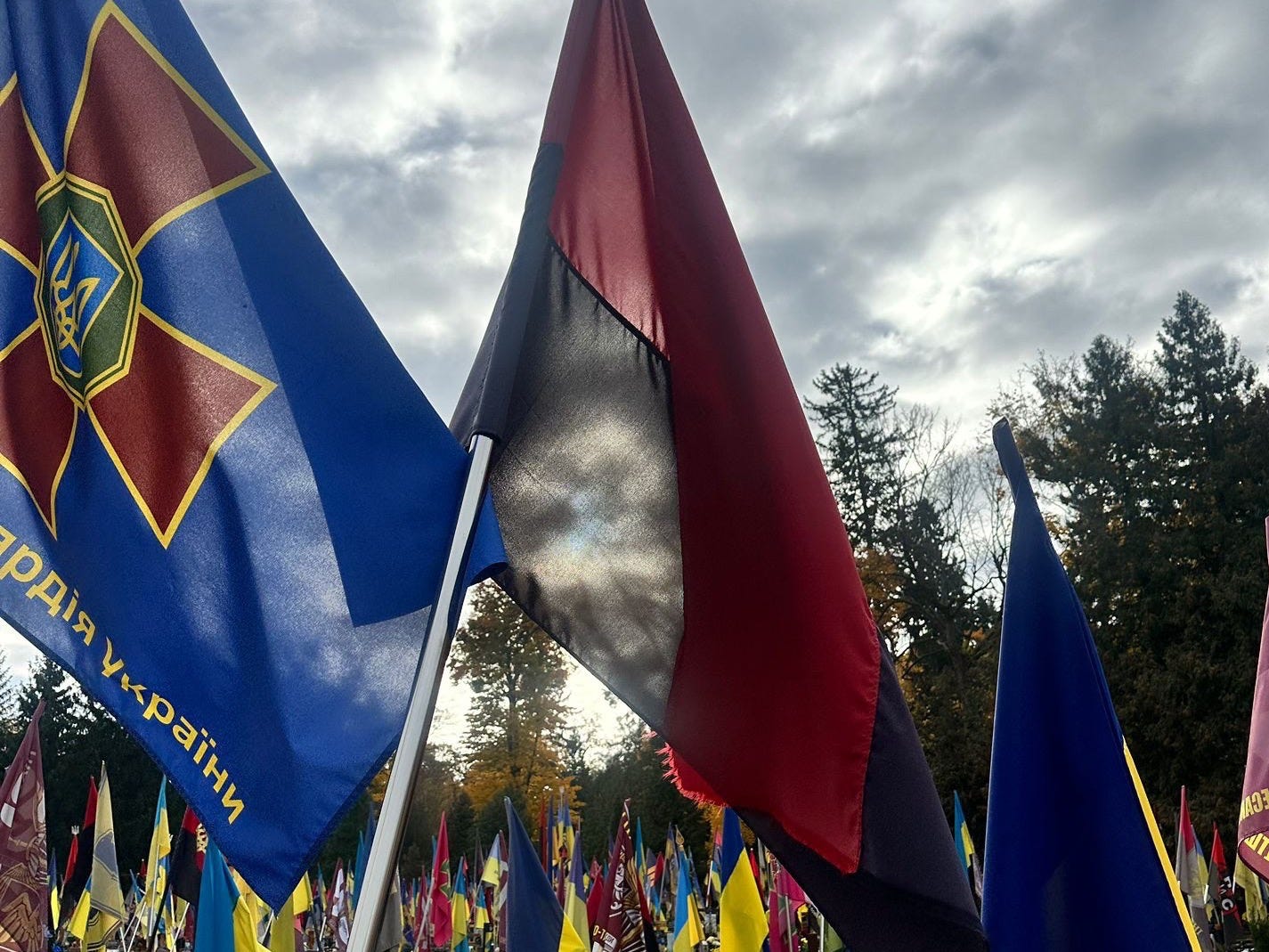
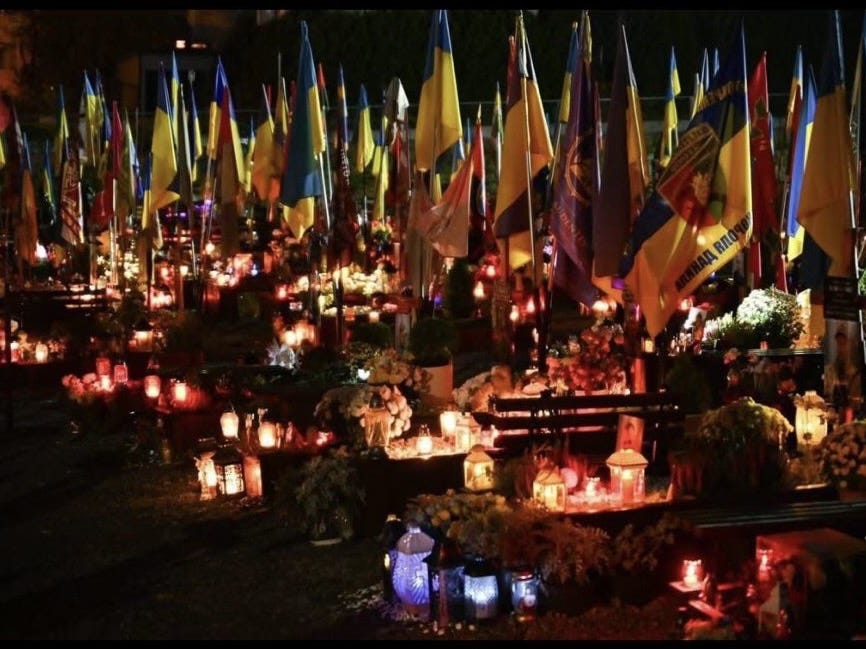
13 vehicles are handed over in Lviv to a Ukrainian, Maksym. They are immediately taken to a Driving Ukraine funded workshop and made fit for their next purpose. The message at 13:56 on Sunday is “… off to city war cemetery – very emotional”


Maksym tells them “I am standing in front of several of my friends who I have known all my life and who cannot be with us ever again. Without your support I can definitely say that there would be more of my friends in this graveyard.”
Not born for War
Many of those people now on the front line were not born for war. They didn’t train to be soldiers. They were builders, farmers, accountants, solicitors, business owners, to name but a few professions. Now they are soldiers.
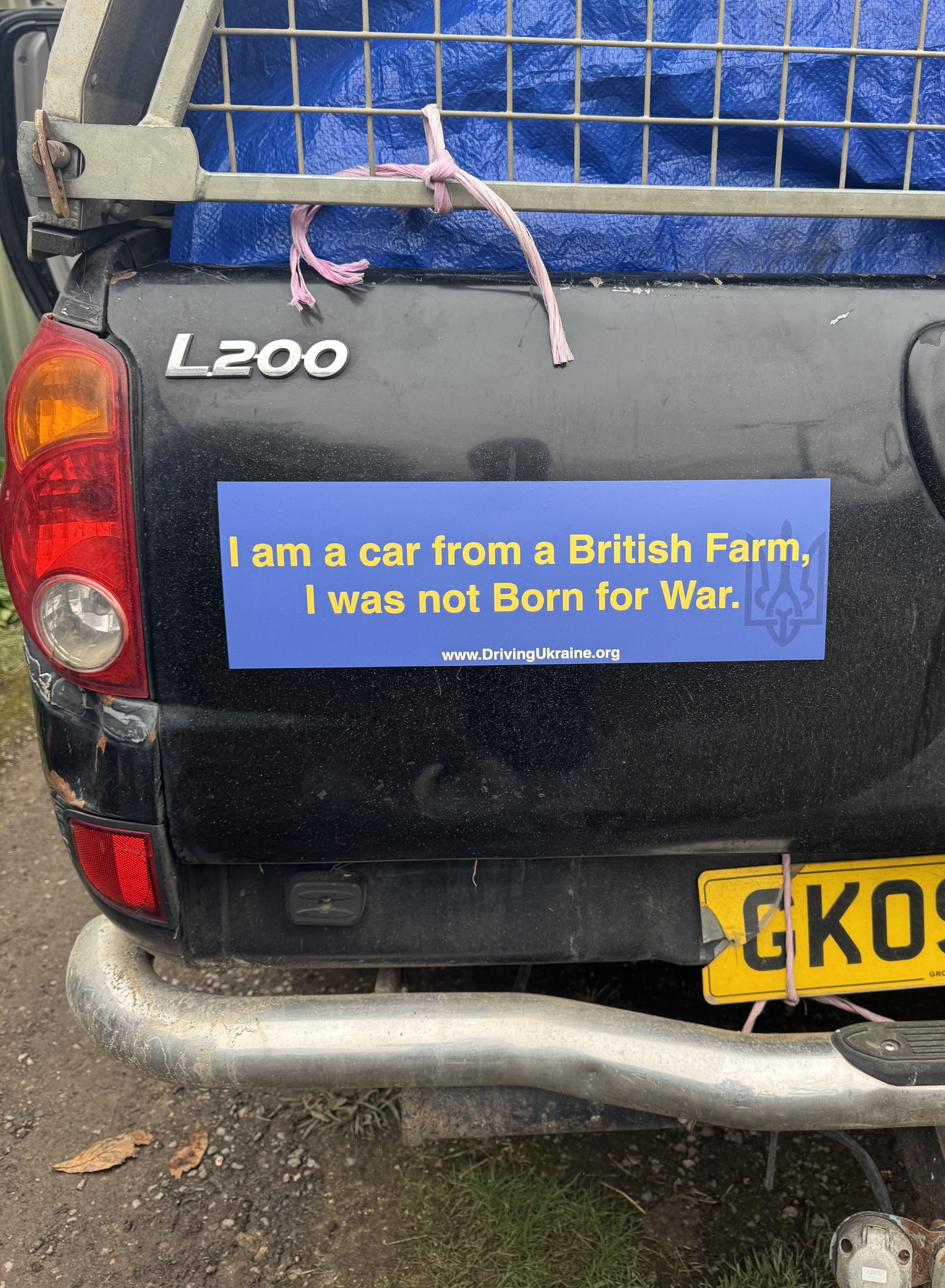
These pickups were also not born for war. They were farm trucks, builder’s trucks, used for towing heavy vehicles, carting heavy machinery, real workhorses of the modern day farm. Now they are military vehicles.
Driving Ukraine literally delivers what it sets out to do. Jacob says “many high earners like to know that their donations are actually reaching the intended destination and not getting lost in bureaucracy. Our donations get to the end user.”
“We are fighting them so that your children won’t have to”
Maksym concludes “It is very tough now at the Front. Please go back and let everyone know that we are fighting them so that your children will not have to, because for sure they will never stop as that is not the Russian way. They only know violence, destruction and cruelty. The Russians have to be stopped, we don’t need your soldiers but we do need the type of help that you are so generously giving”
This war is not in our history books yet. You can support Driving Ukraine at https://drivingukraine.org/donation/ Fynn Watt, Founder of Driving Ukraine, age 22, has been awarded the highest civilian honour a volunteer can receive from the Ukrainian military.