


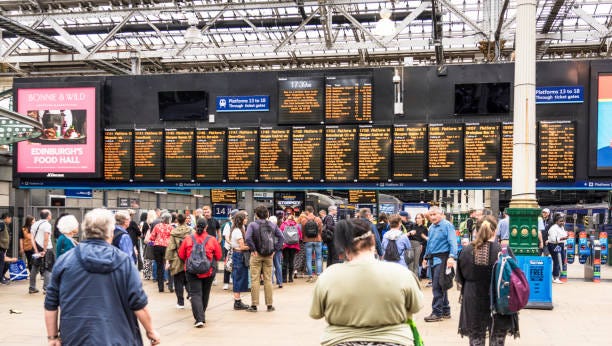
The nationalisation of the UK’s railway network is well underway, with the task set to be complete by late 2027, and the pressure is certainly on the government to get it right. It’s not news that the trains in this country can be unreliable, but just how often are passengers being dealt the day-ruining blow of seeing the dreaded “Cancelled” sign on the dot matrix board? The TOC’s that connect the UK’s major cities, like Avanti West Coast and CrossCountry perform significantly below the national average, which becomes a problem for so many, as you would think reliable connections between places such as London, Birmingham and Manchester would be the basis of a successful network.
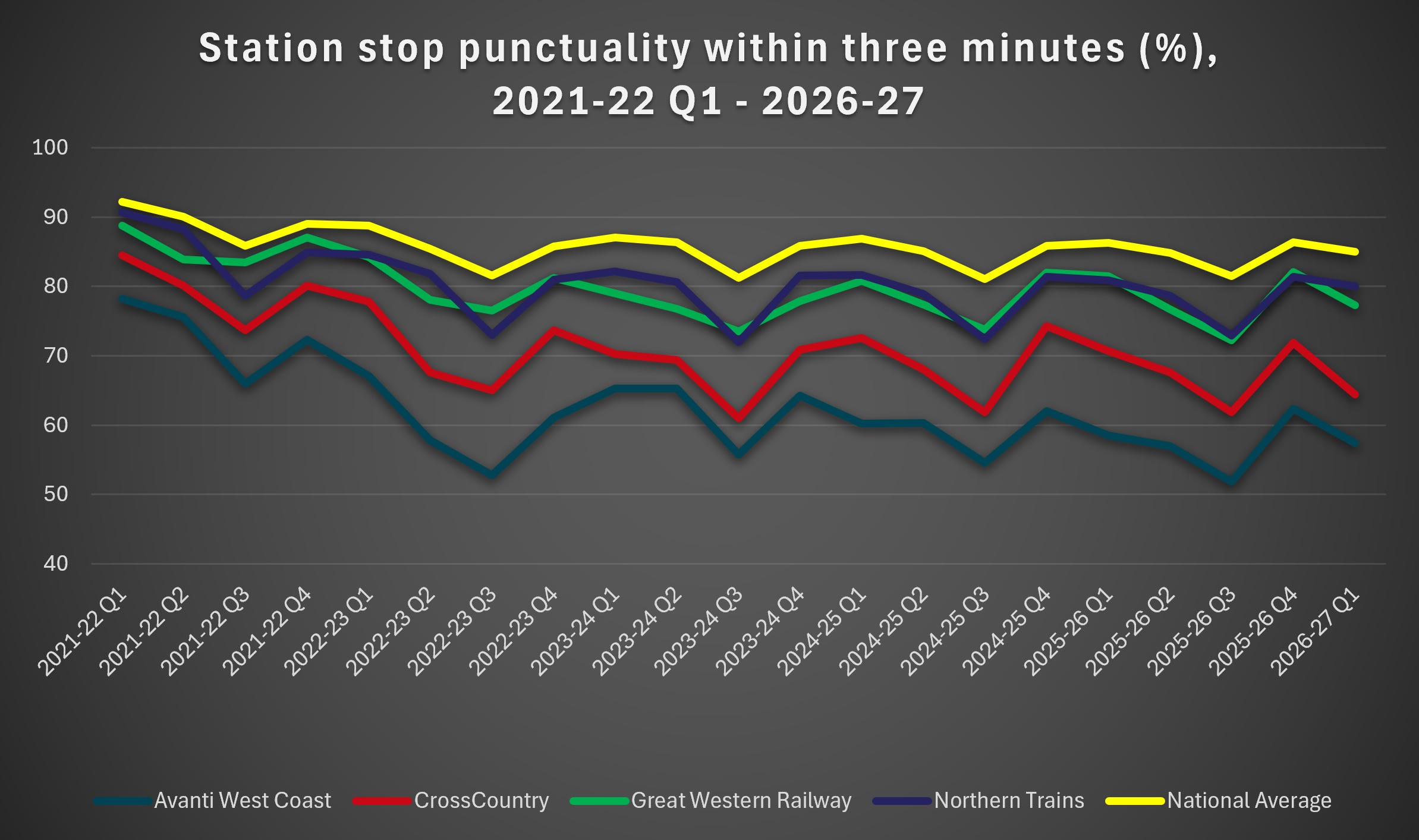
The Office of Rail and Road’s quarterly reports demonstrate that the situation is going off the rails, pardon the pun. The above graph is a damning visualisation of the situation getting progressively worse, especially for TOC’s primarily delivering long distance services like Avanti West Coast. There is something to be said for that being a factor in their tardiness, but is being nearly 30% below the national average for station stop punctuality excusable? Of course, longer distances mean more room for breakdowns, congestion and overcrowding, but that hardly seems justifiable with a fleet of modern trains, with their latest “Evero” stock being only a couple of years old. The operators that are more regional based like Northern have performed better in punctuality, but at 80% station stop punctuality within 3 minutes, it’s not exactly something to brag about. Whilst there’s a trend that favours regional services, it’s crystal clear that the problem lies beyond services being long distance or short.
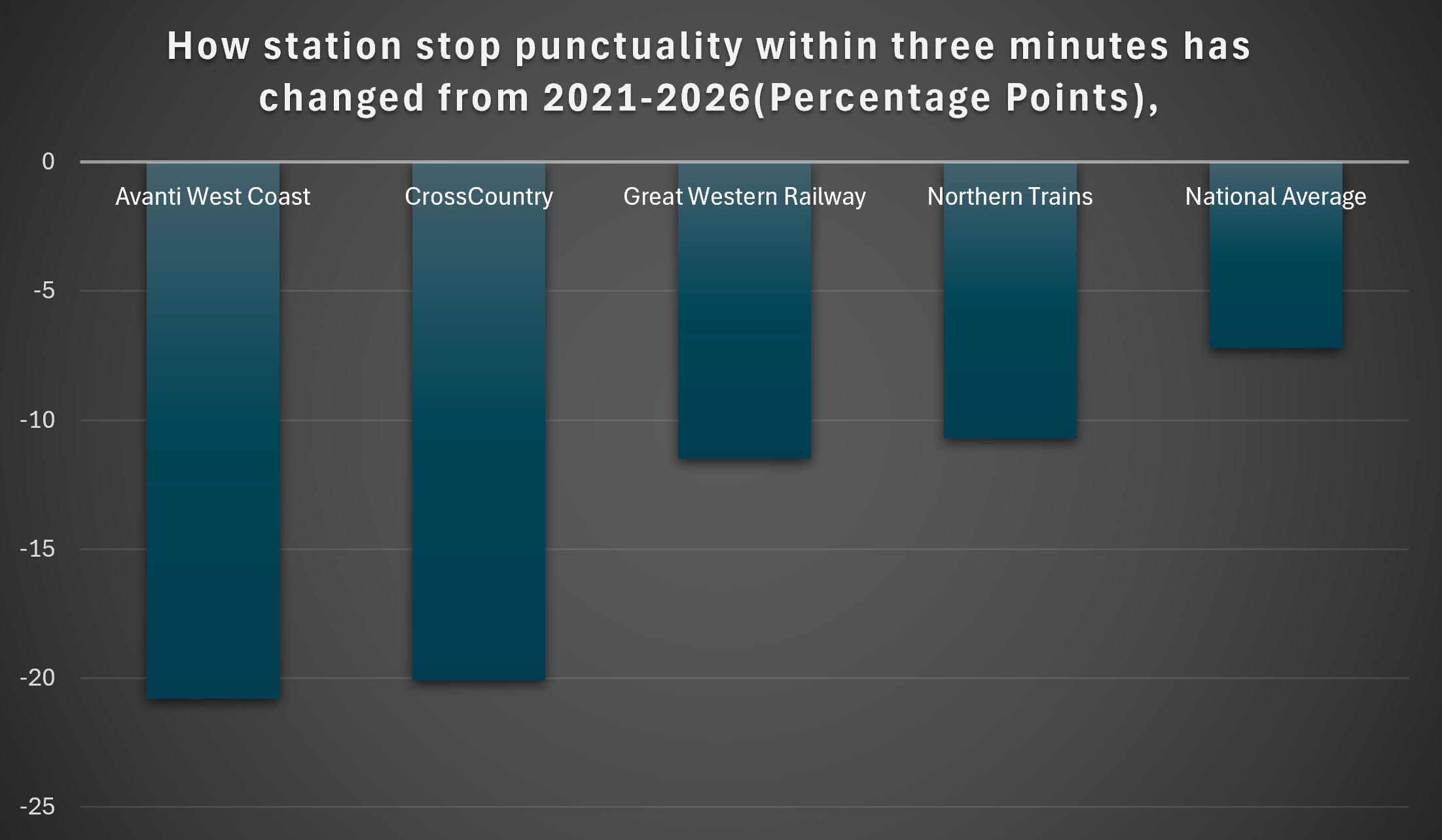
It is clear as day that Great British Rail has a mountain to climb to get things back on track for passengers across the country, and Burnham and co. shouldn’t shy away from hefty investment, with the last five years and their bleak figures all but summing up the pitfalls of private ownership. Station stop punctuality has decreased across the board, but to drop by over twenty percent since 2021 is quite the embarrassment for Avanti West Coast and CrossCountry. Interestingly, each operator appears to follow a pattern of peak and trough, only the two aforementioned TOCs perform consistently below others.
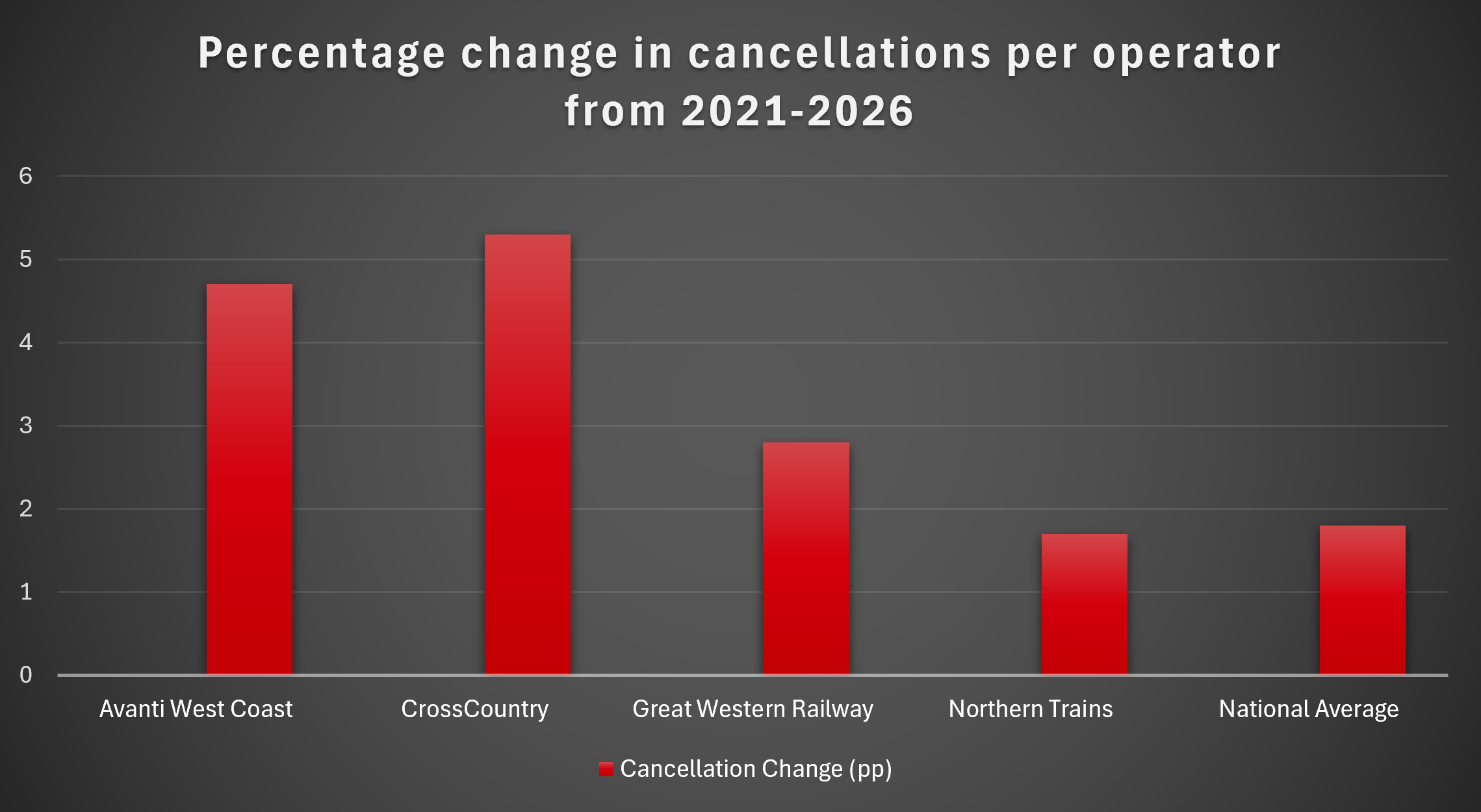
Another measure of reliability is train cancellations, and the above graph shows an across-the-board increase, with Avanti and CrossCountry yet again exceeding the national average, as well as Great Western Railway. Things look particularly bleak in this area for CrossCountry, having seen the amount of cancellations increase by more than 5%. As a regular customer aboard their trains, it’s safe to say that they don’t shy away from cancelling services, sometimes forecasted bad weather being all it takes for an entire service to be scrapped.
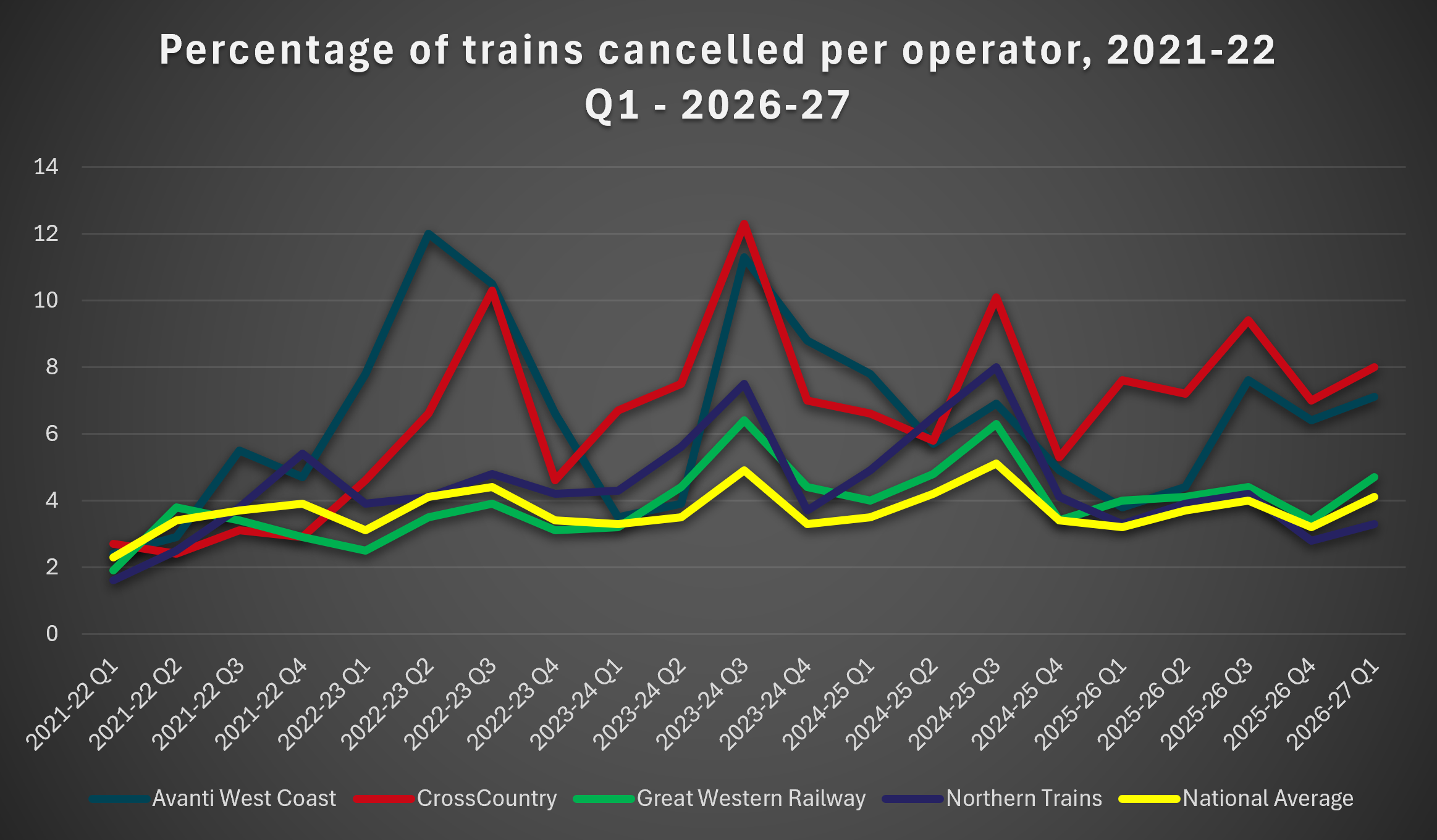
Interestingly, cancellations have seen several surges over the past five years, no doubt hugely augmented by the strikes undertaken across the network, something that the government must look to address if these statistics are to improve in any capacity.
Of course, it is a recipe of factors that cook up these delays and cancellations, but at what point can the TOCs no longer be blamed? The weather in the UK is renowned for its changeability and harsh nature, which undoubtedly plays a significant part in the fate of many services. Only last week, nearly every train on Great Western Railway and South Western Railway was disrupted either in the form of cancellation or severe delays because of Storm Boelo. Whilst there comes a point where safety takes priority in the case of bad weather, pre-emptively cancelling services over 24 hours before they are scheduled to run seems half hearted and almost cowardly.
So can the government change the fate of the railways with nationalisation? It remains to be seen, but plans are afoot for much more uniformity across the network in terms of rolling stock, which is a promising start, but whilst this could lead to collective improvements, it could also lead to further collective decline.