


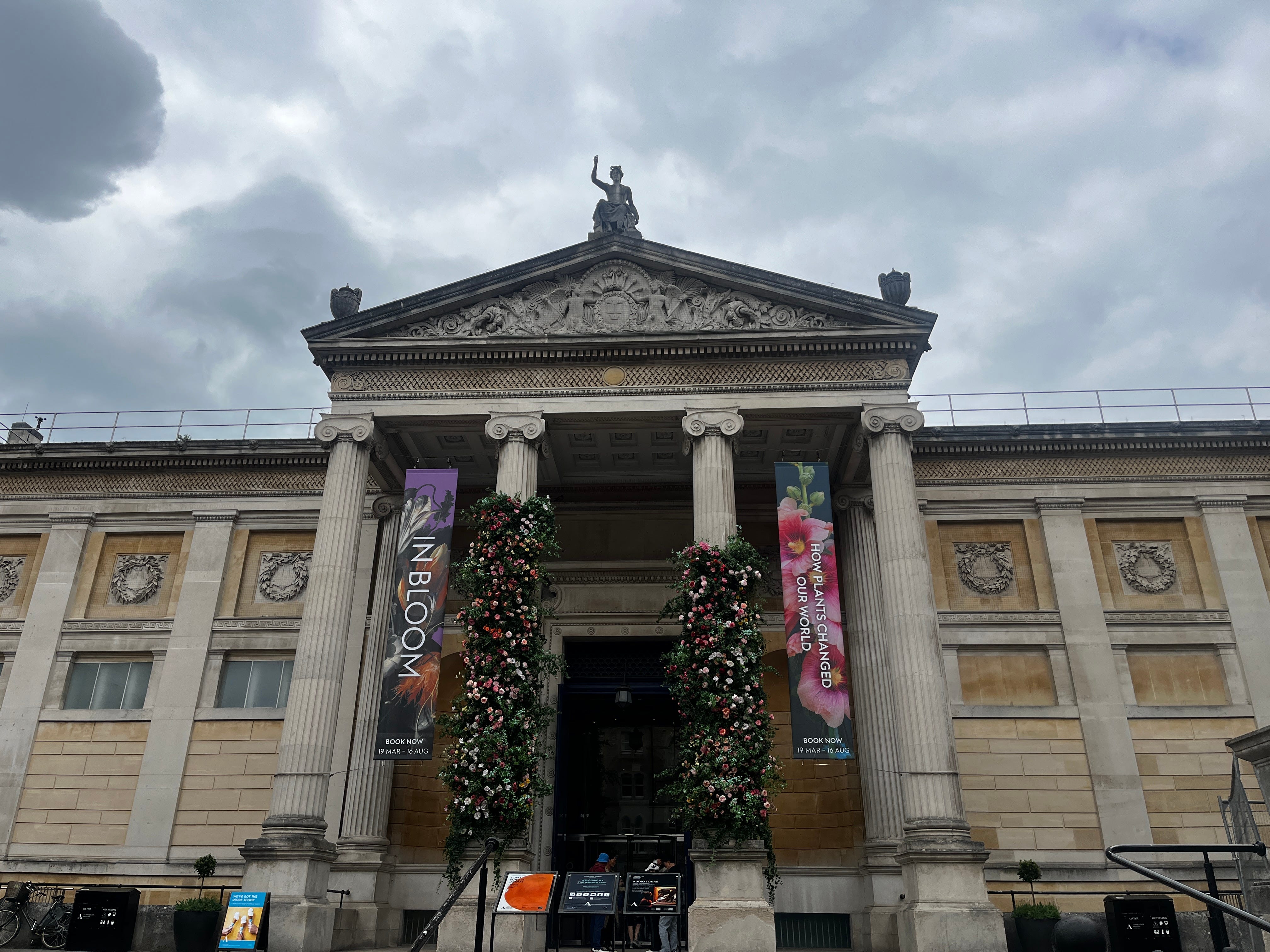
The Ashmolean Museum was founded in 1683 as the world’s first university museum founded by Elias Ashmole, who gave his extensive collection of curiosities to Oxford University.
I recently visited the first floor of the museum and was astounded by the amount of history, information, and artistry contained within its walls. What impressed me most was not only that I would love to re-visit and take a look at the other floors, but how connected I was to my own humanity. Bringing centuries of human creativity and discovery together in one place can make the past feel vivid, personal, and remarkably alive.
The Ashmolean is far more than a gallery of ancient artefacts and fine art – it is a living archive of human curiosity. As the first public museum in Britain, today its significance is often referred to as ‘crossing cultures, crossing time,’ renowned for its vast collections of archaeological findings.
At the heart of the Ashmolean Museum lies a story that stretches across centuries, cultures, and civilisations. From Egyptian mummies and classical sculpture to Renaissance paintings and contemporary exhibitions, its collections reveal the ways people have sought to understand the world and their place within it, offering a unique journey through history under one roof.
The Arundel Marbles Collection
These remarkable sculptures once belonged to Thomas Howard, one of England’s greatest art collectors during the reigns of James I and Charles I. By the time of his death in 1646, Howard had assembled an extraordinary collection of over 700 paintings alongside sculptures, inscriptions, jewellery, drawings, and furniture, earning him a reputation as one of the most important patrons of art in seventeenth-century England.
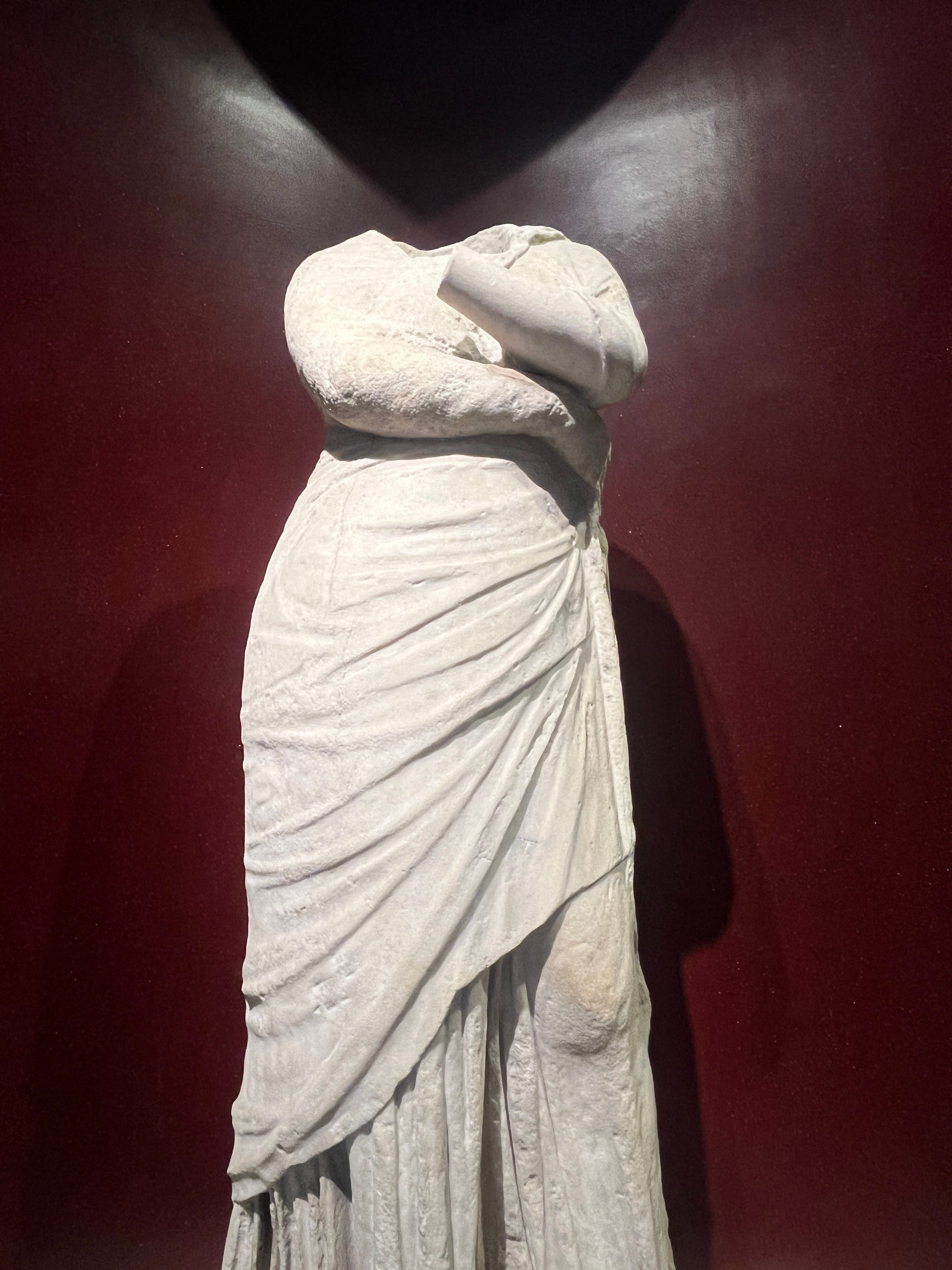
Among the marbles on display was a striking statue of a woman posed with her arms held tightly across her body in the classical ‘Pudicitia’ stance, a style commonly used in Asia Minor, now modern-day western Turkey. Dating from the late Hellenistic period between 200 and 1 BC, the sculpture conveyed both elegance and restraint, reflecting the ideals of femininity admired in the ancient world.
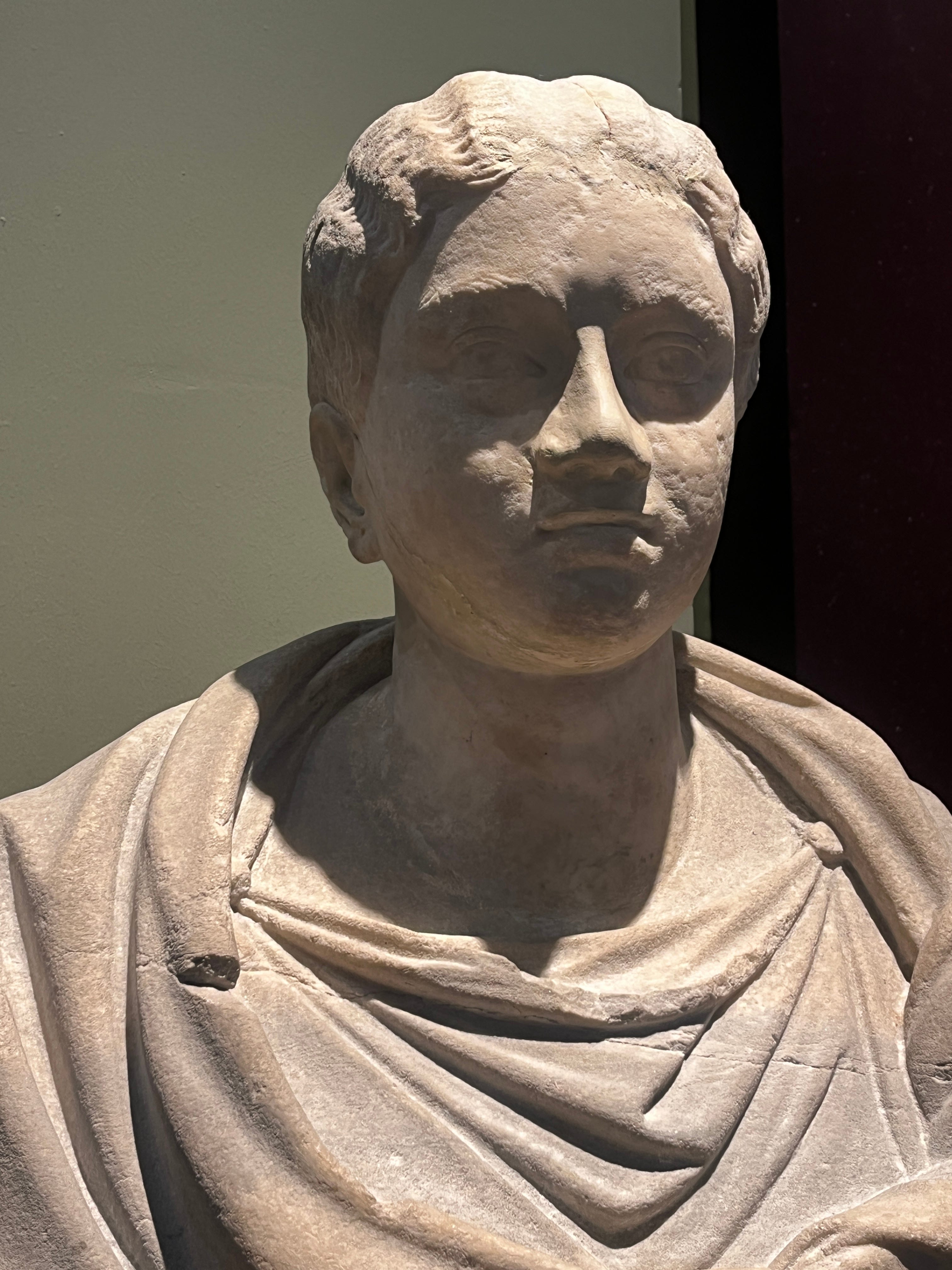
Another memorable piece was a marble bust of a woman featuring the distinctive hairstyle of Antonia Minor, the daughter of Mark Antony and niece of Emperor Augustus. Interestingly, the museum notes revealed that the head and bust were created in entirely different periods – the head dating from 41–54 AD, while the bust itself was produced much later, between 1600 and 1750. This unusual combination highlights the long and complex history behind many classical artworks and the ways they have been restored, altered, and preserved over centuries.
Excavations in Rome
For Thomas Howard, collecting ancient art was not simply a hobby, but a statement. The ideals of ancient Rome, particularly gravitas, honour, virtue, and nobility deeply appealed to him, and he surrounded himself with objects from Greece and Rome that reflected these values.
During a visit to Rome between 1613 and 1614, Arundel was even granted permission by the papal authorities to carry out excavations, uncovering several ancient statues. Although, in a twist worthy of an archaeological reality show, later rumours suggested some of the objects may actually have been planted for him to ‘discover.’
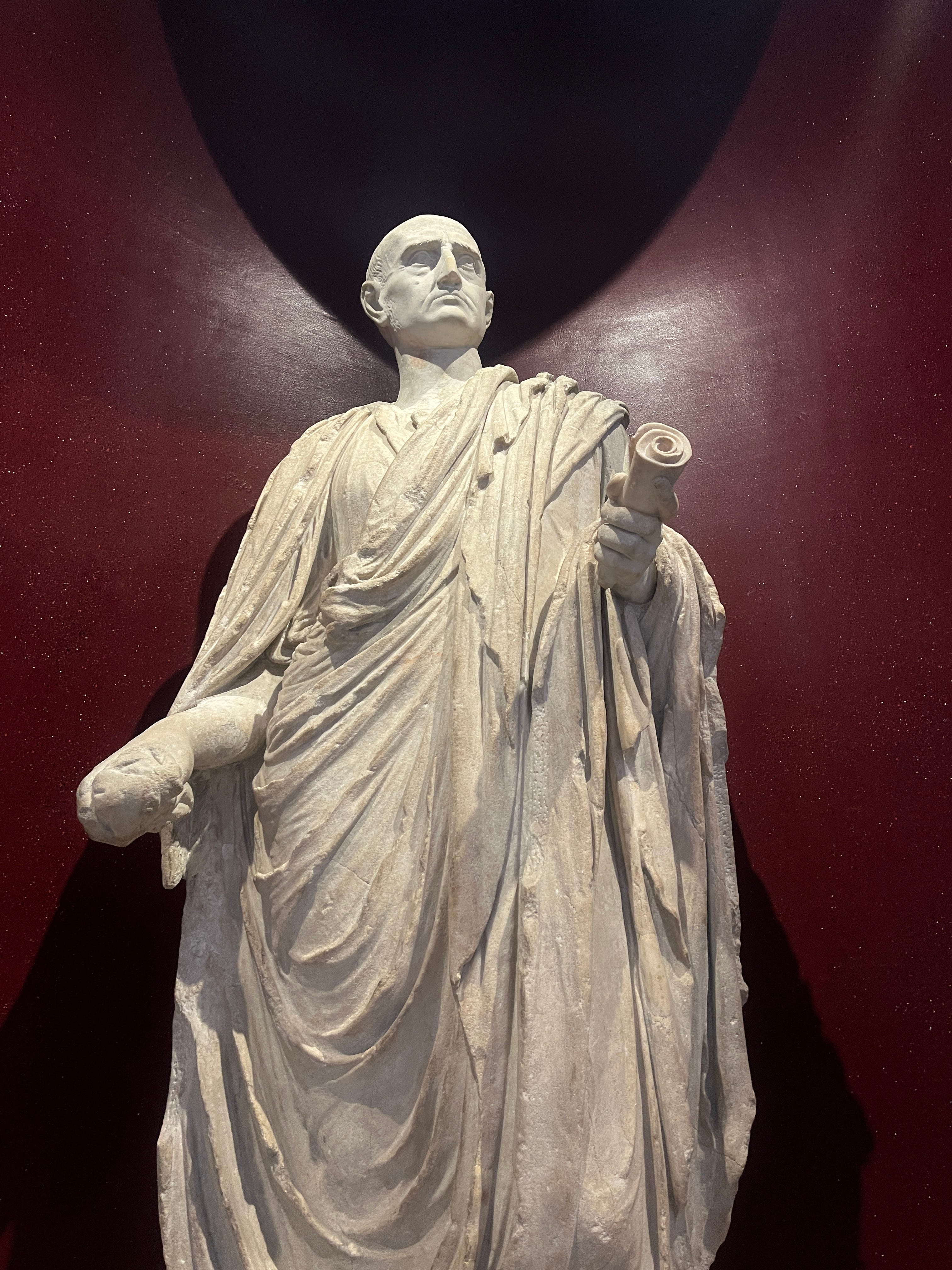
One of the most striking statues linked to these excavations was a marble figure of a man wearing a toga, nicknamed ‘Cicero.’ The statue gained its famous identity because restorers in the 1700s added a wart to the right cheek.
Nearby stands a draped female marble statue inspired by representations of Aphrodite, the ancient Greek goddess of love, beauty, pleasure and procreation – blending Roman craftsmanship with earlier Greek artistic ideals.
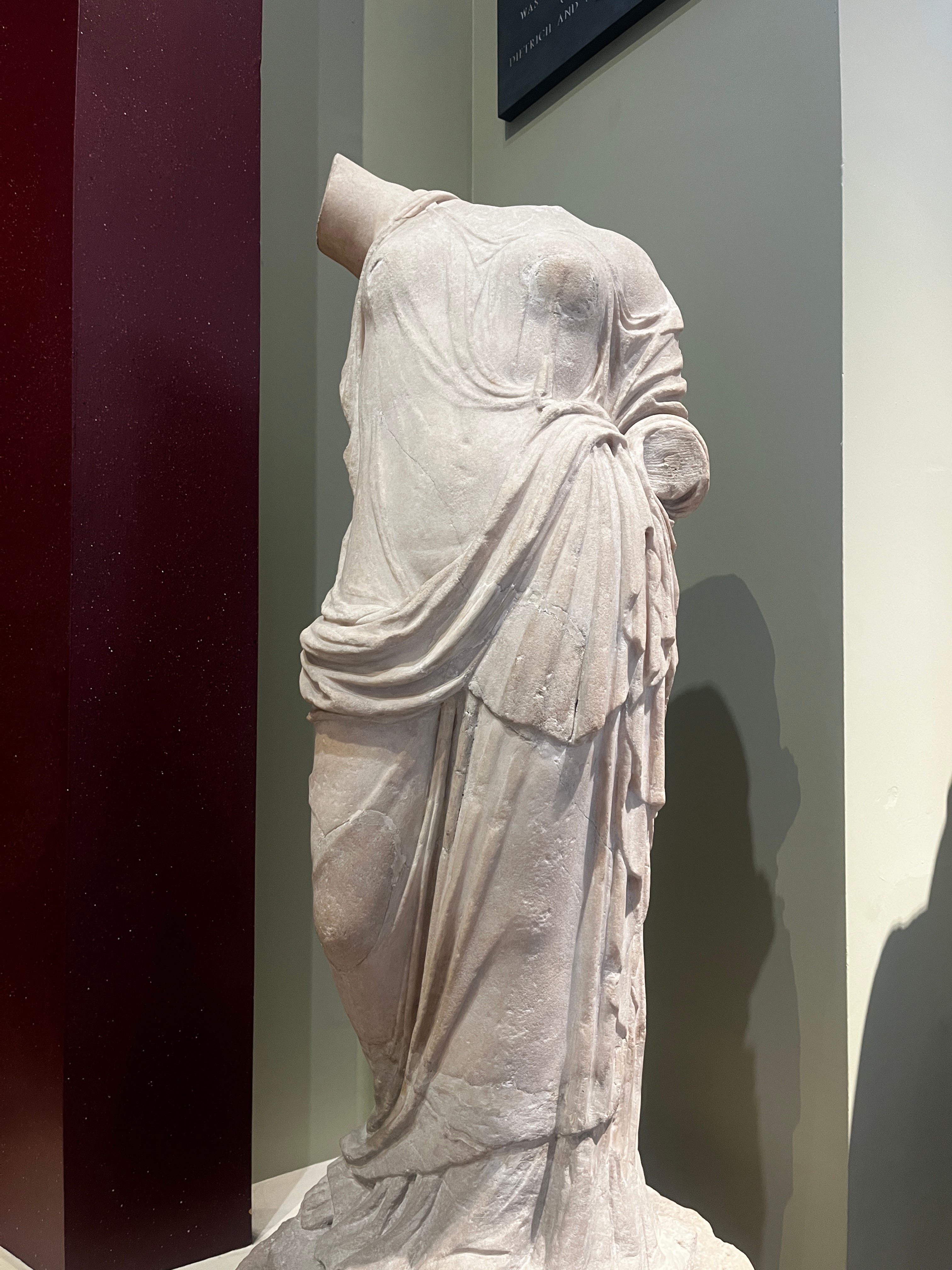
Another portrait bust revealed just how complicated the survival of ancient sculpture can be: the head and body did not originally belong together, and the cut beneath the neck suggested the head had once been attached to an entirely different statue. Ancient art restoration often seemed less like careful conservation and more like an enormous historical jigsaw puzzle with several missing pieces.
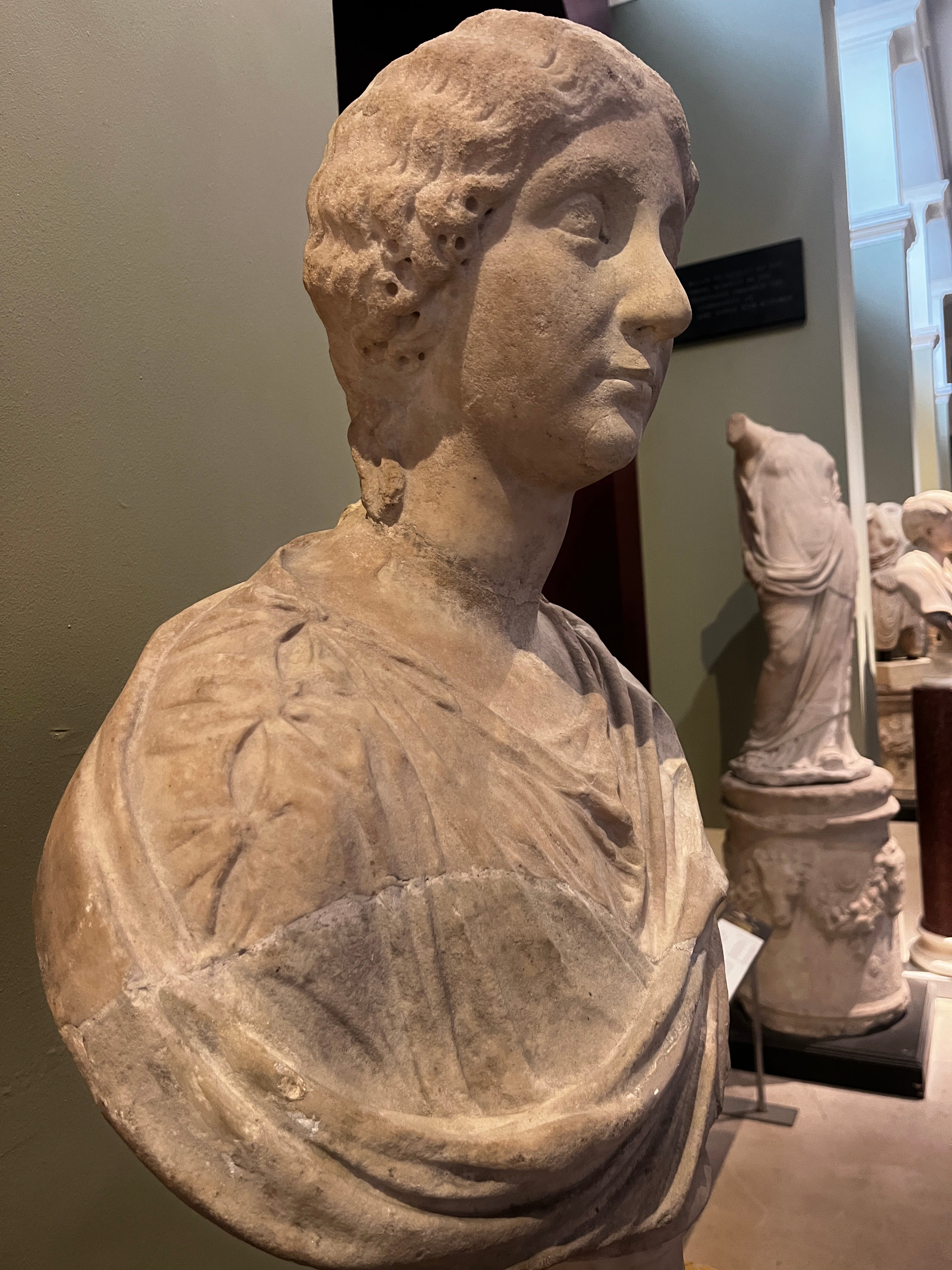
The collection also includes a beautifully carved marble throne dedicated to the gods Isis, Osiris, and Anubis by a Greek priest named Archidamos. Originating from Delos during the Hellenistic period, the throne highlighted the mixture of Greek and Egyptian religious influences that shaped the ancient Mediterranean world.
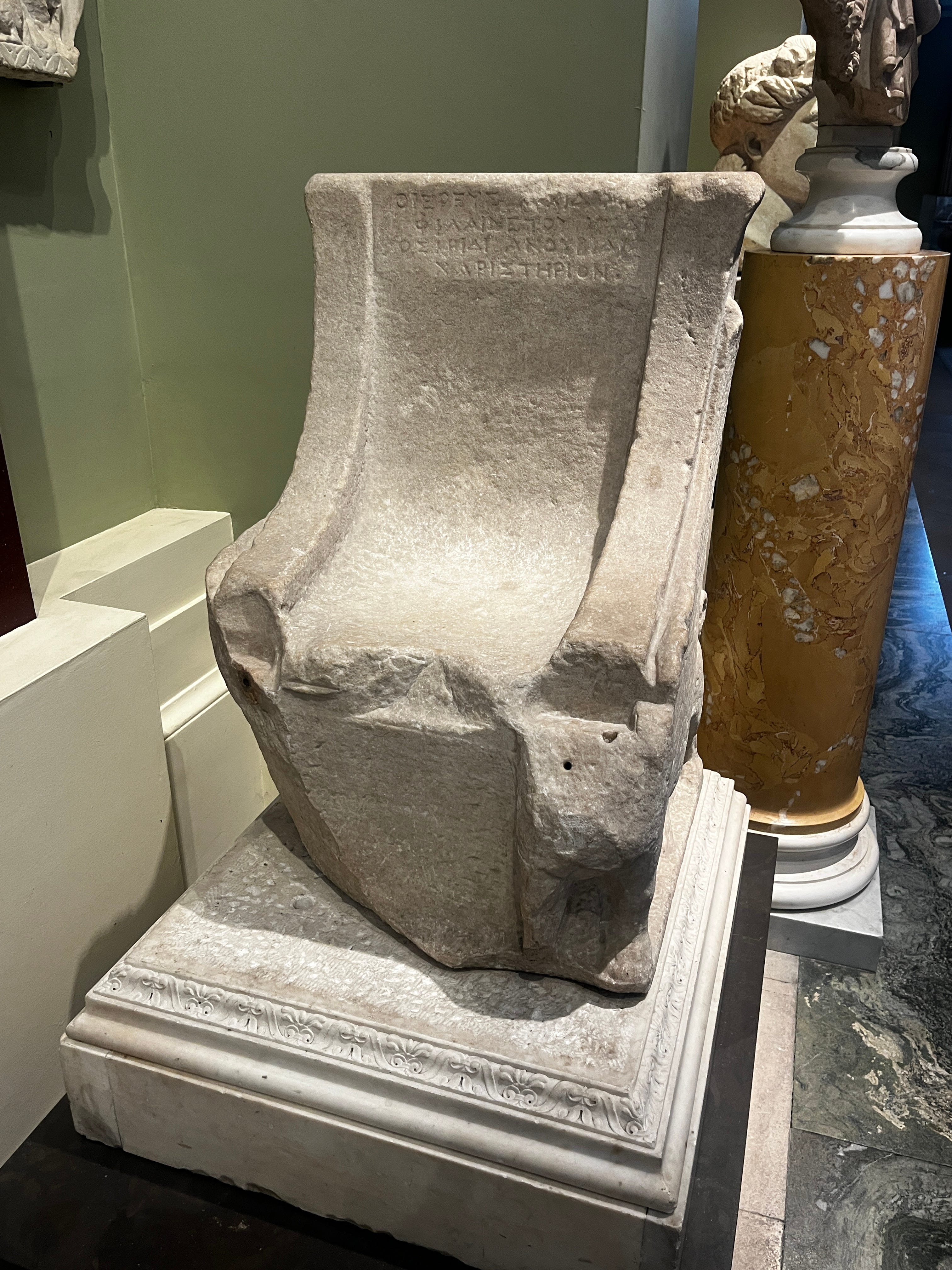
Elsewhere, a colossal marble head of Apollo dominated the gallery. Its nose, mouth, chin, and even sections of the hair had undergone repeated restorations since the 1600s, making it difficult to know exactly where the ancient sculpture ended and later repair work began. Still, the sheer scale of the piece made it impossible to ignore.
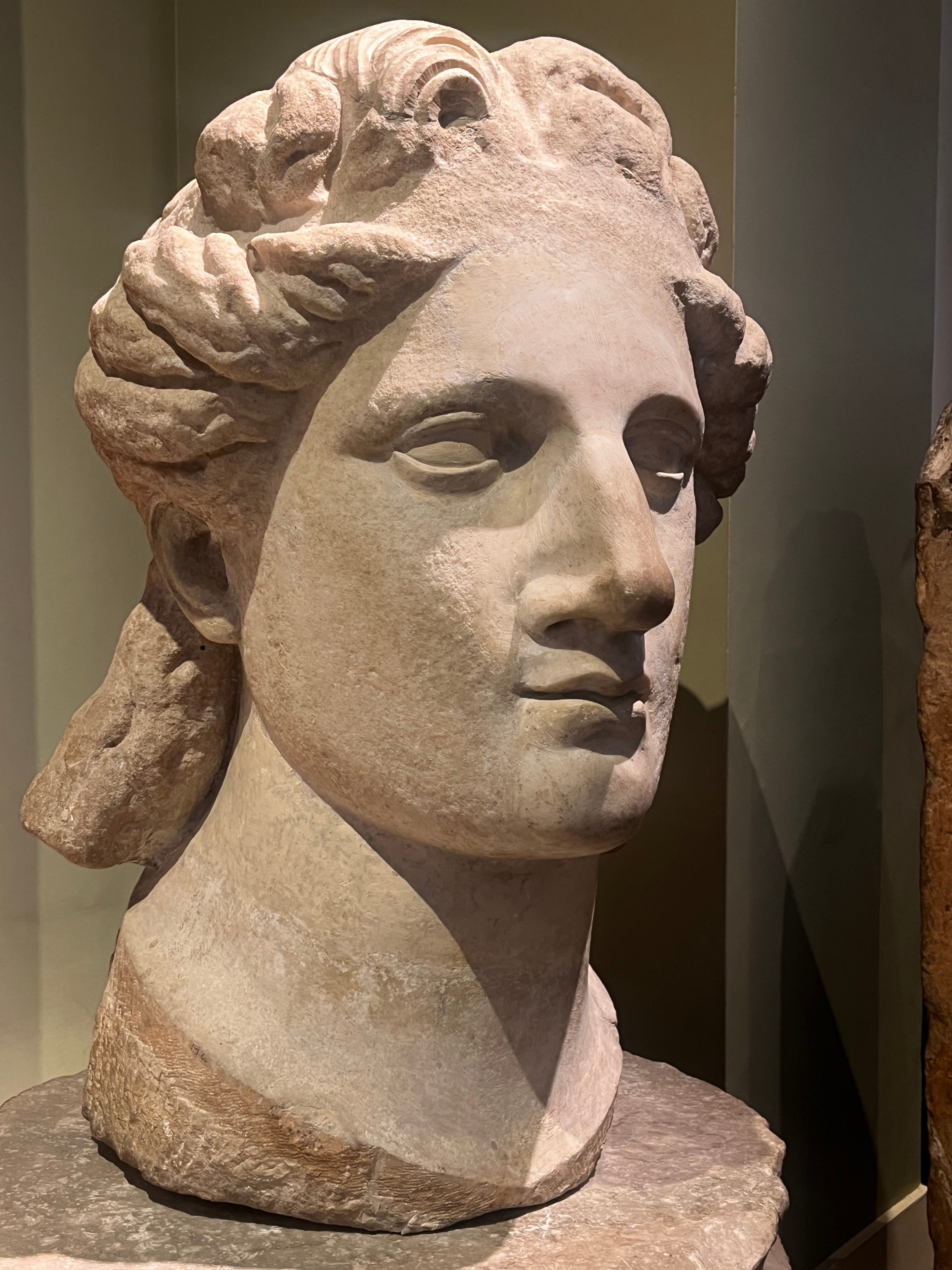
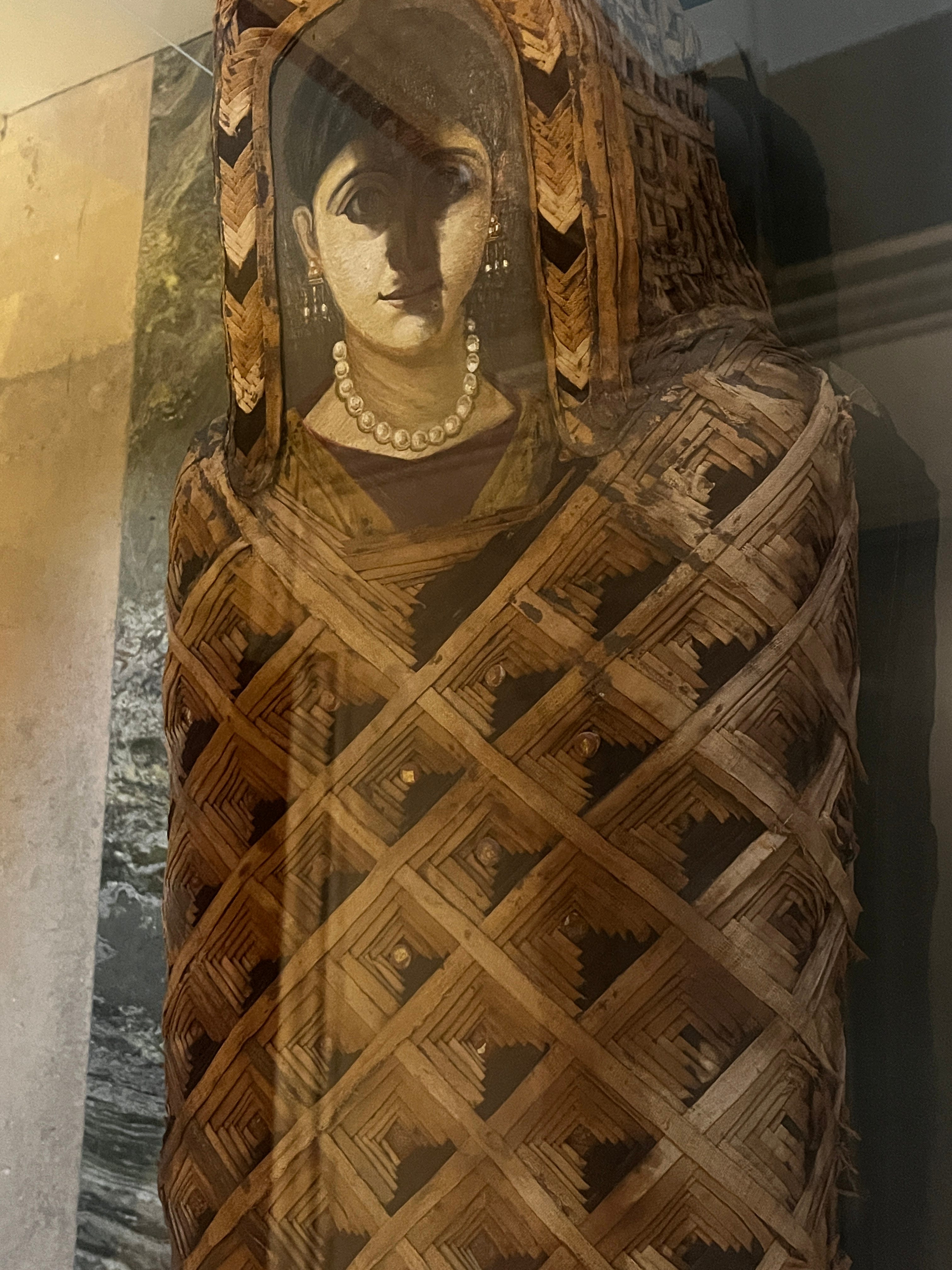
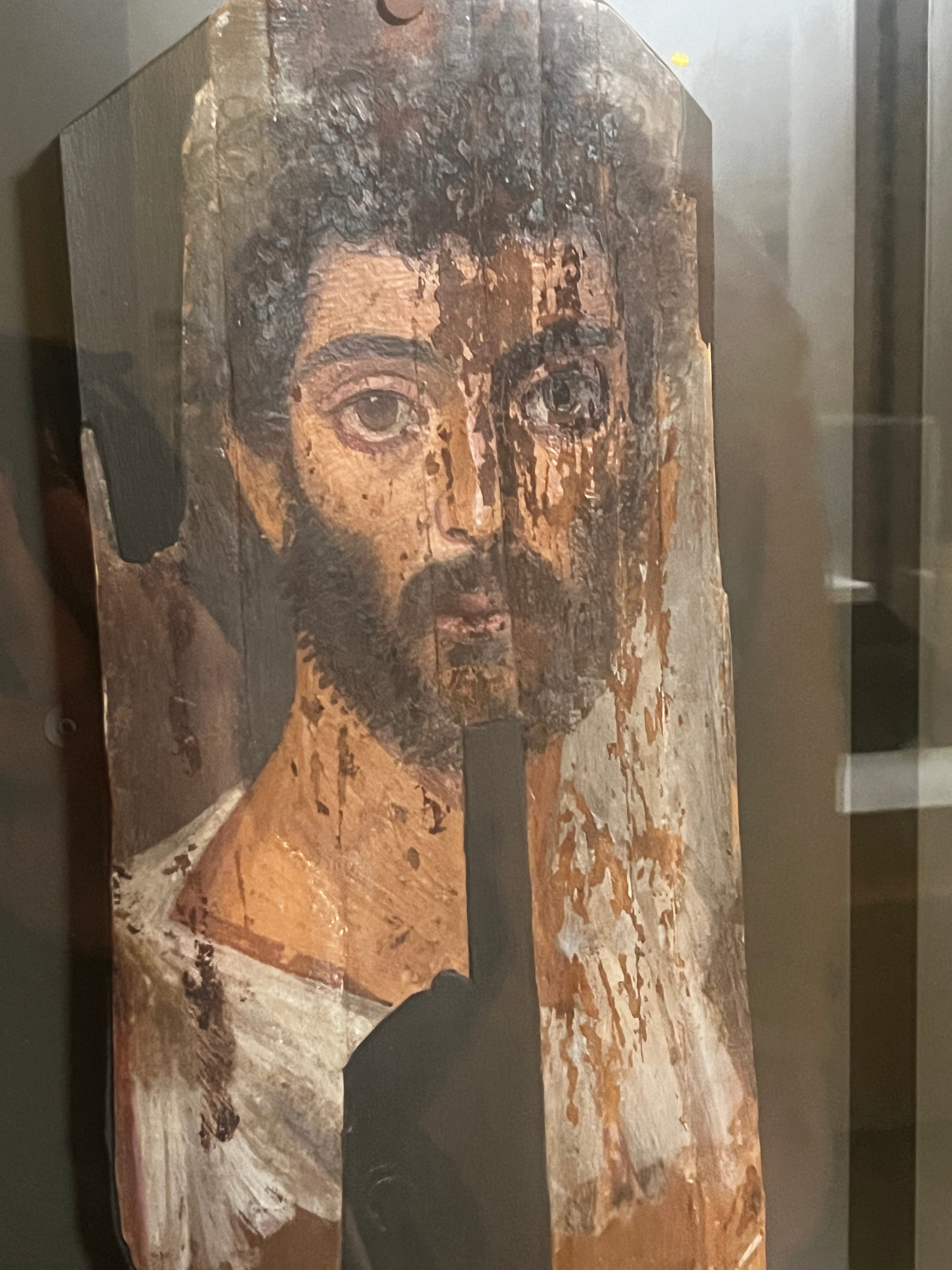
Some of the most haunting objects in the museum came from Roman Egypt. The mummy of a young woman from Hawara in the Fayum region featured an encaustic portrait painted on limewood, her hairstyle and jewellery reflecting contemporary Roman fashions. Despite being nearly two thousand years old, the portrait felt surprisingly modern, almost like an ancient passport photo. Nearby were portraits of bearded men painted in the same style.

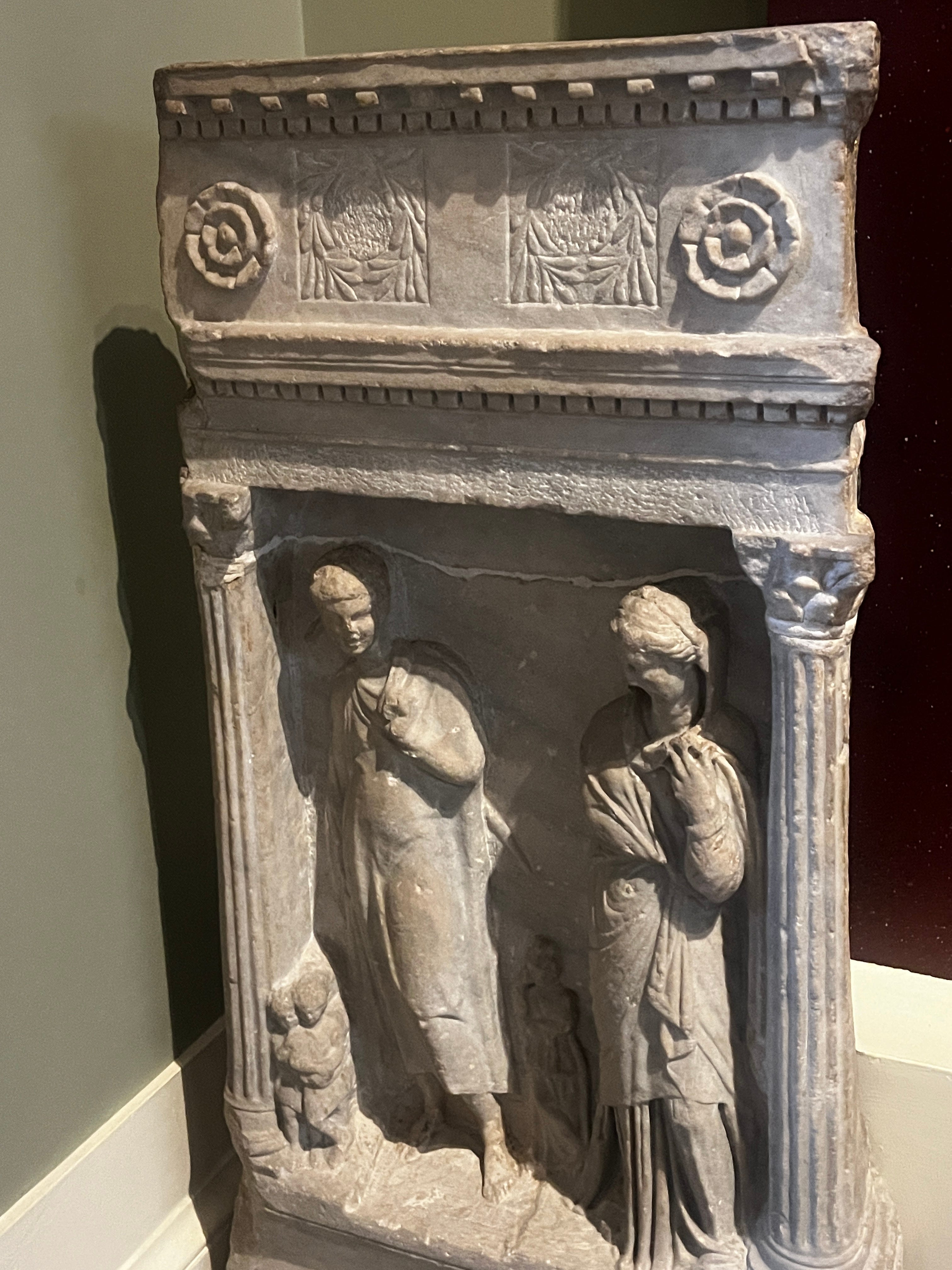
However, not every object in the collection celebrated power or beauty. A tombstone from Smyrna depicted a mourning woman accompanied by servants, while the names of the dead had been deliberately chiselled away over time.
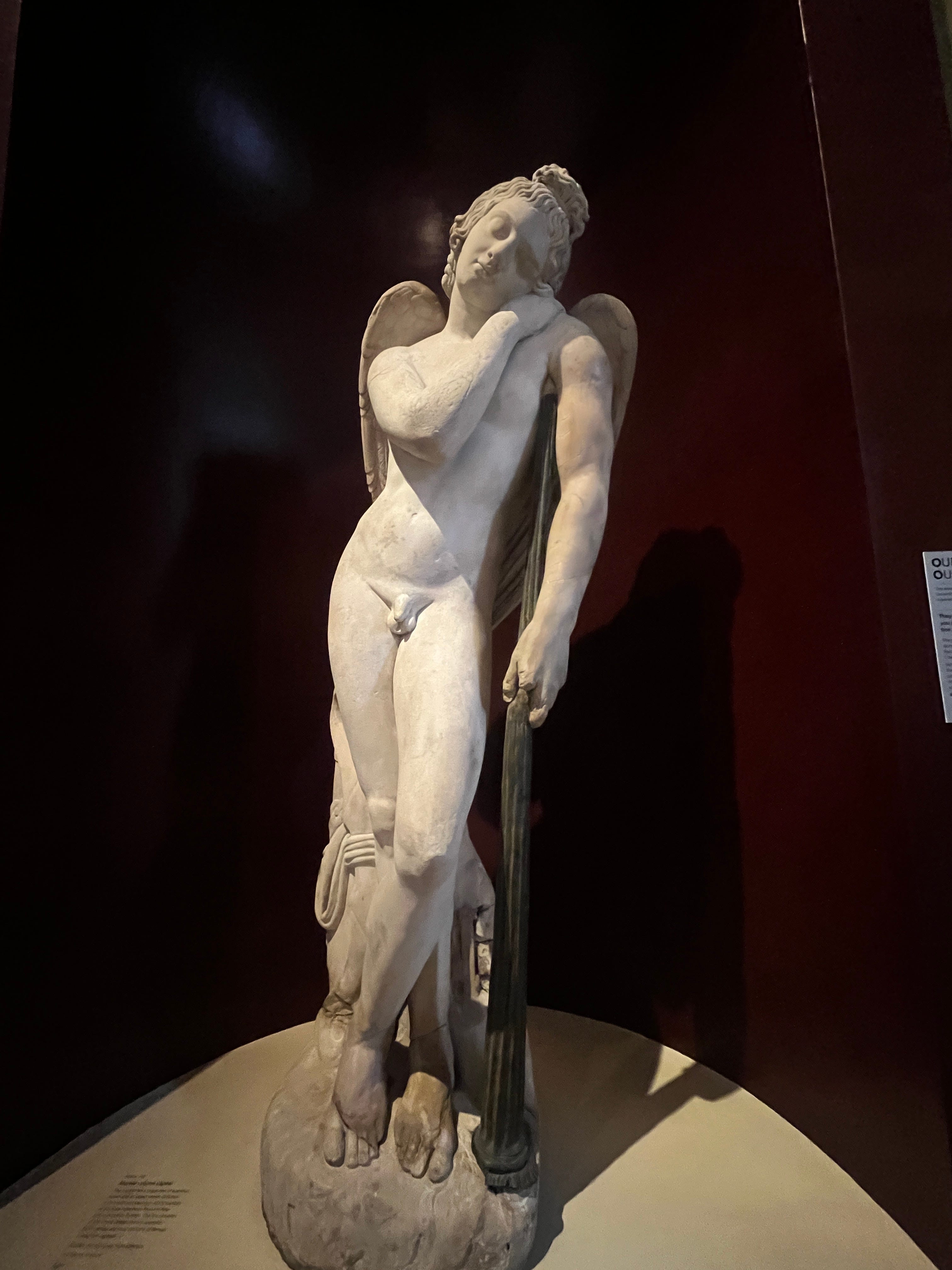
Another marble sculpture showed Eros, the god of lust, asleep with his torch turned downward. This is a Roman symbol of death used in memorial art, representing a gentle, peaceful passing.
Finally, part of a marble sarcophagus showed two drunken revellers returning from celebrations in honour of the wine god Bacchus. Restored during the 1600s, the scene captured both the extravagance and absurdity of ancient life. It was oddly comforting to realise that even two thousand years ago, people still enjoyed parties a little too much.

Ancient Egypt meets Greece and Rome
The Egyptian galleries at the Ashmolean Museum offered one of the most absorbing parts of the entire museum, tracing three thousand years of history from the earliest Egyptian kingdoms to the arrival of the Roman Empire. Around 3100 BC, Egypt became unified under a single ruler, beginning a cultural tradition that would continue for millennia with remarkable consistency.
This section focused on the rule of the Ptolemaic Dynasty, which governed Egypt from 305 to 30 BC after the death of Alexander the Great. The dynasty was founded by Ptolemy I Soter, one of Alexander’s generals, and ended dramatically with the defeat of Cleopatra VII and Mark Antony by Augustus in 30 BC. From that point onwards, Egypt became part of the Roman Empire. It was strange to realise that figures usually associated with dramatic films and Shakespeare plays were connected directly to the very artefacts in front of me.
The galleries dedicated to burial traditions were especially fascinating. Wealthy Egyptians carefully followed ancient burial rites in the belief that they would secure eternal life after death. Some mummies were wrapped in linen designed to imitate the net of Osiris, the god of the underworld, resurrection, and fertility. Painted portraits placed over mummies often showed individuals dressed according to Roman fashions, reflecting the merging of Egyptian and Roman identities during this period.

One particularly emotive piece was the mummy of a young boy from Hawara in the Fayum region who died before reaching the age of two. Unlike many others, the child had no painted portrait, but his wrappings were carefully arranged to resemble Osiris himself. Small gilded studs still decorated the linen, while nearby CT scan reconstructions attempted to reveal the child beneath the layers. It was difficult not to pause longer at this display because suddenly, history felt far less distant, and far more human.
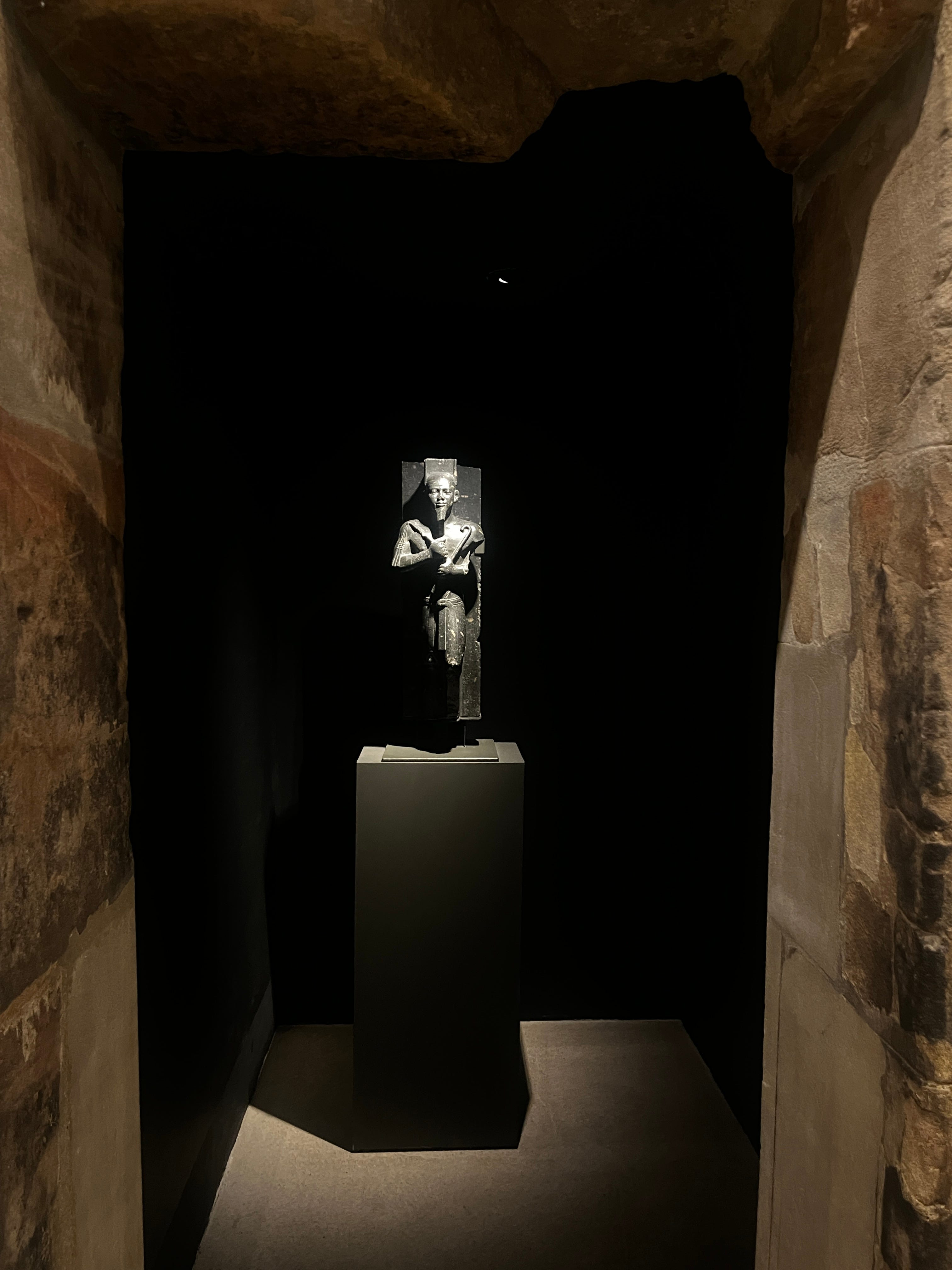
The museum also highlighted Egypt’s close relationship with ancient Nubia, the region south of Egypt along the Nile in what is now Sudan. Egyptian rulers repeatedly invaded Nubia in pursuit of gold mines and trade routes, but over time the Nubian rulers of the Kingdom of Kush grew powerful enough to conquer Egypt themselves, ruling as the 25th Dynasty between roughly 715 and 657 BC.
One of the standout pieces connected to this history was a granodiorite statue of Taharqa. Depicted wearing an elaborate plumed headdress and holding the crook and flail symbols of kingship, the statue projected authority even after more than two and a half thousand years. Ancient rulers clearly understood the importance of political image.

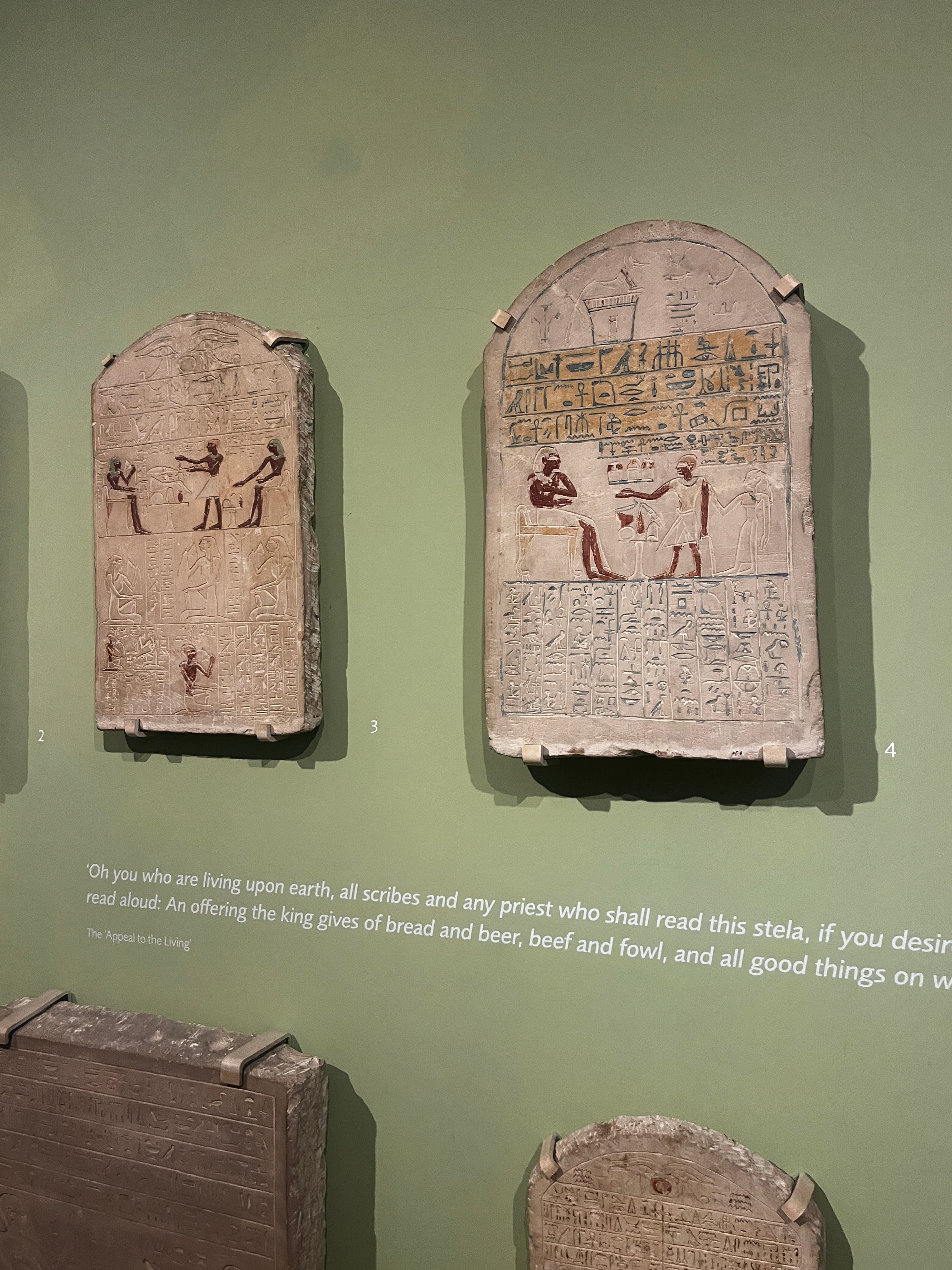
Another memorable feature of the gallery was the collection of funerary stelae, which are carved stone memorials placed in tombs as focal points for offerings to the soul, or ‘ka,’ of the deceased. These inscriptions included names, titles, images, food offerings, and spells intended to sustain the dead in the afterlife. Reading them felt oddly familiar, almost like ancient versions of personalised memorial plaques, except with considerably more references to eternal spiritual nourishment.
What made the Egyptian galleries so compelling was not simply the age of the artefacts, but the continuity of belief they revealed. Across thousands of years, despite invasions, dynasties, and foreign empires, many Egyptian traditions remained remarkably consistent.
Standing among the statues, mummies, and carved inscriptions, it became clear that ancient Egyptians were just as concerned with identity, memory, family, and legacy as people are today.
Early scripture
The ‘Adoption Papyrus,’ written in hieratic script during the reign of Ramesses XI around 1104–1075 BC, revealed just how complex family life and inheritance could be in New Kingdom Egypt. Far from being a dry legal document, the papyrus read almost like an ancient family drama filled with adoption arrangements, inheritance negotiations, and carefully planned attempts to keep property within the household.
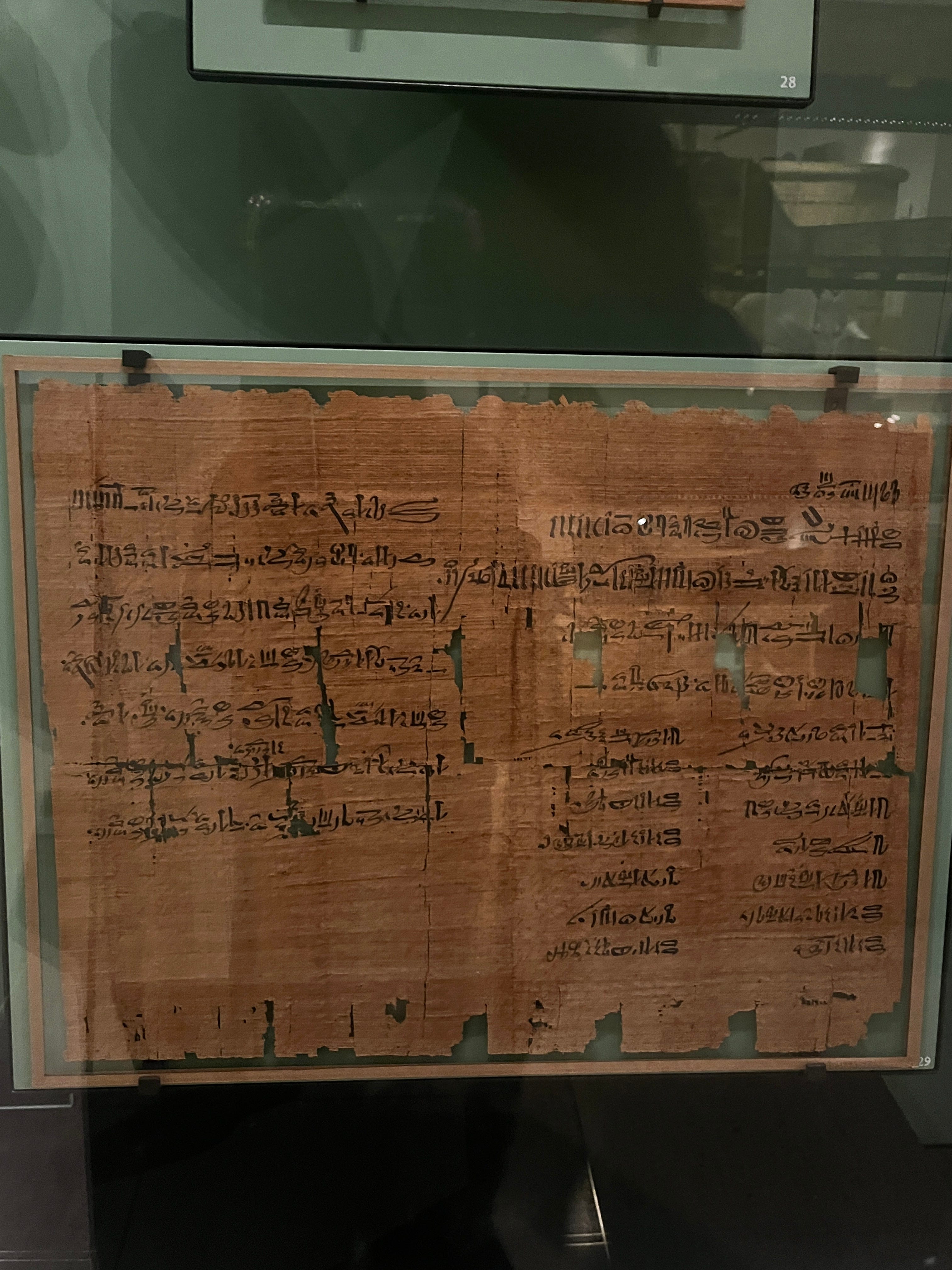
If modern inheritance law can already feel complicated, ancient Egypt clearly had its own equally bewildering system. The document records the actions of a childless couple, Nebnefer and his wife Rennefer. In an unusual legal move, Nebnefer formally adopts his own wife as his ‘daughter,’ so that she could inherit his estate after his death, rather than allowing it to pass to other relatives.
After Nebnefer’s death, Rennefer explains that she and her husband had previously purchased a slave woman who later gave birth to three children, likely fathered by Nebnefer himself. Rennefer raised the children and legally adopted them as her own. She then adopted the husband of the eldest daughter, Padiu, who was also, somewhat awkwardly, Rennefer’s brother, ensuring he too could inherit part of the estate. Finally, the document records that Rennefer emancipated the three adopted children and transferred the estate to them and Padiu.
Beyond its complicated web of family relationships, the papyrus revealed something genuinely fascinating about ancient Egyptian society: women in Egypt possessed legal rights. They could own property, inherit wealth, and pass estates on in their own name. In many ways, Rennefer emerges from the text as a determined and capable figure carefully managing her family’s future through legal means. It was strange, and oddly entertaining, to discover that more than three thousand years ago, people were already dealing with inheritance disputes, blended families, and complicated paperwork – proof that human society has always been slightly chaotic, no matter the century.
However, the world’s earliest known writing systems developed around 3300 BC. Bone and ivory tags in tomb U-j at Abydos were inscribed with groups of signs, perhaps representing geographic and personal names, commodities, and numerals. Continuous texts did not appear until several centuries after the invention of the hieroglyphic script.

Egypt’s Earliest Inhabitants
Humans first populated Egypt around one million years ago. The climate was less arid than it is today, enabling plants and animals to thrive in areas that have since become desert.
The fertile Nile Valley was used by hunter-gatherers who produced flint tools. Agriculture first developed around 5500 BC, as settlements moved closer to the River Nile. This was because the River Nile was so dependable that farming did not appear until after this time.

New types of blade technologies appeared around 50,000 years ago, including small flint elements (microliths) set into composite tools.
The city of Akhetaten and the Amarna ‘Revolution’
When Amenhotep IV ascended the throne during the 18th Dynasty, he rejected Egypt’s long-established religious traditions and introduced the worship of Aten, the sun disk, as the supreme divine power.
In honour of this new belief system, he renamed himself Akhenaten, establishing a new capital city under this name, known today as Tell el-Amarna. The city quickly became the centre of an artistic and religious movement that reshaped Egyptian culture.
Although Akhetaten was abandoned only two decades after its creation, archaeologists excavating the site in the 1890s uncovered a wealth of remarkably preserved material that revealed the vibrancy of life during the Amarna Period.
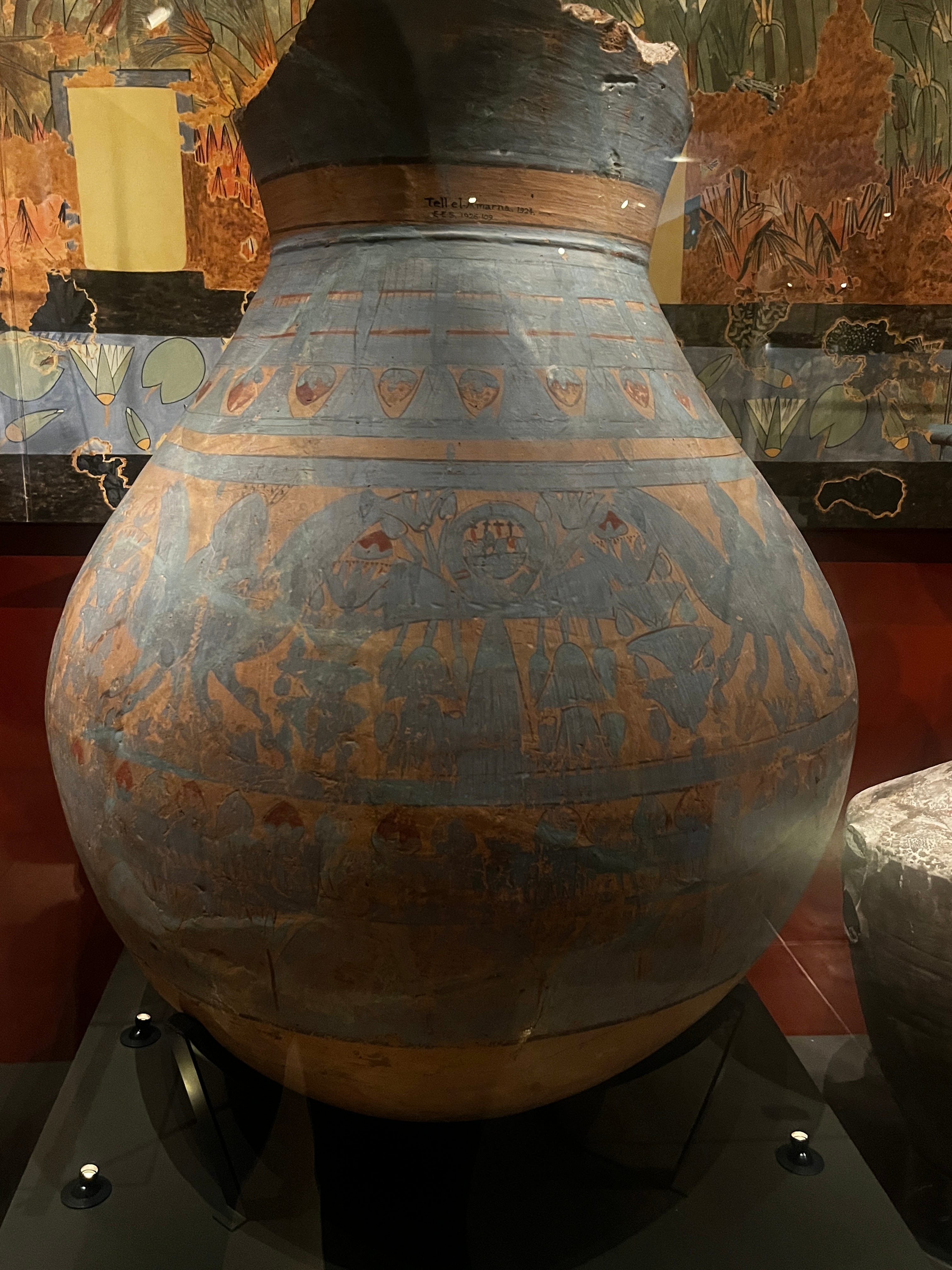
The city’s temples, palaces, and private homes contained elaborately painted pottery, colourful faience and glass ornaments, and architectural decorations that reflected the importance of Aten and the beauty of the natural world. Together, these discoveries provide valuable insight into a brief yet revolutionary era that transformed Egyptian art, religion, and political identity.
The Kingdom of Kush
The Kingdom of Kush emerged as a powerful civilisation in Nubia following the decline of Egypt’s New Kingdom around 1075 BC. Expanding their influence throughout the Nile Valley, the Kushite rulers eventually asserted control over Egypt itself under King Piye, founding Egypt’s 25th Dynasty and ruling from approximately 715 to 657 BC.
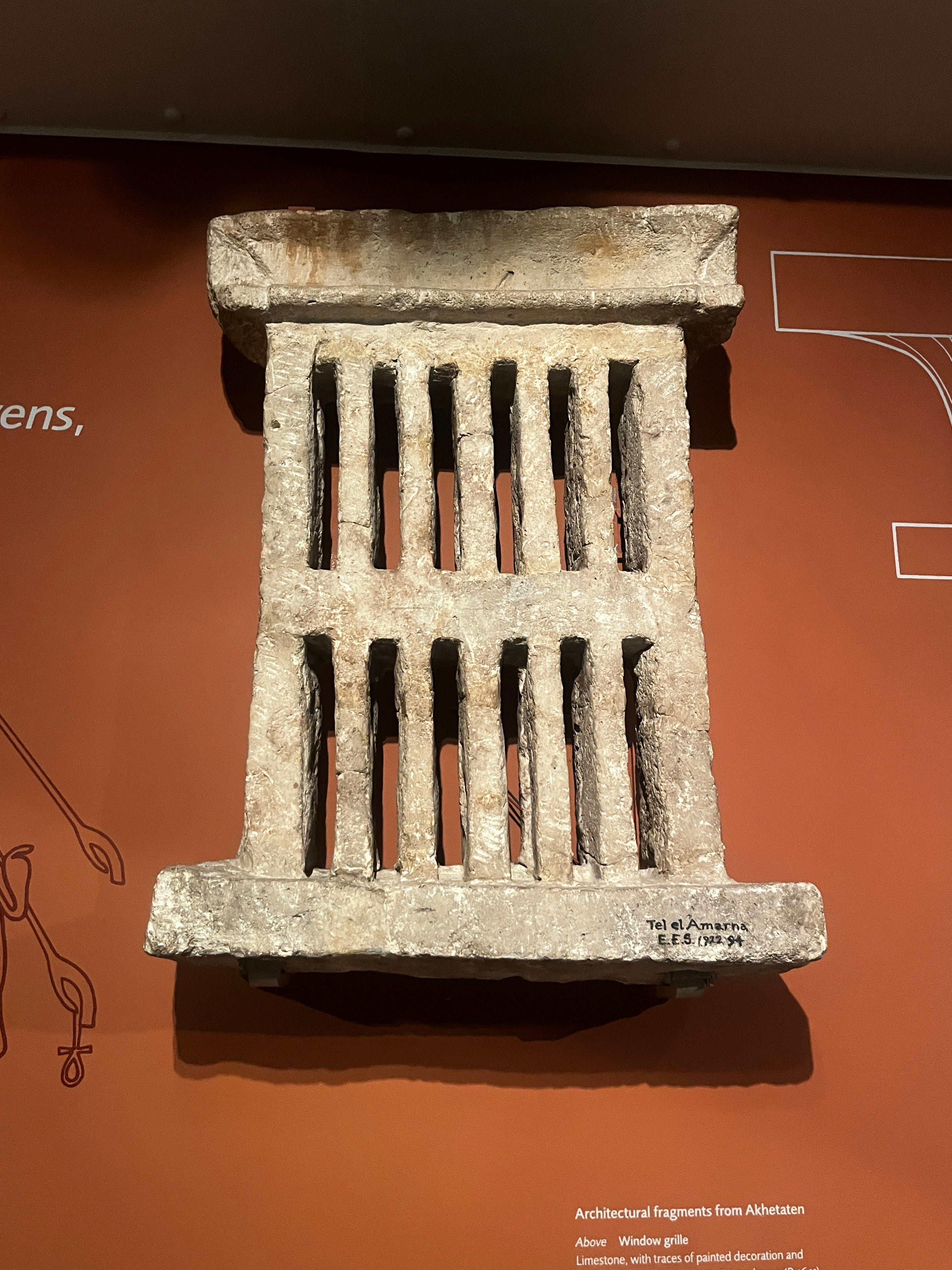
During the Napatan Period, the Kushite capital was centred at Napata, but it later shifted southward to Meroe under King Aspelta, marking the beginning of the Meroitic Period, which lasted from 270 BC to AD 350.
Although Kushite society was deeply influenced by ancient Egyptian culture, it gradually developed its own distinctive forms of art, religion, language, and technology. The Meroitic Period in particular became known for advances in metalworking and craftsmanship.

Bronze was the most commonly used metal, though the tin required for its production had to be imported, making bronze objects highly valuable. Iron, an even stronger and more prized material, was also imported into the region.
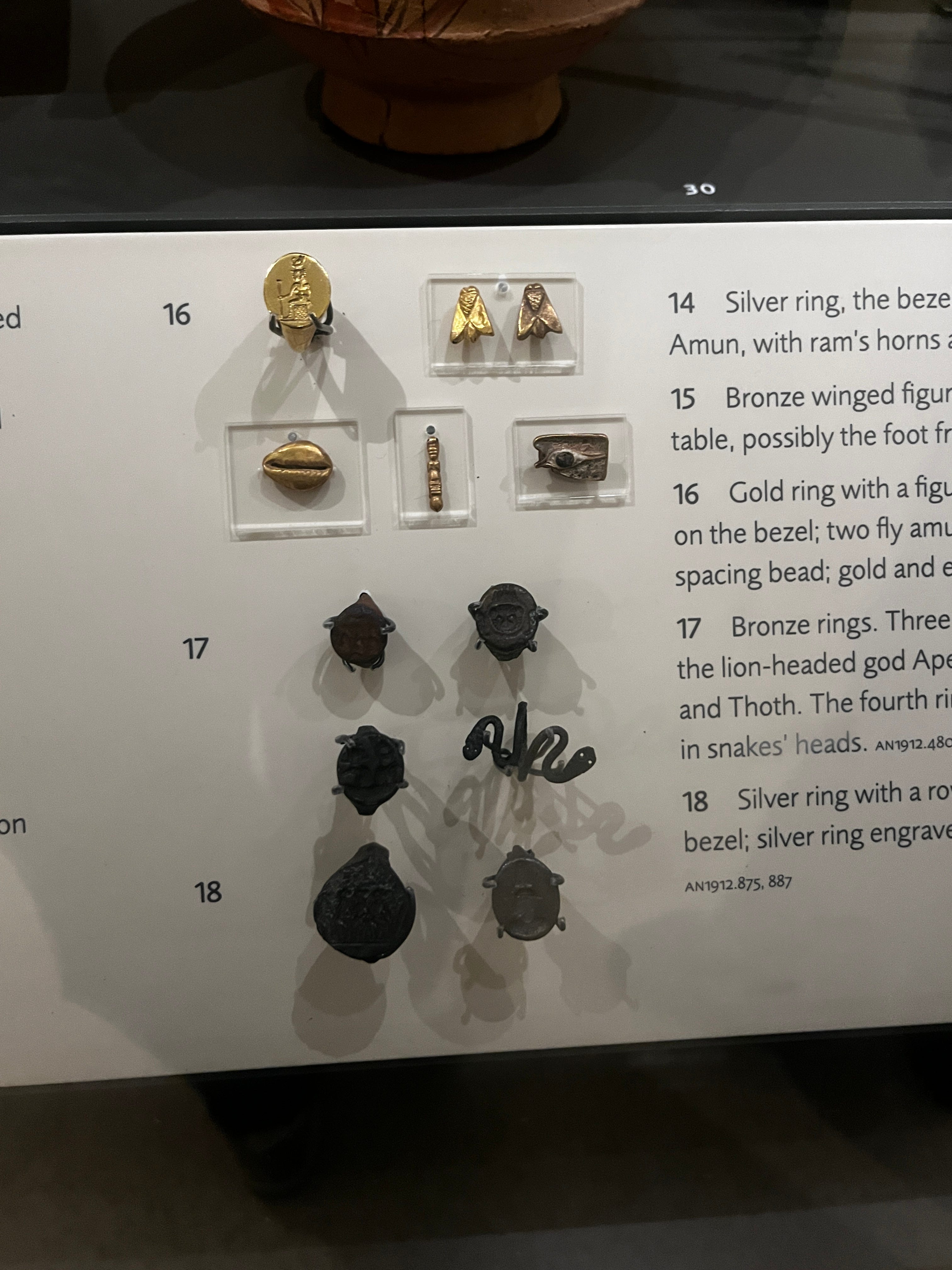
Archaeological discoveries from the Meroitic cemetery at Faras reveal the sophistication of Kushite artisans, including bronze boxes, bowls, bottles, tools, and decorative items, some featuring Greek inscriptions that reflect connections with the wider Mediterranean world. These objects demonstrate the Kingdom of Kush’s political strength, cultural independence, and technological achievement during one of the most influential periods in northeastern African history.

Faience and Stone Animals
The ‘Main Deposit’ at Hierakonpolis contained many models of animals in faience and stone. Some of the creatures depicted were hunted by the ancient Egyptians, while others feared for their power and destructive force. These models may therefore be associated with the performance of rituals at Hierakonpolis, including the presentation of food offerings and animal sacrifice.


The predynastic Egyptians were inspired by the landscape of the Nile Valley. Animals were popular within art, occurring on a wide range of pottery vessels, palettes and clay models. Their presence as grave goods suggest the belief that they would be recreated in the next life for the benefit of the deceased.
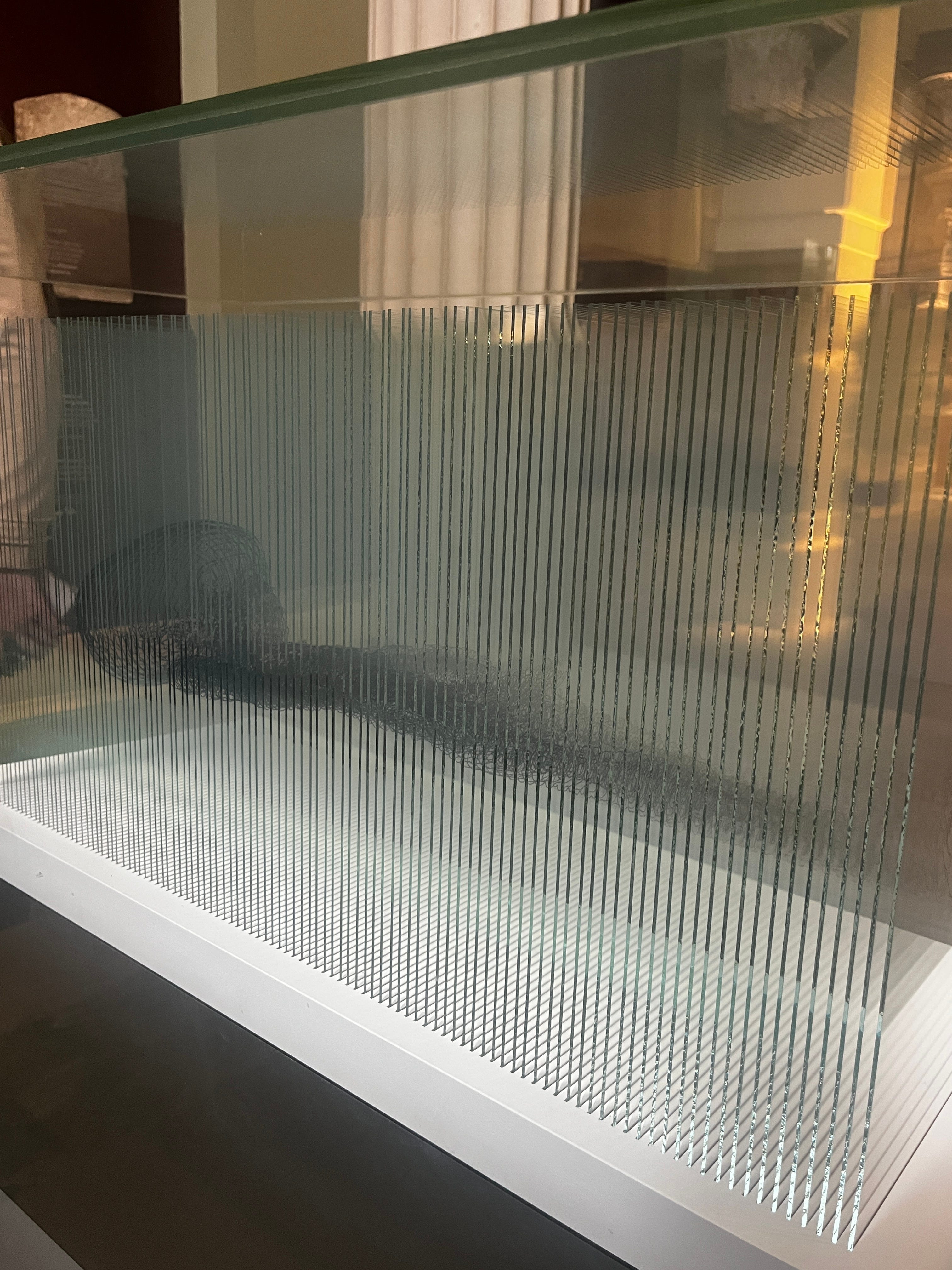
Bone and ivory combs and hairpins, usually decorated with animals, were also often depicted in graves. Below is a section of hair with three bone hairpins and a spoon from a grave containing a female body. Abadiya, grave B378 E.1035-38.

Ancient Cyprus
Ancient Cyprus reveals a rich and complex history through objects that reflect its language, warfare, and connections with the wider Greek world. A limestone block from a monument dating to about 500–300 BC, probably from Amathous, is inscribed in Eteocypriot, an undeciphered local language written in syllabic script. This inscription highlights the cultural diversity of Cyprus in antiquity and the survival of local traditions alongside Greek influence.

Another important artefact is a bronze spearhead from Marion, Agios Demetrios, tomb 2, dating from 400–350 BC. The spearhead reflects the armed conflicts and political instability that affected Cyprus during this period, when rival kingdoms and outside powers competed for control of the island.
The wider story of the ancient Mediterranean and Europe is represented by several remarkable objects and historical developments. The Parian Marble, compiled on the island of Paros in 264/3 BC, is the oldest surviving example of a Greek chronological table, recording significant events from as early as 1581/0 BC. One fragment came to Oxford in 1667, while another was lost during the English Civil War and a third was rediscovered on Paros in 1897.

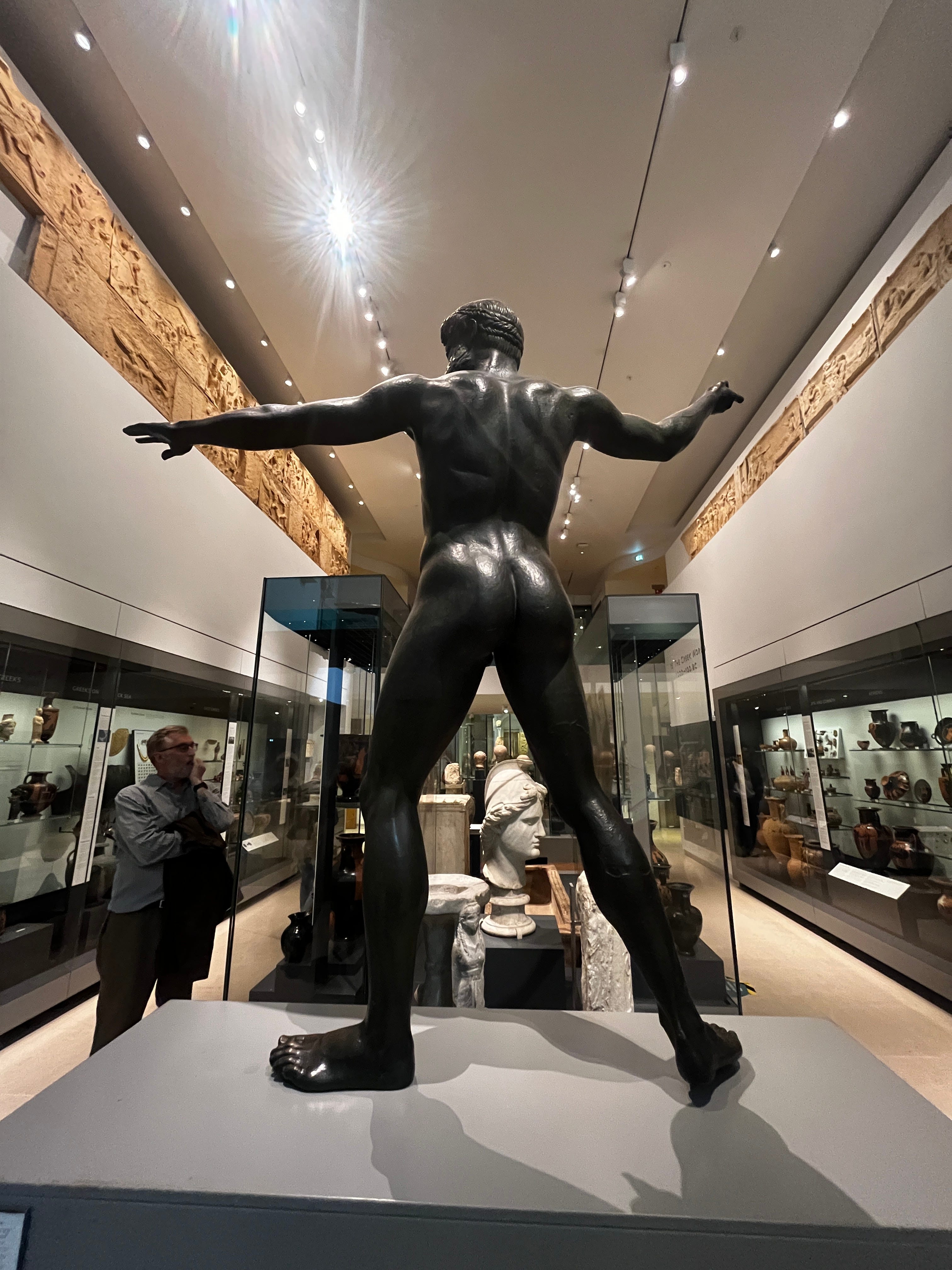
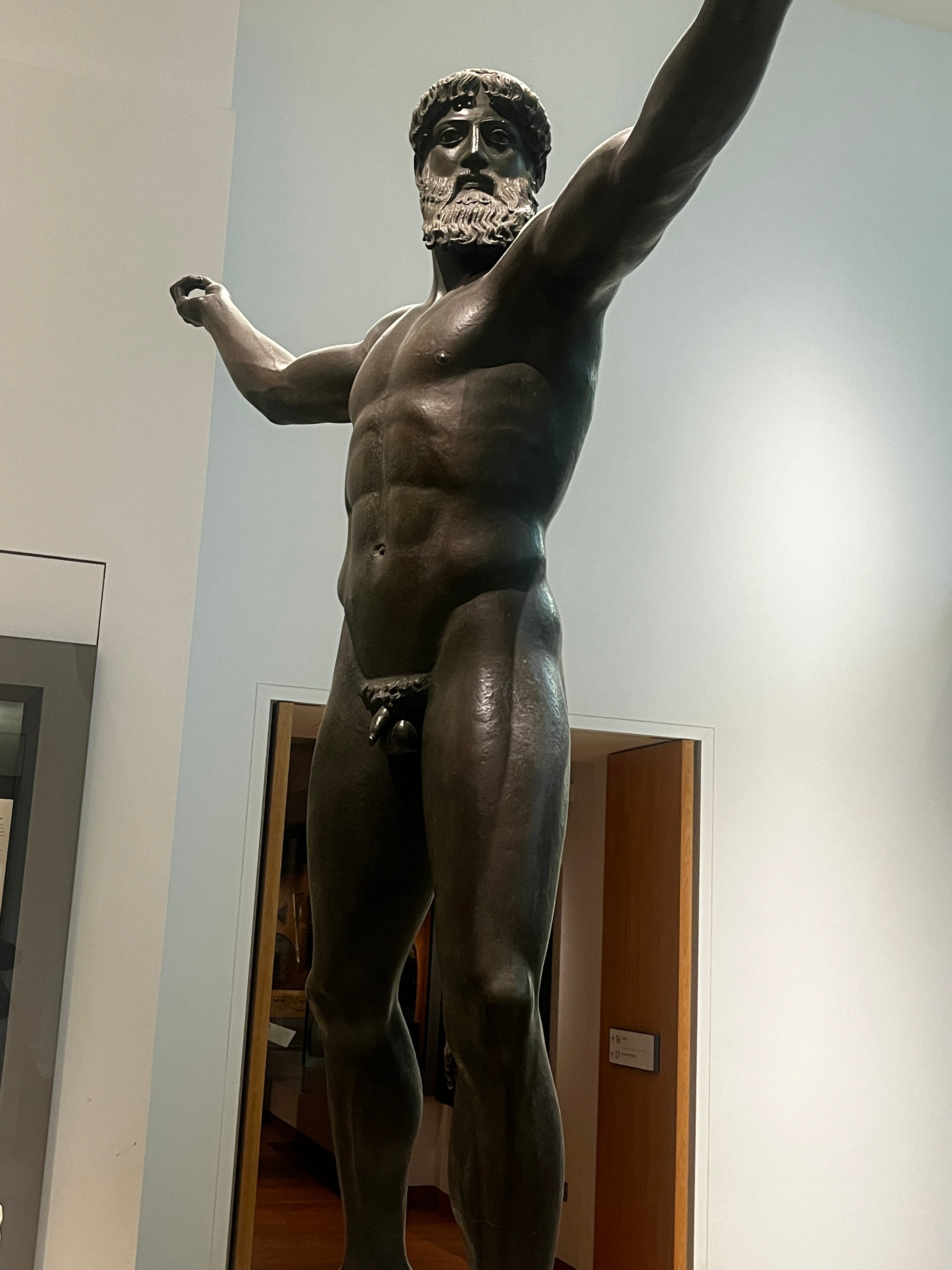
Another wow-factor statue is the cast of a bronze statue of a man from about 470 BC, based on the original statue recovered by divers near a shipwreck off Cape Artemisium on the island of Euboea in the years 1926 and 1928.
European Prehistory to AD 100
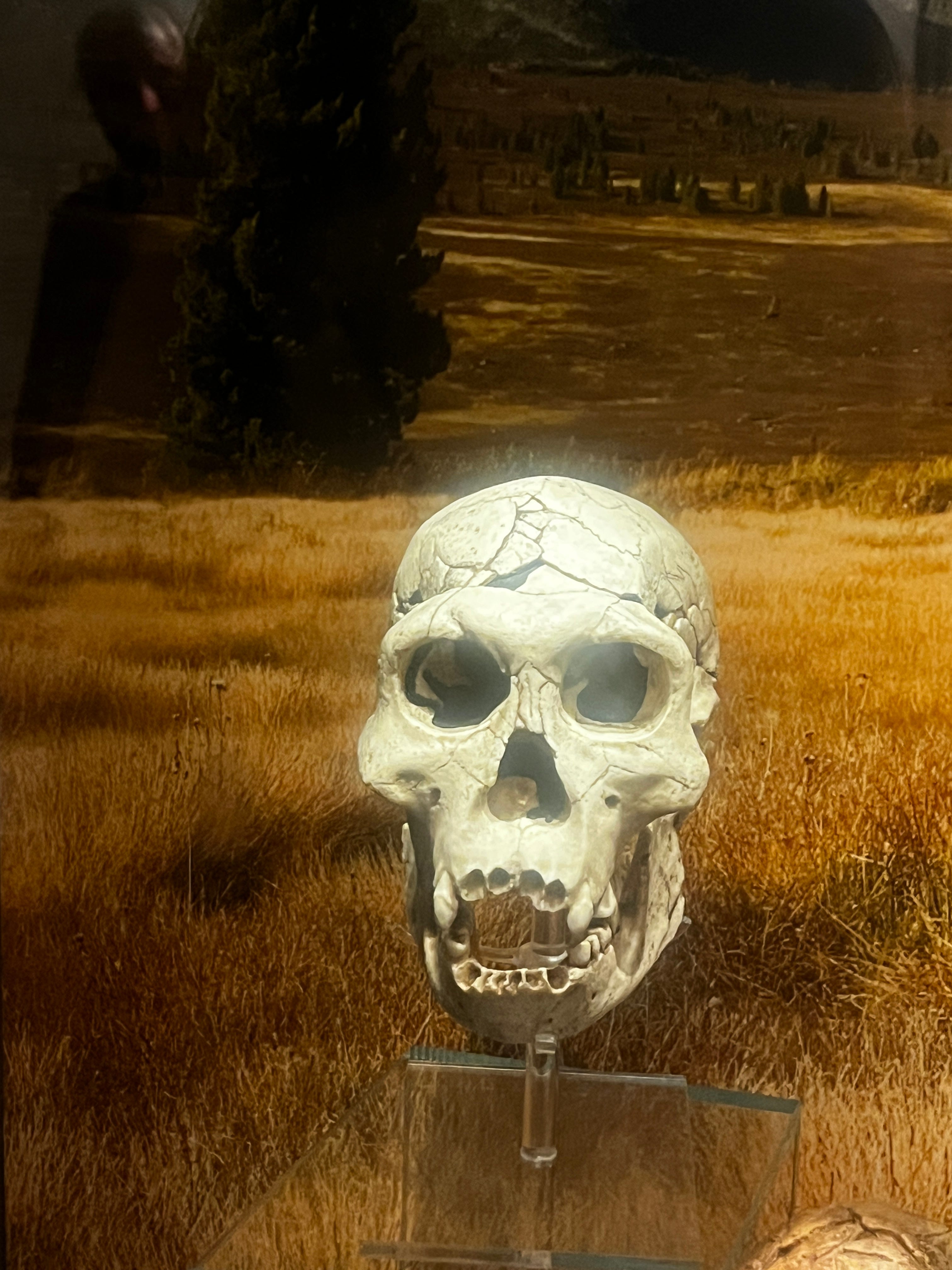
The earliest inhabitants of Europe were not modern humans. Earlier homininis occupied Europe intermittently from around 1.8 million years ago, while Homo Sapiens, the direct ancestors of modern people, probably first arrived only about 40,000 years ago.
Below is a skull from 1.8 million years ago, of the earlier homininis.
Whether you visit the Ashmolean Museum for the art, the history, or simply the chance to pretend that you understand abstract pottery, what you see, read, and hear will leave you feeling inspired and connected to a world so visually different, but so meaningfully the same. If you can make the journey, I would highly recommend it.
For more information, visit: https://www.ashmolean.org/