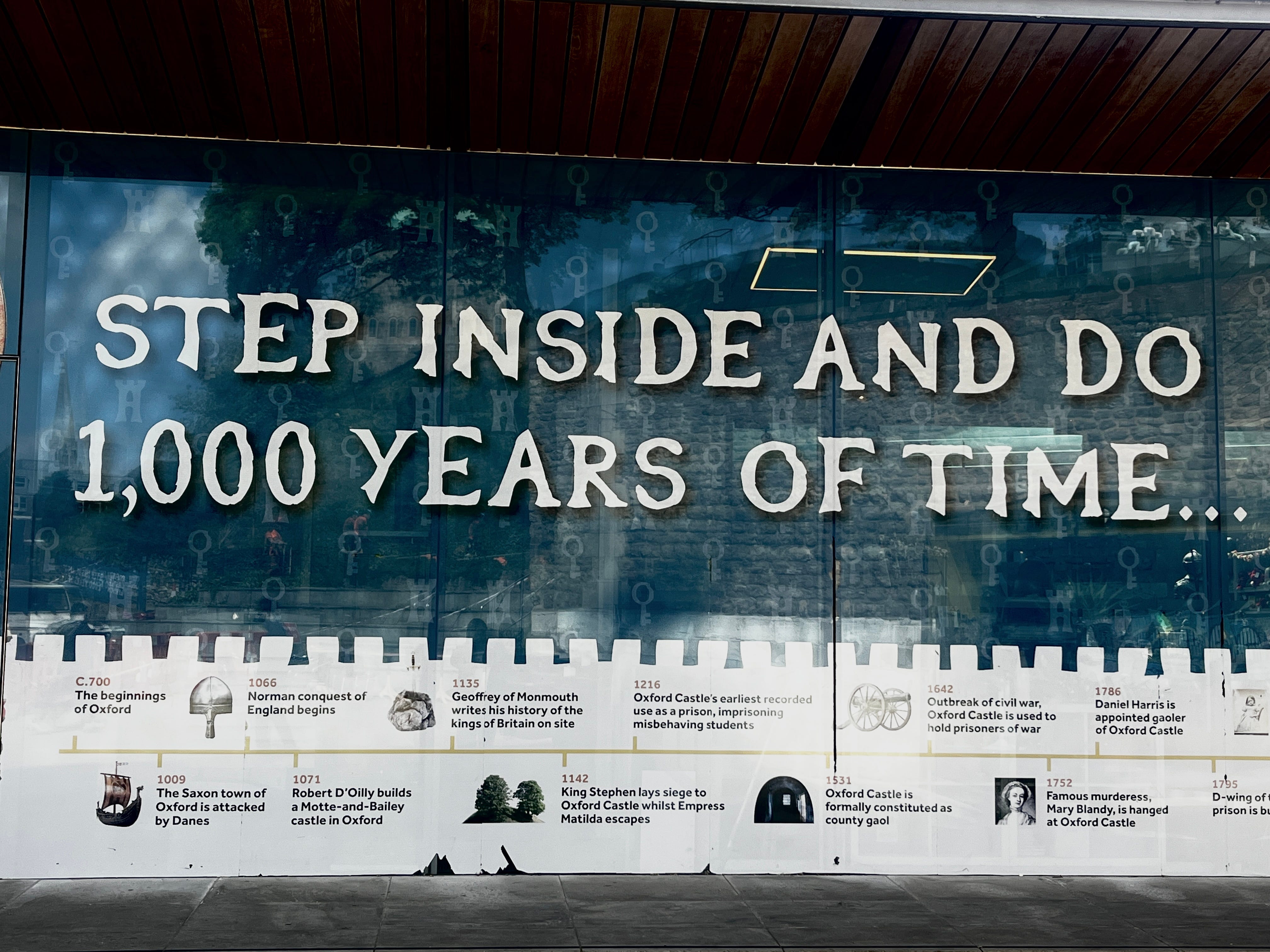

If you have ever wandered by Oxford’s Castle and Prison and thought, ‘What a charming place for a picnic,’ you’re not entirely wrong – provided your idea of charm includes executions, sieges, and the occasional ghostly complaint.
But this historic site is one of Oxford’s oldest landmarks.
I recently visited, and learned much more than I had expected about Oxford’s rich history, which blends medieval might with later penal gloom, wrapped up in a surprisingly entertaining package.
General Knowledge (for your next pub quiz!)
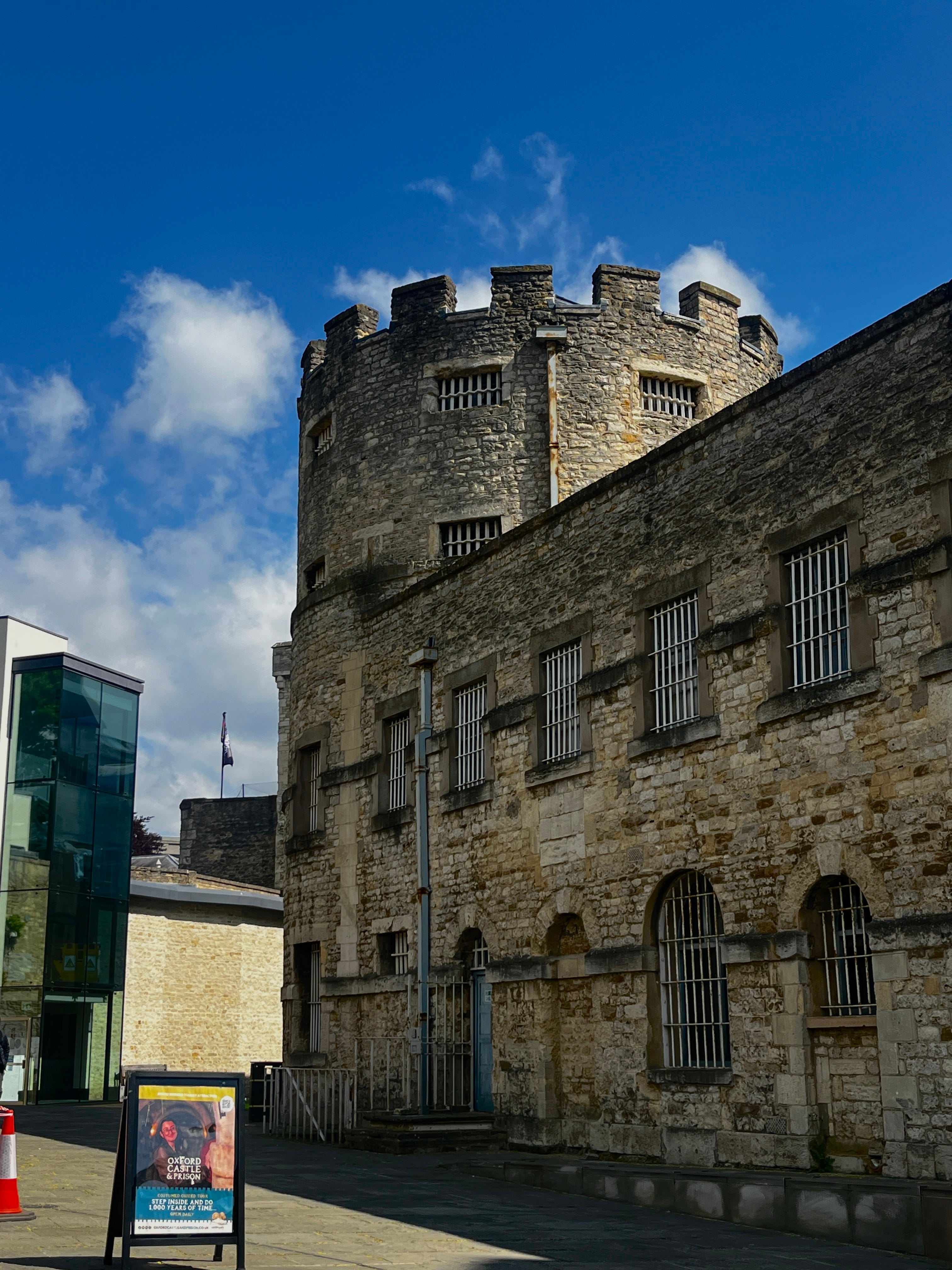
Oxford Castle was built shortly after the Norman Conquest, by Norman Baron Robert D’Oyly, around 1071. Its purpose was to keep the locals in line and remind citizens who was in charge. Constructed as a classic motte-and-bailey castle, it features earth works, timber defences, and later, stone upgrades.
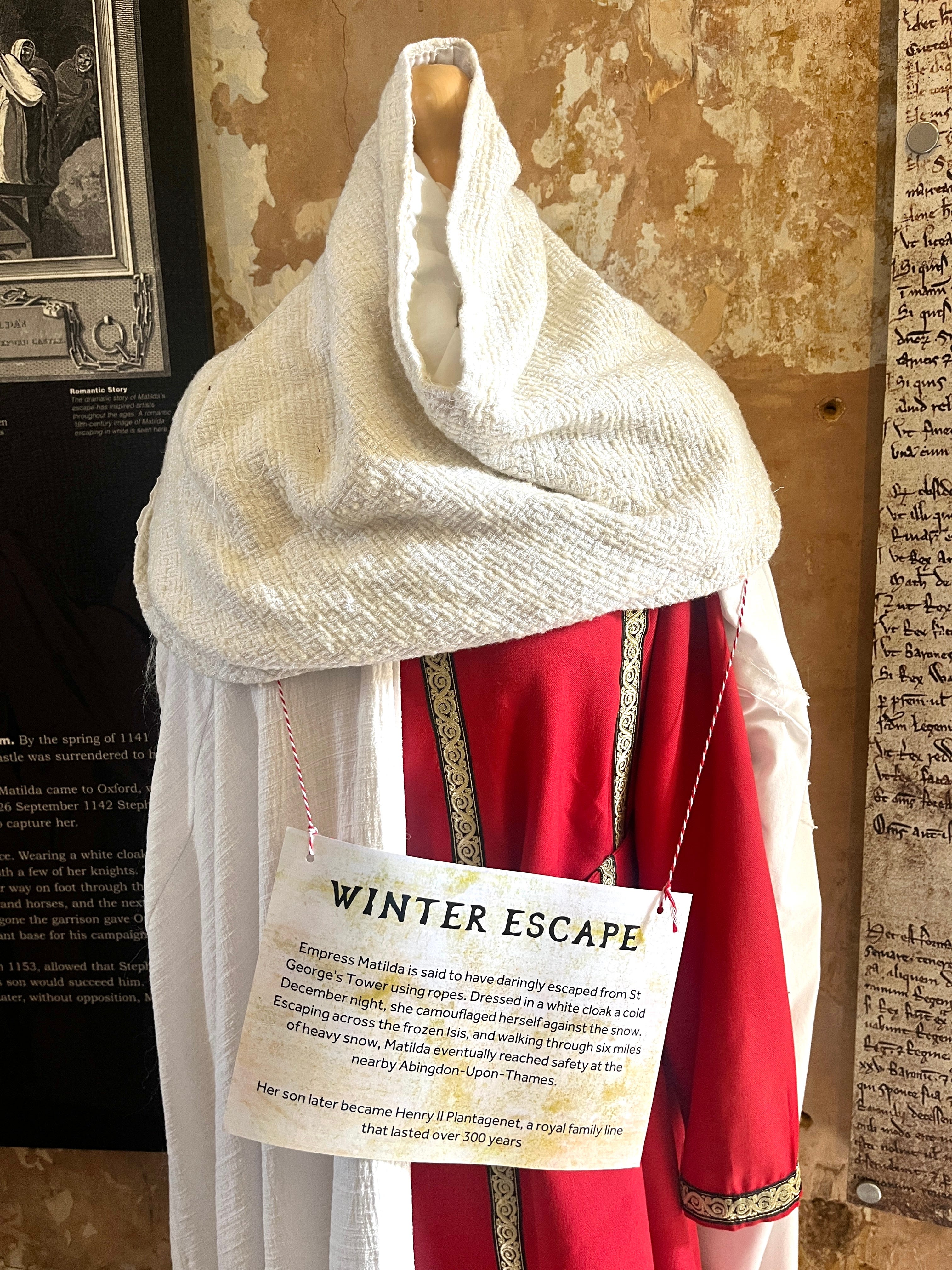
Naturally however, it didn’t take long for drama to unfold. The legendary feud during the Anarchy – a 12th century civil war, meant that the Empress Matilda, the granddaughter of William the Conqueror, besieged here in 1142. She was hiding from her cousin who had taken to the English throne – King Steven of Blois. At the time, Oxford wasn’t just another medieval town, it was briefly stated as the capital of England, making it a symbol of national power.
Once the King had found out about Matilda’s whereabouts, he and his men surrounded the castle, awaiting Matilda to run out of food and surrender. Rather, Matilda famously escaped, by sneaking out at night, wrapped in bed sheets that matched the December snow. She walked backwards, away from the castle, so that her footprints would look as though she were still inside it, escaping to her freedom.
St Georges Tower: Climb if you dare!
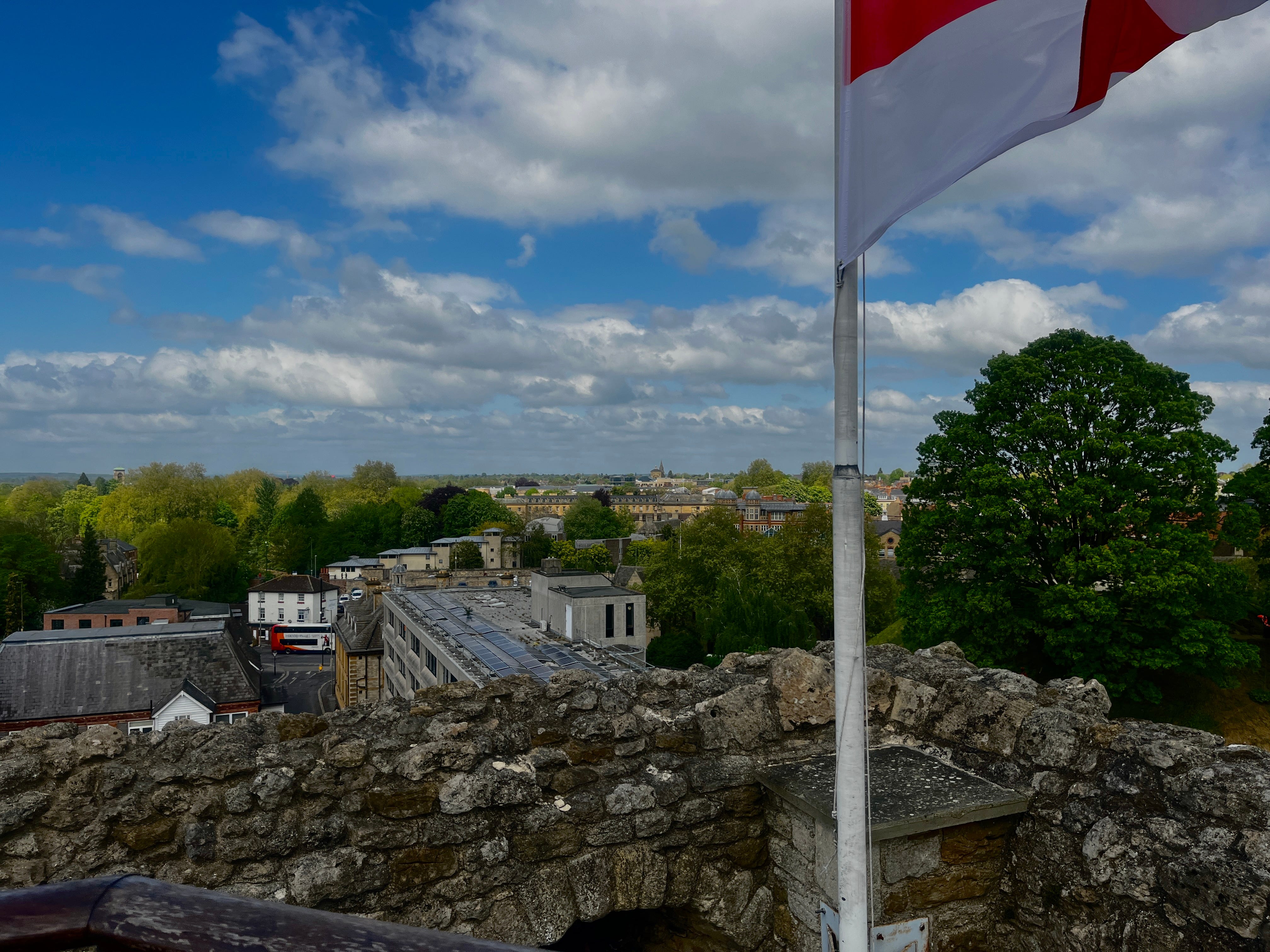
The surviving St. Georges tower is one of the oldest parts of the castle, predating the Norman takeover, linking back to Saxon Oxford. The winding stairs were purposely made. Each one of them is a different size and shape, so that attackers that entered the tower would trip and fall onto their own sword.
That being said, if you do visit the castle, do not overestimate the strength of your knees.
At the top of the tower, keep an eye out for a carved cross. Over time, many of them have crumbled, however the castle has rebuilt one to look like an exact replica from back in the day.
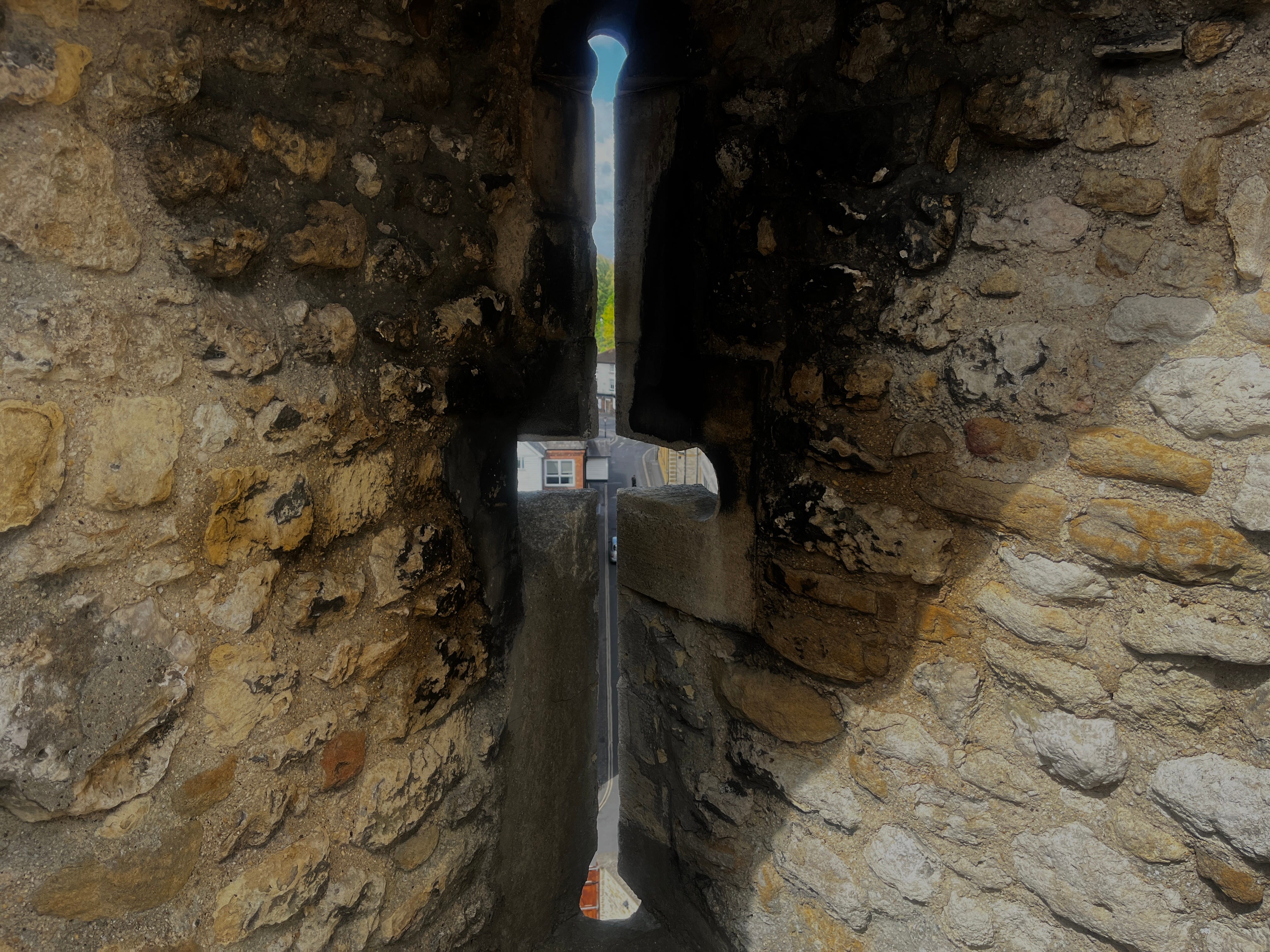
What’s interesting is that the crosses at each point of the tower serve for no religious purpose, but rather protection. They were designed for the shaping of a bow and arrow, whilst hiding the bowman behind it, therefore protecting them from any outside battle – a clever warfare advantage.
From fortress to prison: A career change
By the 18th century, the castle transitioned into a prison – because apparently, if your fortress isn’t terrifying enough, you can always add inmates.
Prison life was harsh, and inmates were subject to manual labour such as tread-wheels and stone-breaking. Below is the remains of one of the labour activities where inmates would walk around in a circle for hours on end, pushing the water wheel around.
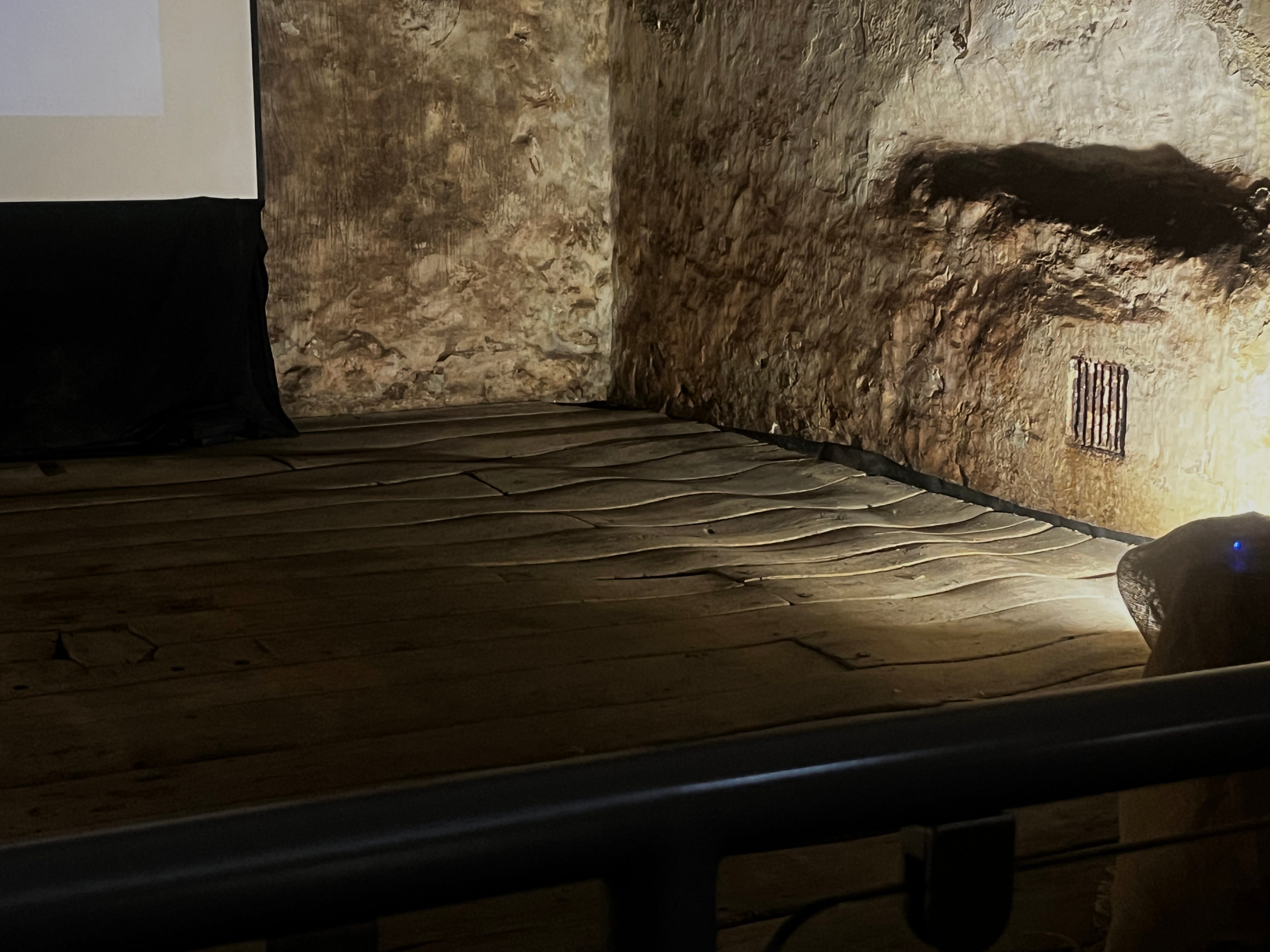
The point? None, as once inmates stopped pushing, all of the water that they had travelled to the castle, would flow back down again. What remains is the footprints of the inmates that did this job, as shown by the dents in the floorboards.
Prison cells were cramped and very cold, with three to five inmates per room and no soft furnishings. Think less boutique hotel, and more stone boxes with regrets.
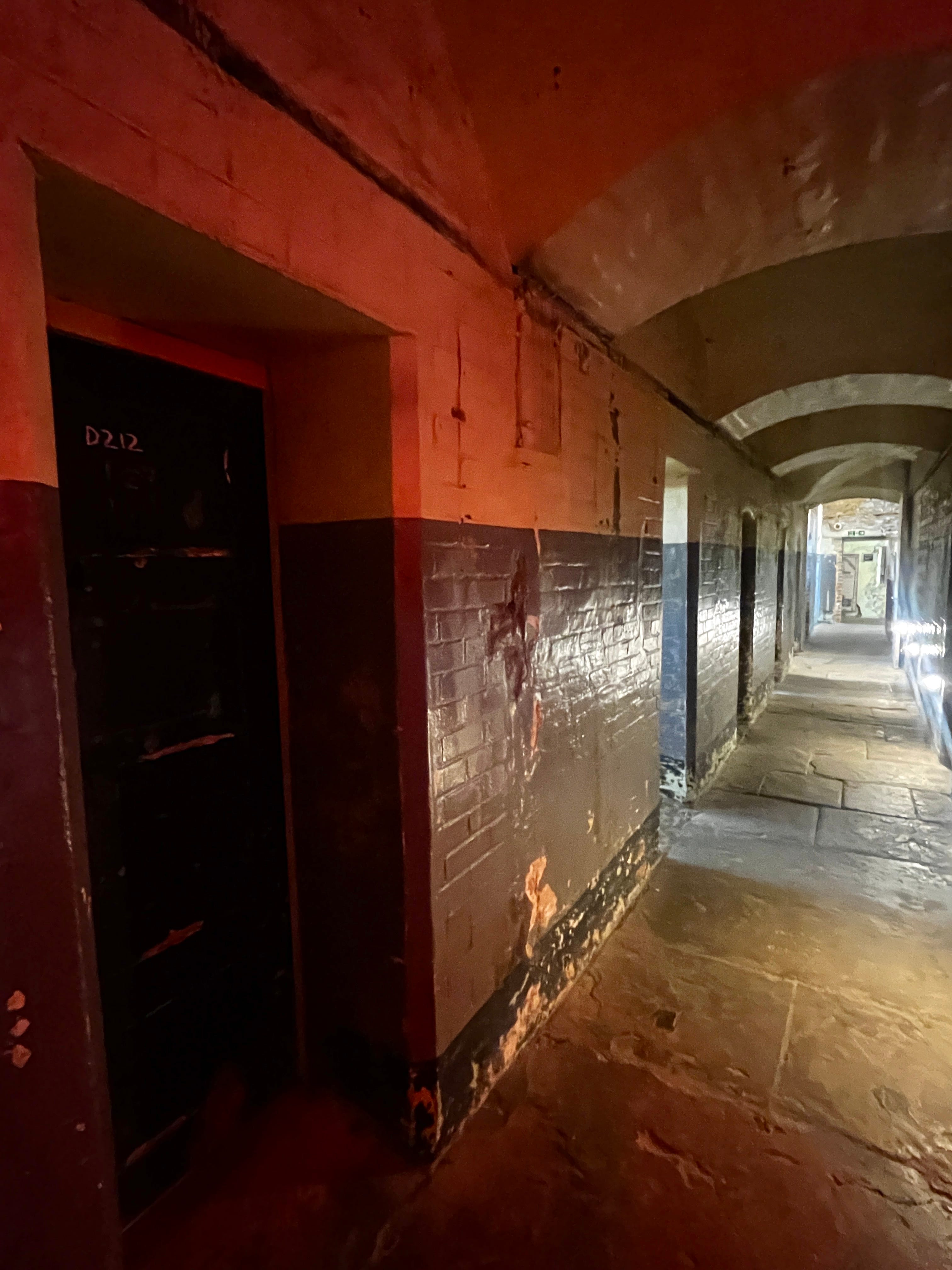
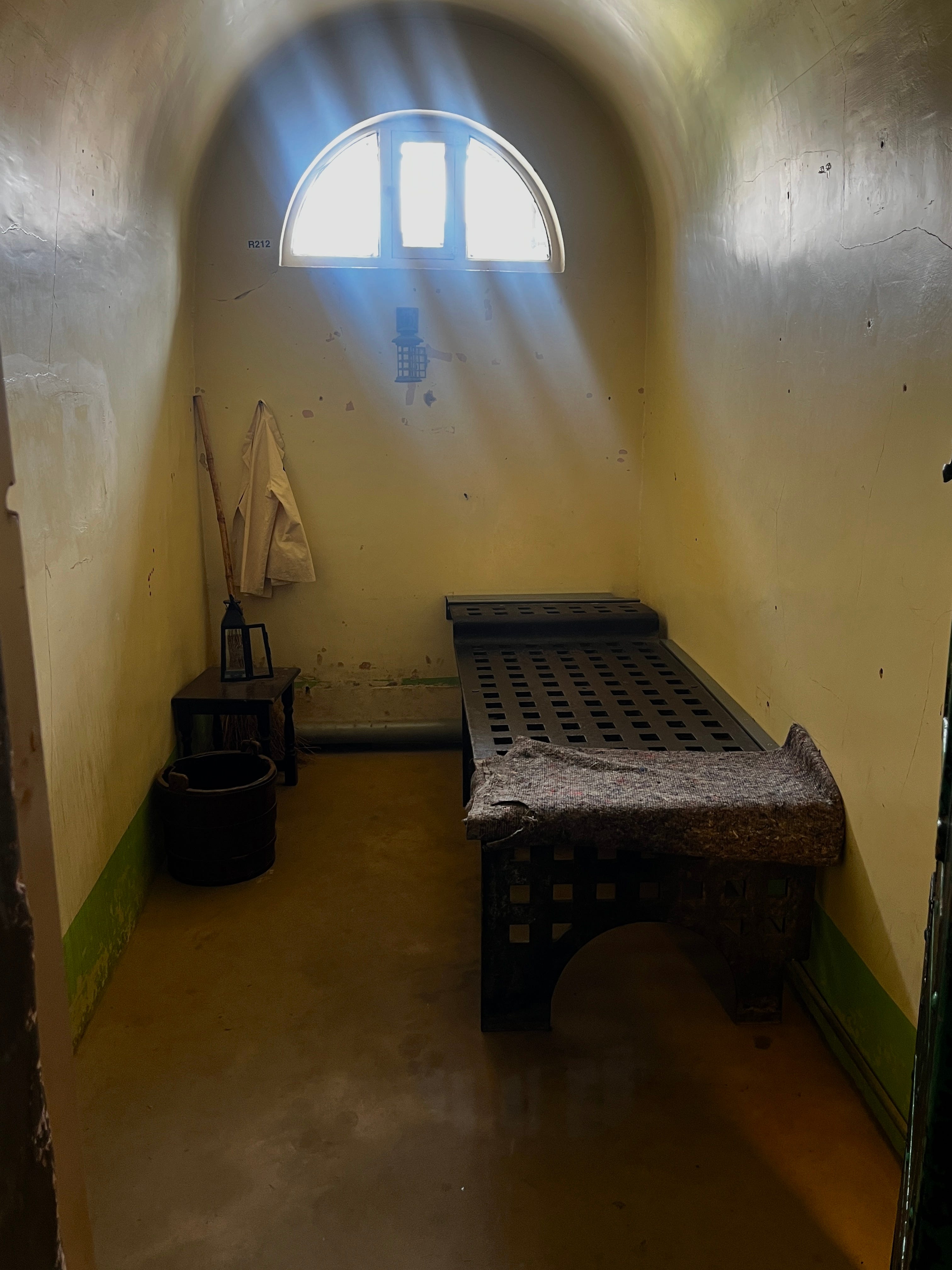
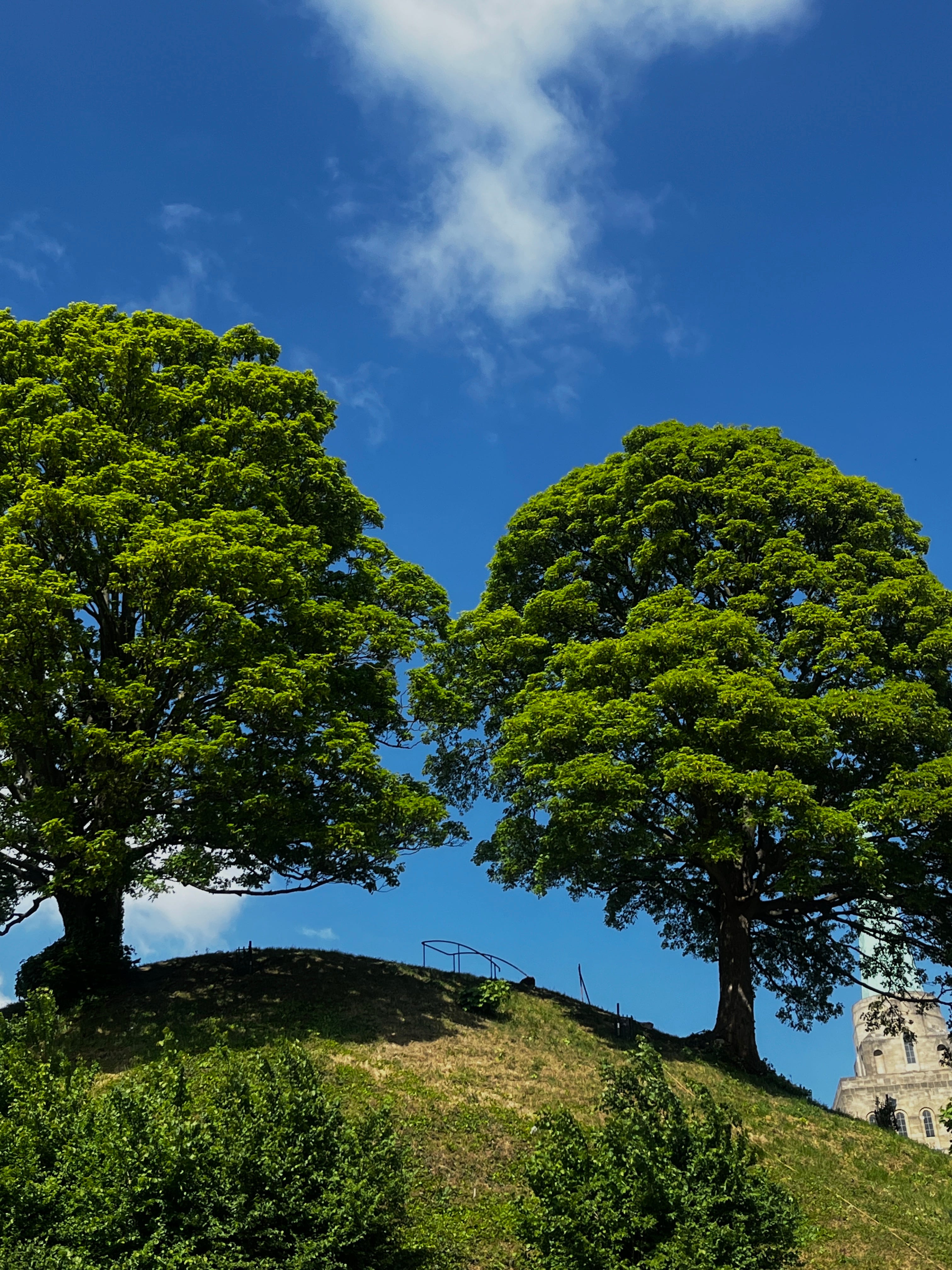
Prison deterrents included public executions and humiliation. Prisoners were beheaded on the nearby mound, conveniently acting as a viewing platform, because nothing says community like a good execution.
Public humiliation included the pillory or stocks. People’s heads and arms would be placed into these, and society could throw whatever they wanted over you as a punishment for misbehaving.
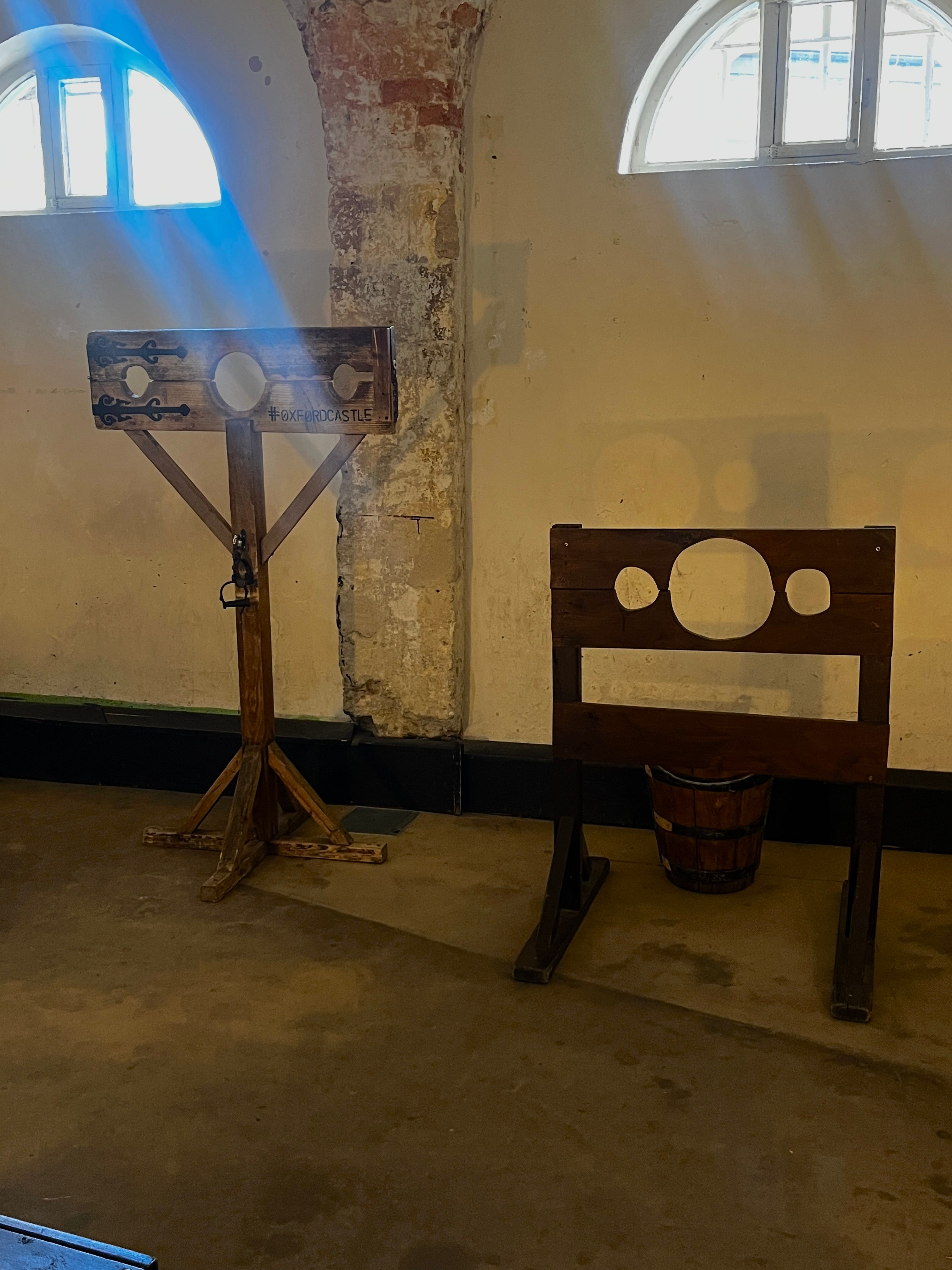
Later, this evolved, and the misbehaved ears would be nailed into these devices so that they could not avoid whatever was thrown at them. In regards to freedom, the misbehaved would be handed a knife to cut their own ears off or guards would do it for them. This showed people that you are, or once were, a criminal – a long form version of public shame.
Collapse, Rediscovery, and a Cryptic Surprise!
Over time, much of the castle’s original structure has fallen into disrepair. Large sections were demolished, and in the 18th century, workers stumbled upon a long-buried crypt that had been hidden for centuries.
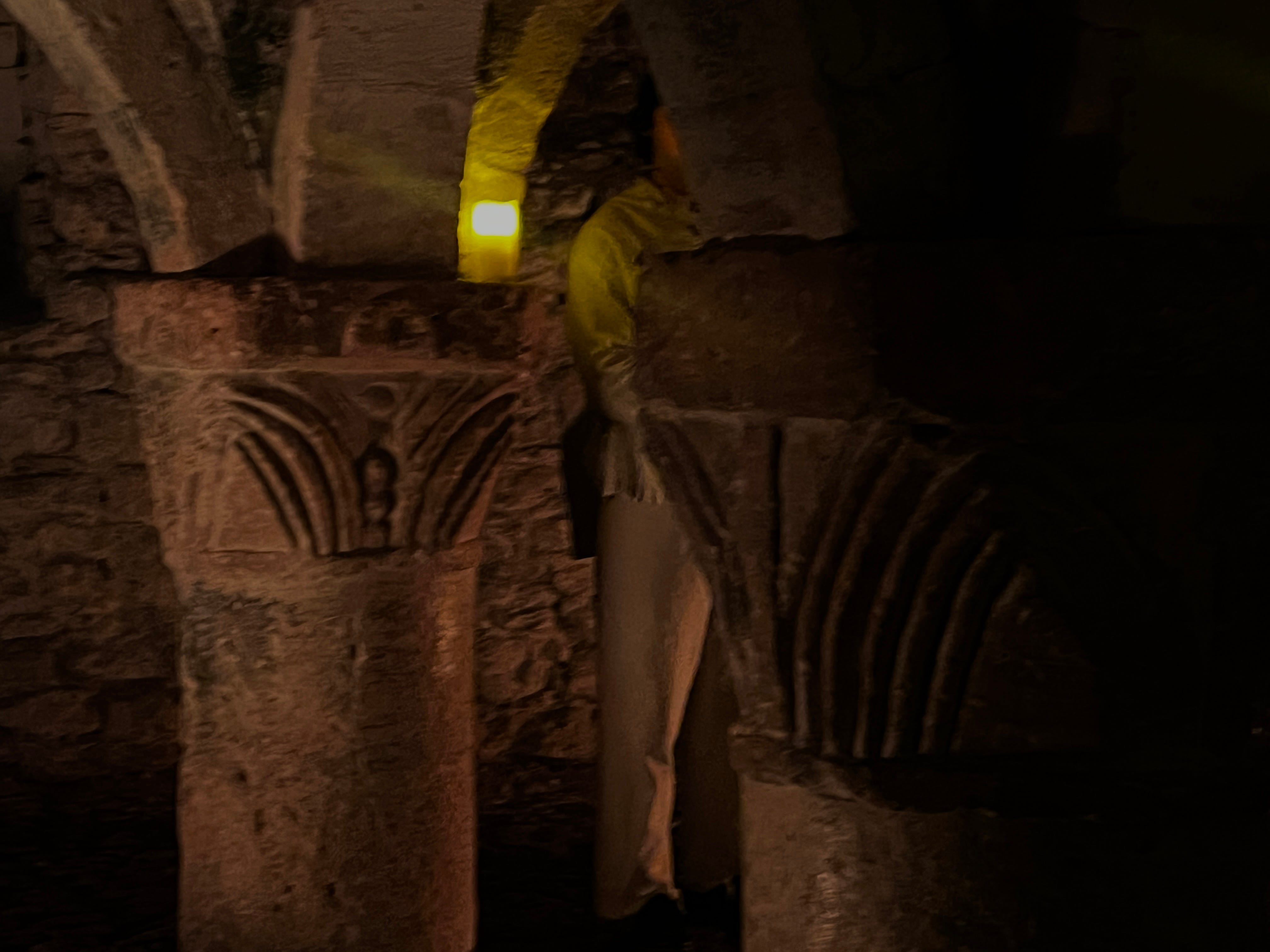
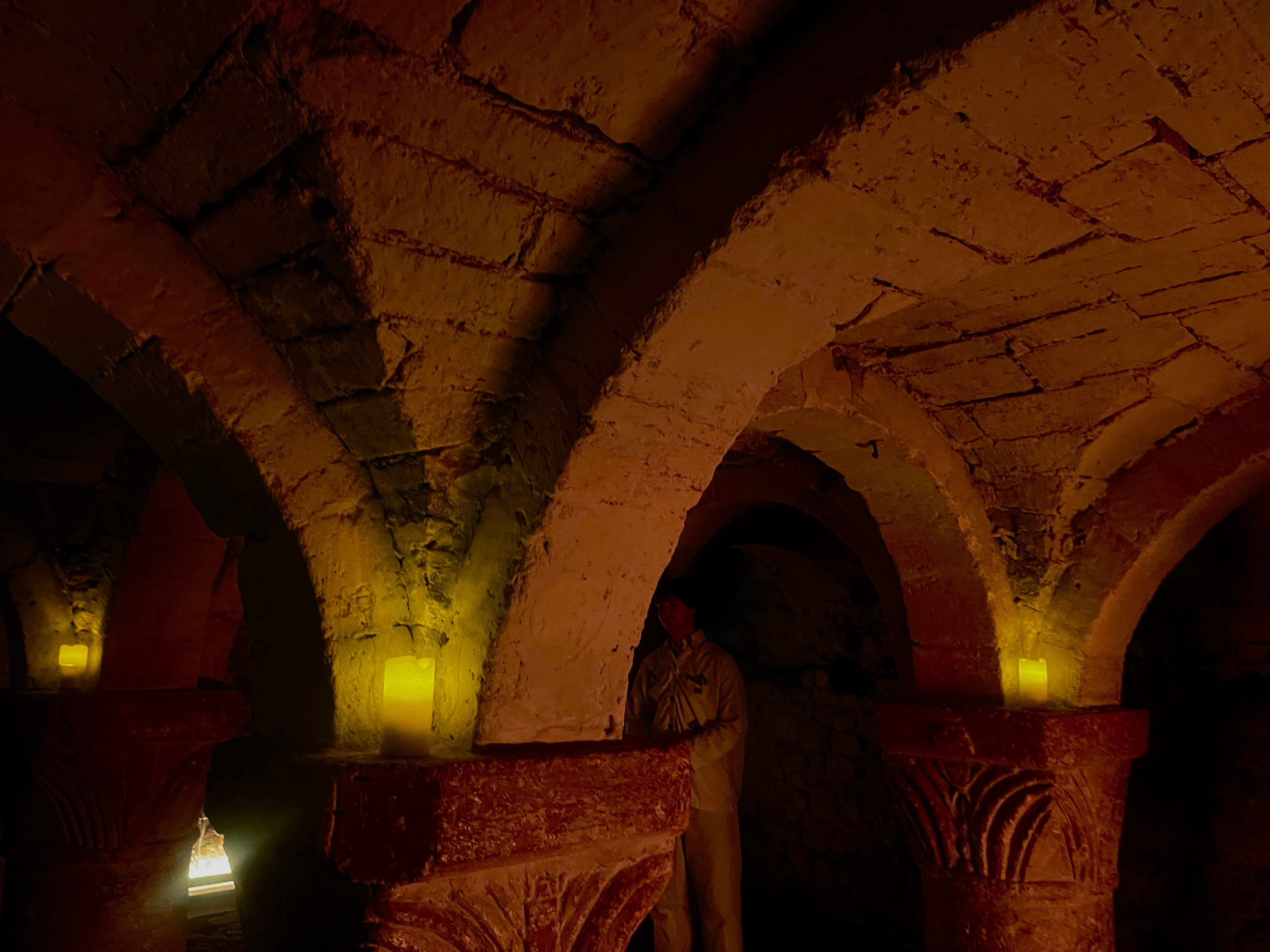
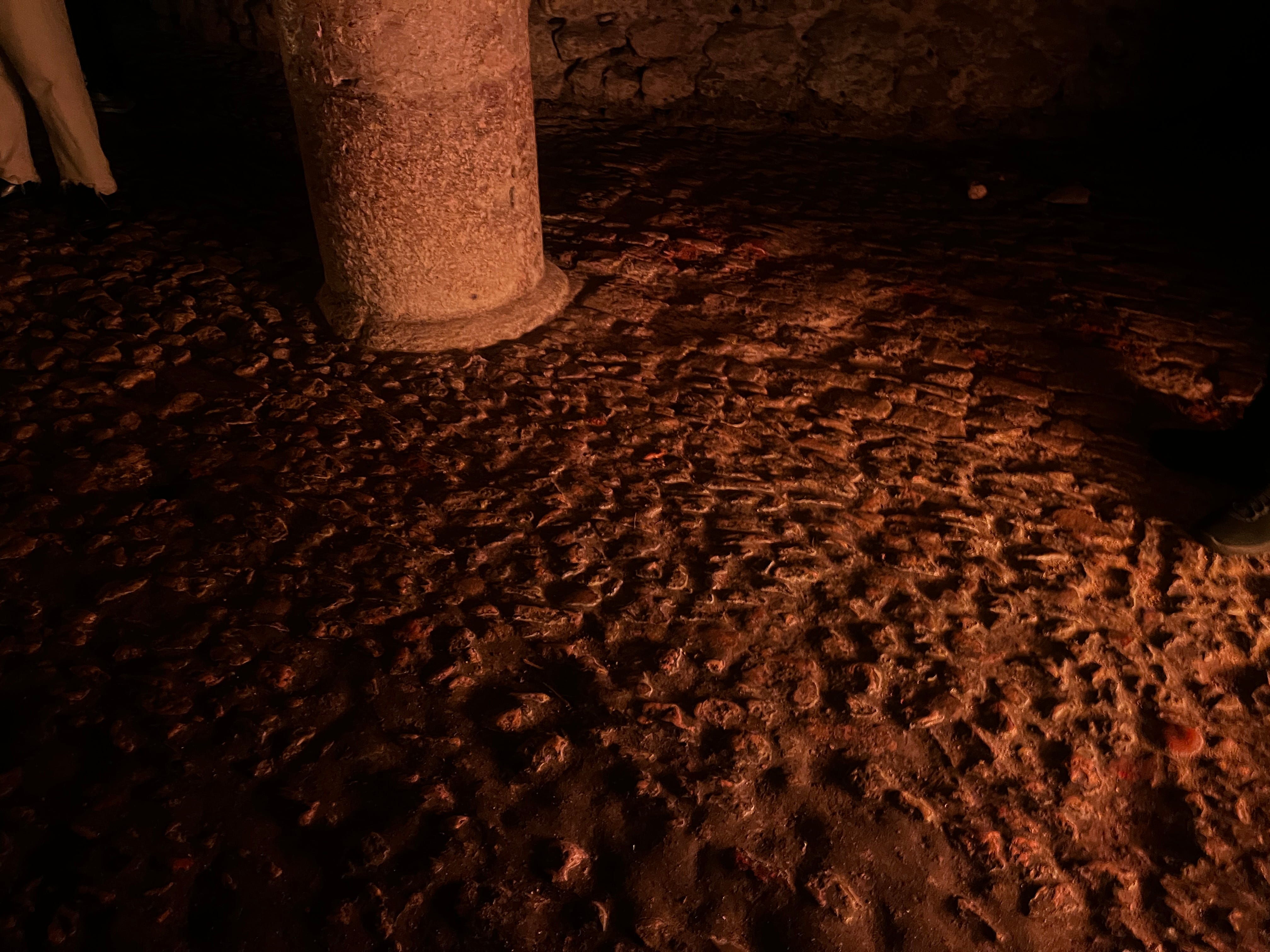
The crypt was used for religious purposes. When people had passed away, their bodies were given to the monks inside of it. However, these bodies were not disposed of for a very long time.
Today, the crypt carries the reputation of being one of Oxford’s most haunted spots. Visitors have reported strange sounds, cold drafts, and the unsettling feeling that someone is watching.
This crypt used to lay under St Georges chapel, and at the time of rediscovery, had partially collapsed. The builder, working on a tight budget, reused the fallen materials such as stone and rubber to patch it up. The ‘builders’ also expanded the crypt, for its original state would have been very small. The result? A wonderfully uneven, chaotic structure that somehow still stands.
This job was prisoner labour, and so much of the design there was made by inmates themselves.
Prison life through the ages
As time went on, prison conditions evolved . . . but not always for the better. The Victorian period was particularly grim. Strict discipline, isolation, and relentless labour made it arguably the harshest period for inmates.
Oddly enough, if you had money, prison wasn’t so bad! Wealthier prisoners could afford better food, bedding, and significantly better degrees of comfort.
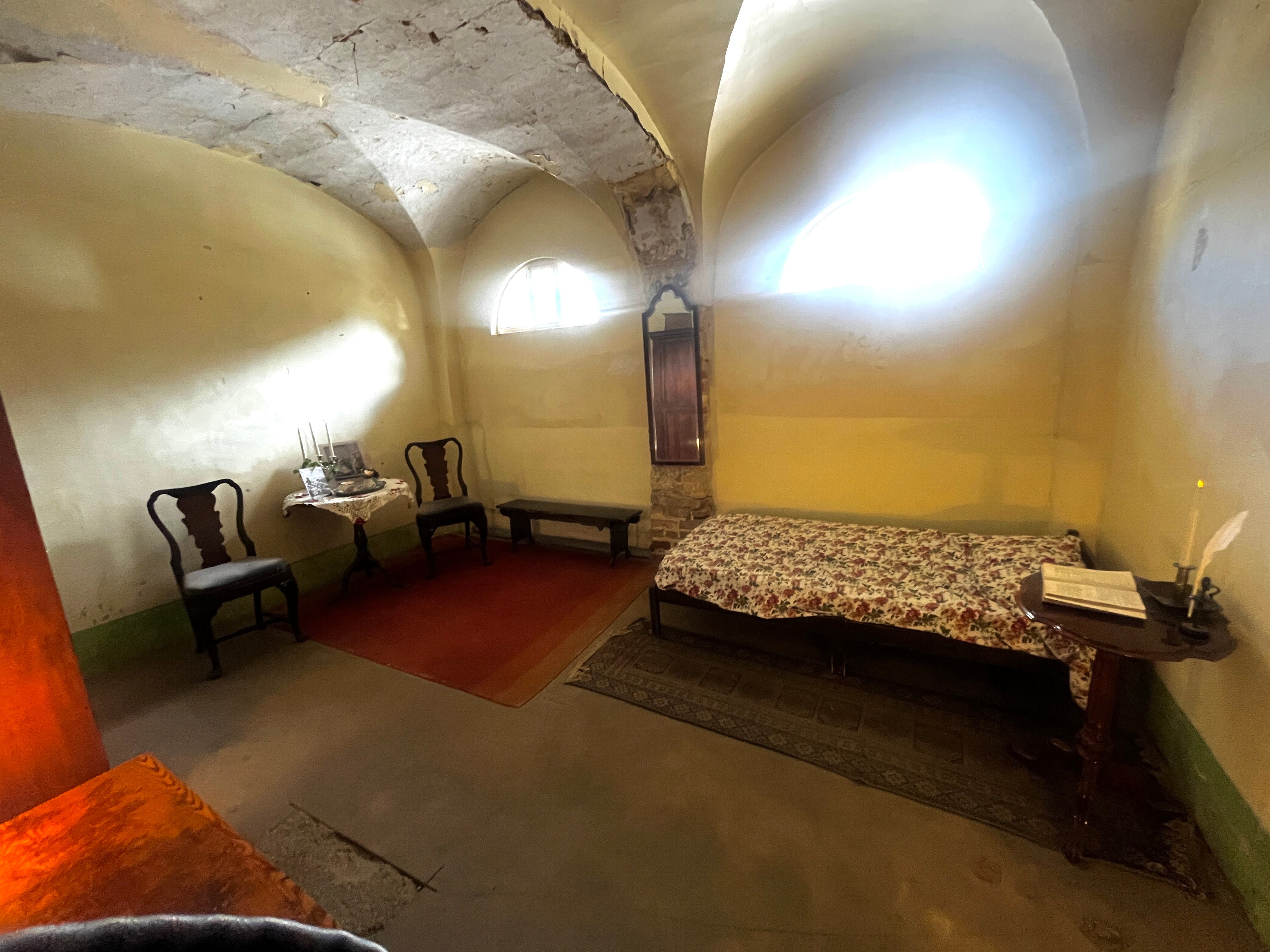
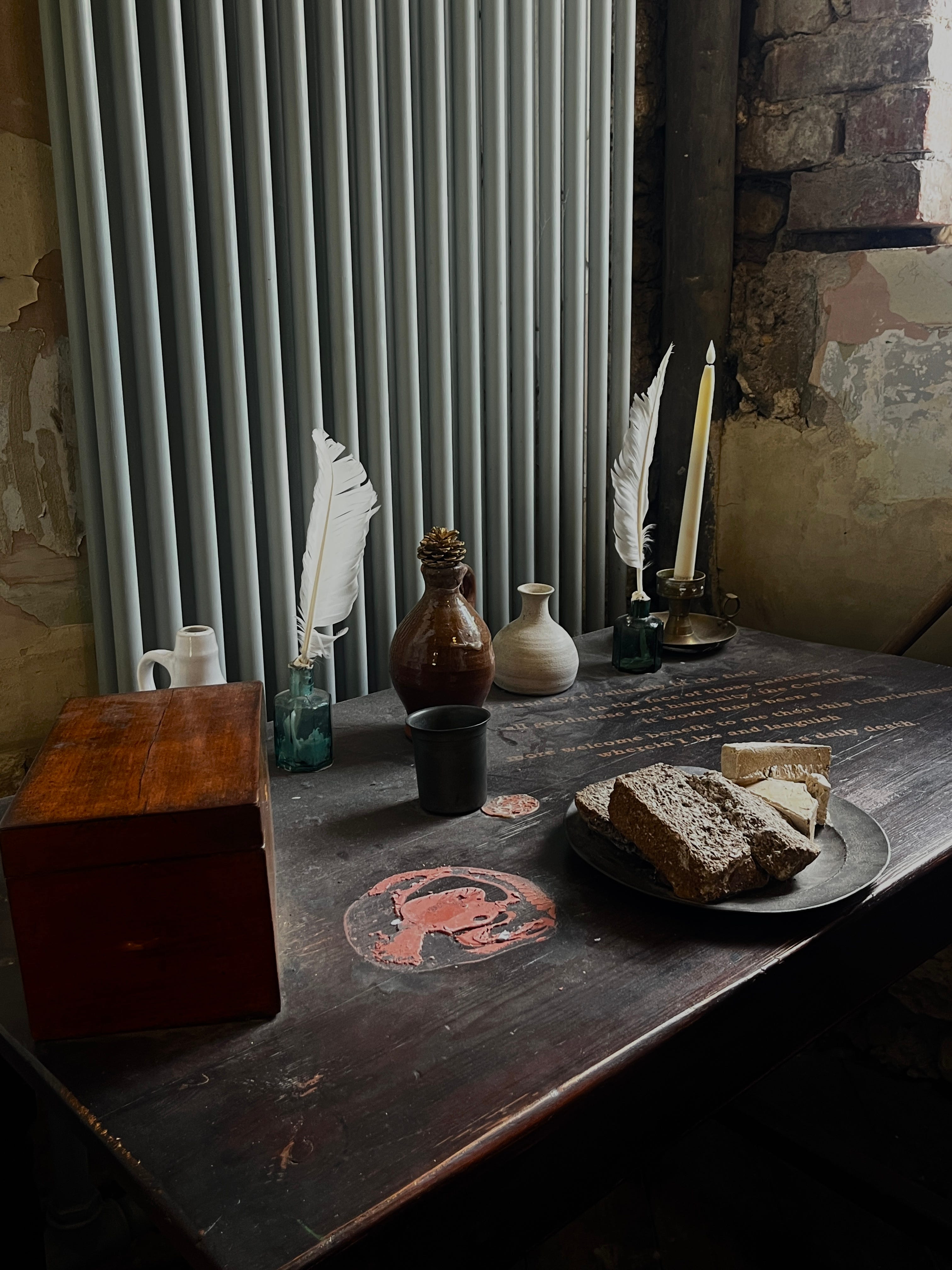
Prisoners were obligated to have three meals a day, their own cell, and also had access to healthcare, long before the NHS existed. There was even a hospital ward – and somewhat ominously, a padded cell for those deemed ‘unwell.’
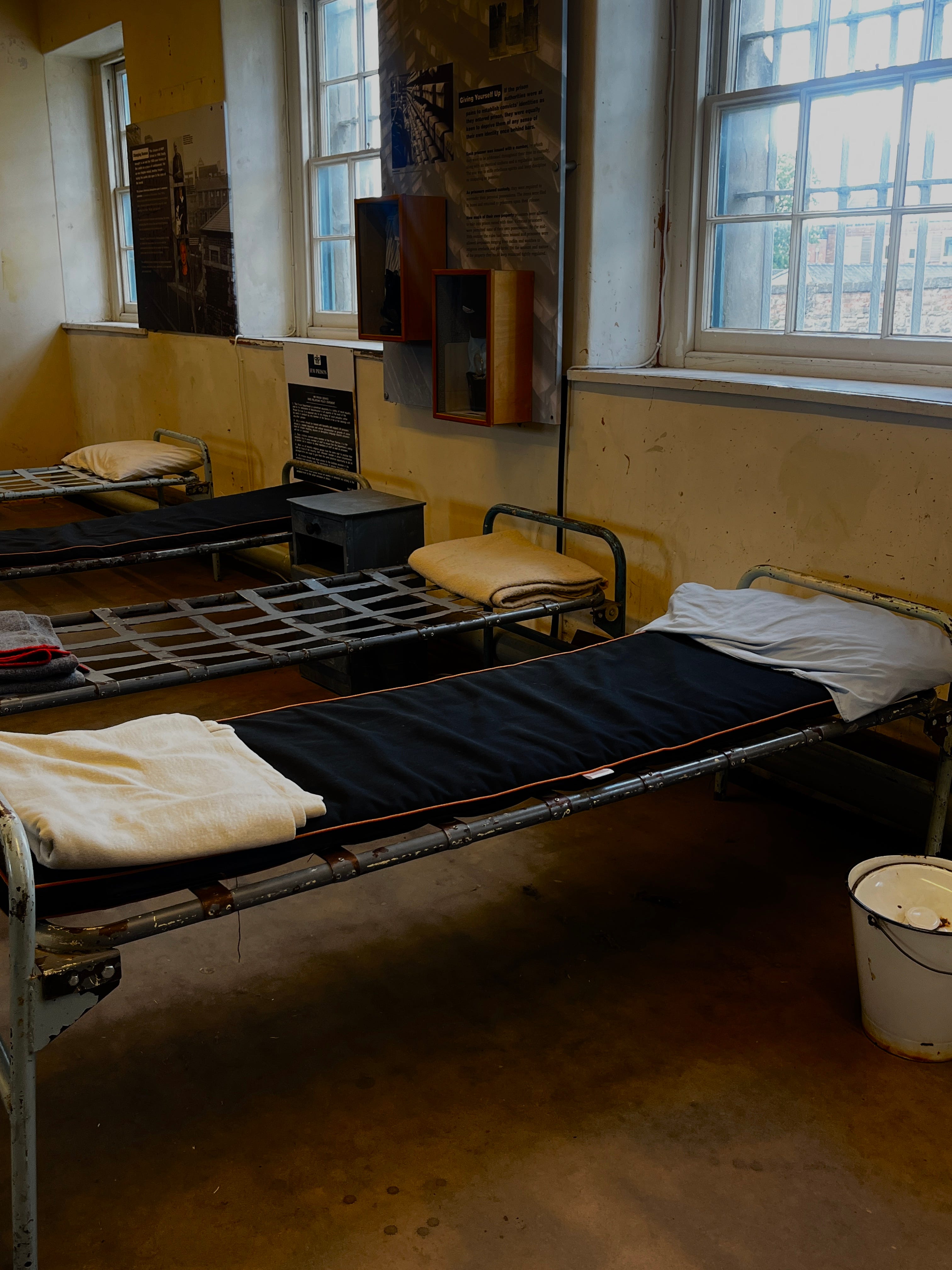
These luxuries were in some cases preferable to the outside world, and so many people, including children, started committing petty crimes so that they could spend a few weeks having filling meals and a bed to sleep in.
So steal a loaf of bread, and suddenly you’re a part of Oxford’s long and stored penal history.
Pints behind bars: the female wing re-imagined!
One of the more unexpected twists in the site’s long history is the old female prison wing – which today, has traded shackles for ciders.
What was once a section of Oxford’s Castle and Prison, is now a Wetherspoons pub, specifically known as ‘The Swan and Castle.’ The same walls that echoed the clank of cell doors, now hosts the clink of pint glasses.
There is something oddly fitting about it though. The space has gone from confinement to conversation, from punishment to pub lunches. If nothing else, it proves that Oxford has a talent for reinventing its past, preferably with chips on the side.
Lights, camera, incarceration . . .
The castle closed its prison doors in 1996, and in more recent years, the castle has opened its eyes to the world. It has found a second life as a filming location as its atmospheric corridors and historic architecture have made it a natural choice for film and television.
Featuring films and programmes such as ‘102 Dalmatians,’ ‘Bad Girls,’ and ‘The Bill,’ big names including Brad Pitt, Glenn Close, and Gerard Depardieu have all stepped in front of the camera here, adding to Oxford’s reputation as a creative hub.
Final Thoughts and Information
Today the site is far more welcoming than its past. Guided tours bring its stories to life, often with a dose of humour which balances out the darker history.
Ticket prices range from £15–£20, and also include a student deal, though it is best to check latest prices on their website at: https://www.oxfordcastleandprison.co.uk/
Oxford Castle and Prison isn’t just a place where history sits quietly – it looms, creaks, and occasionally gives you goosebumps. From a Norman stronghold, to royal escapes, and a Victorian prison full of ghostly whispers, it offers a layered, slightly eerie glimpse into England’s past.
And if you do hear footsteps in the crypt . . . well it’s probably just another visitor
. . . probably.