



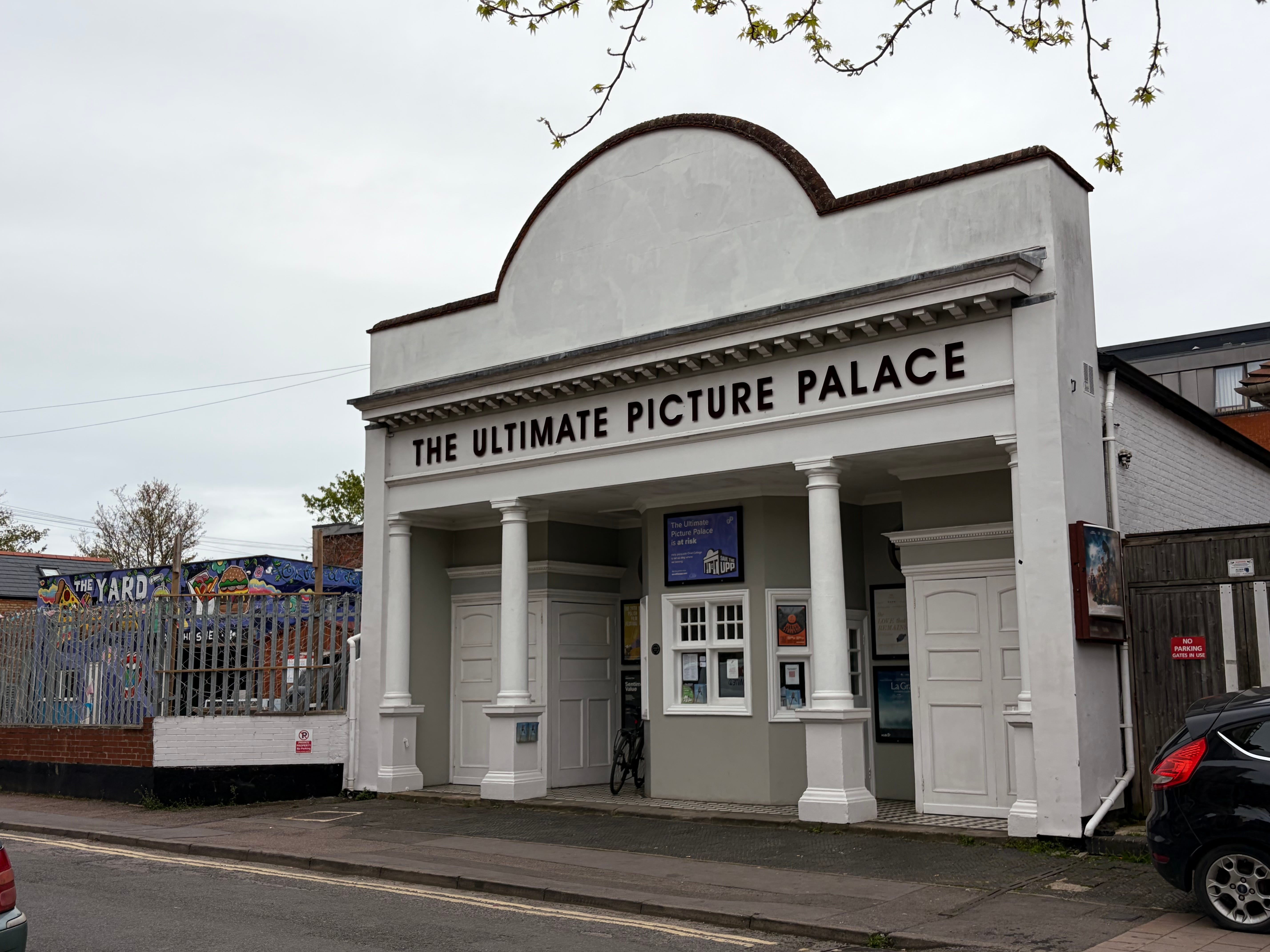
The Ultimate Picture Palace makes a powerful first impression. Its impressive Art-Deco exterior, box office and all, stands out amongst the rest of Cowley Road’s corner stores, kebab shops and student flats. The gorgeously maintained white facade leads inside to a cinema that just feels right. WIth 108 bright red seats, fresh popcorn and professional film projectionists, everything about the experience feels like the quintessential cinema, and the East Oxford community agrees. The UPP has been a standout success, with ticket sales continuing to rise and a unique community owned structure that divides responsibility between over 1200 shareholders. But like so many historical independent venues, they’ve been forced into a fight for their survival.
For Sam, a former Oxford resident, the UPP was never the most convenient option. Living across town in Botley, Sam and his partner would make the journey up throughout the year to catch screenings of Studio Ghibli classics, indie darlings like the Green Knight, or for the simple fact that this place had something most cinemas didn’t. “It has an atmosphere and a mood that you couldn’t buy,” he says, “and you couldn’t just install it somewhere.
It’s important to establish that this fight isn’t because the UPP is failing. Ticket sales actually rose 29% last year - defying trends across the wider national industry, which has failed to return to post pandemic levels - but because of a dispute with their landlord. Oriel College, the current leaseholder for the land on which the UPP is built, is refusing to commit to an extension over the existing lease which expires in 2037. Without a longer tenancy, the UPP cannot secure funding to progress with improvements it already has planning permission for.
Lucas, a film student at Oxford Brookes who has been visiting the UPP since his first week at university, told me that the situation is alarming. “I’m worried that [Oriel are] using their level of influence for profit and private use” he says, telling me that he believes they should instead focus on “helping the UPP grow and thrive as a community owned cinema.” Speaking with ITV, the college stated that they “have no plans to extend the lease at this early stage in the tenancy”. This surprisingly dismissive answer obviously strikes cinema-goers like Lucas as a problem, one that The UPP has decided to take into their own hands.
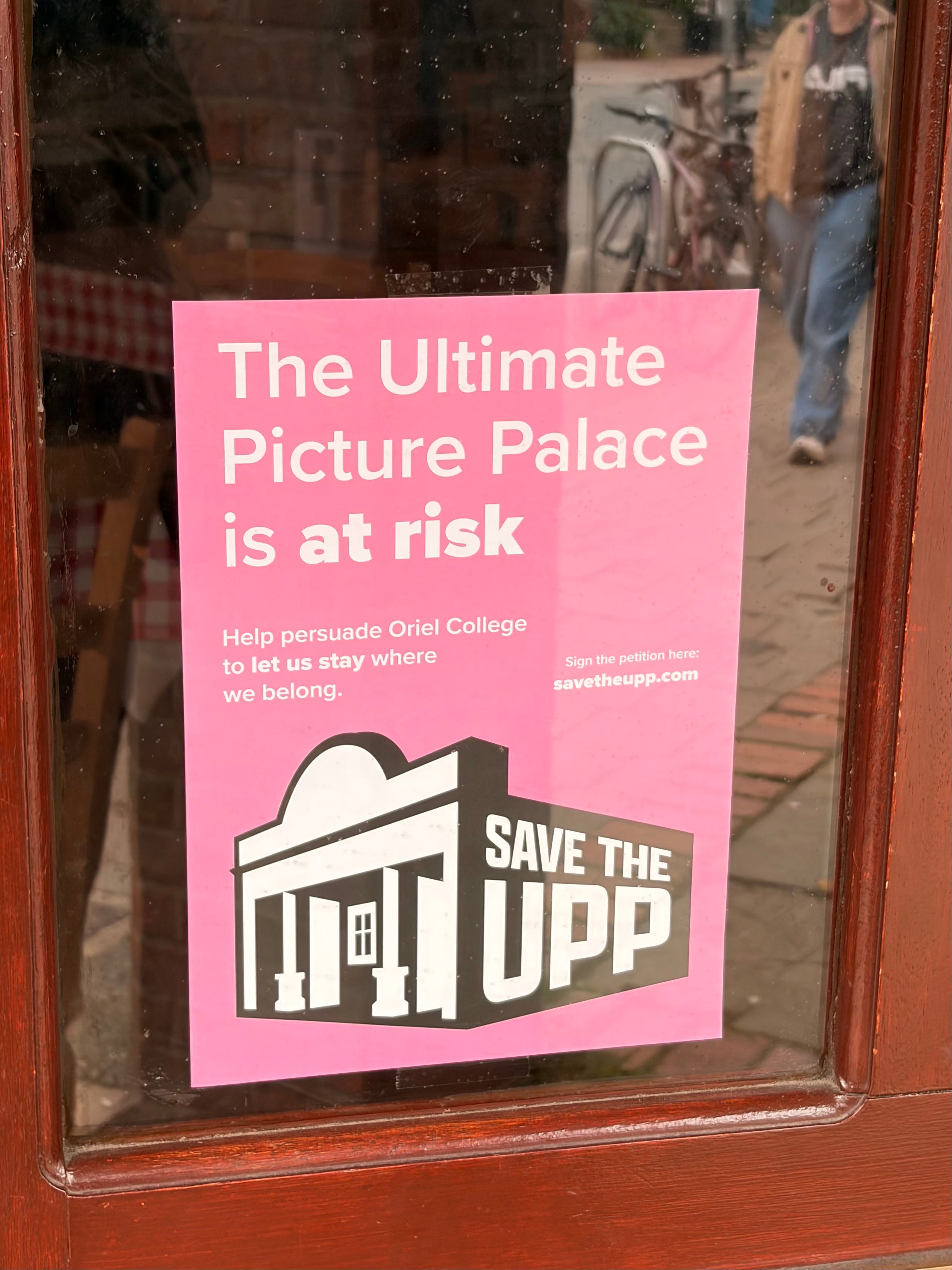
On March 13th 2026, the cinema launched a public campaign to raise awareness and push back against Oriel’s firm stance. Save The UPP is the cinema’s chance to fight back, and it’s safe to say the campaign hasn’t gone unnoticed. In just over a month, the petition launched alongside the campaign has gained over 20,000 signatures and support from the local government and industry figures such as producer Dame Pippa Harris. Support amongst the local community has been palpable. It’s hard to go far in Oxford without spotting one of the vibrant Save The UPP posters adorning a community noticeboard, stuck in the window of a cafe or behind the bar in a pub. And many locals, even those that don’t go to the cinema often are aware of the campaign.
The UPP’s continued impact on its community is hard to overstate. Built in 1911 as the city’s first purpose built cinema, and aside from a brief stint as a furniture warehouse, the cinema has remained an important part of the vibrant Cowley road area. Members of the Oxford community have formed strong relationships with the cinema. Lucas told me that he “tries to go to the UPP as often as possible” and that the unique atmosphere makes it “genuinely feel like you’re stepping back in time”. Sam echoed this sentiment, and despite having not visited the cinema in a few years, he could picture it clearly: “Nowhere else looks as much like a cinema as that place looks like a cinema.”. The community owned nature of also stuck out in my conversation with patrons, with both telling me that it was an important part of its identity, and that for Lucas its a “drive to try and go there”.
When I asked them about the campaign, and the threat to the UPP’s continued existence, Sam told me that “It’s poor show. I think you know, people have clearly made over the last few years a concerted effort to maintain something that has cultural value. And if the university all those parties that own it [the land] through the university aren’t sharing willing to protect something of actual cultural value then we’re we’re in real trouble”.
Sadly, the unfortunate predicament the UPP has found itself in is not a unique problem. Independent venues up and down the UK have been facing increased pressures ever since the pandemic. A 2025 Independent Cinema Office survey found that 31% of cinemas and arts venues would be unable to remain open without further investment, and that 28% were unsure about their continued viability. Some of the most commonly cited essential investments were for upgrades to equipment, furnishings and building repairs, all things the UPP is also looking to enhance.
The continued issues facing cinemas and other arts venues around the country highlights why the Save The UPP campaign is so important, and why many have thrown themselves behind it in support. Birmingham’s Electric Cinema shut its doors in February 2024 following an eerily similar tenancy dispute, and the continued decline in investment and support for many small cinemas shows why the UPP’s fight is so important, and why so much of the local community has thrown themselves behind it.
Below is a short video produced to accompany the piece, asking some more members of the public how they feel about the cinema: