



As we are all aware, life in 2025 is expensive. Whether it be food, education or even a pint; budgets’ remain stretched for most. Towards the top of the list is housing. Whether you’re buying or renting, it definitely isn’t cheap.
There are four key factors that are definitely going to influence house prices in the future. The world we now live in post Covid, the Renters Right Act 2025, changes to Bank of England base rates and the availability of housing. Each of these factors will impact on the place you call home.
University choices are wide, there are many courses but finding accommodation remains competitive. For landlords and investors in Oxford, there feels like there is always a constant supply of students and if demand for their property exceeds supply rents, will only go up. Great business if you can afford it!
But it’s not just the students. Many full time workers are now straddled with the university debt and if the accommodation is shared with a partner who has also attended university the debt is combined. Trying to save for a deposit on either a flat (one months rent) or the house (10% of the purchase price) is difficult .
House prices vary regionally and by property type . Why? Employment and lifestyle seem to be two key influences when finding the perfect home. Post Covid employment and lifestyles have changed with hybrid working now the norm. To a certain degree lifestyle remains within our control but there are many other factors that aren’t.
Let’s have a look at Oxford:
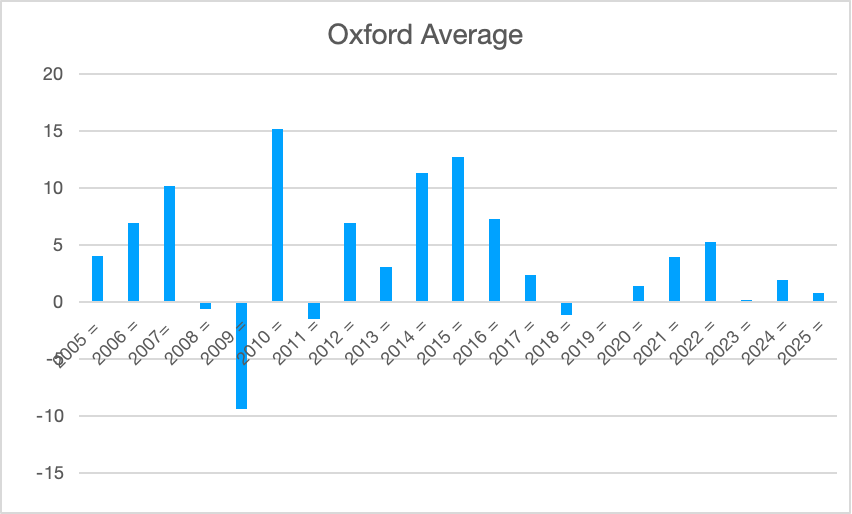
This graph demonstrates the percentage increase in housing prices in Oxford from 2005 - 2025.
House prices in Oxford over the last 20 years have risen and fallen in cycles. Focussing on recent times, the average price of property in Oxford dropped below the UK average in 2018 to £244,000. House prices have a direct impact on the ability to buy or rent. If house prices are low, it could be a good time to buy, but you need the cash to do so and you also need to ensure the city is not facing an economic crisis.
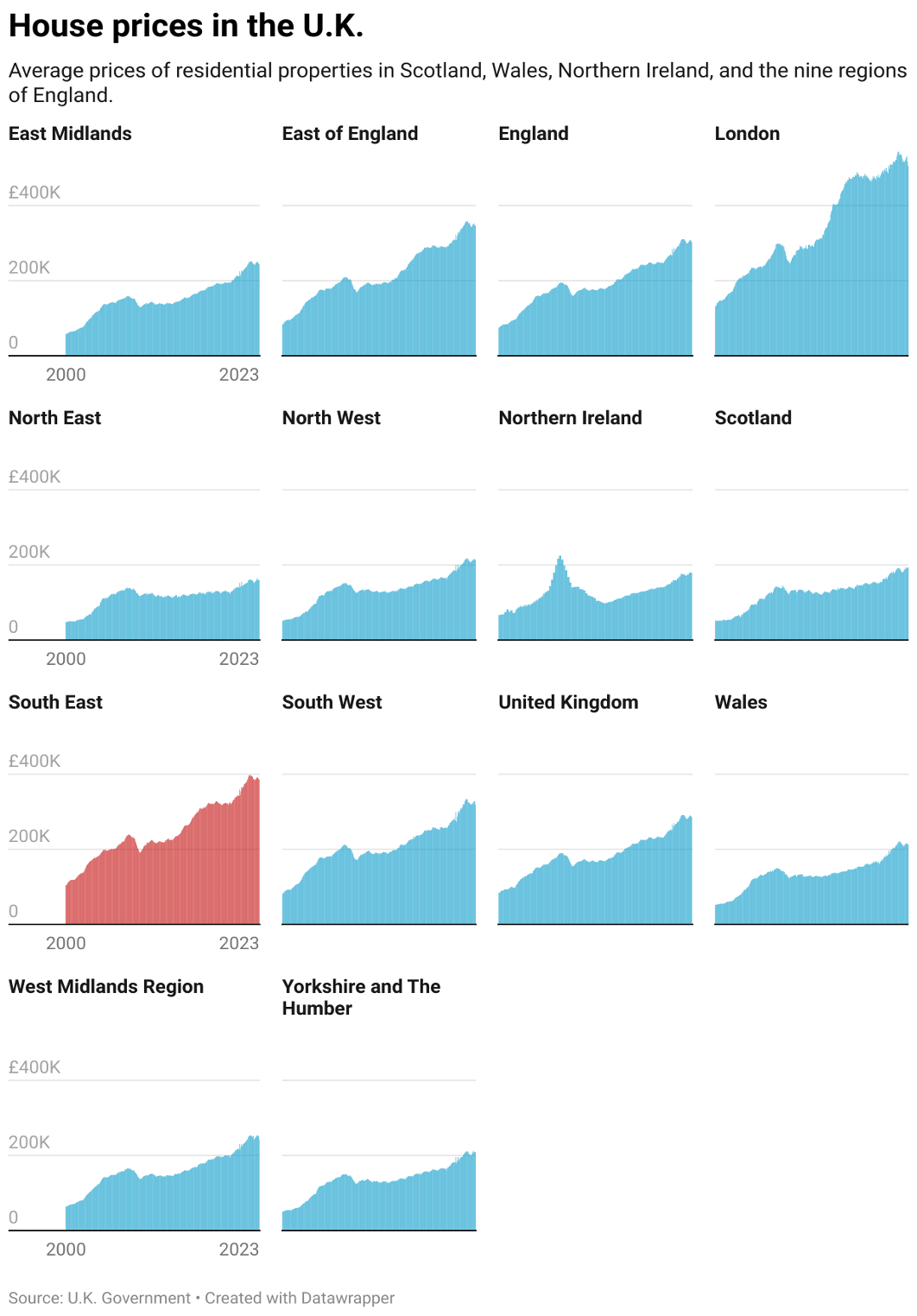
Despite the price cycles in the earlier graph South East values (Oxford ) have risen significantly overall.
House prices which are higher than the national average normally reflect a desirable area . Oxford has good public transport and is only a short train journey away from London, making it an ideal city for many to live in. It also has some of the top schools with Magdalene College and an excellent hospital, John Radcliff. Oxford has curb appeal for every generation. .With more people working from home after the pandemic, it isn’t essential for people to live in London or the suburbs.
But with a desirable location and higher prices deposits will be higher and competition amongst buyers can be fierce. For landlords the higher prices may reflect higher rents which many tenants are forced to pay whilst saving for a deposit on their first purchase.Once the property is secured the dilemma does not stop. Interest rates can make mortgages less or more expensive if on a variable rate and we have recently seen base rate move from 0.5% during Covid to 4% now.
Up until recently Landlords issuing AST’s (assured shorthold tenancies) had the right to raise rents and tenants either swallowed it or moved out. This has now changed following the introduction of the Renters Right Act in 2025, designed to offer tenants more security. It empowers them to challenge bad practice without fear of retaliatory eviction. Tenants are allowed to negotiate with the landlords if their rents are raised and can appeal via a tribunal who will decide if the increase is fair. Until that decision is made rents will remain at the lower amount.
On this basis there is a high likelihood of a backlog of cases at tribunal Landlords should also benefit, with more straightforward regulation, and clearer and expanded possession grounds but this still needs to be determined.
Tenants renting property in Oxford were asked about their existing arrangements:
Luella Davis is a student at Oxford Brookes University, currently renting a room in an HMO (House of Multiple Occupation) student house stated “There has been a huge increase in rent prices to the point where we have stopped looking for a new house for next year. We’ve negotiated with our current landlord to let us keep our house after saying we needed to move as the rent was already too expensive. After looking around, we found out that the price we are paying, which is already high( £1350 a month), has become the normal rate for a house that isn’t damp. Even though we are having to stay in the property, we are experiencing higher rent rates.”
Maddie Whitton, another student renting a HMO stated her thoughts on renting in Oxford. “Oxford is the fourth most expensive city in the UK to rent - and I can sure tell you! We pay £600 a month each, not including bills - for a student house for 5 people; this is a bargain compared to the rest of Oxford. It is so hard to find a good deal as everywhere to rent in Oxford nowadays is expensive - it’s a national problem.”
In the first instance the rent uplift has been agreed which will safeguard Luella for at least 12 months . With Maddie it appears the landlord is in a position to review?
Turning to newly built homes for sale, the government has set a target of 1,500,000 new homes by the next election and it is already clear that target will be missed. In simple economics if demand remains greater than supply prices are more than likely to go up. This is reflected in the graph below (2025). The huge drop in values in 2009 can be linked to the global financial crisis and a number of borrowers unable to repay existing loans.
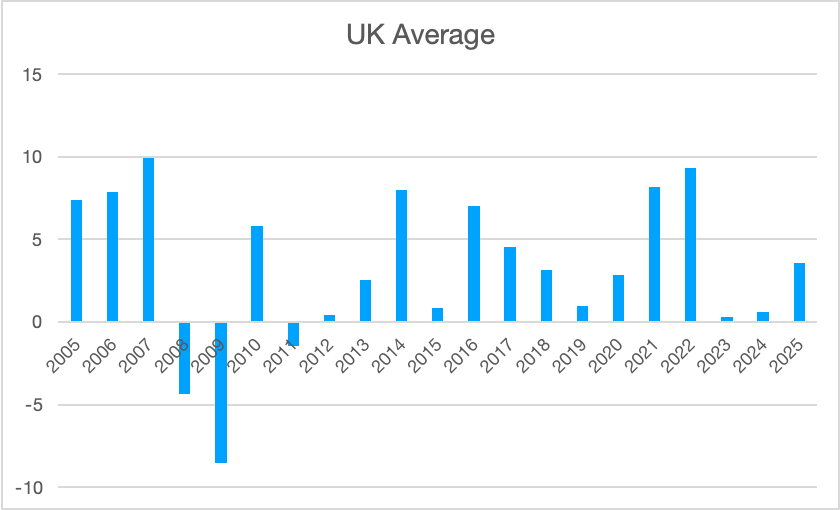
As the financial crisis drew to an end, opportunistic investors with cash bought into new homes at lower prices. This investment saw Oxford house prices increase by 15% compared to 6% in the UK.. In combination Oxford had an existing shortfall in properties “the Oxford housing crisis’ both of which were key to house price growth .
To build more homes we need a strong economy and changes to the planning process. The existing and previous governments recognise that the existing planning system is inefficient. More land needs to gain consent for building and more apprenticeships for skills in the building trade to undertake construction.
Since the pandemic both companies and employees have adopted hybrid working . With fewer people needing to be based in London, we may see an increase in house prices in cities such as Oxford. Other cities are also beginning to expand, such as Manchester therefore there may be an increase in demand for housing outside of the South East.
What will this mean though for the future of house buying? For younger generations entry into the housing market is likely to be much later if solely reliant on personal means. Land prices remain high, cost of materials remains high and the planning system remains inefficient. With a shortage of rental properties and the ability for tenants to be protected to a much greater degree, demand for rentals is likely to grow .
Property boom or bust? That depends on which side of the many fences you sit on.