


Photo by Visionhaus/Getty Images
For the past decade, the traditional Premier League top six: Arsenal, Tottenham, Man City, Man Utd, Chelsea and Liverpool, have seen consistent strong revenue growth. This is mainly driven by their large fan bases, not just domestically but also internationally, with many of the top six having global appeal. While broadcasting deals have been growing steadily as the Premier League solidifies its position as the premier division in world football, surpassing LaLiga and Serie A. This has allowed these teams to see exceptional growth as broadcasting rights seemingly only ever climb, never dipping or stagnating. On the other hand, many lower league teams in the football pyramid are struggling to stay alive as functional organisations. With the likes of Bury going into total collapse, and the likes of Sheffield Wednesday just recently entering administration due to their inability to pay staff and player wages on time.
This, therefore, again raises the question around the sustainability of football and how much longer the lower league teams and grassroots football can keep going without the additional help from the large-scale few.
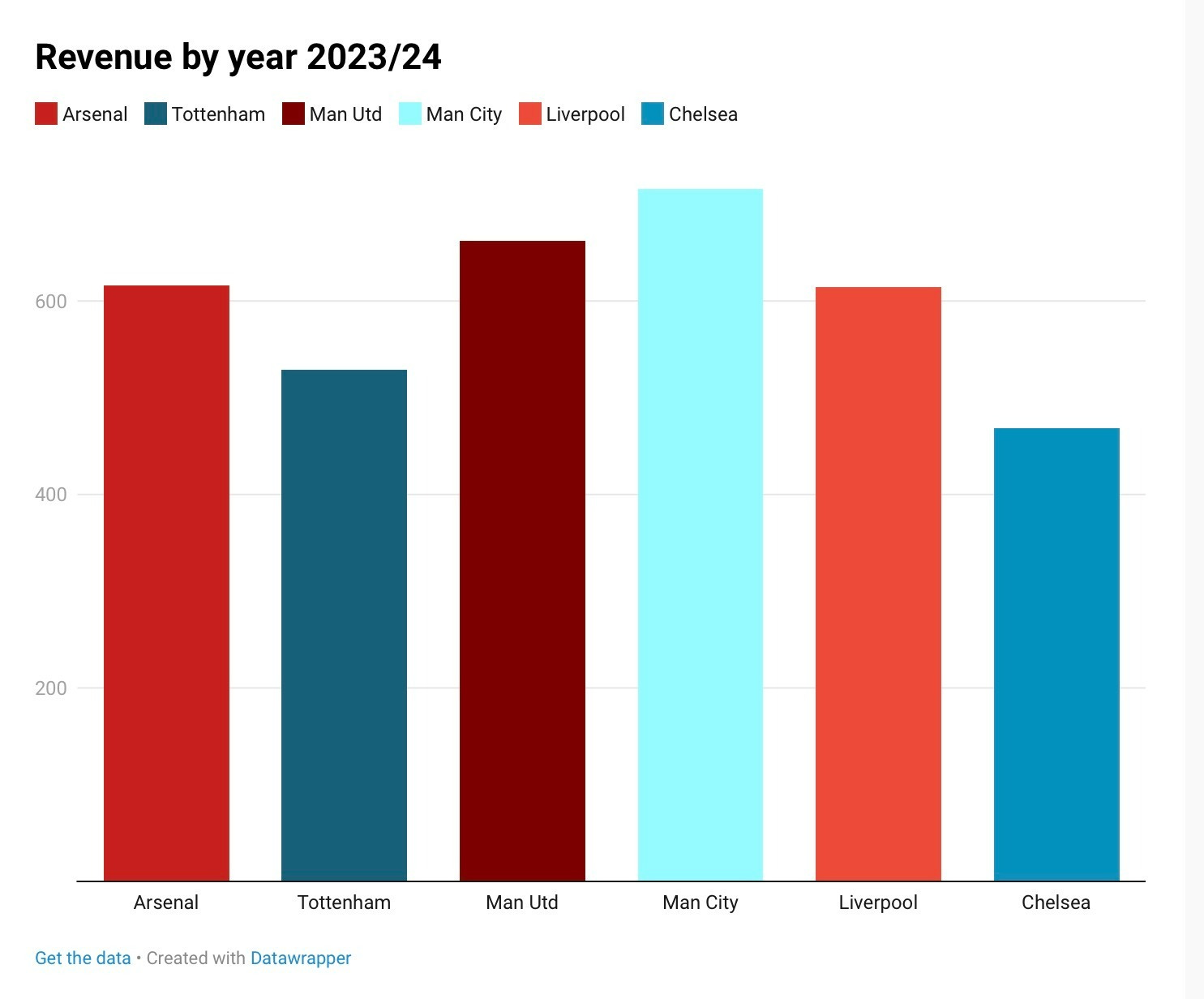
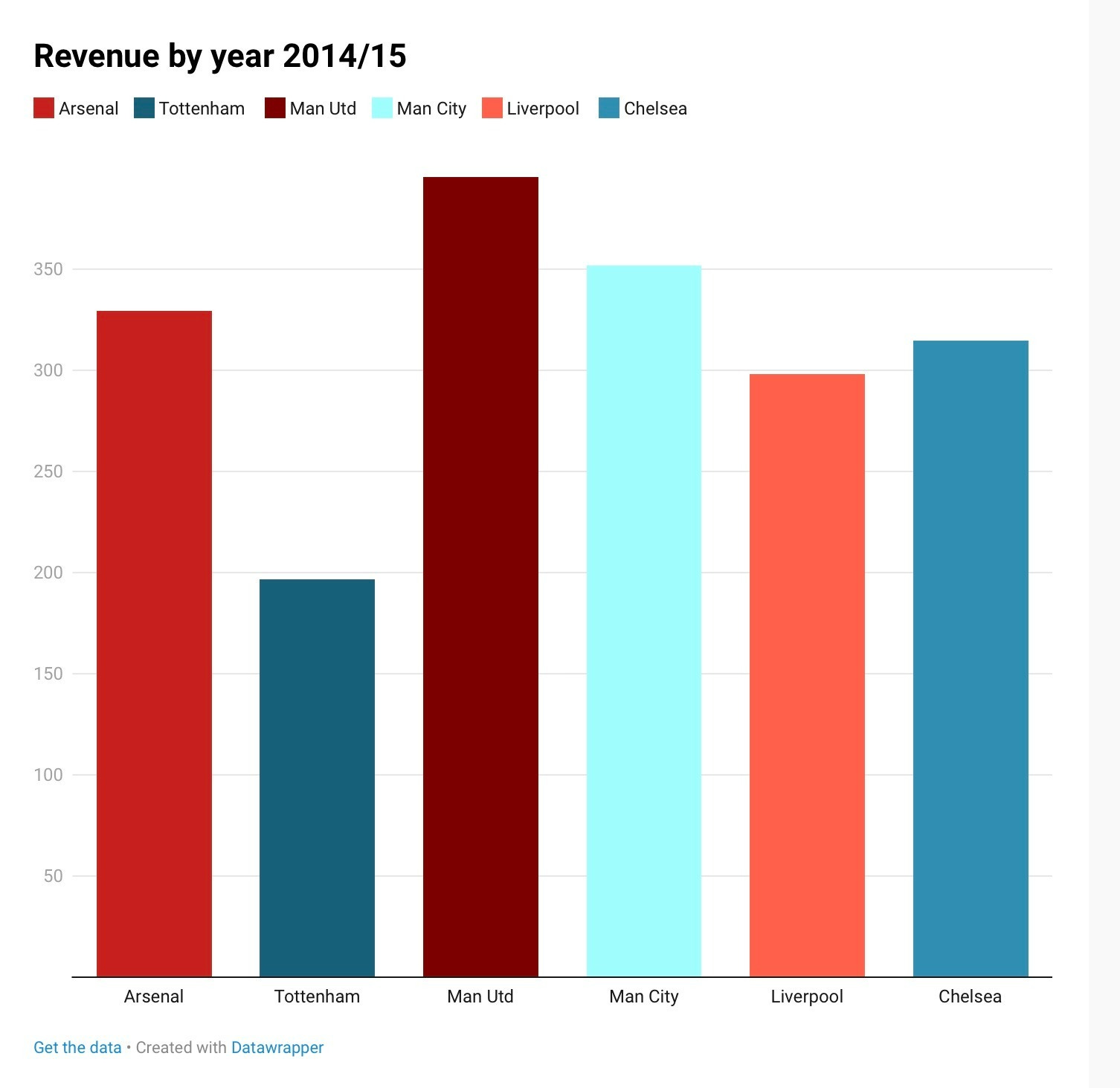
When you analyse the data surrounding revenue for the Premier League top six over the last ten years. You won’t be surprised to hear they have all seen large-scale growth. This again comes through many different channels of business acumen that they likely invest in on the commercial side of their respective clubs. Which is not something that should be used as a stick to beat them with, as why would a football club not always try to maximise their revenues and allow for a better ability to work around financial fair play (FFP) rules? To help them re-invest in their playing squads every summer. While also boosting their financial footing. At the end of the day, they are run as businesses even though we as fans see them as emotional investments and something way deeper for reasons only one can know and understand for themself.
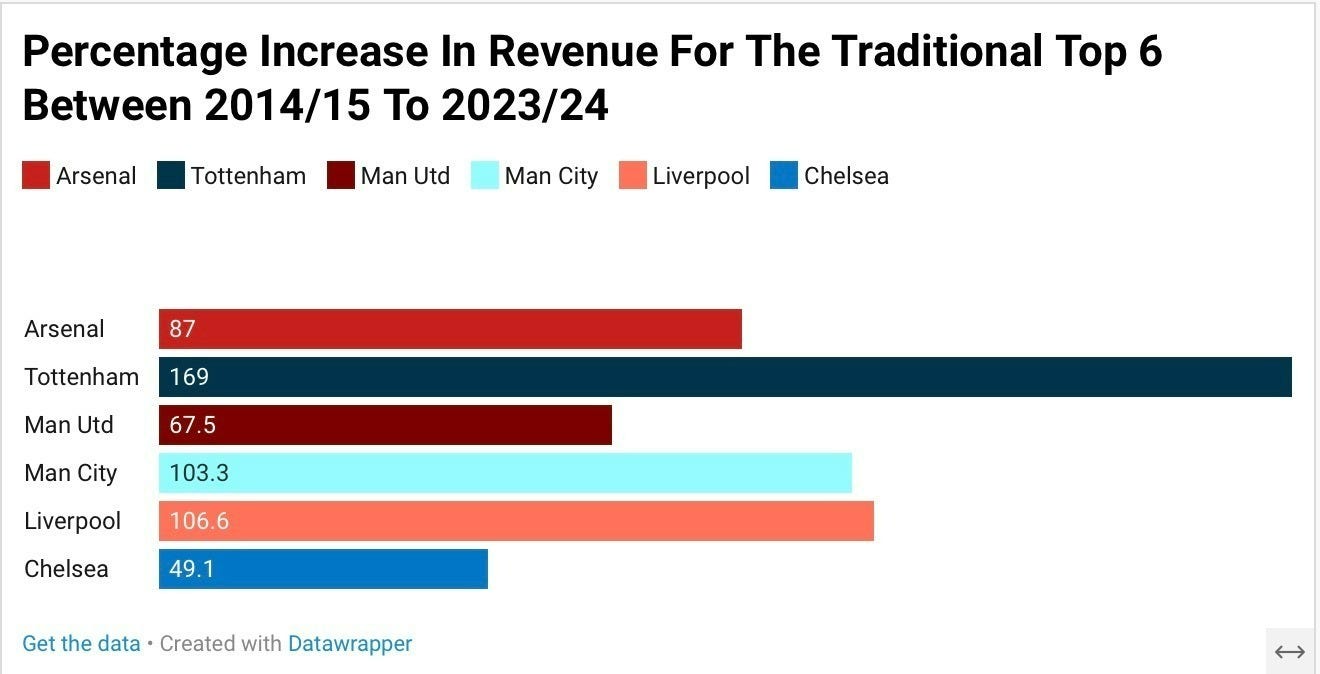
Over the last decade, the top six have seen revenue growth ranging from 49.1% to as high as 169%. This would demonstrate a clear ability for them to start redistributing some of that wealth down the pyramid more. Looking to offer a financial stimulus for those clubs who need it. As for some, that could be the difference between them being able to secure new owners and subsequently their future, or having to enter high-interest debt or possibly even going into bankruptcy.
The reality behind the idea that these set clubs start to budget for a higher new expense could be seen as fanciful in a capitalist climate. As for any business, the idea that the successful should help the less successful wouldn’t pass. However, in the world of sport and in this instance, football. Parity is held in a much higher regard than any typical industry business. For the product of the Premier League to be successful, there needs to be an avoidance of a monopoly and a high level of competitiveness. At the end of the day, people will always watch their team they have a personal connection to, but the league needs to make sure people feel like they want to return and watch games they otherwise might have turned their nose up to and seen as a waste of time. As the Premier League is stronger when the football leagues are stronger.
The recent 2025 summer transfer window saw large-scale expenditure. Data sourced from Squawka stated that the Premier League spent £3.19 billion, making it the highest expenditure for a transfer window for the Premier League of all time, breaking the record set two years prior. This demonstrates that the level of wealth is clearly there at the top of the football pyramid. Whereas when you look below at the EFL, the chasm between the three leagues and the Premier League is just getting bigger and bigger. With many clubs working on the knife-edge between just being okay and total insolvency.
With examples of Bury being the total extreme after being expelled from the football league. While teams such as Sheffield Wednesday and Derby County enter administration. While so many other teams sit on a weak financial footing, the question of whether there needs to be a redistribution of wealth is a very important topic to debate and keep in the public consciousness.
To better understand how fans feel about the issues facing the wider footballing pyramid beyond the EPL. I interviewed a lifelong Reading FC fan, who has supported Reading all his life and understands the struggles they have had over the last decade, with finances and the possibility of them entering administration being on the agenda for a long time now. “The reality is that we need help. We’re not in a good position financially. The losses that keep getting quoted just aren’t sustainable, and I worry that we’ll probably end up entering administration”.
When it came to the question of whether he thinks the EPL should be paying more into the footballing pyramid, he said, “ Yes, I know that’s probably not a shock, but we need more help to provide us with more time to find investment, otherwise we’re likely just denying the inevitable”.
The argument for many of the top teams is that they already pay enough. The process of solidarity payments is already intact. This is a share of the Premier League’s domestic broadcasting income, which is then redistributed to the Championship, League One, and League Two. Excluding the teams that receive parachute payments.
Data from Sportzify for the 2024/25 season states these payments were £5.5 million per club for Championship teams. £1 million per club for League One and £750,000 per club for League Two. Although it may look like the teams with the wealth are already giving a helping hand to the footballing structure. The fact is that if the help was sufficient, then why do so many clubs in the EFL rely on high-interest bank loans and large capital injections from owners just to simply stay alive and function day to day?
If the Premier League truly cares about the structure of the footballing pyramid in English football, then there needs to be action taken to amend the capital that is being redistributed down the 92-team hierarchy. Football is not just about the bottom line. Football, for some, is everything and the heartbeat of communities and societies. Which, for so many, they simply can’t afford to lose.