


Media workers in the Israel-Hamas war have been repeatedly repressed, oppressed, and restricted by Israel. The persecution of the press is not collateral damage, but part of a broader deliberate strategy. Its aim: to silence the coverage of the hostilities in Gaza.
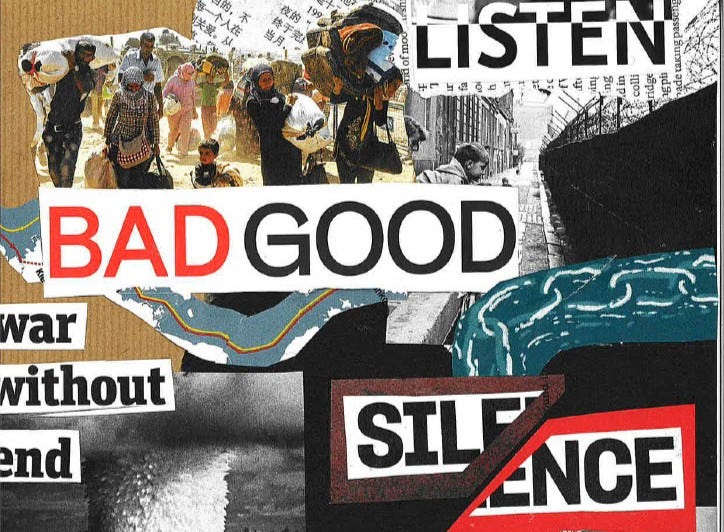
Last week, three journalists were killed in Gaza and Lebanon, bringing the total number of press casualties to 260. In light of the deaths of journalists at the hands of Israeli Defense Forces, the Committee to Protect Journalists, an entity responsible for recording press casualties since 1992, has called for international action. These figures reinforce what was confirmed at the end of 2024: The war is the most lethal suffered by journalists. More journalists and media workers have been killed in the Israel-Hamas war than in World Wars I and II, the Korean War, the US-Vietnam War, the US war in Afghanistan, and the Russia-Ukraine war combined.
The media has been in the crosshairs since the spark of the war in October 2023. Restrictions on international media were imposed by Israel, with foreign reporters being banned from entering Gaza. Rather than relying on their own reporting, international news outlets have had to base their reporting on statements shared by international organisations, such as the Red Crescent or the United Nations Office for the Coordination of Humanitarian Affairs (OCHA), as well as statistics published by the Israeli government and Hamas, often contested and significantly biased.
This is why Palestinian journalists and sources on the ground have been the eyes and ears of world-leading broadcasters. ‘Despite the fact that foreign journalists were not allowed in, Palestinian journalists were able to convey the message,’ explains Yousef Alhelou. He is a Gaza-born journalist and political analyst based in London, who reported on the 2008-2009 war from the ground, and has covered the latest war remotely as a freelance journalist. Using Instagram as his main distribution channel, he has built a base of over 1 million followers.
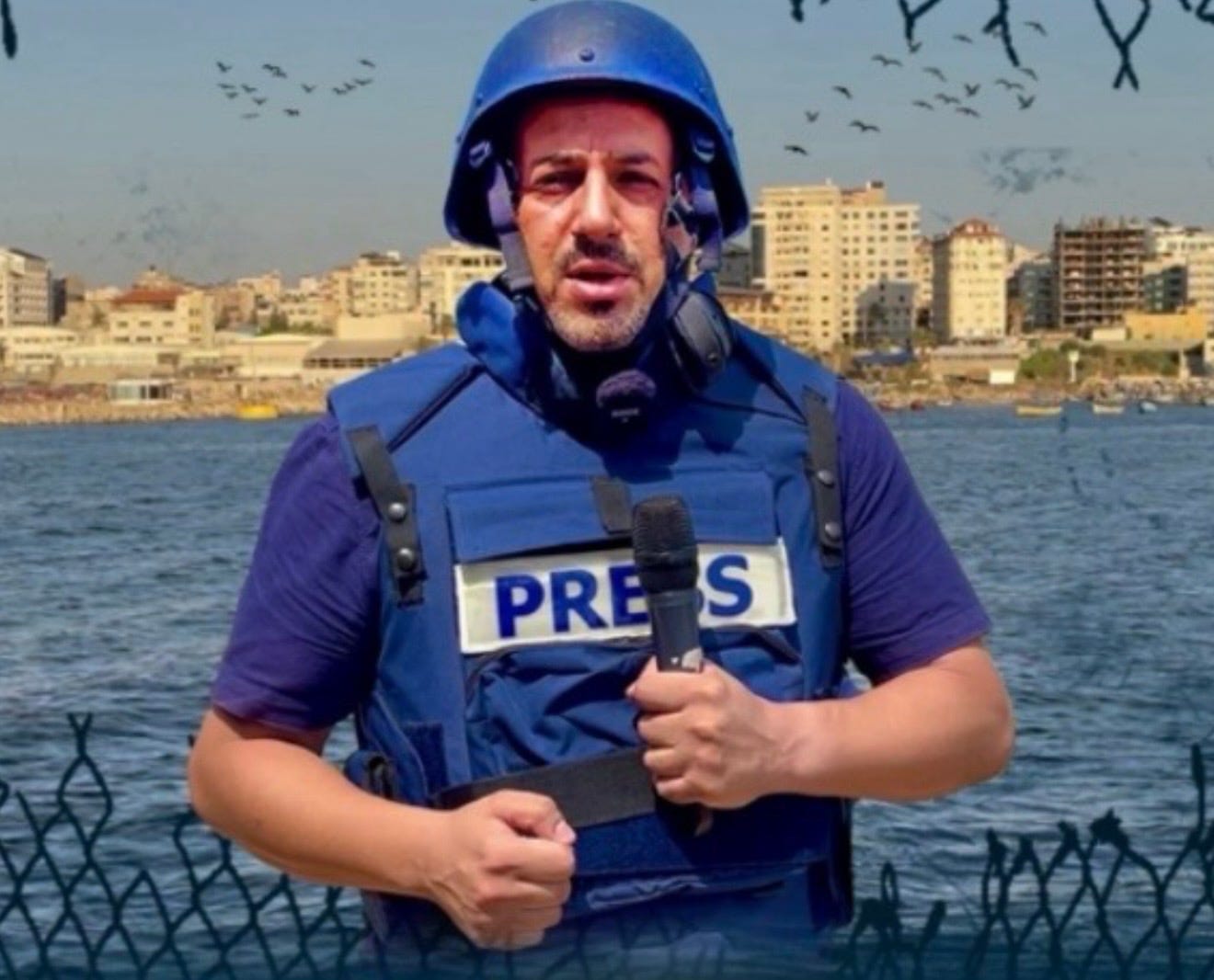
Local journalists on the ground have not had it easy either, operating under harsh and hostile conditions, and most of them are unpaid for their work. The price of having a voice in Gaza is high: the killing and wounding of media workers have been part of Israel’s campaign to silence the press, with the IDF deliberately targeting media offices and satellite media trucks to damage production equipment. Alhelou knows the story and struggles of many who have remained reporting on the frontline. ‘They want to show the world what is going on, but it isn’t easy, because it isn’t safe,’ explains Alhelou. Threats and harassment are used to instil fear and influence journalists’ reporting. ‘Even if you are wearing a vest or a helmet, you will be targeted.’
Movement constraints have also been imposed on journalists as part of Israel’s strategy to enforce what Alhelou labels a ‘full media blackout’ in the region. The freedom of movement of media workers has been significantly restricted, preventing them from reaching areas near the border. Solar panels have been targeted by air strikes, significantly damaging the Gaza communications and internet network, which limits the reach of journalists’ content. Alhelou explains how many colleagues had to climb high buildings and rely on e-SIM cards sent from abroad to share their gathered footage.
And yet from a distance, Alhelou has experienced media censorship firsthand. Since the beginning of the war, he has covered the conflict as a freelance reporter. ‘I wanted to help my peers on the ground, because I felt the world had abandoned us’, he explains. Alhelou gathered footage and information delivered by his colleagues, often overlooked by mainstream media, and, after meticulous verification, shared it in English so it reached Western audiences.
Alhelou lost his Instagram account for five months, a consequence of what he names, a strategy to ‘intimidate and scare’ professionals reporting about events in the Strip. Alhelou’s account has been repeatedly shadowbanned, with users often having to scroll down extensively when searching for his profile via the search tool. ‘At some point, they banned me from going live,’ he explains. ‘These companies have a way to reduce your reach,’ he claims, referring to Meta and X.
Media silencing as a weapon of war is nothing new. It has been used in other conflicts, particularly over the last two decades, ranging from the Assad regime in Syria to the United States and the Islamic State. Journalists have repeatedly been subjects of physical and verbal threats in war zones. However, the record-breaking journalist casualties in Gaza raised concerns about the driving motives behind such repression. Faisal Hanif, media analyst for the Centre for Media Monitoring (CfMM), argues that Israel aims to ‘minimise coverage and shape the overall information environment of the conflict.’
‘International audiences are already angry from the reports coming from Palestinian journalists,’ claims Alhelou. ‘Imagine if these reports came from journalists from their own countries,’ he adds. The limited verifiable sources that international reporters rely on are often ‘delegitimised because they happen to be non-Western,’ explains Hanif.
‘The Israeli tactic has been one of a “muddying the waters” dynamic, in which the conflation of journalists with militant actors serves to delegitimise reporting and complicate verification’.
Israel’s roadblock on the media in the general public has an immeasurable impact that seems intangible, yet profound. These ‘shape how the conflict is understood, influencing which narratives gain prominence, how credibility is assigned, and how audiences interpret allegations of serious violations of international law’, claims Hanif. ‘Israel does not want its genocide to be broadcast.’
‘Palestinian journalists are exhausted,’ states Alhelou. ‘The world is busy, and Gaza is no longer in the front line.’ Although many journalists took their press vests off after the signing of the ‘ceasefire’ in October 2025, there is something that brings Alhelou a flicker of faith: the new generation. ‘They aspire to become journalists because they want to speak to the world.’
The cycle is ongoing, Alhelou believes. Reporting will continue, despite the setbacks, and journalists will carry on fighting to amplify their voices – even if major powers want them silent.