


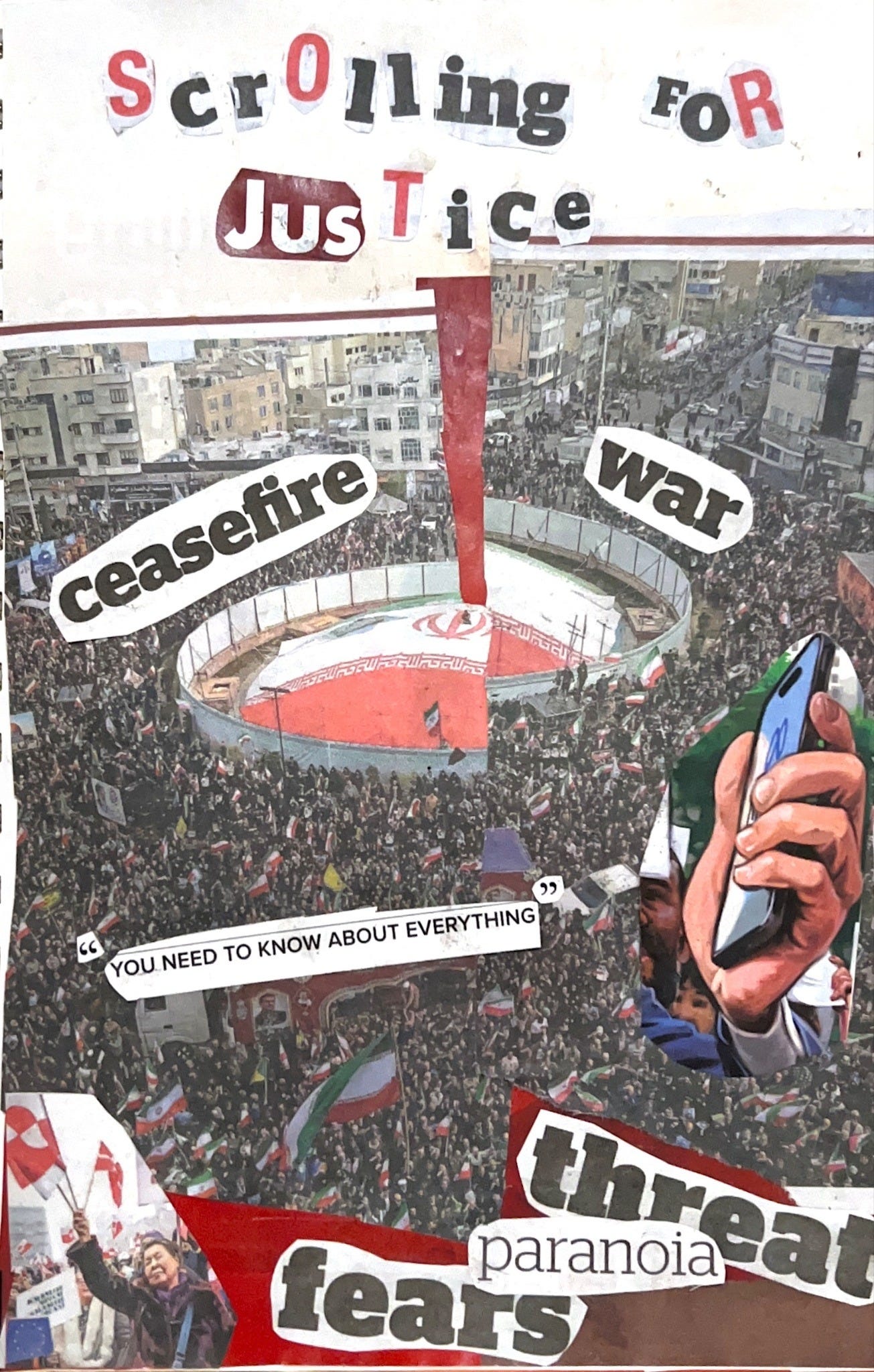
(Source: Ella Squires)
Using social media platforms to speak up on less-discussed political topics is effective at spreading awareness, promoting fundraising and organising campaigns. Despite this concept elevating social justice, fighting for change through a screen can have a mental health cost, especially for students often already at risk of high stress. From emotional burnout, pressure to interact and cancel-culture, a progressive concept can soon generate negative backlash for its advocates.
Insight from Head of Student Wellbeing, Counselling and Engagement at Oxford Brookes, Becca Howard Burrell, helps to explain how we can protect mental health while keeping activism prominent through social media.
The Impact of Social Media
80% of the UK’s population classed themselves as active social media users at the end of 2025. These statistics reflect the impact that social media has on our everyday lives, including our mental health, with 62% of users aged 16-24 years stating that they felt social media impacted their mental health, with 17.3% sharing that this impact happened often.
Student at Oxford Brookes campus, Rebecca Wallace, told me that she comes across political and activist content on social media everyday. ‘Mostly, the political content makes me feel more negative emotions and have negative connotations’, she says.
(Source: Unsplash, 2026)
Echo Chambers
This effect, particularly on young people, is elevated negatively through constant exposure to distressing content online. Becca explains ‘it can become an echo chamber’...‘because of the way algorithms work, once you start following one protest group, you then get an enormous amount of very similar content.’ An echo chamber is defined, much like an actual echo, as encountering and subsequently reinforcing the same beliefs, or in this context the same type of content.
Shock Factor
As much as it is important to stay informed on political topics, when you’re constantly engaging with them on social media, the quickly-manipulated algorithm can create your feed to be seeing more and more of this, often distressing content. ‘As human beings we have a negative bias’, says Becca, ‘We are drawn to things that tend to be negative and sensationalist and we click on it. Then we click on more’.
When your social media is constantly revolving around distressing content, it’s bound to affect your mental health. ‘I think 2 things can happen. We get overloaded or we become desensitised’, says Becca.
Overwhelm, Stress and Anxiety
These feelings of overwhelm can create a cycle of negative mental health, causing you to feel more stressed in your everyday life and increasing anxiety levels. A study in Pakistan showed that out of 23 individuals who were politically active on social media, 62% were stressed out and 34.7% were not, showing a significant association between stress and online political content.
Information from mental health charity, Change Mental Health, explains that the ‘human brain is wired to react to threats and the news, which frequently focuses on problems and crises’, which can ‘trigger a prolonged stress response’.
With constant access to our phones, it can be easier said than done to simply switch off from this content. ‘There is an endless stream’, Becca says. ‘Your phone can ping all day long, and then this causes lots of micro-stressers. One micro-stresser won’t make much difference, but 10 or 20 can quickly build up, and up comes your anxiety’.
How to protect your peace while engaging with activist content online
So, what can we actually do to combat these issues? As much as activist content engagement can have a negative mental health impact, staying up-to-date with political content is important, and a key part of many people’s lives. Let’s look at how to stay informed strategically, with your mental health in mind.
Human Interaction
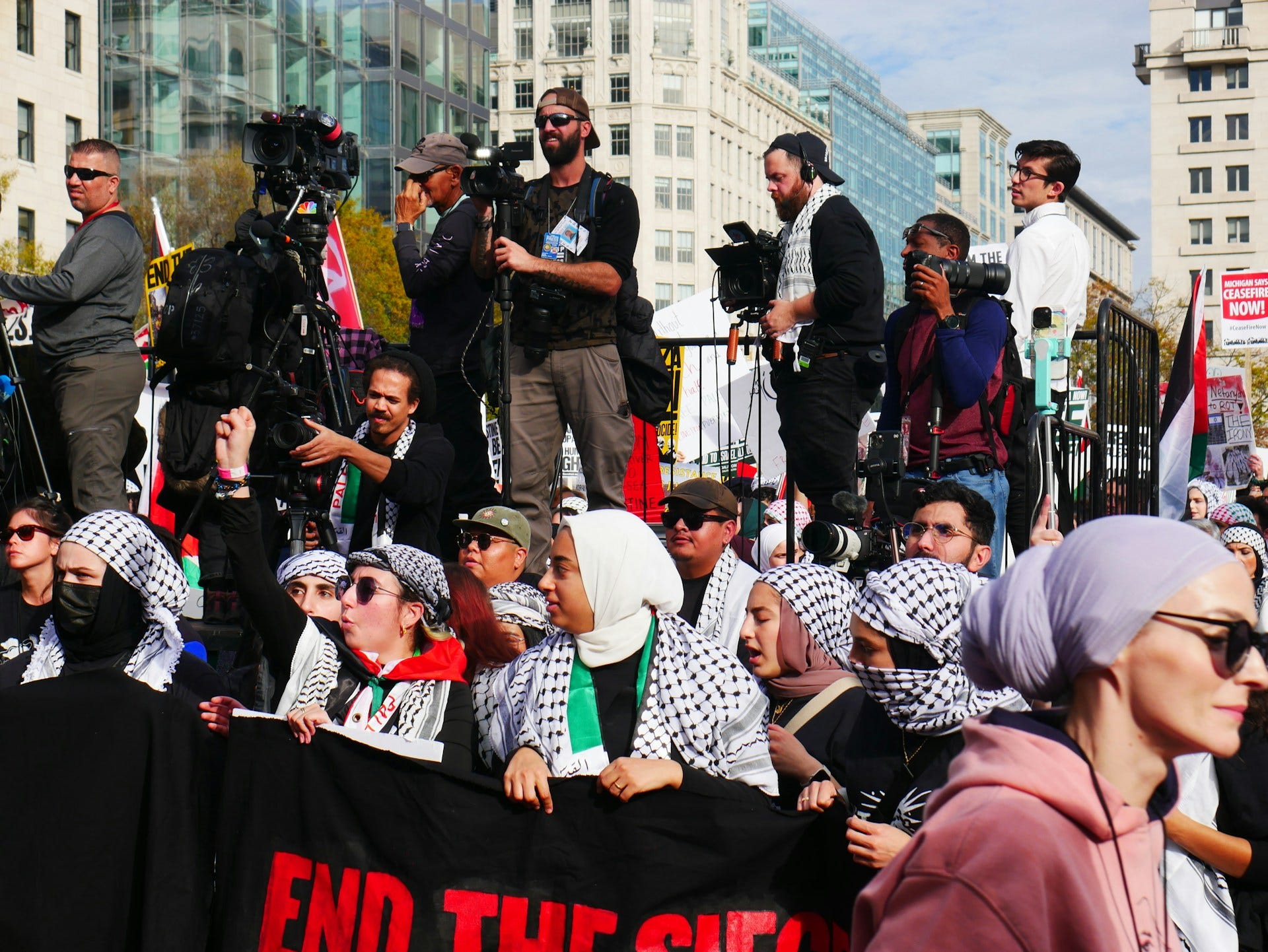
Just because social media has become a convenient go-to for publishing activist content, it’s not the only option. Why not join or start a local in-person protest? Or meet up with a friend to discuss your latest political views and opinions? Rebecca explains, ‘going on a march, joining a group, doing something, helps to alleviate some of that huge anxiety.’
(Source: Unsplash, 2026)
Stay True to You
It’s easy to compare yourself to others on social media, but you don’t have to follow the crowd. If something doesn’t feel natural to you, take a step back and assess if it aligns with your morals and values. ‘One of the key things is having a sense of sticking to your own core beliefs, your ethics, and using your voice in whatever way is authentic for you’, Rebecca says.
“There isn’t a right or wrong way to be an activist.”
Becca Howard Burrell
Think Critically
Having the ability to continue thinking critically in a world of AI, and being able to differentiate between fake or overly exaggerated news and truthful content is an important skill to practice and essential for protecting your mental health in regards to political content. ‘Having a healthy dose of cynicism and critical thinking is always helpful’, says Rebecca. ‘Asking yourself questions like ‘Why am I being shown this? Why am I being
encouraged to engage with this material?’ is extremely helpful for determining whether content is worth your mental energy.
Take Breaks
You don’t always need to be scrolling when you find yourself with free time. Take some time to take a walk, either with friends or as a form of self-care. Spending time outdoors is so important for your general wellbeing and often does a great job at regaining your focus and energy!
So, the key takeaways for protecting your mental health while still staying informed with important topics are: stay true to your morals and values, don’t neglect in-person connections and interaction, and think critically.
Remember, scrolling for justice doesn’t need to be a full-time job.