


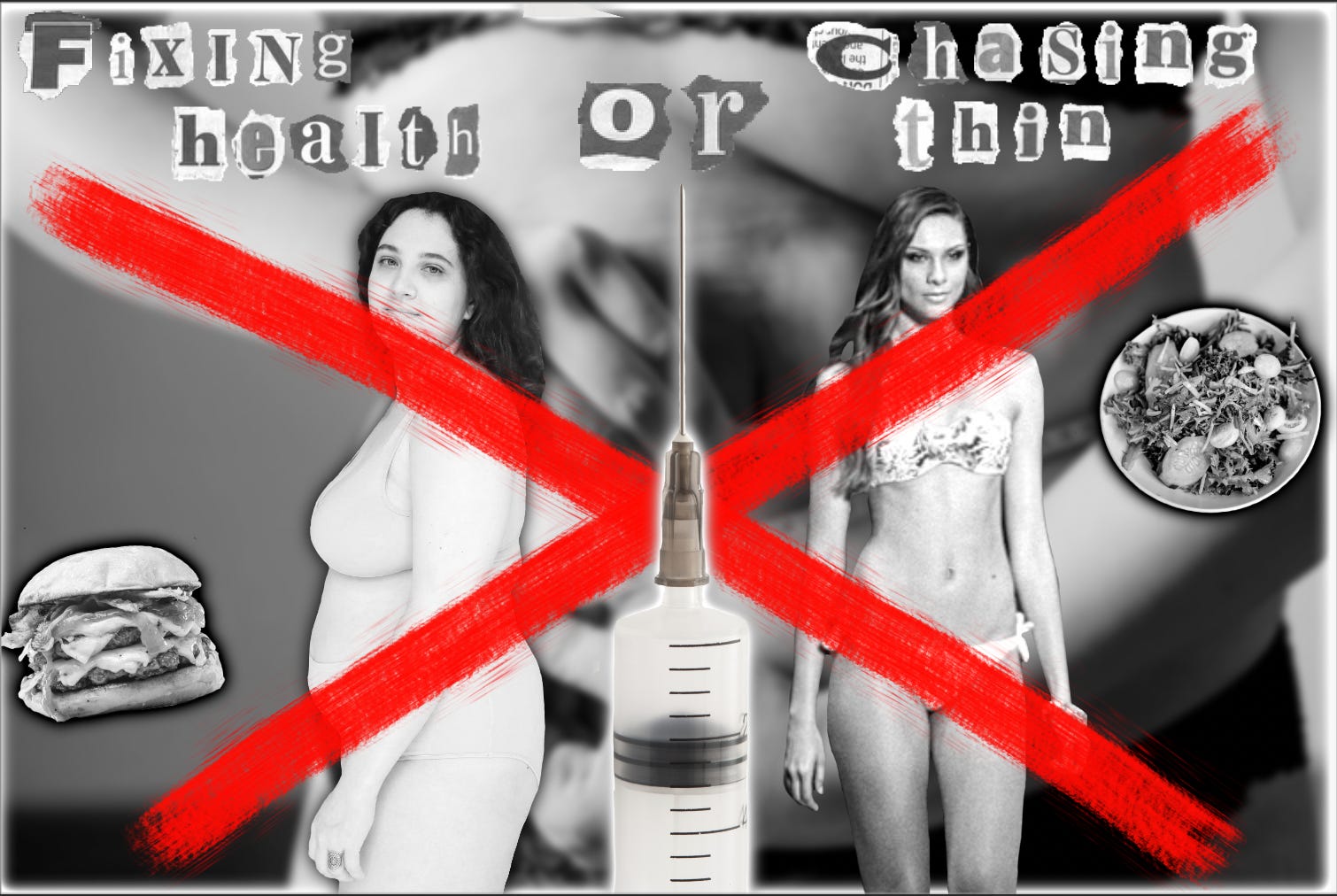
In the UK there are many different types of GLP-1 drugs/weight loss medication; the main ones being semaglutide, also known as Wegovy, and Tirzepatide more commonly known as Mounjaro.
The drugs work by releasing a hormone into the body called glucagon-like peptide-1 (GLP-1), this hormone is naturally released after eating and satisfies hunger. The introduction of added amounts of this hormone, through the medication, will make those who take it feel fuller for longer, with a loss of appetite. Over time, this disinterest for food and deficit will lead to weight loss.
See video explaining a little more:
In order to legally obtain these drugs they must be prescribed, however by the NHS having a strict criteria and private healthcare being extremely expensive, limits accessibility and pushes unsafe alternatives.
However still, the popularity of these drugs has risen due to its recognised ability to lose weight quickly. A study was done by UCL university that suggests that between early 2024 and early 2025, 1.6 million adults in the UK used weight loss medication to help them achieve their weight goals. On top of that 4.9 million adults in Great Britain were interested in using the drugs in the near future.
The inequalities and access to these drugs have come to light through the ability to obtain the drugs through private healthcare, but only if you can afford them. During a labour party conference speaking on weight loss medication Wes Streeting states “The wealthy talk about how they’ve transformed their health, their confidence, their quality of life, but what about the millions who can’t afford them?” He argues people’s standard of health should not be based on wealth. The Independent estimated that about 90% of people on the medication pay privately, spending hundreds of pounds. Those who cannot afford the drug or are ineligible via the NHS, are still able to receive treatment but in an illegal, dangerous and unregulated manner.
An interview was conducted, where a young lady talks about her struggles with weight and her attempts at getting Mounjaro through the NHS. She wishes to remain anonymous but for the sake of the article we will name her Jane.
When asked if she has experienced being treated differently based on her weight, with no hesitation, “yes…Especially when it comes to attraction… you do feel very self conscious”, she speaks about the comparison to other women and that she feels other women have the bodies that men would want, and she doesn’t. Immediately we think where has society gone wrong? Why are young women comparing oneself to others and belittling themselves because of their size?
Jane mentions she has tried to lose weight before but emphasises the struggle of wanting results immediately. She explains that “as a big girl…you do feel like it’s not working a lot of the time…just get frustrated with it”.
The gym can be intimidating for people who struggle with body confidence. Jane discusses her trial at the gym and the fact she felt uncomfortable when she went, she speaks about the women who have “perfect bodies” and she shouldn’t even be at the gym; “It’s just pressure and it’s not pleasant’.
We then discussed her experience trying to access weight loss medication. She had originally heard about the jabs through a family member and thought she would try it out. However when going to her local GP it was immediately shut down. She revealed “I told them what my issues were… I wasn’t happy mentally”, they came to the conclusion her weight was a depression contender. She implies unless there is a physical issue there is no way to get these jabs on the NHS, yet those who go private and pay, have less of an issue.
She describes her experience as being “horrible. You see all these rich people that can afford it out of pocket and they don’t even necessarily need it. But they just throw it in your face”.
She believes the GP dismissed her. “Even if you are on the verge of, I don’t want to be here because of this…They still don’t do anything and just toss you aside.”
After being refused by the NHS Jane then looked for alternatives, on other websites and various places for the same thing just cheaper. She said “it would still be out of pocket.”
I had the opportunity to speak to another lady regarding her mounjaro journey, however she has the ability and fortune to be able to go private, she is the same as Jane and states “I am desperate to see results and lose weight” and she knows that “going through the NHS is a long process”. But is lucky enough to get straight into it and start the medication.
Jane was asked what she would say to those who act like it easy to lose weight and change lifestyles and she said “I would just say that you’re not very considerate of other people’s situations, home life and mentality, because those people in particular have a great mentality…they have a certain way and let’s be realistic, these people can afford to have those lifestyles, whilst for myself, like living with a family that is considered a big family. Having that lazy lifestyle, having junk food, all of that. It’s very hard to break.”

To make journeys easier, society needs to shift its mindset. Jane states “People aren’t thinking enough. And I think that’s what the issue is. Everyone just sees big and skinny.”
Jane’s story reflects society’s role in body shaming and weight discrimination, which are shaped by class and wealth. Social media promotes unrealistic beauty standards for women and in turn will go to extreme lengths to fit in. The demand for the medication shows how our current culture prioritises altering bodies over challenging dangerous ideals of beauty. It reinforces the message that if you’re wealthy, you have more advantages to healthcare and an edge over those who aren’t as fortunate.
Changing these standards and ideas around weight needs to happen. But what also needs to happen is better education on obesity and its deeper rooted causes; by addressing from the onset reduces the need for weight loss medication in the first place.