



Online safety is an ongoing and severe issue in current society. There are more active mobile phones than there are people in the world, according to sqmagazine.co.uk. 82% of children over 10 years old own a mobile phone and are more than likely online, using social media. Social media is the home of online grooming, cyberbullying and online scamming which children should not be subjected to at such an impressionable age.
Why should social media be banned for under 16-year-olds?
The government are seeking to enforce the ban in spring 2027, according to the BBC, to restrict livestreaming and other ways strangers are able to contact children. This ban will also put restrictions on functionalities for 16- and 17-year-olds, such as curfews to limit screen time on social media from midnight to 6am and infinite scrolling.
The Office for National Statistics shared figures about children’s perceptions of crime and online safety in England and Wales from February 2026. 0.3% of 10- to 15-year-olds do not go online with 83.3% watching videos, reels, vlogs or livestreams and 22.2% creating or posting content on social media sites or apps. Parents are aware that their children are online, but it is what they are being shown or advertised by strangers that can be worrying.
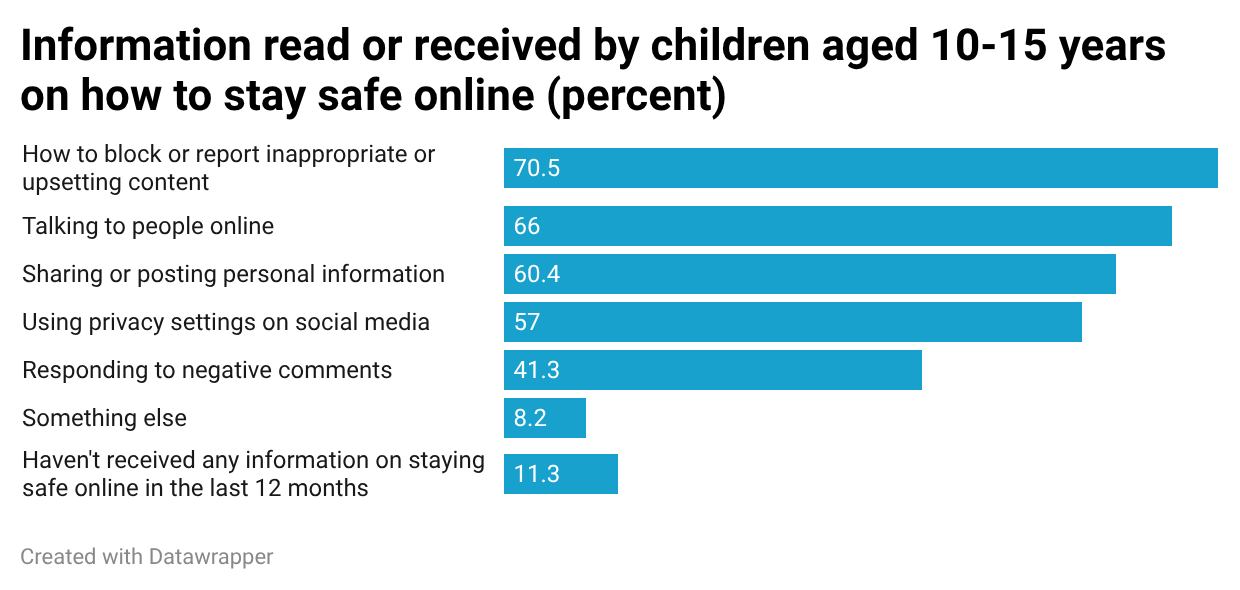
Until the ban is enforced in 2027, the sign-up age for most social media apps remains at 13. This age is arguably too young for children to access content which can be poorly regulated. The Online Safety Act 2023 was set in place to protect children and adults from harmful content online. The gov.uk website states ‘platforms will be required to prevent children from accessing harmful and age-inappropriate content’ including accessible ways of reporting harmful content if it slips through the net and give people control over the content they choose to see.
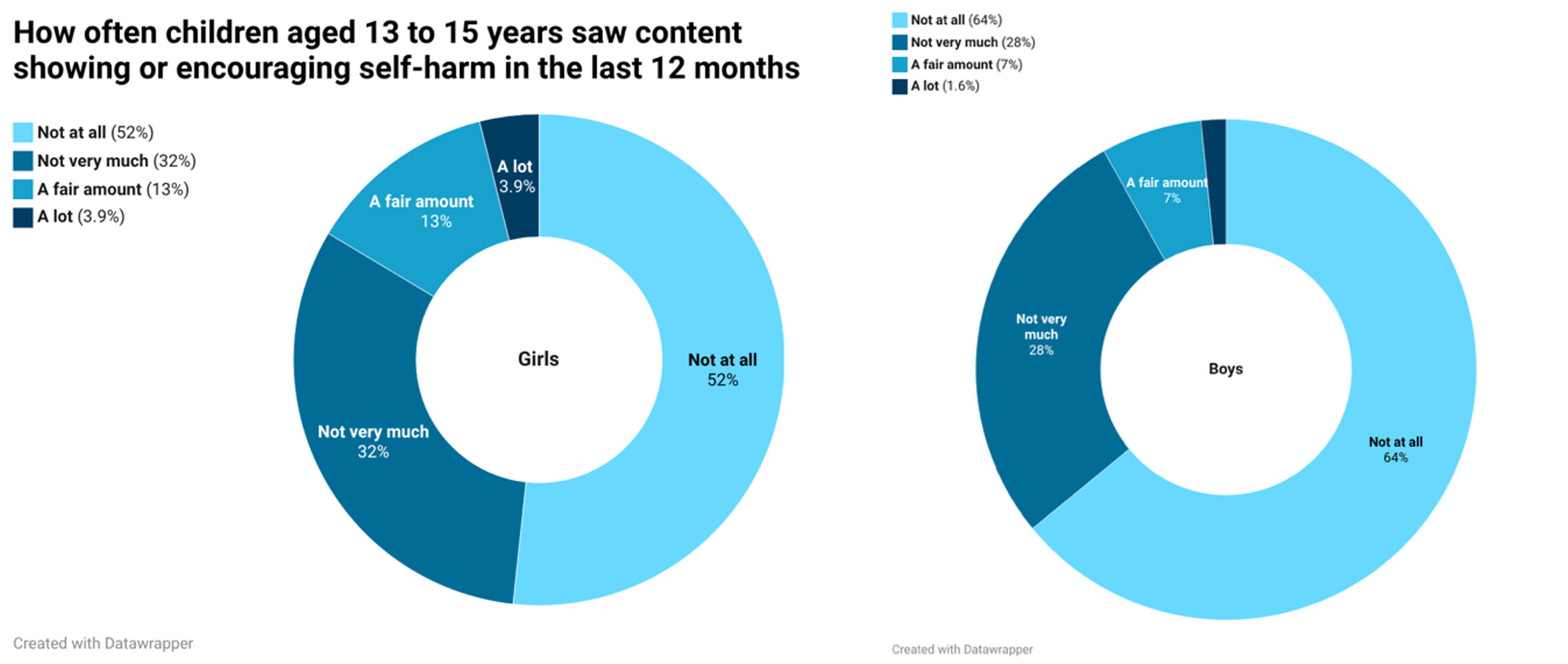
One of the criminal offences introduced by this act was encouraging or assisting serious self-harm, which came into effect on 31st January 2024. Even though this is now a criminal offence, statistics from 2026 show that self-harm is still being shown or encouraged on social media to 10- to 15-year-olds. 3.9% of girls and 1.6% of boys view a lot of this content.
How does this relate to children in real life society?
Harmful content is increasingly accessible for children at high speeds through social media and their algorithms. In this way, children are influenced by viral content posted by people they should look up to such as adults and influencers.
One major viral trend that took the internet by storm in a life-threatening way is the Tide Pod Challenge on YouTube in 2018 which entailed ingesting the laundry pod. TheAaronSwan669 began this challenge in an ironic way to gain views, but children saw this and tried it for themselves. America’s Poison Centres reported 37 cases of teen Tide Pod misuse in just one month during this trend, with half of the number being international, reflecting the speed at which this trend took off across social media and the world.
Another example of the media having influences on children is the Jamie Bulger case in 1993 where two ten-year-old boys kidnapped, tortured and killed Jamie Bulger who was two years old in Liverpool. The reasons for the murders have been heavily debated whether they were born ‘evil’, or there were factors of their upbringing that drove them to commit the crime.
According to crimeandinvestigation.co.uk, the reasons why the two boys could have committed this crime is because of bullying and violence at home, poor parenting, psychopathy, the need for control or power or sexual gratification. Rumours also spread that the boys watched Childs Play 3 during the 1980s which led to the children committing some of the same acts on Jamie Bulger as the film.
Even though the reasons for this crime are not clear, what is clear is that the media can have a strong influence on the way children think or act. This makes children believe that if they see someone else causing harm to themselves or others, they can repeat these actions without harmful consequences.
The effects of children viewing harmful content online also makes them afraid of real life. The news is now prominent on social media, showing clips of criminal acts and openly speaking about harm is often unavoidable with algorithms pushing these videos into the mainstream ‘For You Pages’ of different social media apps. This short form content weaponises scaremongering for views and engagement which can install fear into children for real life.
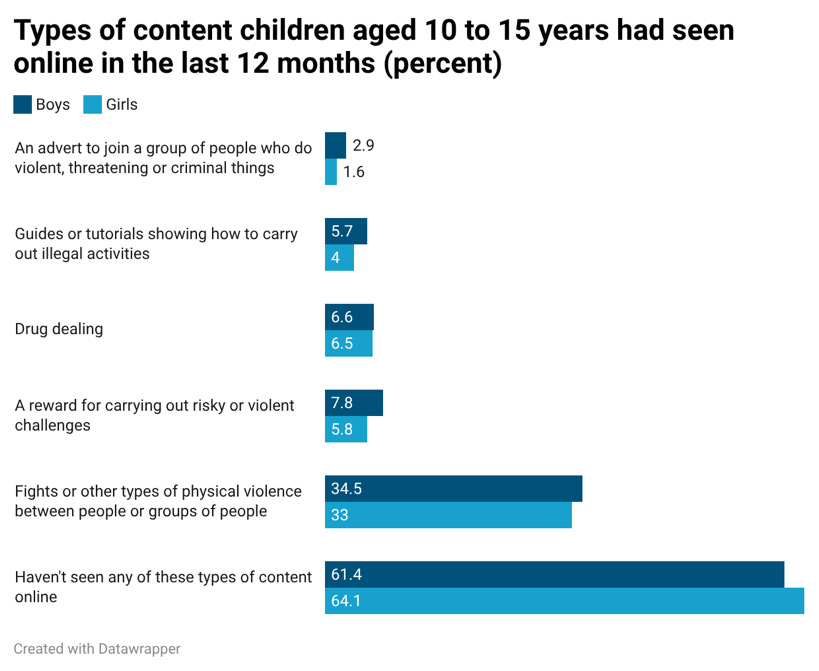
Through this, 13% of 10-year-old children believe it is quite to very likely that people in their local area carry weapons and this increases to 36% of 15-year-olds. These figures are likely to be increased by children viewing violent videos on social media, leading them to believe that violence is all around them.
Following an interview with a 35-year-old mother to a 14-year-old teenage boy who spends everyday online brought forward the opinion that the social media ban is a good idea to keep dangerous trends and information from reaching impressionable children. She allowed her son to use social media from the age of 13 and agrees that it has negatively affected her child’s attention span.
Even though there are parental controls on her son’s phone and he is aware of the harms of social media such as online grooming and cyberbullying, she believes that her son’s school are not teaching enough about online safety and harmful messages and posts can be shared to him without his consent.
The social media ban is already in place in Australia. Is it working?
The ban was completely supported by parents in Australia, which is no surprise, as it can be difficult to limit their own child’s social media use. Mainstream social media platforms have successfully been banned for under 16-year-olds since December 2025, with these apps facing a fine of up to $50 million if they do not comply.
The weakness of this ban comes from the idea about what children can still access online, these resources can be unregulated and more dangerous than the apps which have been banned.
The Molly Rose Foundation found that 61% of Australian 12–15-year-olds are still able to and are using their social media accounts due to inadequate age checks. This may not give parents in the UK much faith that this ban will be effective for their children, especially if they already have social media accounts.
In current news, it is not clear if the UK social media ban will prove to be beneficial for under 16-year-olds, but it will make them work harder to find online platforms that they can access. This, in turn, could have a drastically negative effect with dangerous sites being unregulated and could expose children to more severe issues. However, if it does happen to make a positive difference, children can enjoy an online-free childhood while they learn about how to stay safe when they are allowed social media.