

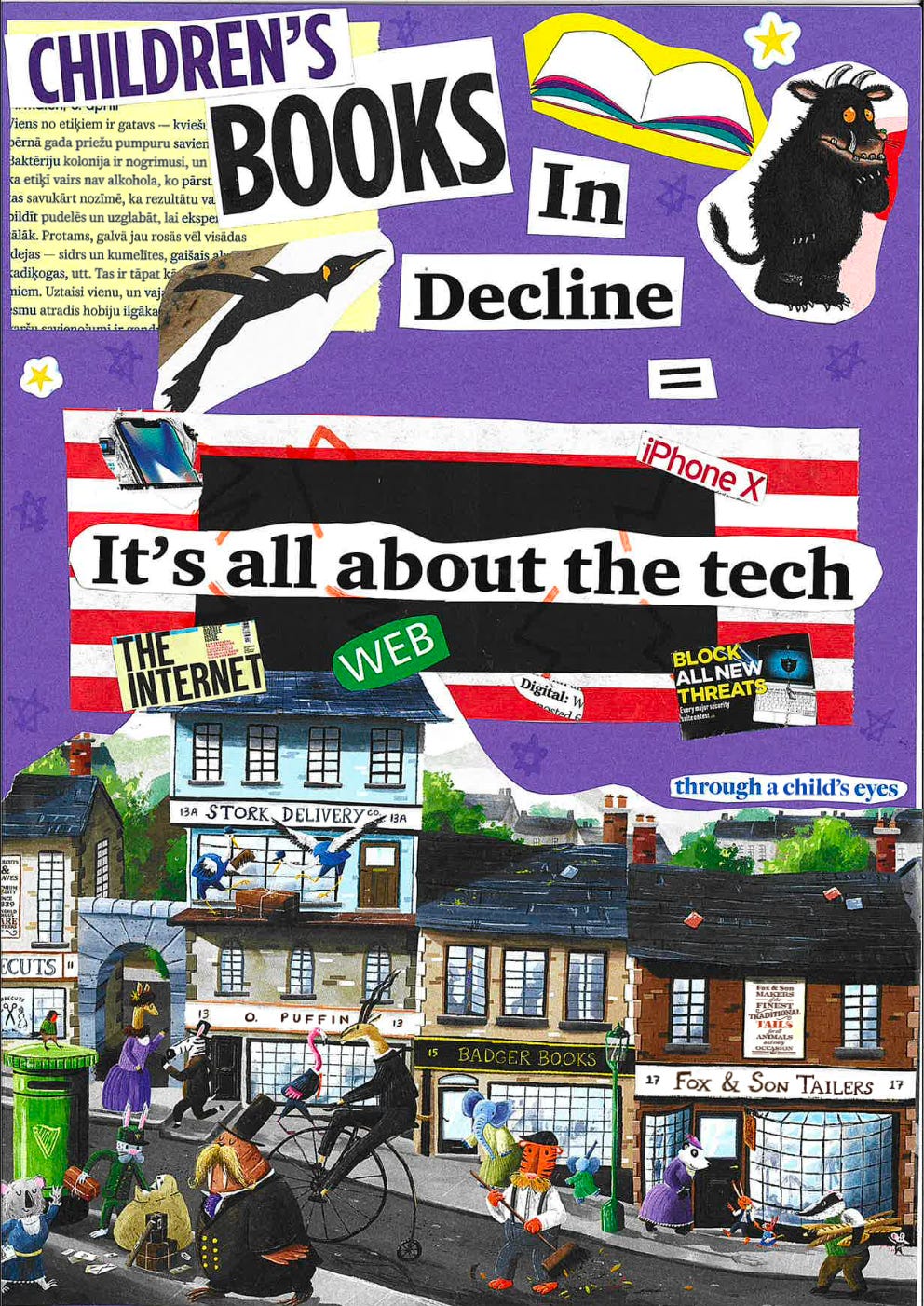
For most individuals, textbooks used for learning and reading books for leisure have been their main source of entertainment. However, growing up in a more contemporary world, the approach to learning may differ, incorporating technological advances such as touchscreens instead of paper and pencil, or iPads instead of sensory picture books.
These changes have made a significant impact on young children’s development, particularly those in primary school aged 4-11 years. A huge turning point in this realization was the impact of COVID-19 and how detrimental it was to children’s learning. But do these digital tools have to replace traditional resources?
David Morgan is the founder of All Aboard Learning, an organization focused on literary research, established in 2008 to identify the causes of educational difficulties for children and develop unique tools to address these potential negative effects on children’s futures. In our interview, David believes that one of the main obstacles to learning that children face is inheritance. He says that “literacy can become quasi-inherited”, as “if your parents can’t really read, how can they help you?”
To watch a snippet of our interview where David shares some of All Aboard Learning’s history, their missions, and one of the positive uses of technology in education, click below:
Determining whether there is a lack of physical print resources in children’s education depends on the schools, academic programs, and teaching styles. In discussing this topic with Matthew Wimpenny-Smith, a Senior Lecturer in Initial Teacher Education at Oxford Brookes University, he agrees “yes, there appears to be a growing shift away from physical resources towards digital tools in some primary classrooms, although the pace of change is slow which is typical of education”.
Knowing the industry and dynamics of education to a professional level, Matthew mentions that “this change is only beneficial when physical and digital resources are used in balance, and an over-reliance on digital tools is likely to negatively impact children’s learning, particularly in early literacy”.
In a similar judgment, David has found through his own research at All Aboard Learning that “at the moment 25% of children still get to the age of 11 unable to read”. Could this be a result of physical reading books fading away?
However, now a Program Director for Initial Teacher Education at Oxford Brookes University, Kelly shared her past experiences as a teacher in several primary schools over 4 years and reports that “I haven’t experienced a lack of physical resources in primary schools”. In fact, Kelly says “we strongly promote the use of physical resources in all subjects”, including now in her ITE role at Brookes.
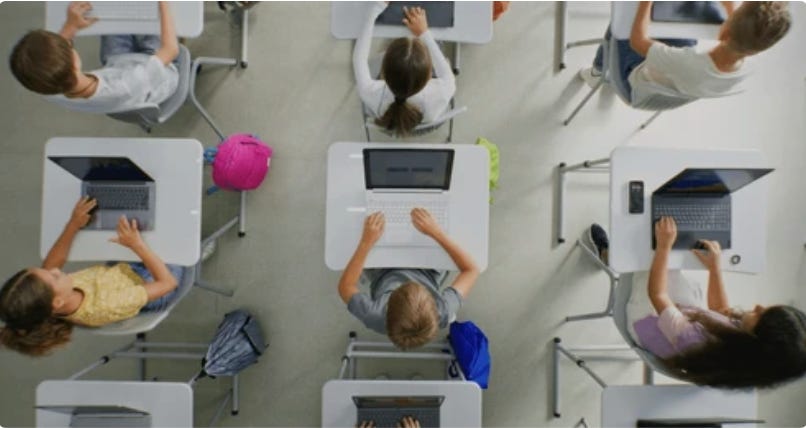
Research into education studies has shown that there has been an adaptive and impactful change in learning and leisure enrichment strategies in primary schools due to the outbreak of the COVID-19 pandemic in 2020.
The Education Endowment Foundation (EEF) conducted a “longitudinal study” into the disruptions of school closures to children in years 2-6, focusing on “attainment gaps between reading and maths”. The study found that the attainment gap in reading and maths widened significantly, increasing from 4% before the pandemic to 17% in 2023. In addition, the study concluded that no beneficial closures of these gaps were achieved through remote learning during the numerous lockdowns, showing its impact on children’s education.
In the interview with David, the fallout of Covid-19 and its changes were discussed as “something which has been changing very fast very recently”, whereas “until 2020 the classroom was almost unchanged over the last hundred years”.
Matthew consolidated these research findings, sharing that “it has also contributed to gaps in foundational learning inequalities, and highlighting the importance of social interaction in children’s development.
Furthermore, Kelly says that “teachers rely heavily on the interactive whiteboard, with lots of teaching being driven towards being scheme-driven”, also with “homework set using online platforms too - even more screen time!” Not only this, but Kelly believes that the rise of technology after Covid-19 has affected children’s development in other leisurely ways, such as “play-based learning and creative thinking in particular”.
As David mentions, this could be due to the minimal effort and quick fixes that digital tools provide. During our interview, David goes on to say that “there is always something that is highly engineered to hack the brain’s dopamine circuits to give a very quick gratification, whereas a book tends to be a much slower process for that”. Especially for primary school children aged 4-11, their brains, identities, and personalities are still developing, making them more susceptible to digitally engaging learning options.
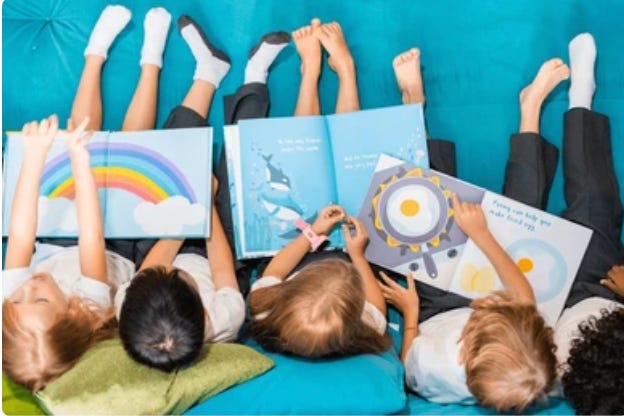
To keep the classroom alive, both Matthew and Kelly have noted that technology should be embraced alongside traditional print methods to create an enriched and fulfilling learning experience for the future.
When considering the idea of embracing technology as a mainstream, helpful, and inclusive tool in children’s education, Matthew agrees but additionally mentions that technology should “not be a replacement for traditional learning approaches”. Perhaps iPads, touchscreens, and other digital technologies bring a new element to classroom teaching that print elements can’t.
Matthew explains that physical resources provide “foundational skills such as reading, writing, and communication, and more importantly, critical thinking, problem solving, and collaboration,” which are all imperative for a young child’s development. Therefore, Matthew says, “the future of children’s education lies in a balanced pedagogically driven model where digital tools enhance adaptive teaching, engagement and access”.
Furthermore, Kelly agrees that traditional methods of teaching should not be discarded, saying “a balance is required - technology has to be embraced and used responsibly, but with other tools implemented too”. Finally, David similarly says that “the teaching industry will change more and more over the next decade or two as technology becomes embedded as an approach”, stating that digital tools should be accepted into a primary school curriculum, as they don’t seem to be disappearing anytime soon.
Hello Lily, I have enjoyed reading your article and feel that you have given a broad and balanced view of your chosen topic. Are you inspired to keep researching this important area of Education?