


There’s no denying that streaming movies and TV shows online has become the prime form of media consumption. I don’t think I know a single family who doesn’t have a subscription to at least one streaming site, whether it be Netflix, Disney Plus or Amazon Prime. With global consumers turning to digital media, this has an undeniable knock on effect on the sales of physical media, like DVDs and Blu-ray discs.
This may sound hypocritical (coming from a serial streamer myself) but there’s something about owning a physical copy of a film that streaming just simply can’t replicate. Having the real physical disc itself almost makes it feel like a part of you and your character, not just another lost title in the infinite digital library. As Christopher Nolan once said “If you buy a 4K UHD, you buy a Blu-ray, it’s on your shelf, it’s yours. No company is going to break into your house and take it from you and repossess it.”
The surge of subscription-based platforms in the modern day has wildly overtaken any other source of film and TV revenue, as reported in the ERA (Digital Entertainment and Retail Association) 2026 yearbook. Streaming subscriptions are dominating the market, grossing just over £13.6 billion from 2023 to 2025 in the UK. In 2025, 90% of digital video formats consumed in 2025 were SVOD (Subscription Video On demand) sites. Streaming Services are growing fast, with sites like Netflix grossing almost half of that, generating almost £8.5 billion of that profit.
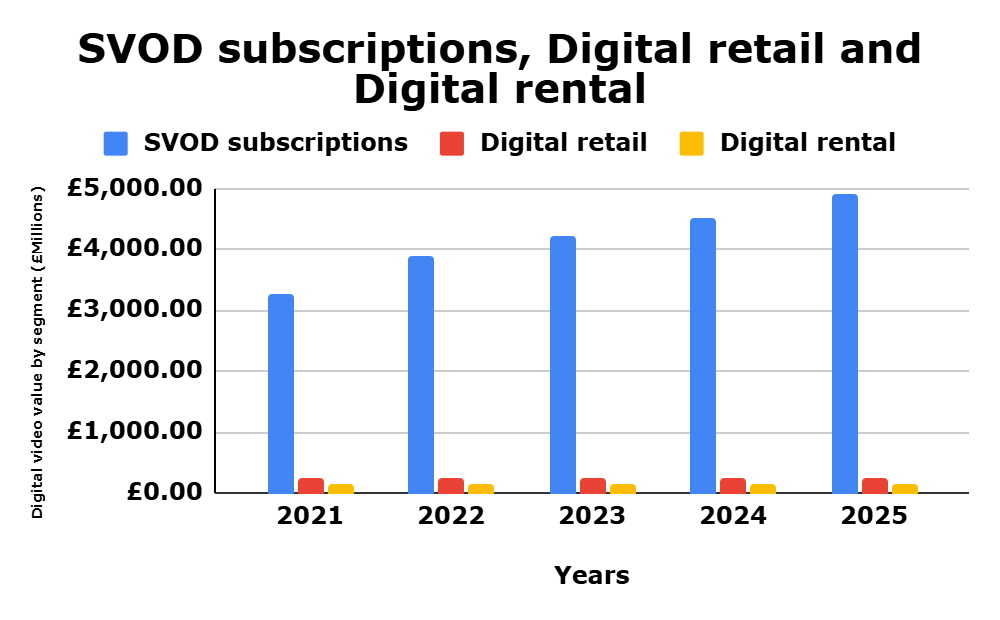
This drastic shift in media consumption is down to factors like convenience and algorithm control. Our generation loves binge watching, and with these subscription based sites offering millions of different movies and tv shows, we have endless options at the end of our fingertips. Streaming sites like Netflix and Disney Plus provide their patrons with personalised watch lists based on what they’ve previously seen, meaning we can follow the algorithm then actively search for something new. Although this can be helpful, it ultimately restricts us from exploring different genres, which is a bit depressing. There’s so many good TV shows and films out there!
I spoke to BFI-funded filmmaker/multi-award-winning director Tom Boyd-Hall about his opinions on what the increase in using streaming services has affected the industry.
He said that “using streaming services means the individual can create and distribute content more easily and potentially reach a wider audience.”
He continued on to say “however, as a consumer, you are overwhelmed by hundreds and thousands of films being distributed everyday. There’s almost an oversupply of things- so an individual film means less.”
Even though the UK’s overall entertainment market has experienced its 11th consecutive year of growth in 2025, the physical video market in itself has had the complete opposite outcome. As reported in the ERA, from 2023-2025, physical media in the UK grossed £488.4 million. Physical formats have been reported to have declined for its 16th year in a row. The revenue generated by physical media from 2023 to 2024 has decreased by 8.43%, and then 2024 to 2025 has decreased by 5.47%.
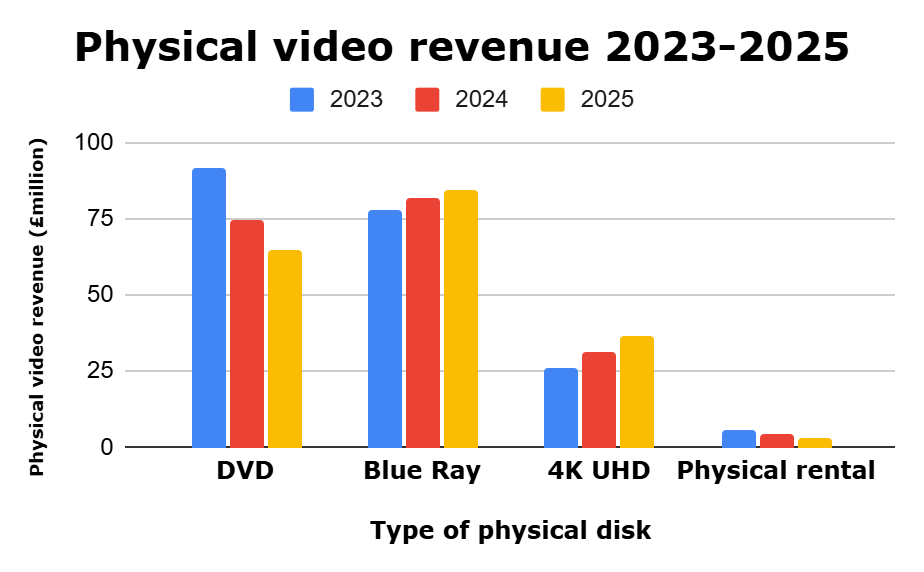
This reflects how physical media is no longer the main way audiences consume entertainment. Even though almost half a billion pounds (which sounds like a lot, but in comparison to digital media sales it is only a fraction of the revenue generated) has substantially decreased from previous years, and most likely, will continue to decrease from now on. Saying this, the rate of decline in physical media revenue is slowing down.
Don’t get me wrong, I’m not suggesting this indicates a physical media revolution is on the horizon, but the slowing rate of decline does show that there are still indeed adamant DVD fans out there. Audiences who are fans of collectable boxsets, film enthusiasts and seriously dedicated fans are trying their best to not let physical media die. Considering how much less cost effective physical media is, I applaud you.
However, there has been a rise in the purchasing of Blu-Ray discs (8.09% increase) and 4K UHD discs (40.93% increase), which arguably offers better picture and sound quality than streaming. Although it’s in decline there’s still so many bonus features that come with discs which appeal to audiences, like behind the scenes footage, Q&As, extra footage etc. These definitely factor into why although physical media is in a decline, some people are reverting back to discs.
Additionally, audiences are beginning to recognise the lack of reliability of digital media. Streaming services can remove any films/tv shows at any point, and having a tangible copy of your favourite tv means you have it permanently.
New York based entertainment distribution company, Criterion Collections also a key contributor to this physical media rebirth. Alongside licensing, distributing and restoring classic movies to 4k quality with exclusive special features, the company additionally runs an online series featuring celebrities picking films from their ‘Criterion Closet’. This not only inspires audiences to purchase physical media from their store, increasing sales, but also broadens their knowledge of classic cinema that is often inaccessible on streaming services.
When using subscription services, do we actually own what we watch? Films and TV shows can disappear from platforms due to distribution rights, licensing agreements etc. They essentially have complete control over what we can consume. Isn’t that ironic? Although we have more access to entertainment than ever before, we arguably have less control over what we can actually watch. Through digital media we have gained accessibility, choice and convenience, but in return we sacrifice ownership, quality and experience.
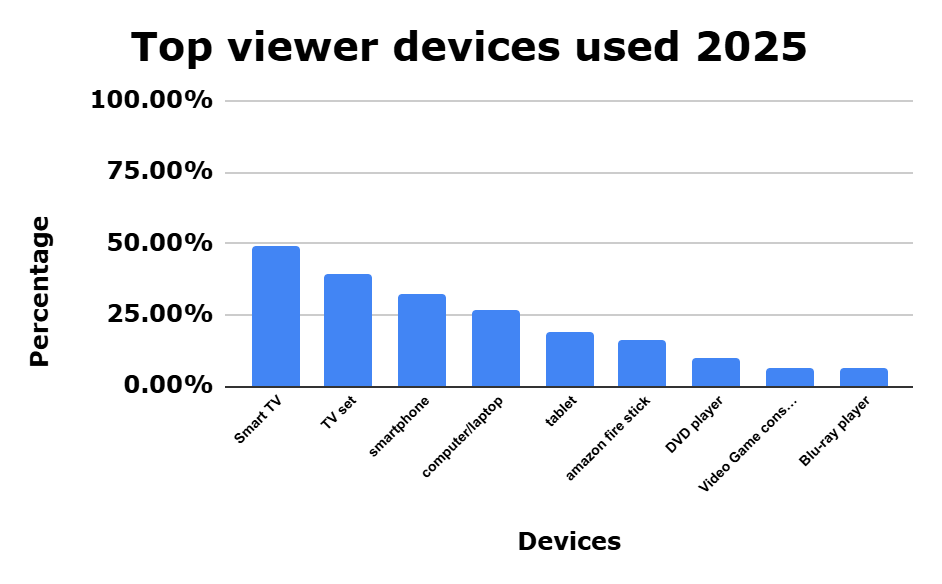
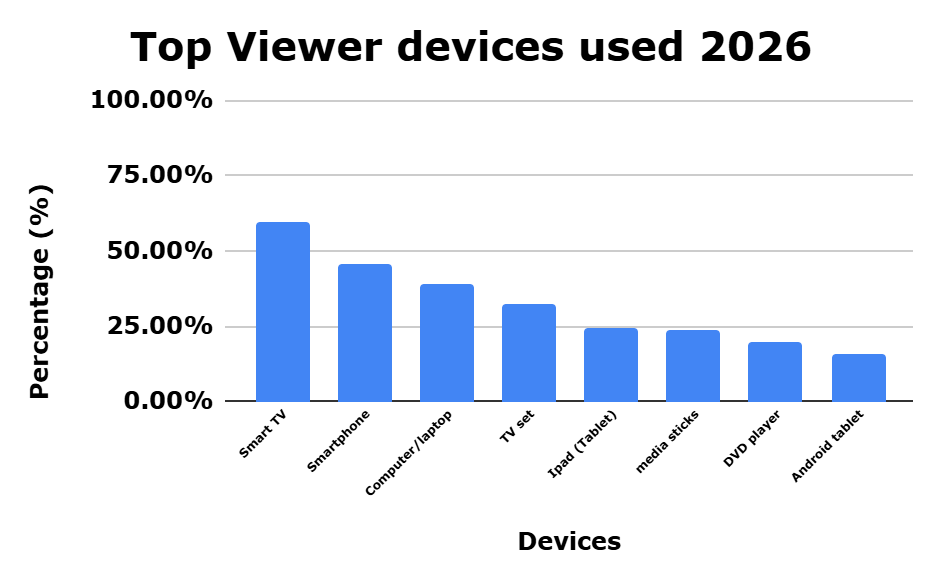
If we break down the different leading streaming platforms used, it highlights the changes in viewing habits as technology advances. Modern devices such as a Smart TV, smartphones and computers are the most used viewer devices for watching movies/tv. All of these devices have risen in engagements from 2025-2026, showing that there is an ongoing rise in the desire to use modern day technology for entertainment, which does not co-operate with physical media.
The loss of old technology that co operates this means that inevitably the volume of DVDs being sold will decrease. Quite sad really. Tech companies nowadays prioritise making slimmer and lighter designs, removing mechanical parts which are too bulky to free up internal space, such as Apple, Samsung etc. This means the original design to add optical drives has been abandoned, in order to use faster, smaller, more convenient digital alternatives. From 2025-2026, both DVD and Blu-ray players have decreased in usership, with DVD dropping from eighth place to ninth place, and Blu-ray has gone from tenth place to dropping off the map altogether.
Nowadays people desire instant gratification, and the immediate streamability of media on online services has almost taught us to expect instant reward. The old thrill of simply going to the shops to buy a DVD set of a series you wish to see is gone, and is replaced with the convenience of accessing anything at the click of a button.
Ultimately, although digital media is the winner when it comes to consumption and sales, I can see physical media making a comeback. Streaming itself may be winning the battle for accessibility, but it hasn’t replaced the sentimental value of owning a film. If we keep supporting physical media we can ensure true ownership, permanent access and uncompressed quality while thriving second hand markets and preserving cultural history.