


At Manor Place, a free public space in South London created by Palace and Nike, Melanin Skate Gals & Pals (MSGP) hosts a weekly Sunday session, where falling is not treated as a failure; it is expected and carefully supported.
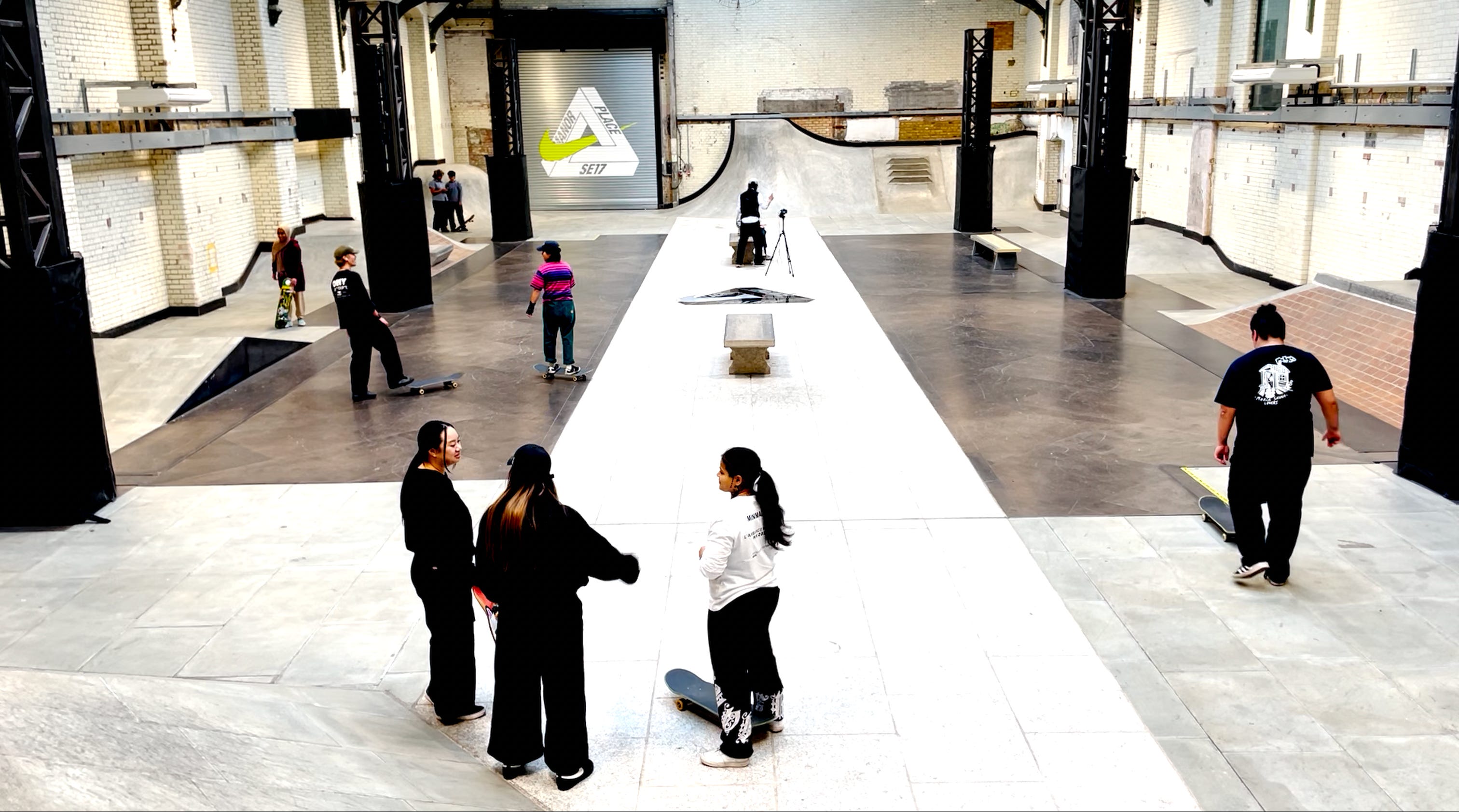
‘We all fall skating, even the coaches,’ said Lauren ‘Ama’ Siaw-Johnson, MSGP’s community engagement coordinator. For Ama, the real obstacle is not the fall itself, but what happens before it. ‘The fear of falling is almost the worst part,’ she said. ‘That fear makes people stiff. It stops them from pushing themselves.’


MSGP is a community-led skate collective, centring women, Black and other people of colour, and LGBTQIA+ skaters. Its sessions are designed differently from traditional skate environments; the emphasis is not on performance, speed, or spectacle, but on how people enter the space and how they are held once they do. Beginners and experienced skaters move side by side, not separated by ability but connected by a shared vulnerability.
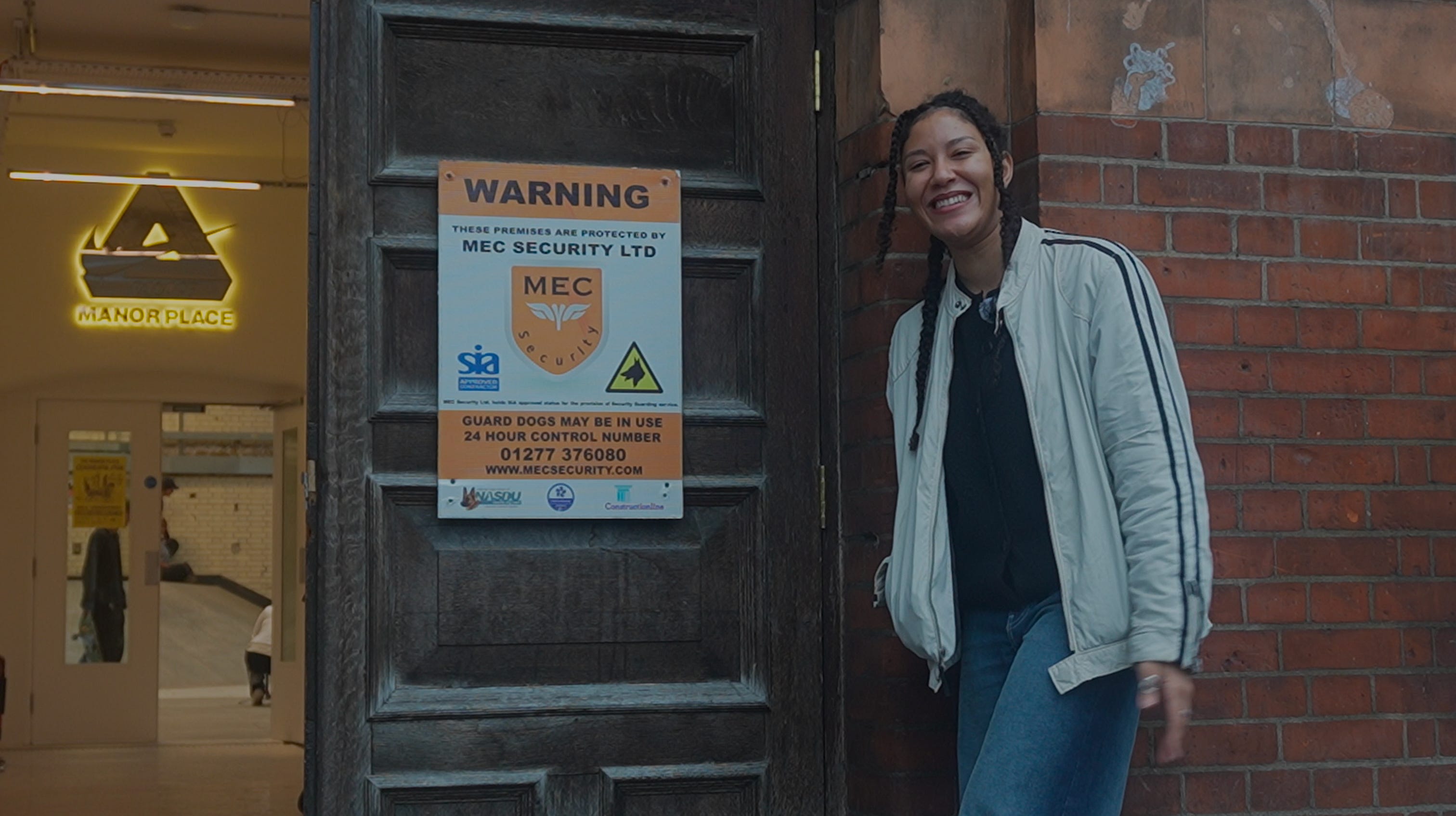
‘Squat down, jump straight up, pop the tail with your right foot, catch the nose with the left.’ The instructions stack up, then dissolve into a quieter thought: What if I fall? Bodies tighten. Movements hesitate. Advice is hard to take in. The fear of embarrassment or injury often outweighs curiosity.
But something shifts once the first fall happens. ‘Once you’ve fallen and you see how fine it is,’ Ama said, ‘you realise it’s not catastrophic. You’ll get back up.’
The atmosphere revolves around that moment. Falling is met not with correction or embarrassment, but with laughter, reassurance, and encouragement to try again.


For Nicholas Ong, attending the session was his first time skating at the venue. ‘I probably wouldn’t have had the opportunity to skate here as soon as I did without MSGP,’ he told me. And when he fell, the experience took him by surprise. ‘Falling and getting back up felt like a part of life,’ he said, ‘a daily struggle.’
Indeed, what stood out was not pain, but the release that followed the first fall. People arrive afraid of falling, Ama explained, but once it happens, something loosens.
’Falling seemed to take something away – the need to perform, the fear of being watched. It frees something up,’ she said. ‘And people start to see falling as part of the process of learning.’
That shift changes how people move. Bodies visibly relax. Movements become less rigid. Questions start to come. Participants stay longer, try again, and take small risks. Progress is measured not in tricks landed, but in confidence gained.
Traditional skate parks, like many sports spaces, can feel intimidating, especially for those who do not see themselves reflected in the culture or the bodies that dominate it. High skill levels, unspoken rules, and the pressure to look confident often push beginners to the edge. MSGP was created precisely to challenge this. Ama described the sessions as spaces where ‘every level comes to skate’, where ‘there’s no judgement’, and where people are ‘more comfortable’ being beginners.
That sense of comfort is not accidental, it is produced through repetition, support, and a shared vulnerability. When someone falls, others laugh with them, not at them. The fall becomes collective rather than isolating.
Nicholas described leaving the session feeling different from when he arrived.
’Familiarising yourself with new spaces helps adapt your current sensibilities,’ he said. ‘When you learn to adapt your sensibilities to new things, it grows, and it expands.’
For Ama, this is where sport reconnects with something deeper. Many participants, she said, arrive with histories of exclusion from sport, from public space, or from their own bodies, but being supported through fear changes that relationship. ‘It reminds people that they can still learn something new,’ she said, ‘that it’s possible.’ The aim, she explained, is not to shield people from difficulty, but to support them through it.
Watching the session unfold, it became clear that falling here is not a setback to be avoided, nor a badge of toughness to be earned. It is simply part of the process, a shared moment where control loosens, and learning begins.
In this space, or in any space, falling isn’t a setback. It’s how things begin.