


The cost of living will always be a major issue for young people and it’s only getting bigger and worse over time. The dream of owning a house is something all young people aspire towards and is a crucial step forward to independence. The importance of homeownership to young people is also the dream of having a family or getting married and living with the person you love. This is however slowly becoming more of an impossibility. In 2026 it was reported that the cost of living had gone up by 56% with the wage growth only going up by 0.5%
We are now in a society where dreams of young people are dying and only becoming harder to achieve. Along with the rising housing prices, renting prices have gone up and this has killed the dream of independence in young people. The cost of living crisis has become a real thing with the annual rate of inflation through the uk peaking at 11.1% during October 2022 and decreasing to 3.1% in August 2026 but the cumulative effect is still felt. A group of adults were asked in a survey why they believe the cost of living has increasing in the uk. 94% said shopping prices, 72% also said because of rising fuel prices from the conflicts overseas and 64% blamed rising energy prices.
In 2025 the UK house median price was £300,000, costing 7.6x the median annual average earnings of people in full time employment (£39,300). The Lower quartile earnings is £29,359 and median housing prices in the lower quartile is sat at £200,000. This is only going to increase overtime with a gap between yearly earnings and house prices slowly moving further away from each other. Young people dream of having houses as soon as they can, funded from their first full time jobs, but reality is they won’t be earning enough money that early in their lives and are more likely to have a house in their late 20s to early 30s. Possibly even later in life with the increasing housing prices. However since 2021 annual wages have increased by 25% while the median housing price has only increased by 5%
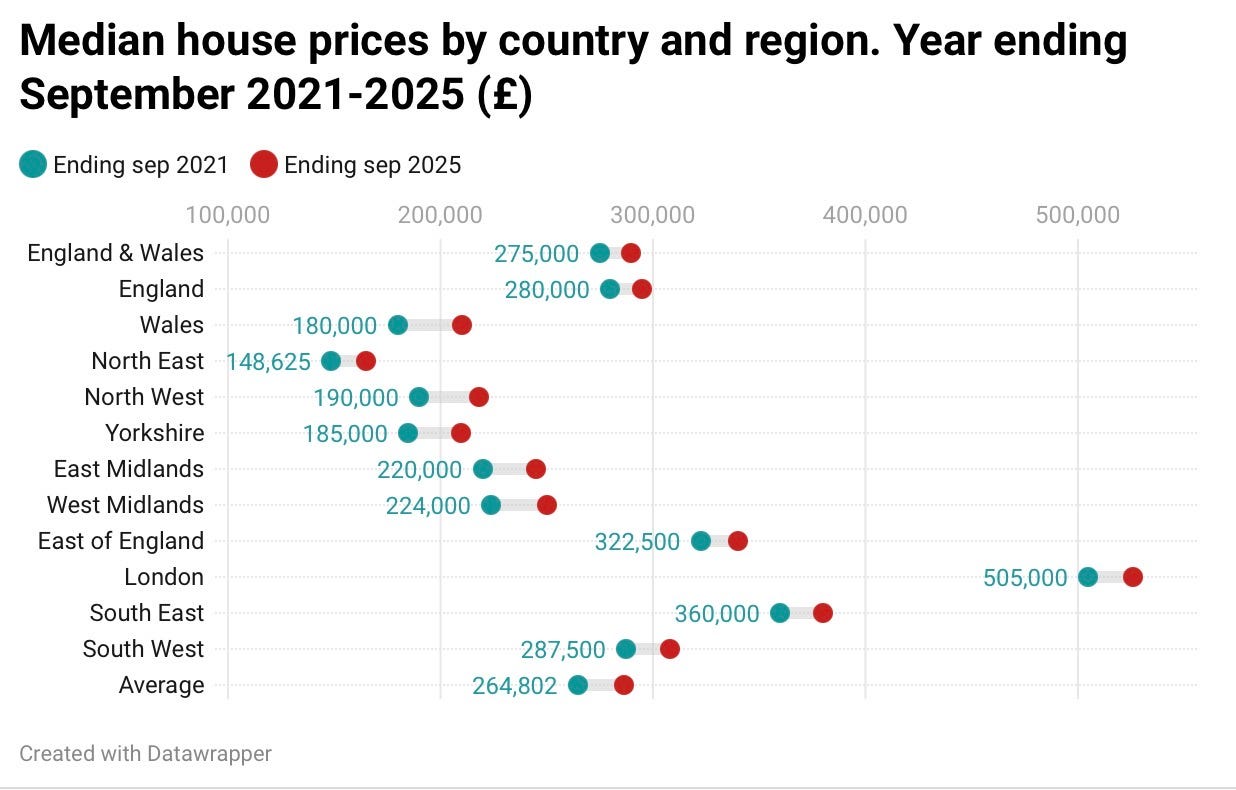
Source one- range plot created from data used from The Office for National statistics and the house of commons reports on wage increases and housing prices
Data gathered from the office for national statistics and UK government reports. This shows the gaps in housing price changes over the years and how each region is affected differently.
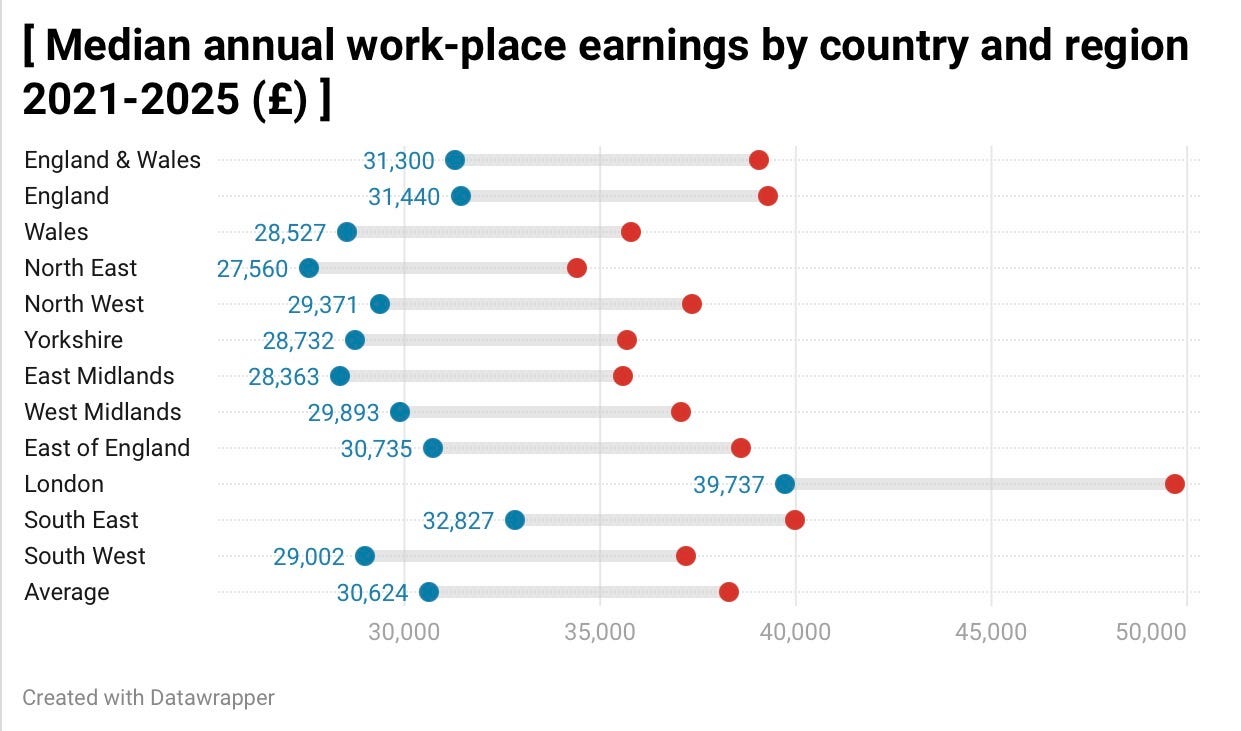
Source two- range plot created from data used from The Office for National statistics and the house of commons reports on wage increases and housing prices
The real trap for young people is renting. The average private rent price is £1377 monthly across the UK and £1434 in England. Renting is a way for young people to have a taste of independence, but it in reality takes away money that can be saved towards deposits on houses and for mortgages later in life. It slowly becomes a loop with a large percentage of their monthly pay checks doing into rent and then into essentials like food shopping. Based on household income data it was found that on average 36% of monthly paychecks are put into private renting for people ages 16-34. This increases to 47% for people in places like London. This is based on the bench mark of household incomes not individual meaning young private renters will be paying more out of their paychecks if they rent alone.
It was also found that young people are more likely to rent than own. 42% of people aged 16-34 are owners of houses while 43% are private renters, this is in comparison to people aged 35-64, with 64% owning houses and 18% privately renting. This means young people will struggle to eventually move to ownership due to little room to save money, the solution to this would be co-renting with a friend or partner to lower personal rent costs and giving more room to save. By co renting it takes away the independent side of it as you can have roommates relying on you, however the costs of living become split as well meaning money on energy and food shopping can be saved. These small savings can help build up more money for a deposit on a small house and begin that step into ownership.
The dream for most people is moving out, owning a house and having that space to build a new life. According to the office for national statics the average age of people living at home with parents is now between 24.3 to 24.6. This is an increase from the previous years where majority of people living at home were in their early 20s/late teens. I myself live at home still, with a hope to move out after uni but as the years go on this hope is slowly dying and I can only see myself moving out with a partner or roommates. According to the House of Commons the increasing interest has also affected housing mortgages which is another major factor that limits young people getting houses as raising a deposit for a mortgage is getting more expensive.
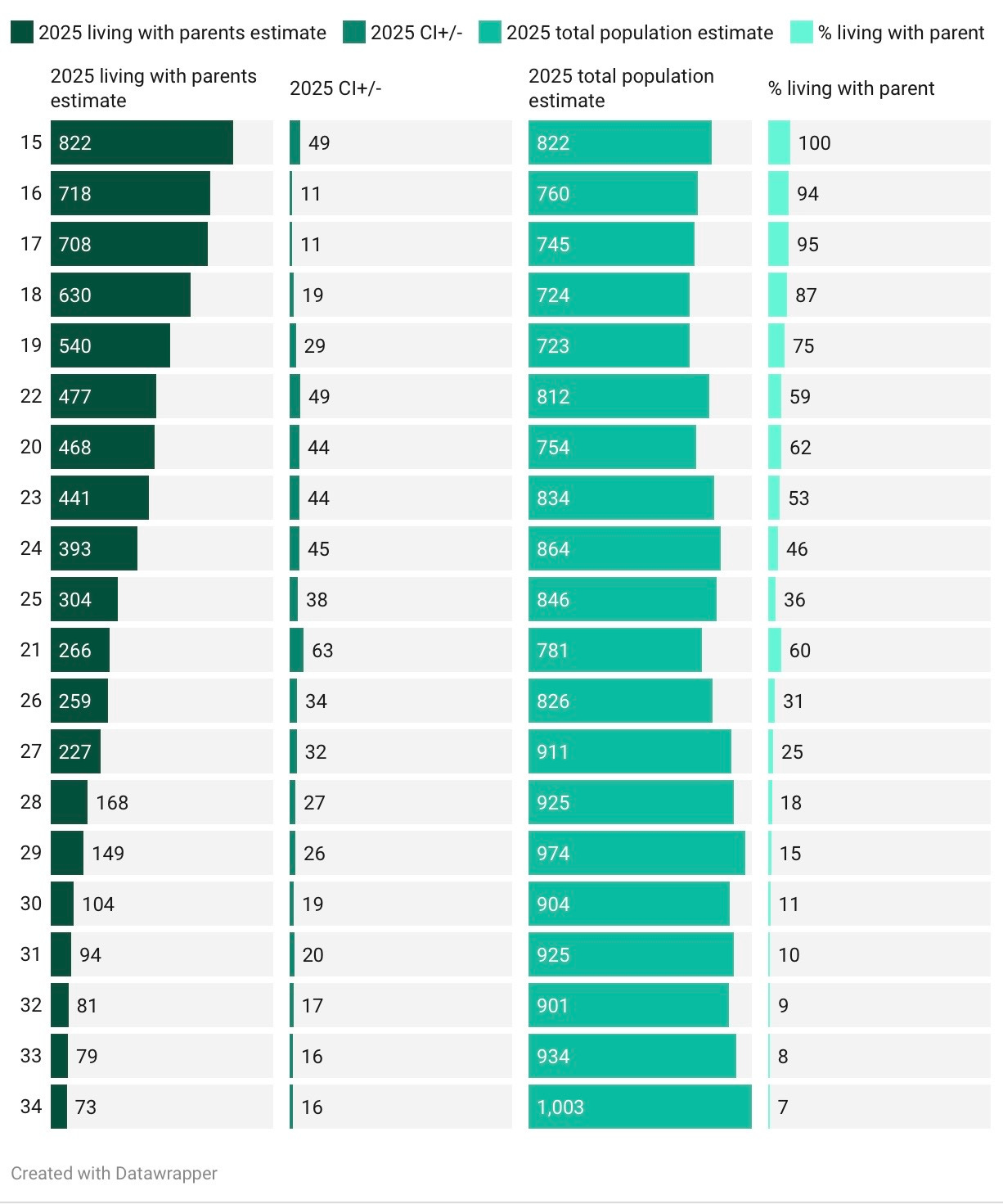
Source Three- Multi-bar chart created from data used from The Office for National statistics on young people living with parents report
This data was published by the office for national statistics and it shows the larger population of young people still living at home with their parents and the slow decline into ownership as the ages progress
So who does the cost of living affect? Everyone, it is worse for lower income households and better for higher income however. This can be shown through the generational divide. The generational divide is the divide between two or more generations involving houses, money and inheritance. Many older generations bought their houses at a cheaper price and the majority had paid off their houses by a younger age. They got to experience the dream that today’s youth has, owning a house with a stable job and a family to raise. This is the gap between the now younger generations who are starting house searching in an inflated markets with low annual wages. Most young people then rely on their parents for stability and fall into these comfort zones of not having to worry about the costs of living. This creates another generational gap with most older generations forcing their children to become independent at a young age and taking away that support today’s generation relies on. Older generations will also have more money saved that can be put towards the rising cost of living with little change in their lives. This however isn’t applicable to all older people with the consideration into poverty needing to be taken into place.
Another factor that is taken into consideration is the smaller generational gap between millennials and Gen Z, a lot of the middle aged generation got money from things like inheritance that they could put towards mortgages and deposits in houses. This isn’t the same with the younger generation whose parents are made up of those middle aged generations. This could also suggest if younger generations are promised inheritance they may stay at home waiting to get that before thinking of moving out, thus creating room for people to live at home at later ages in their lives and increasing the statistics.
So what can be done, suggestions of building more houses is one of the keys to solving the housing price issue. By building more houses and lowering the demand for housing prices have room to decrease and level out. However this is costly and the government doesn’t have the time to approve building across multiple regions, leaving it to local councils who are underfunded. Overall the cost of living crisis is something we will never see stop but hopefully will see decrease.