



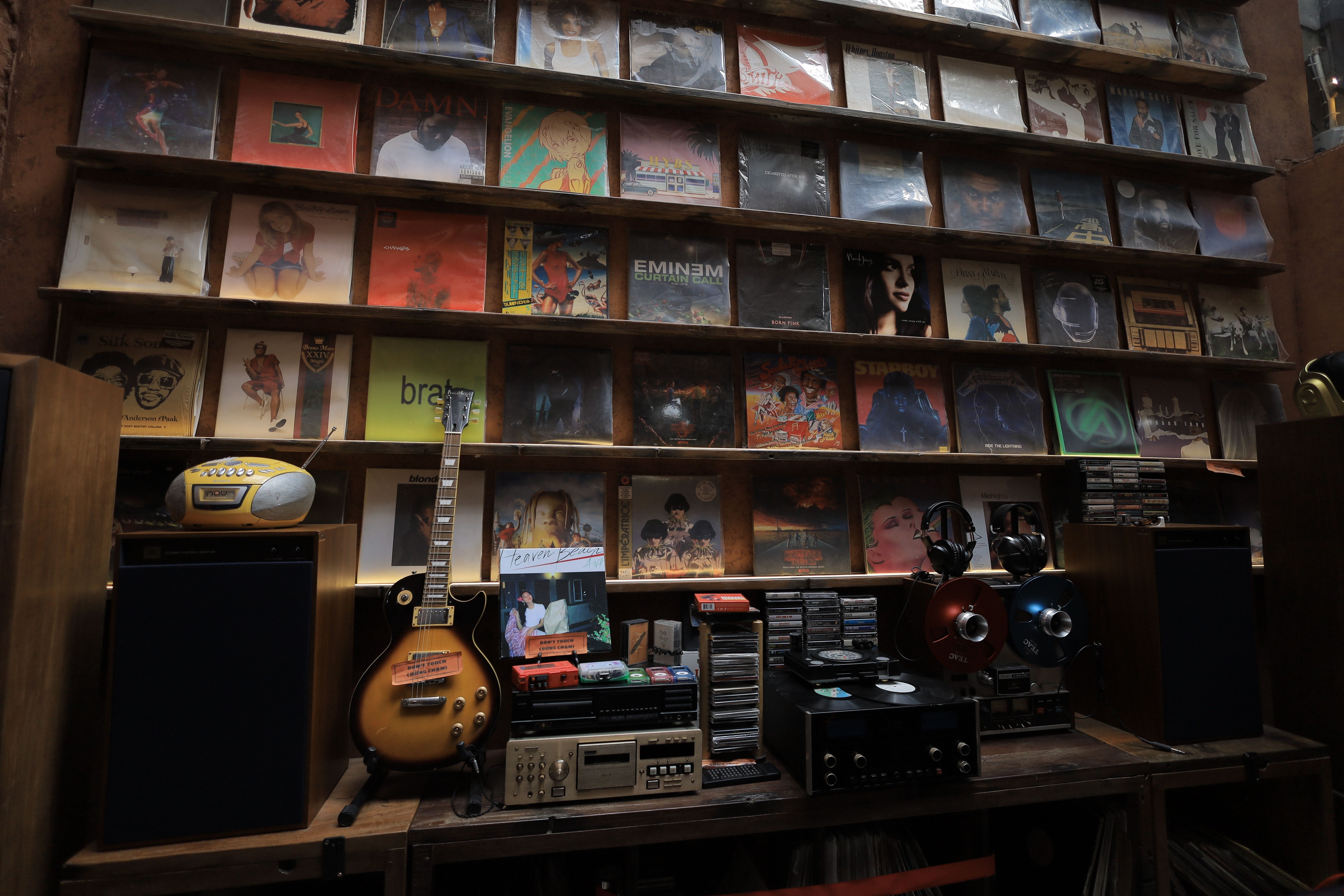
The latest trend in music right now is physical releases. The latest limited edition CD, the deluxe Vinyl LP with the full 12 x 12 inch poster tucked inside the sleeve, are at the top of every devout music lover’s wish list. In the ‘digital age’ we have now found ourselves desperate to go analogue. I suppose the constant attachment to many differing sizes of screens can become insufferable over time. Amongst people with 12 hours of screen time, you are able to garner a superiority complex by proving you can spend time detached from your phone.
Of course digital streaming is the main format where people listen to their music, it is now currently at its peak and is definitely expected to rise as streaming services like Apple Music and Spotify have discovered that exclusive releases drive up users. In the ERA’s (The Digital Entertainment and Retail Association) 2026 yearbook, they have found that since 2022 physical music formats like vinyl, CDs and surprisingly even cassettes have begun to rise.
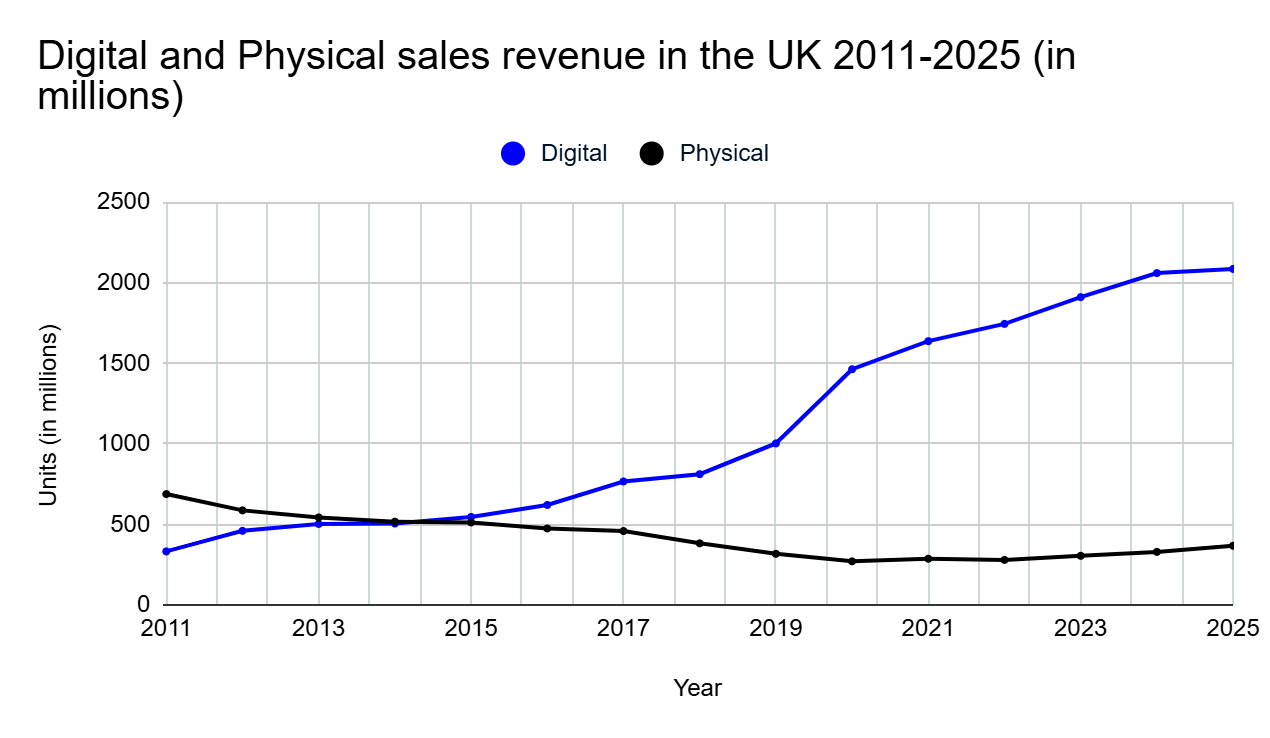
Physical releases reached a sharp decline in 2020 marking a 60.81% decrease in sales since 2011. This was due to the closure of retail stores during the COVID-19 pandemic. With its decline came the rise of social media usage, of course, how else do you occupy a screen obsessed population? More specifically the rise of the short-form video app that is increasingly responsible for all recent trends: TikTok. The app produced communities of music lovers sharing their physical music collections with viewers, whether that be CDs or vinyls, they served as not just music releases but also cherished memorabilia. This is how you prove your fan dedication, by purchasing as many releases from your favourite artist as possible. Vinyl Alliance’s ‘Gen Z’ report in 2025 found that 62% of Gen Z buy vinyl to support their favourite artists and 35% believe owning vinyl records makes you a “true fan”. For the die hard fans, deluxe and limited edition releases are evermore appealing including extras like lyric sheets and posters that wouldn’t be available as a stand alone item.
Although CDs lead the charge of increasing physical formats making up 54.21% of the total physical music sales in 2025, vinyl has risen at a rapid rate with a 23.52% increase in sales over the last three years. The rise and importance of vinyl was recognised by The Office for National Statistics as they were included as an inflation metric for the first time in 30 years. The chief executive of BPI, Jo Twist, was grateful for its inclusion writing on X, “This much-loved format has seen demand grow consistently for nearly two decades, including among younger and more diverse consumers who stream daily but also love to own their favourite music on physical formats.” Twist embraces and encourages the rise of vinyl and credited its rise to the new generation of British artists saying “Its impact is being felt not just at home but globally, highlighted by the recent Grammy wins of Olivia Dean, Lola Young and others, as well as on streaming services and music charts around the world.”
Although the rise of physical releases seems incredibly widespread, this is most likely due to the excessive coverage on social media. The comparison between physical releases from 2011 to 2025 shows an extreme leap towards digital, demonstrating the absurd rise of streaming services.
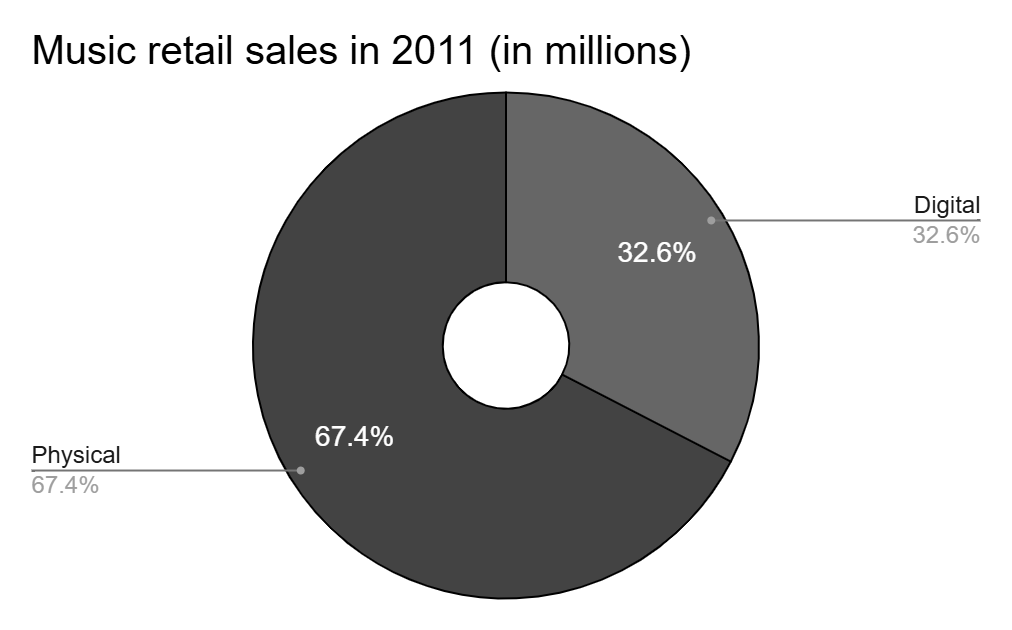
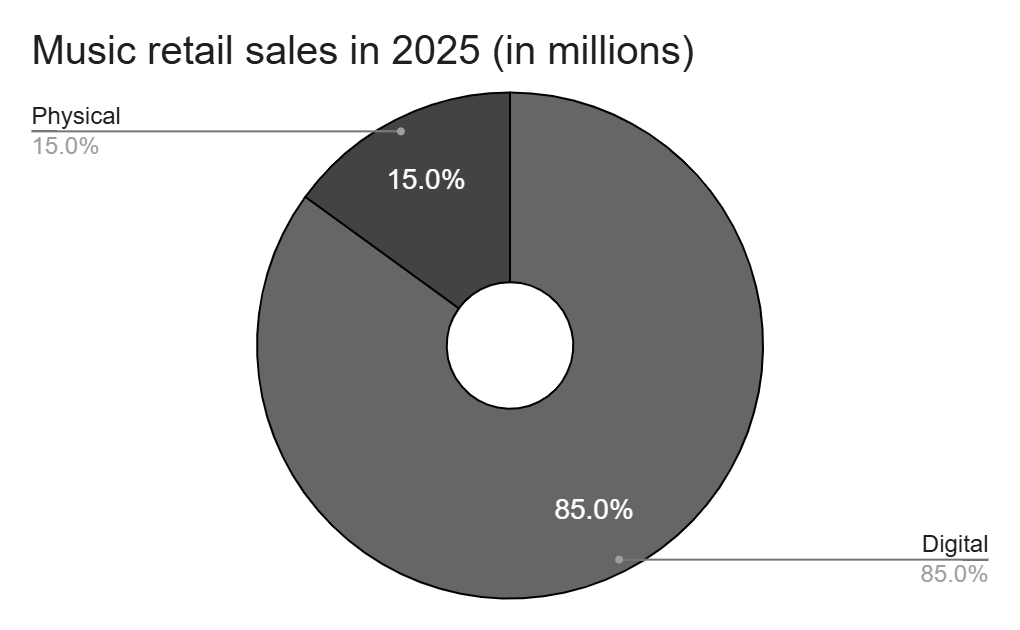
Music streaming apps have developed platform-specific features that improve quality and drive their user engagement. It’s safe to assume that most people will choose Spotify over Apple Music for their Spotify Wrapped feature, especially considering artists will send 30 second thank you videos to their top listeners. These services attempt to give you the same sense of identity and ownership as physical music but paired with instant convenience. It might also help that a monthly subscription with access to over 100 million songs is a lot more affordable and accessible.
Gen Z seem to be the latest main contributors to the shift towards physical music. Whether that be as an act of fan service, a detachment from the digital world or plainly, and unfortunately, just for the aesthetic. For some, collecting physical copies of their favourite albums and singles acts as a performance, their audience being their friends, family or social media. In order to demonstrate your unique and refined taste in music you must show it off. Vinyl Alliance’s report also found that 56% of Gen Z respondents found vinyl appealing for its aesthetic value, and 37% use them strictly as home decoration. Either a symptom of overconsumption or performativity.
However, I would like to think that the collection of physical media is a reflection of someone’s taste and personality. Something that could be looked back on, a reminder of a certain time or feeling encapsulated within a disc that is irrefutably yours. Streaming services have the ability to remove songs and albums for whatever reason, making its physical counterpart ultimately superior. When speaking to CD collector Laila Amaan she said she prefers knowing she has permanent access to her favourite albums. “I love Joanna Newsom’s Ys and obviously her music isn’t on Spotify so I felt like I needed to buy the CD.” Newsom has kept her discography off of Spotify as she believes “it’s set up in a way that they can just rob their artists.”
HMV employee Finley said he have noticed a difference in their customers’ demographic over the past few years. “They’re getting younger and younger.” He said, “We’ll usually get a lot of teens, typically in groups, looking through the Vinyl selections. Sometimes just browsing but they spend a lot of time here.” It seems there is not a designated genre that drives the appeal of Gen Z buyers to Vinyl, but more so the social space and the ability to build their own collection of music.
In Vinyl alliances report they found that 84% of Gen Z prefer to shop in store, not only does this provide an experience of browsing and expanding tastes, it also builds strong communities of music lovers. The ERA reported that the number of independent music retailers has risen by 26.01% since 2011, demonstrating how buyers value community and the tangible experience that in person shopping provides over the bleak and impersonal online alternative.
The increase in physical media seems to only be a strong trend within music formats as the ERAs 2025 yearbook shows that the sales of physical videos have been steadily decreasing since 2011. This is mainly in part due to the rise of streaming, the cause for the decline in music formats, but DVDs and blue rays are struggling to get picked back up.
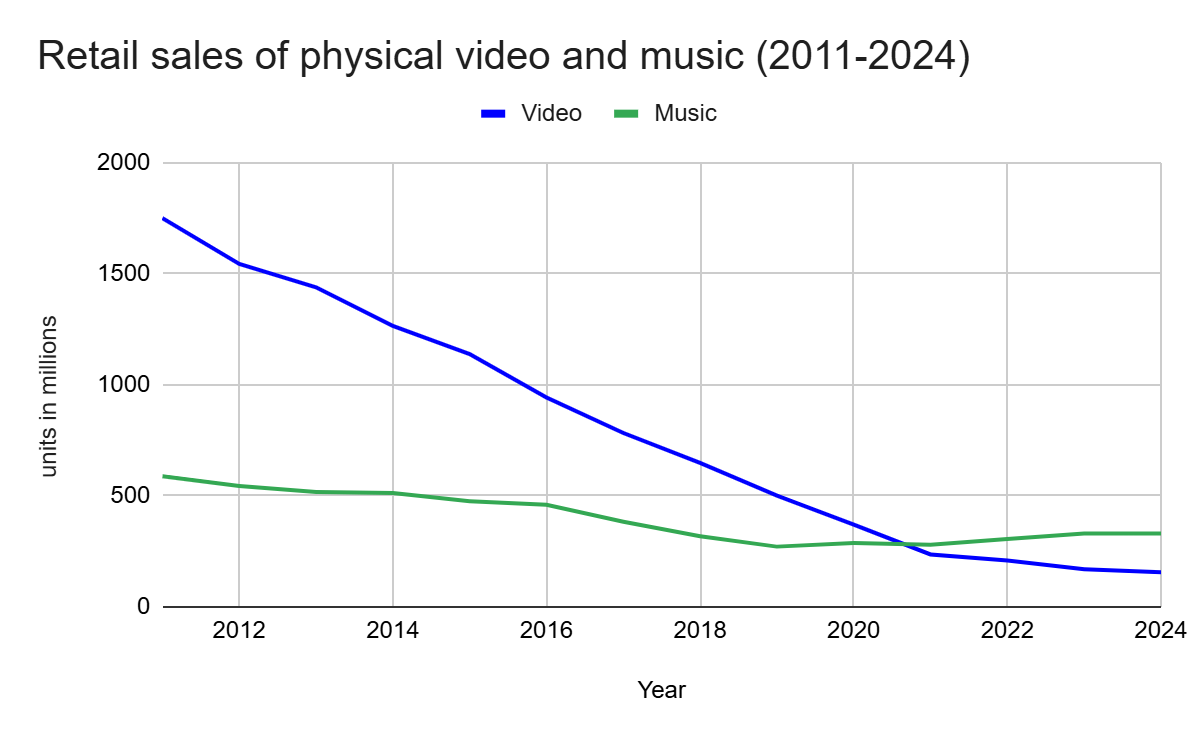
The last years video retail sales has seen a 7.90% decrease in sales despite the efforts of distribution companies like The Criterion Collection, which have seen a surge in popularity thanks to their restoration of classic and contemporary films, as well as their popular internet series The Criterion Closet. This features film industry guests discussing their favourite films from the collection. Yet still, these increasing trends within the physical video sector are not enough to catch up with the rise of physical music.
The data tells us that vinyls and CDs are leading the revival of physical music sales and that Gen Z are now their main consumers, and no wonder. The overwhelming pressure of the digital world was bound to push people out. But it’s not just that. Physical albums invite curiosity, they hold memories and feelings. A collection of albums can tell someone’s story, where they used to be, where they are, and where they’re going. It’s not about owning a piece of music, it’s about owning a piece of who you are.