


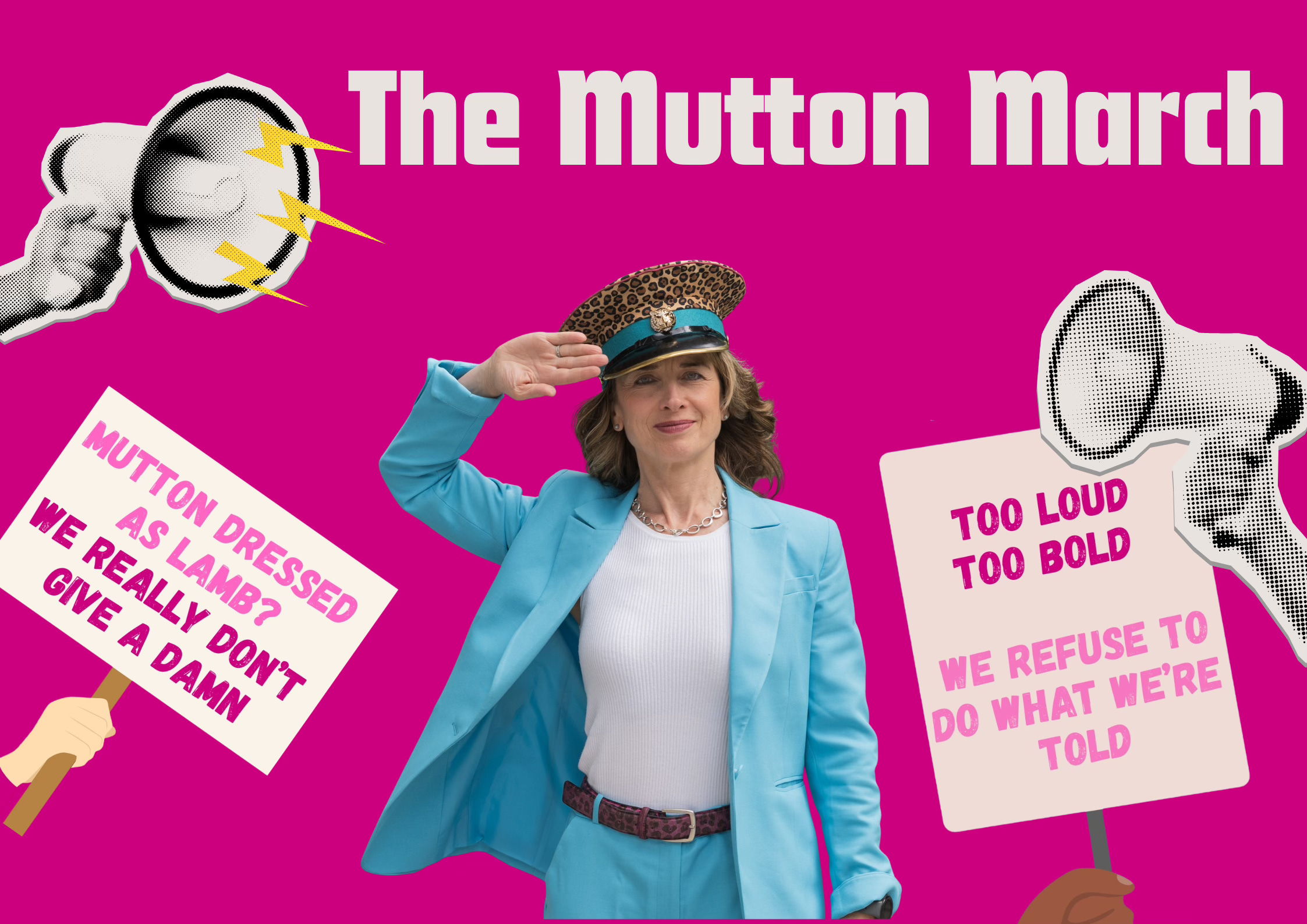
A man muttered it outside Sloane Square station.
Mutton dressed as lamb.
It was quick, almost a throwaway, but one of those comments designed to shrink a woman back into place. But this time, it didn’t land the way it was supposed to.
Amanda FitzGerald, an Oxford Brookes alumna, didn’t let it.
Now, that comment has turned into a movement . . . The world’s first Mutton March took place on March 21st in Sloane Square.
I arrived at a cluster of women gathering just off the station: pink vests, heels, cheetah print, sparkly jumpsuits – voices already louder than the space expected them to be. There wasn’t one single uniform, but there was a shared understanding; This was about being seen.
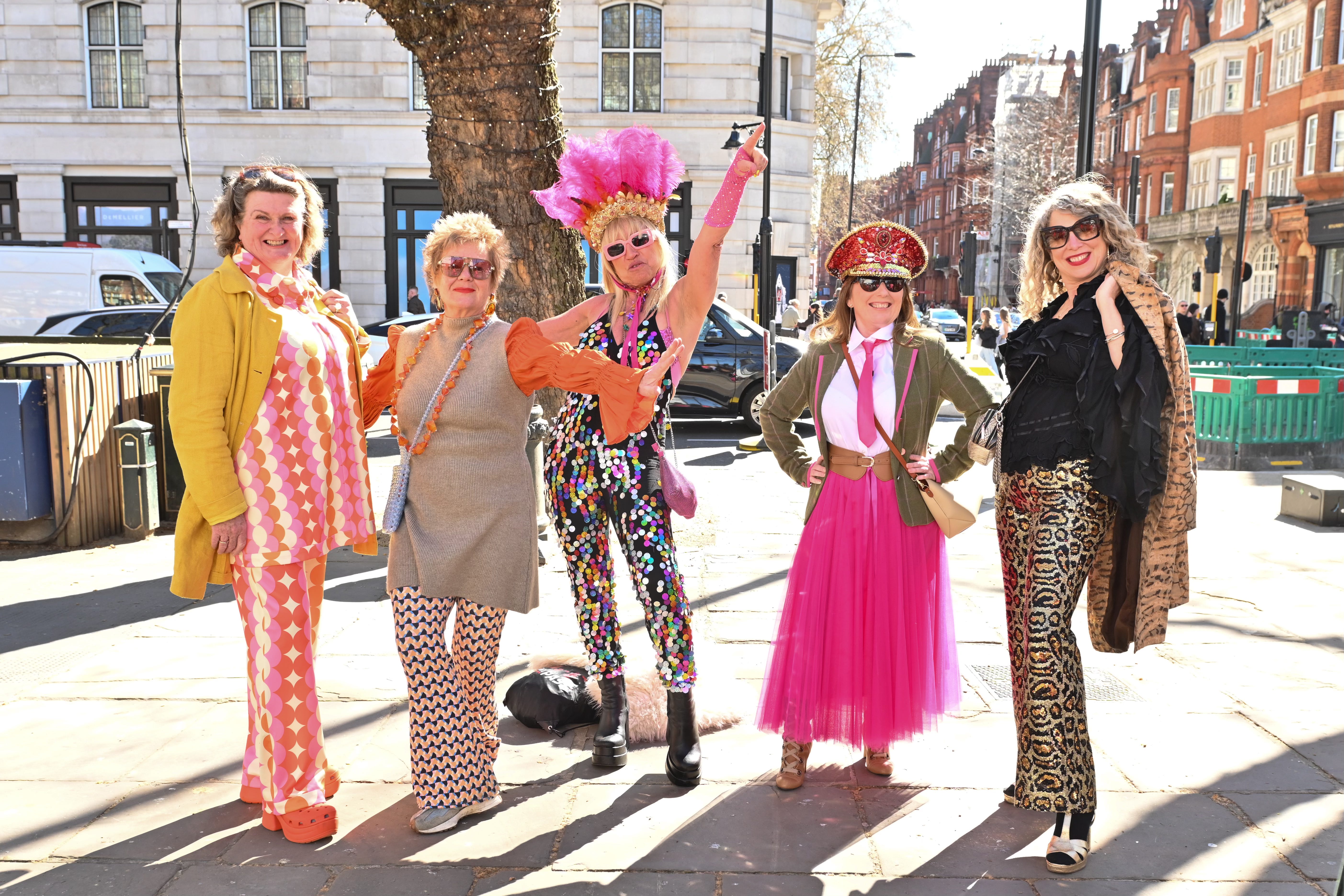
The phrase that sparked it all, ‘mutton dressed as lamb,’ isn’t new. It’s a familiar cultural shorthand, usually aimed at women who refuse to ‘age appropriately,’ who dress too young, speak too loudly, and take up too much space. It carries a very specific message: know your place, and more importantly, know when to disappear.
But at the Mutton March, disappearance was exactly what was being rejected.
What struck me the most was not the scale of the event, but the attitude and tone of all the women. Every single woman showed up visible and unapologetically themselves. And this radiated onto me. I felt inspired, empowered, and comfortable being myself.
The women were laughing, chanting, posing for photos, holding placards that read:
‘Too loud! Too bold! We refuse to do what we’re told!’
‘Mutton dressed as lamb? We don’t give a damn!’
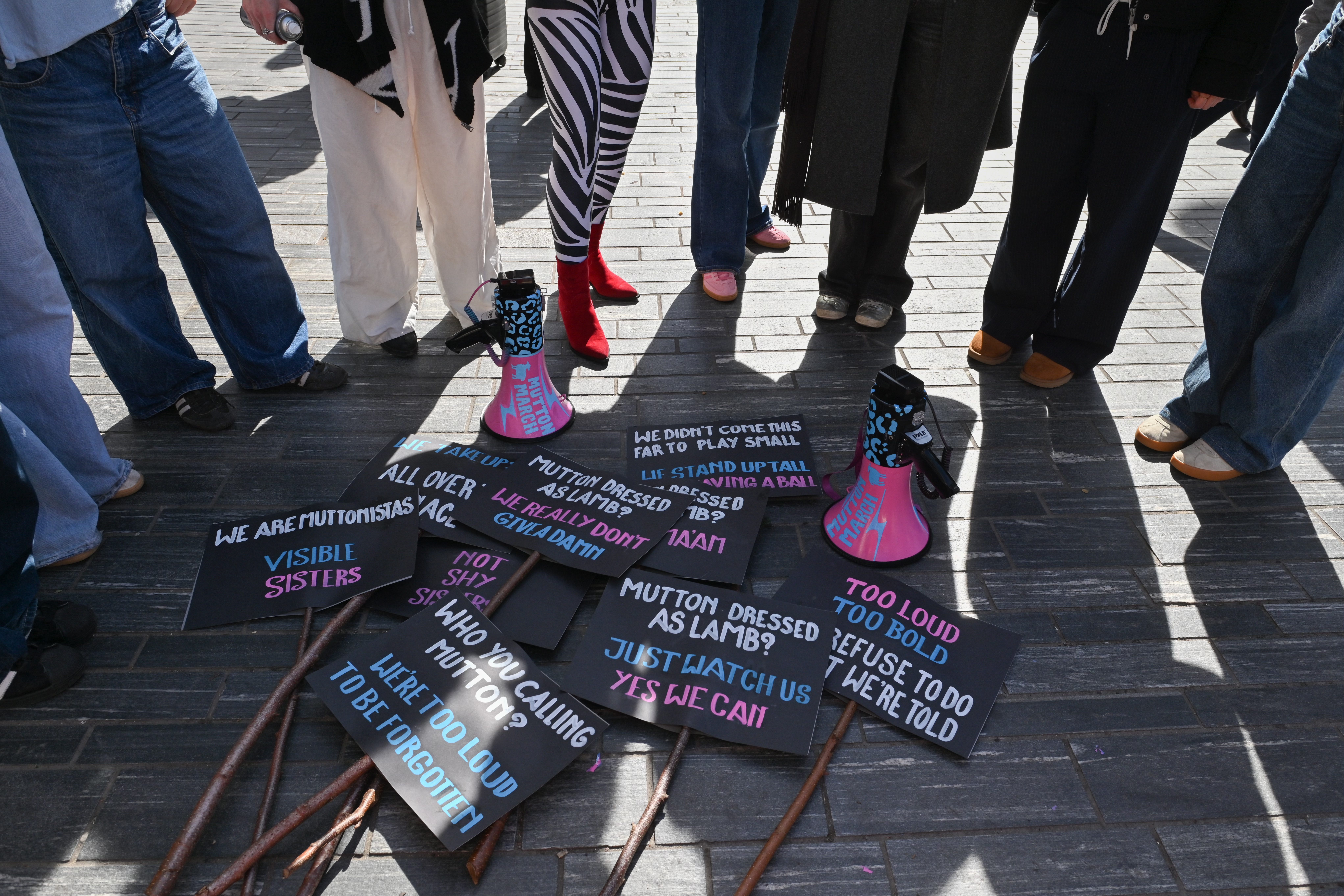
There’s something significant about the way humour was used. The insult hadn’t just been challenged, it had been absorbed and rebranded. What was meant to ridicule had become identity: Muttonistas. A label that once carried shame now served as a signal of solidarity, defiance, and refusal.
What the march did, intentionally or not, was interrupt that logic. By exaggerating visibility, it removed the possibility of quiet dismissal. You couldn’t ignore it. Colourful, sparkly clothes moving through Chelsea and chants echoing past storefronts. It forced a kind of attention that women are often criticized for seeking and then punished for achieving.
There’s a tension there: women are expected to be visible, but only in acceptable ways. Stylish, but not try-hard. Confident, but not loud. Present, but not imposing. The Mutton March refused those conditions entirely.
By the time the march ended, the word mutton had lost its original edge. It no longer worked as an insult, not in that space, not in that context. It had been redefined through repetition, humour, and collective ownership.
That doesn’t mean the attitudes behind it have disappeared. If anything, reactions to the march, such as online comments, show how persistent they are.
But something had shifted.
The term has been reclaimed and made visible, making it much harder to deploy it in the same way again. What I kept thinking, watching it all unfold, is how much of this comes down to visibility. Not just being seen, but choosing to be seen, on your own terms.
For a long time, women have been told that there is a point at which they should fade out. Dress differently. Speak less. Take up less space. Become, gradually, invisible. The Mutton March pushed directly against that idea.
Loudly. Publicly. Unapologetically.
And perhaps that’s why a single muttered comment outside a tube station was enough to start it. Because it wasn’t just one moment. It was a pattern, and this time, it was answered.
When I spoke to the women during the march, they explained that throughout their lives they have been called all sorts of ‘too:’ too much, too bold, too prickly, too loud and not loud enough. And as someone just about to enter ‘real adulthood,’ it struck me how familiar that language already feels. How early women learn that, whatever they are, it will still be somehow wrong.
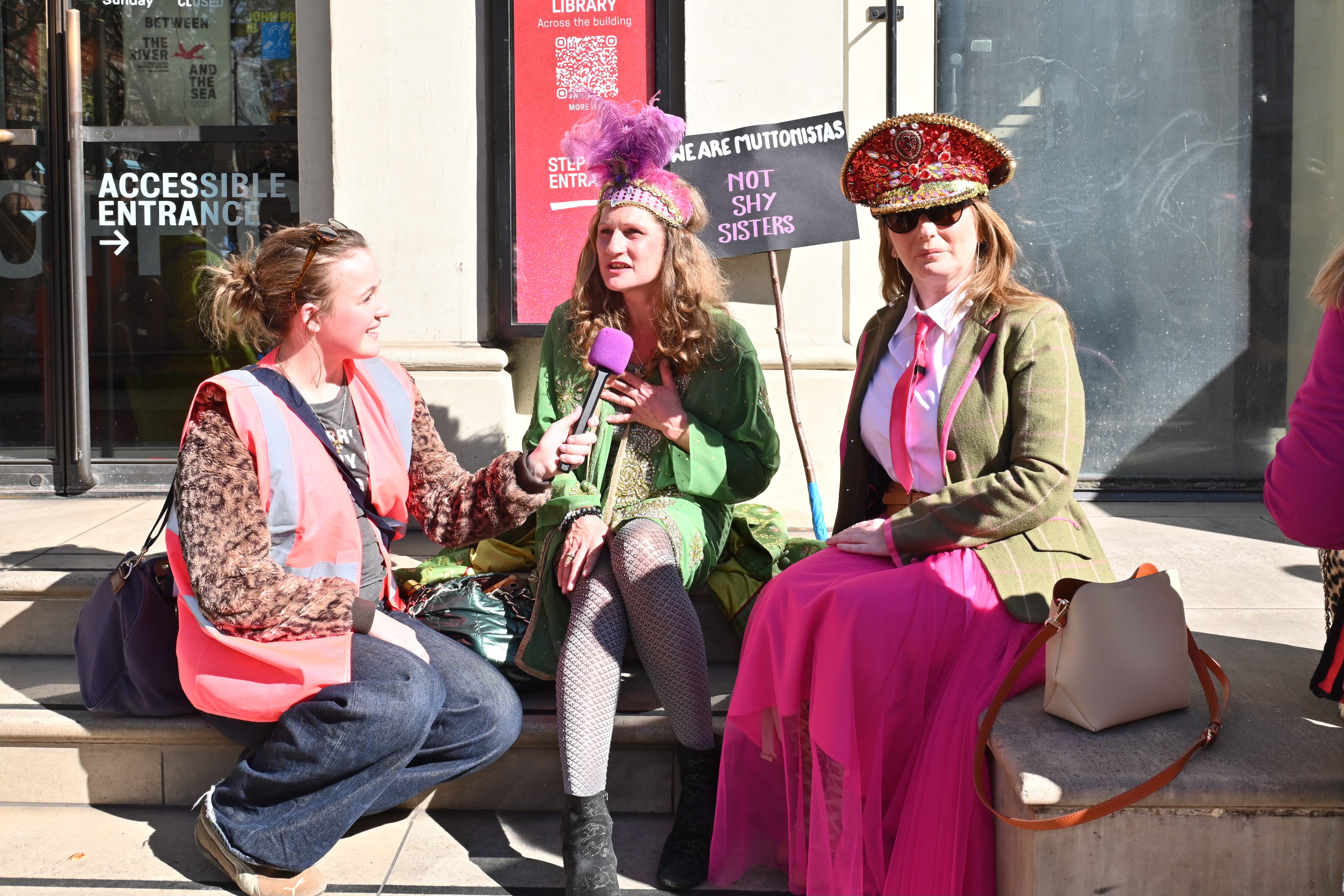
So, walking alongside these women yesterday, watching them empower each other, encourage each other, and laugh with each other, it became clear that this wasn’t just a march, it was a refusal to be made smaller.
What Amanda did was simple but significant: she refused to let the comment land as intended. Instead, she amplified it, reshaped it, and handed it back louder, bigger, and impossible to ignore. Amanda says thank you to the man who called her ‘mutton dressed a lamb,’ as he sparked this movement.
The Mutton March stands as a reminder that visibility, when chosen, can be a form of resistance. Not shrinking, not softening, not stepping aside, but showing up, exactly as you are.
Amanda FitzGerald is a PR expert who works with women to build business through visibility.
Brilliant article Ella and perfectly represented the sentiment of the women that marched in the first ever Mutton March. Such a fantastic and uplifting day.
Fabulous Ella, thank you for taking the time to write so eloquently about this really important event. What a fabulous time we had, I was hugely grateful to be accompanied y my daughter and step-daughter too.