


Chancellor of the Exchequer John Healey has set out measures to ease financial pressures on Britain’s grassroots music venues but industry figures are questioning whether this latest intervention is enough.
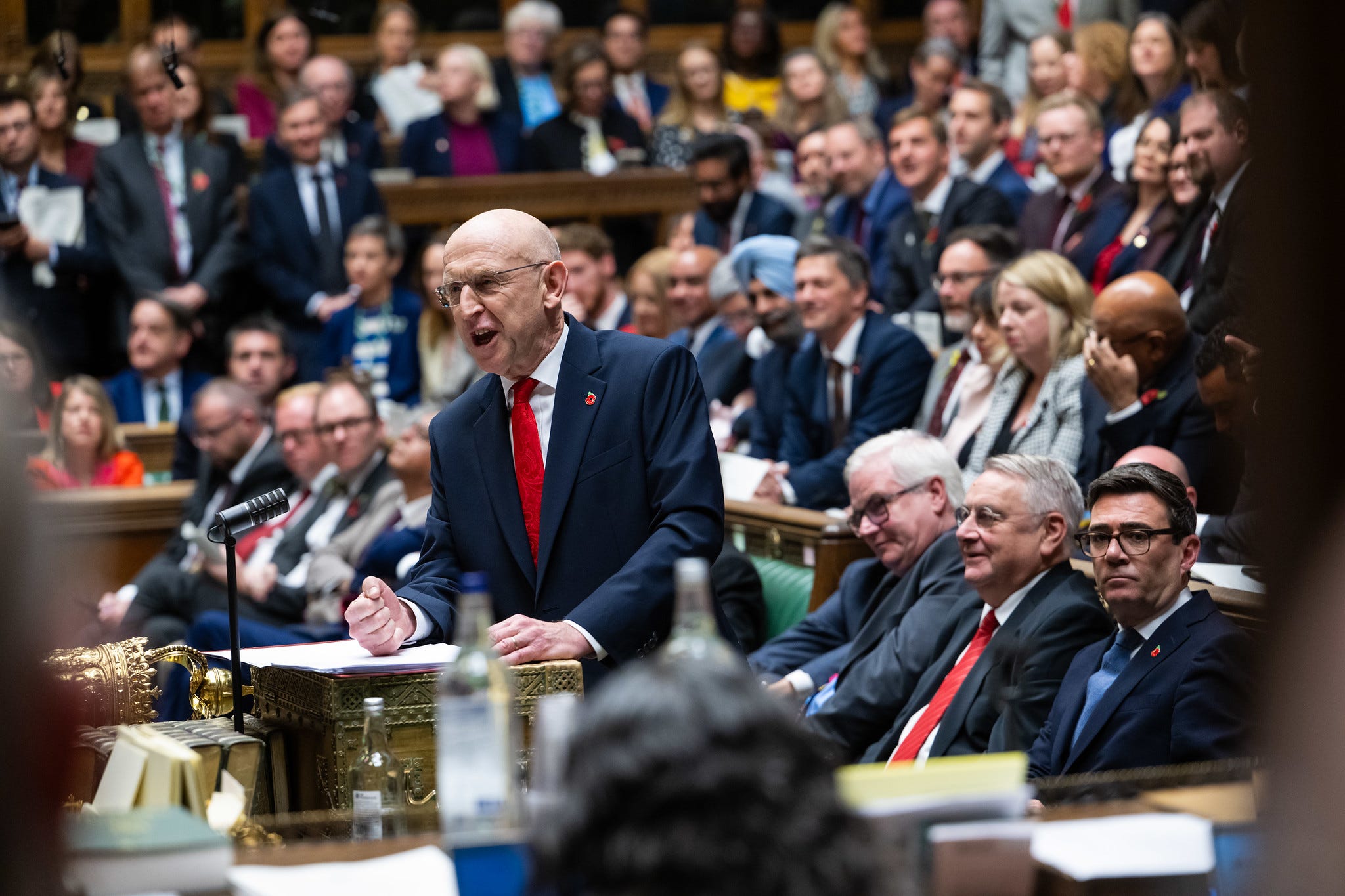
John Healey, Chancellor, delivering October Budget 2026 - Source: House of Commons, Flickr
The October Budget was widely considered an important signaller as to what concrete action the government would take to alleviate Britain’s struggling night-life hospitality industry. The measures outlined include a further 15% reduction in business rates for qualifying premises with a rateable value under £1 million from April 2027 on-top of the 20% cut announced by Prime Minister Andy Burnham this July. Those valued under £18,000 will be made completely exempt.
Online, the Music Venue Trust (MVT) welcomed the measures but warned ‘business rates are only part of the challenge, venues continue to face substantial operating costs and precarious margins.’
The MVT, founded in 2014, is a charity that has played a significant role in advocating for legislative reform as well as financial and legal assistance to floundering local music venues. This has most notably included the voluntary ‘grassroots levy’ campaign where large arena and stadium artists donate £1 per ticket sold to the MVT; bands like Coldplay, Gorillaz and Radiohead have since adopted the practice over the course of 2025.
Source: Music Venue Trust Annual Reports (2022, 2023, 2024, 2025)
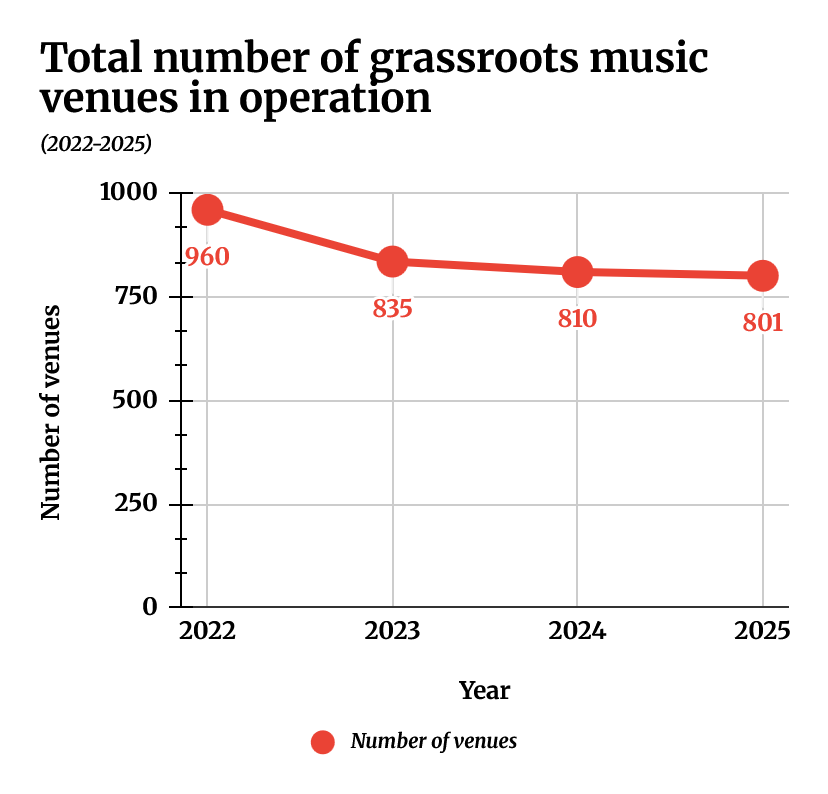
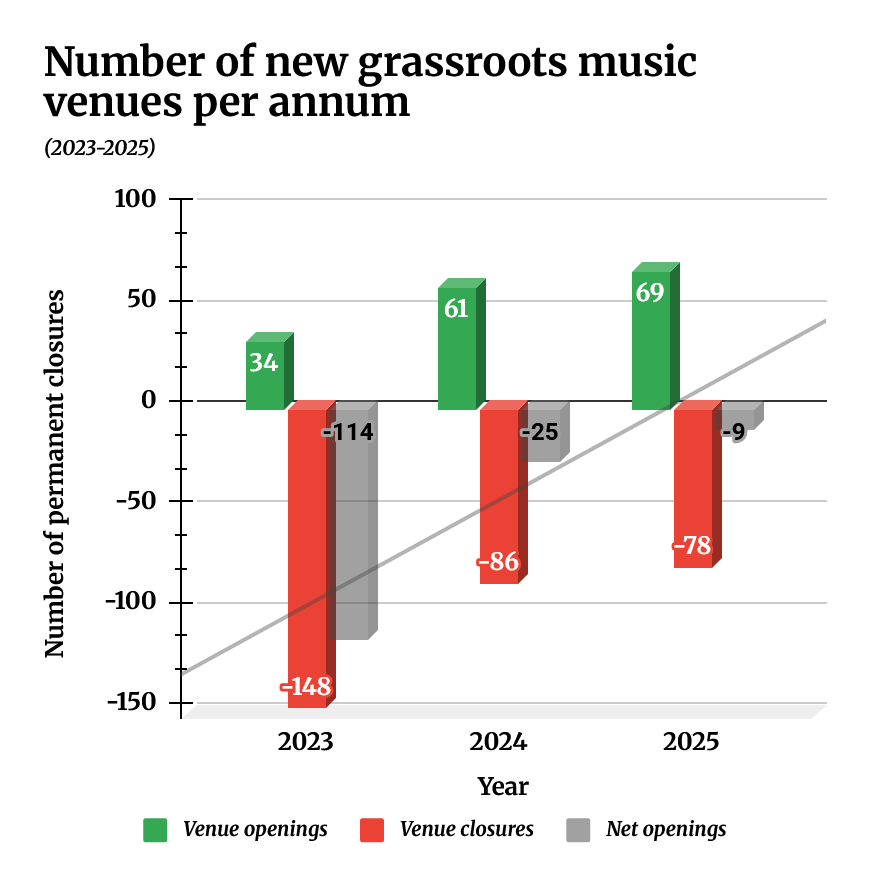
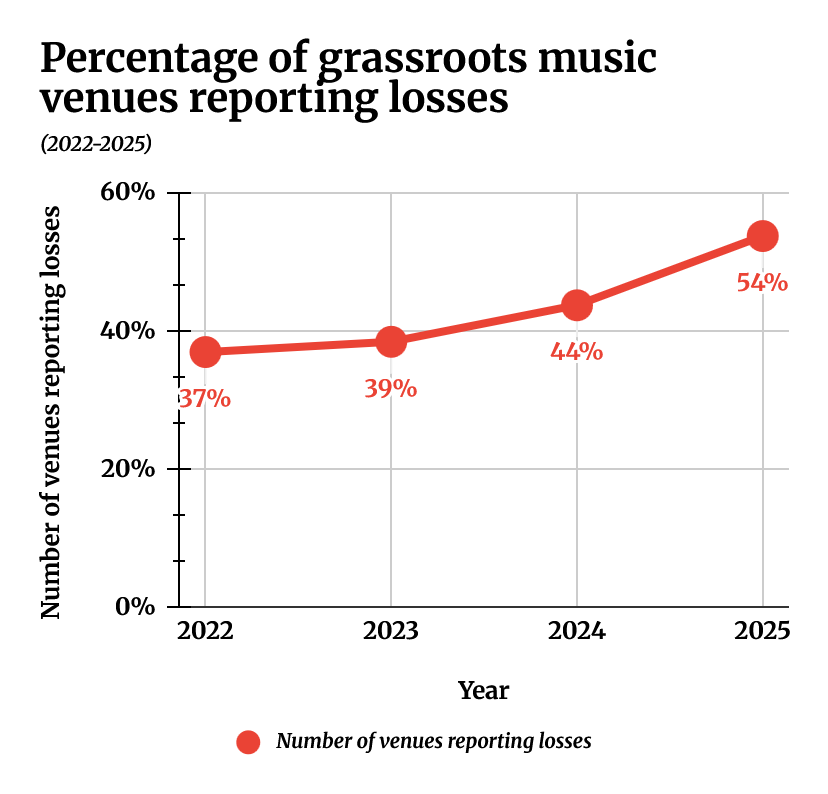
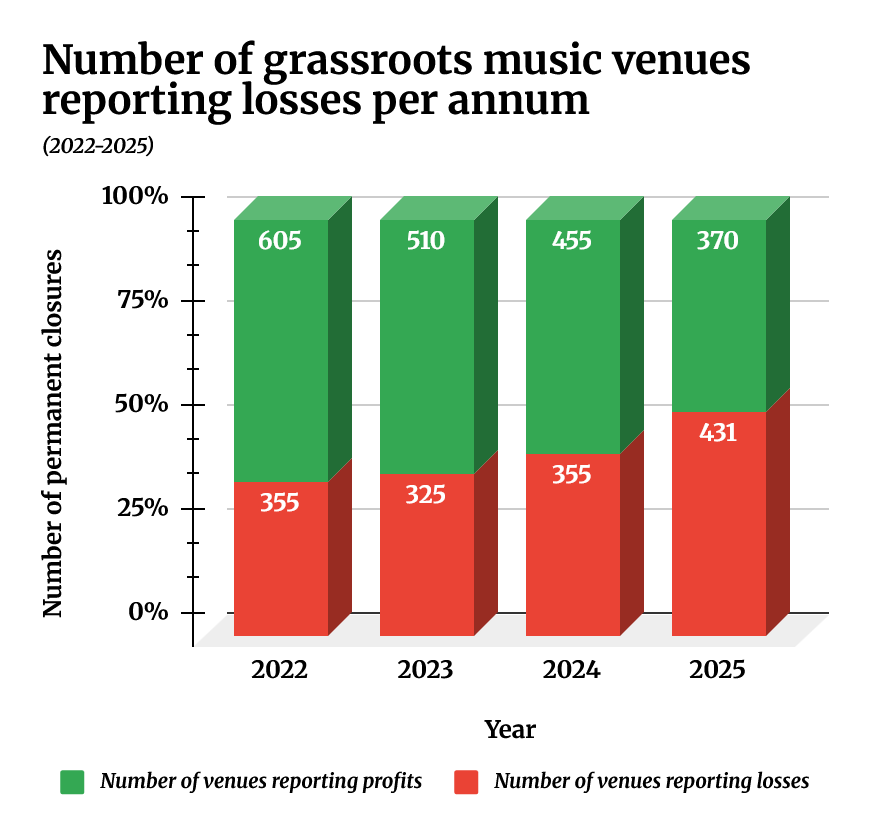
While on the surface, you may think that these are all positive developments, in-line with the fact that despite still not recovering to 2022 levels, the steep decline in the number of grassroots venues appears to have petered out.
The truth is a lot more complicated.
Nearly 5 years have passed since the COVID-19 pandemic ended but for grassroots music venues, the aftershocks have been severe and lingering. While increasingly extortionate arena and stadium concerts have continued largely unabated, it is local music that has absorbed the brunt of post-pandemic debt, inflation and shifting consumer habits.
Source: Music Venue Trust Annual Reports (2022, 2023, 2024, 2025)
2022 marked the winding down of lockdown restrictions but it too saw the beginning of unprecedented rises in rent and utility prices driven by supply chain disruption, the highest rate of inflation in 41-years and geopolitical crisis, culminating in what’s better known as ‘the cost-of-living crisis’.
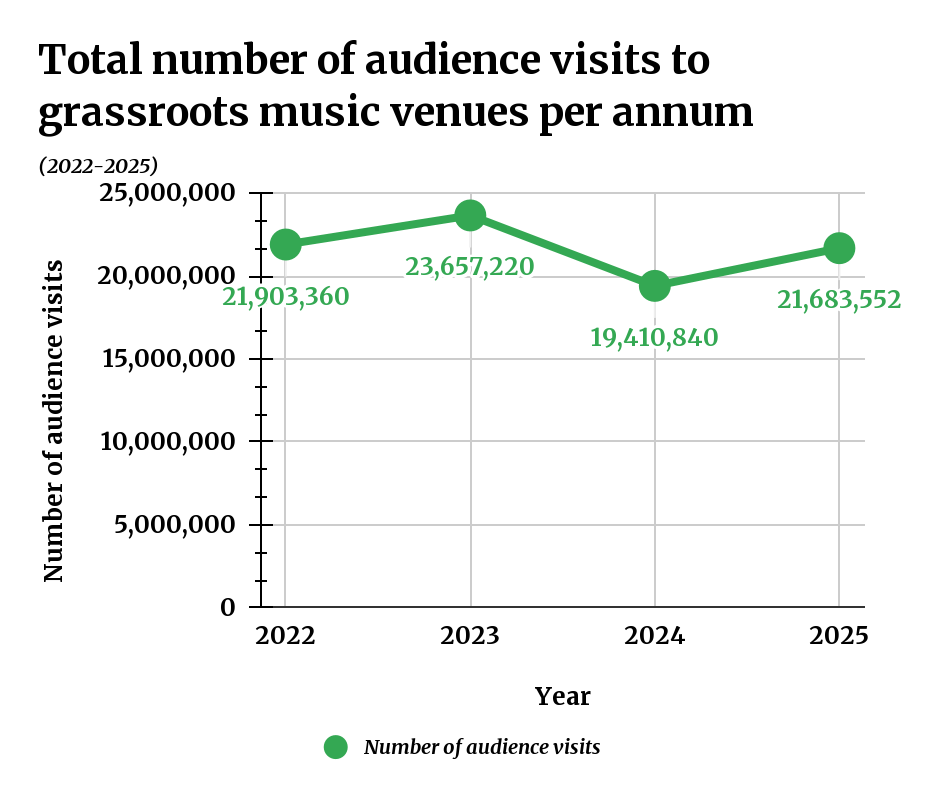
Not only did it hamper consumer’s disposable income, leading to a precipitous fall in audience attendance of live music venues but the knock-on effects on 11.1% inflation drove up rent prices. In 2023, 81% of venues operated within rented premises in the span of a year (2022-23) the average rent paid rose by an unprecedented 37.5%.
Source: Music Venue Trust Annual Reports (2022, 2023, 2024, 2025)
Ever-spiralling costs combined with the rolling back of post-COVID support for landlords and banks who collected rent and gave loans to elevate the pressures on the grassroots music industry. The consequences were dire and Chief Operating Officer of MVT, Beverley Whitwick would tell the Independent that ‘we are losing on average two venues a week, those that have survived have no chance of overcoming [threats to their continued existence] without immediate help.’
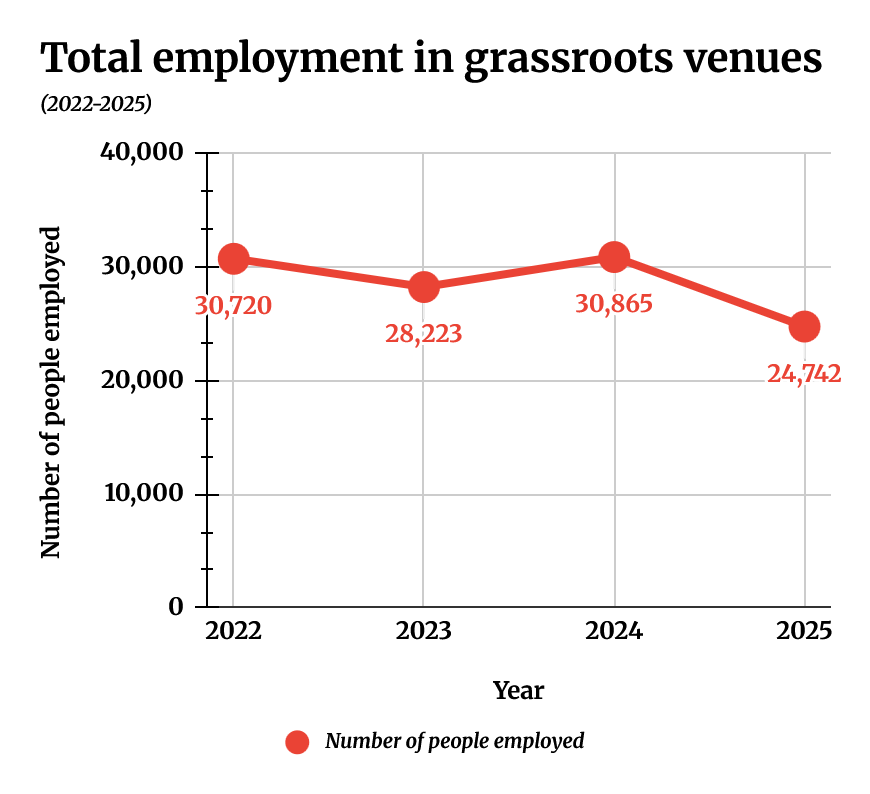
Despite voluntary fundraising drives, hardship continued further into November 2025 when then Chancellor, Rachel Reeves announced that a 40% deduction in pandemic-era business rates for pubs and local music venues would be removed. A hike in Employer National Insurance Contributions from 13.8% to 15% and minimum wage rising by 22% between April 2023 and April 2026, was branded by the MVT as the most ‘significant financial shock’ of the year. The strain on many venues became unbearable and employment plummeted in ‘the sharpest reduction since records began.’
Source: Music Venue Trust Annual Reports (2022, 2023, 2024, 2025)
Before the latest budget, a former venue operator in Leicester spoke to us about the issues, ‘at the start of the year we went from paying nothing to over £20,000 per year, some [venues] saw their [business] rates go up by £40,000.’
‘Everything is against us right now and music is struggling massively.’
Despite growing attention being paid to the sector, with Andy Burnham pledging [this] is just the start as we work to bring back hope across the country,’ there’s been little engagement with tangible, long-term solutions to the precarious position grassroots venues find themselves in.
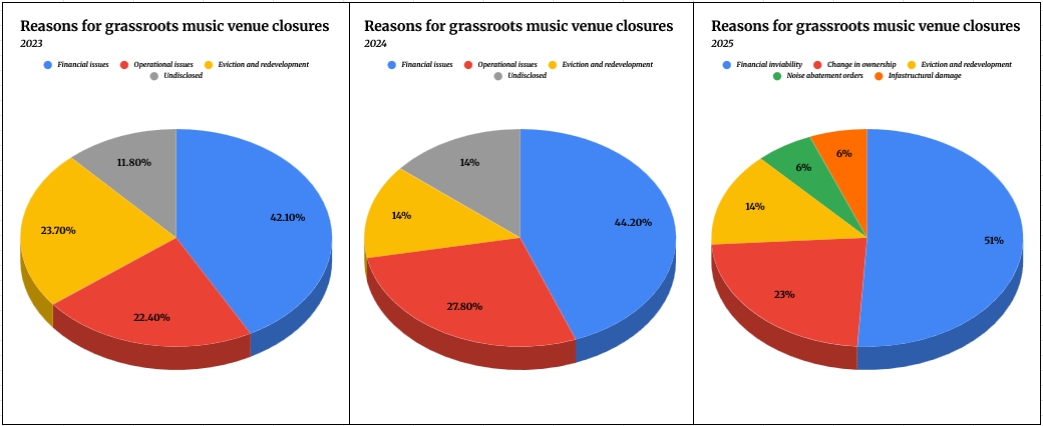
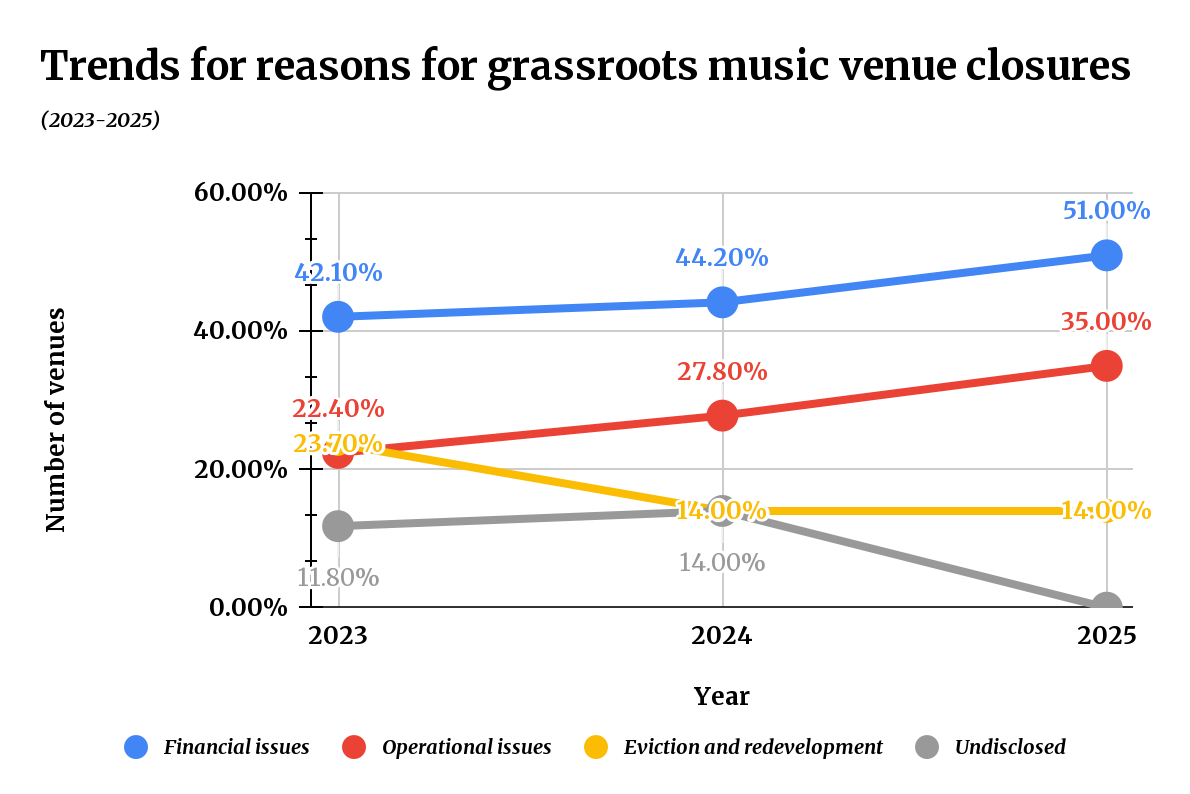
Concerns over ever-rising energy costs, alcohol being cheaper to purchase in supermarkets, 59% of venues not being included in significant tour routings, there being no clear framework for business rate relief and venues not being embedded into cultural and night-time local economic strategies means, today, financial issues are the reason a majority of venues shutter.
Source: Music Venue Trust Annual Reports (2022, 2023, 2024, 2025)
Source: Music Venue Trust Annual Reports (2022, 2023, 2024, 2025)
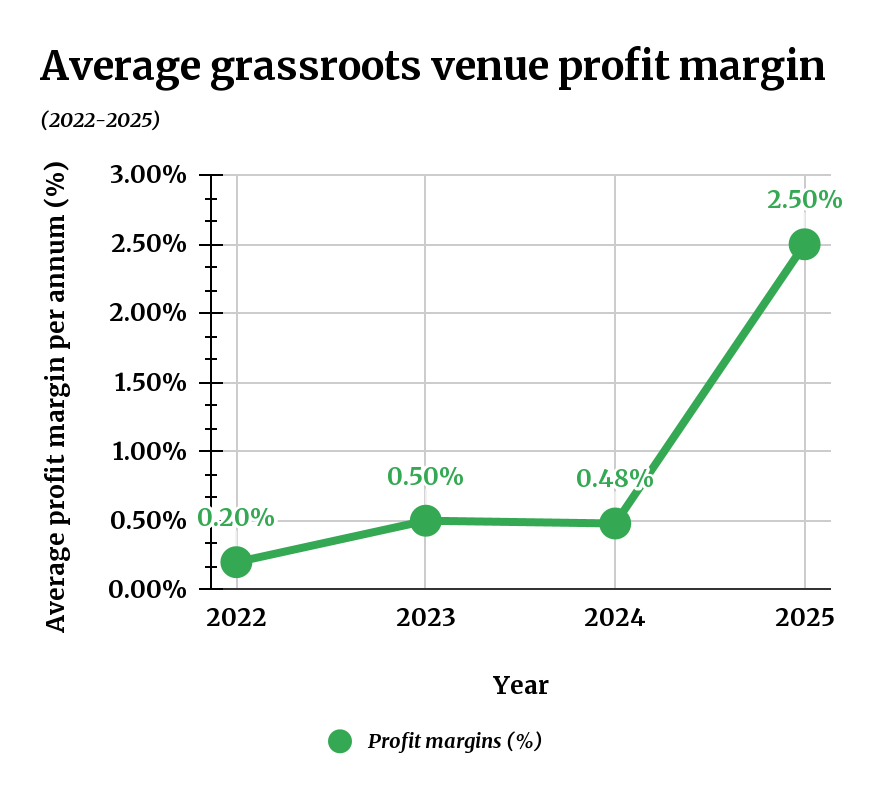
Despite the average profit-margin increasing dramatically in 2025 to 2.5%, this remains a ‘critically low’ figure according to the MVT.
Source: Music Venue Trust Annual Reports (2022, 2023, 2024, 2025)
‘Imagine if you buy a £5 beer and we’re making even 1% of that, that’s 5p [of profit] a can. We were operating at margins below that and with the increases in national insurance, our position became untenable.’
Source: Music Venue Trust Annual Reports (2022, 2023, 2024, 2025)
Source: Music Venue Trust Annual Reports (2022, 2023, 2024, 2025)
Our interviewee’s venue, The Shed, Leicester’s oldest, shuttered in December 2025 after over thirty years of operation.
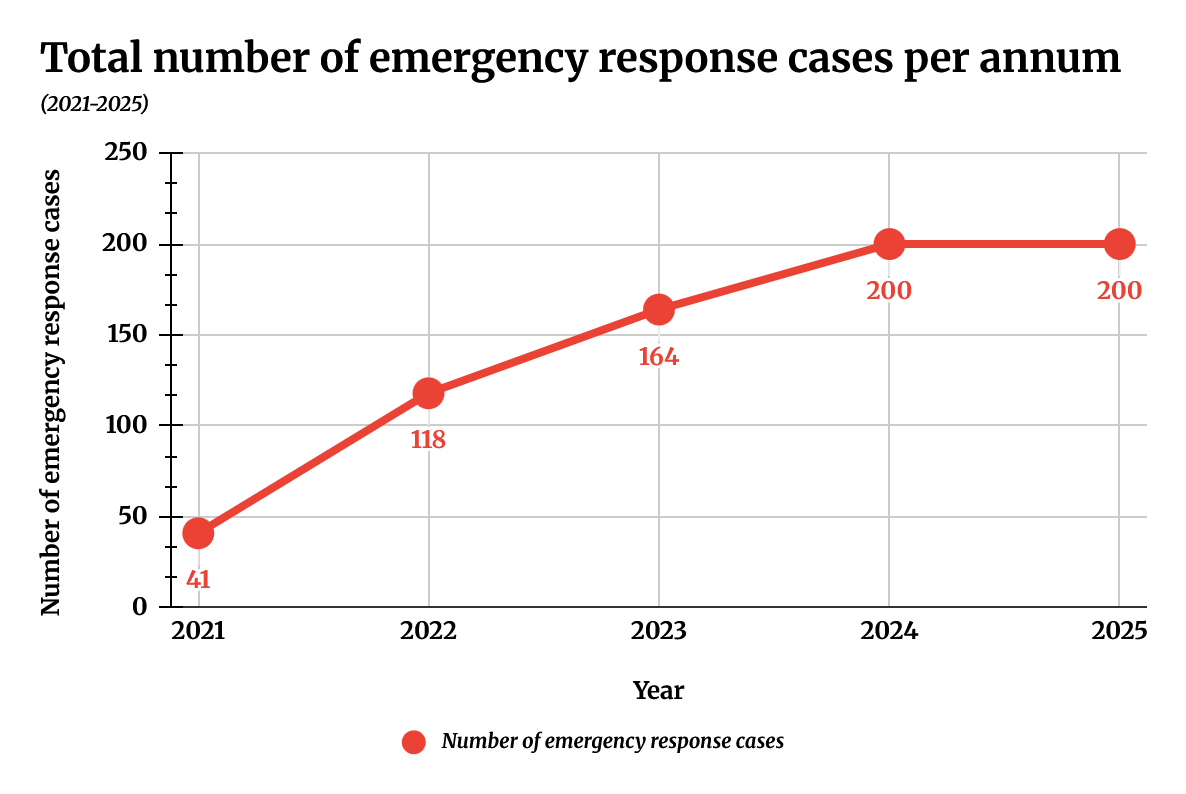
The MVT reported in 2025 that a majority of grassroots music venues are now operating at a loss. The trust’s expanding but nonetheless limited resources are swamped by emergency response cases, that see last-ditch attempts to keep venues afloat because there simply isn’t the capacity for pre-emptive action. In 2022 cases rose by 187% alone; in 2024 and 2025 the number of emergencies has remained at an all-time-high.
Source: Music Venue Trust Annual Reports (2022, 2023, 2024, 2025)
Anthony Lamb, manager of local Leicester venue The Big Difference, also interviewed prior to the budget, said that while taxes like alcohol duty ‘are far too high’ he made the point that ‘[cutting] them alone wouldn’t really save [GMVs]. There needs to be a cultural shift in the way we go out.’
While he pointed to the cost-of-living crisis as ‘the biggest hurdle’ as to why people are going out less, he stressed the point that ‘we’ve moved from a monoculture to a world where information is left undiscovered unless it shows up directly in your personalised feed’.

Be There or Be Square Festival at The Big Difference - Source: Music in Leicester
As the distribution of information and communities become increasingly centred around online algorithms and social media, there are concerns that once thriving local music communities are being cut-off from the beginning. Avenues like Reading / Leeds Festival’s BBC Introducing Stage that have previously platformed artists like Charli XCX, Sam Fender and Ed Sheeran too have been scrapped by organisers, replaced by a list of what critics describe as ‘nepobabies’ riding off of name recognition rather than merit. These include Cruz Beckham, Gene Gallagher’s ‘Villanelle’, Violet Grohl and Simon Cowell-backed boy band ‘December 10’.
Ant continued, ‘people love to say live music is dead in their city, presumably because it’s easier than doing anything to change it. I can say with certainty, though, that it isn’t going anywhere. It’s going to get more difficult and expensive but there are always cool people trying to do cool things in your city, you just have to go out there and support it.’