


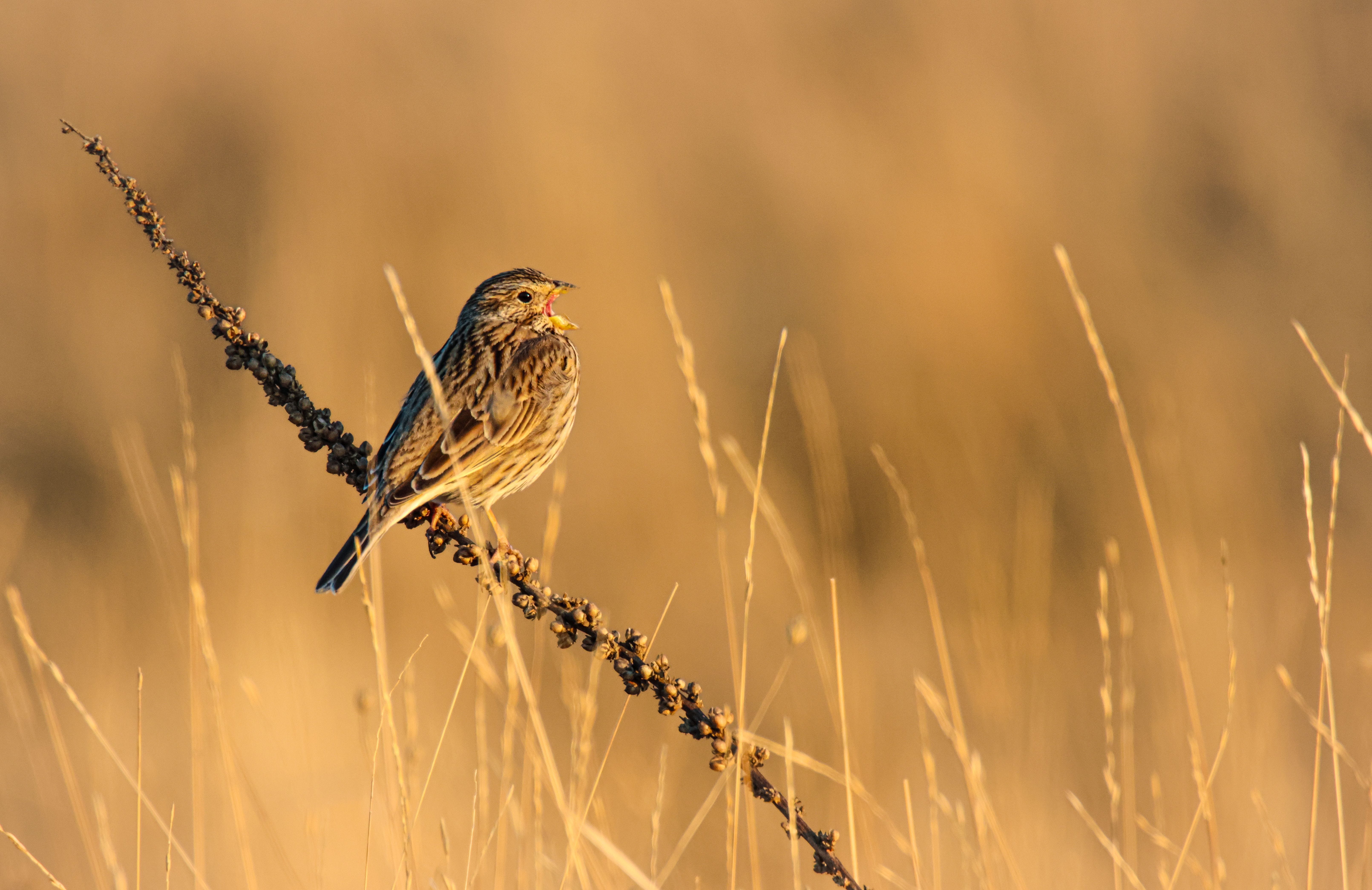
The British countryside is often imagined as a place bustling with wildlife. The open fields and rolling land is the perfect environment for many species to flourish. A single walk across a field and you will be encompassed in nature and a cacophony of birdsong.
Whether soaring high above or peeping out from a hedgerow, birds have always, and will always play a monumental role in Britain’s rural landscape. But unbeknownst to the most of us, there has been a change. Unless you spend a lot of time outdoors then you might not have noticed; but the birdsong symphony is getting quieter.
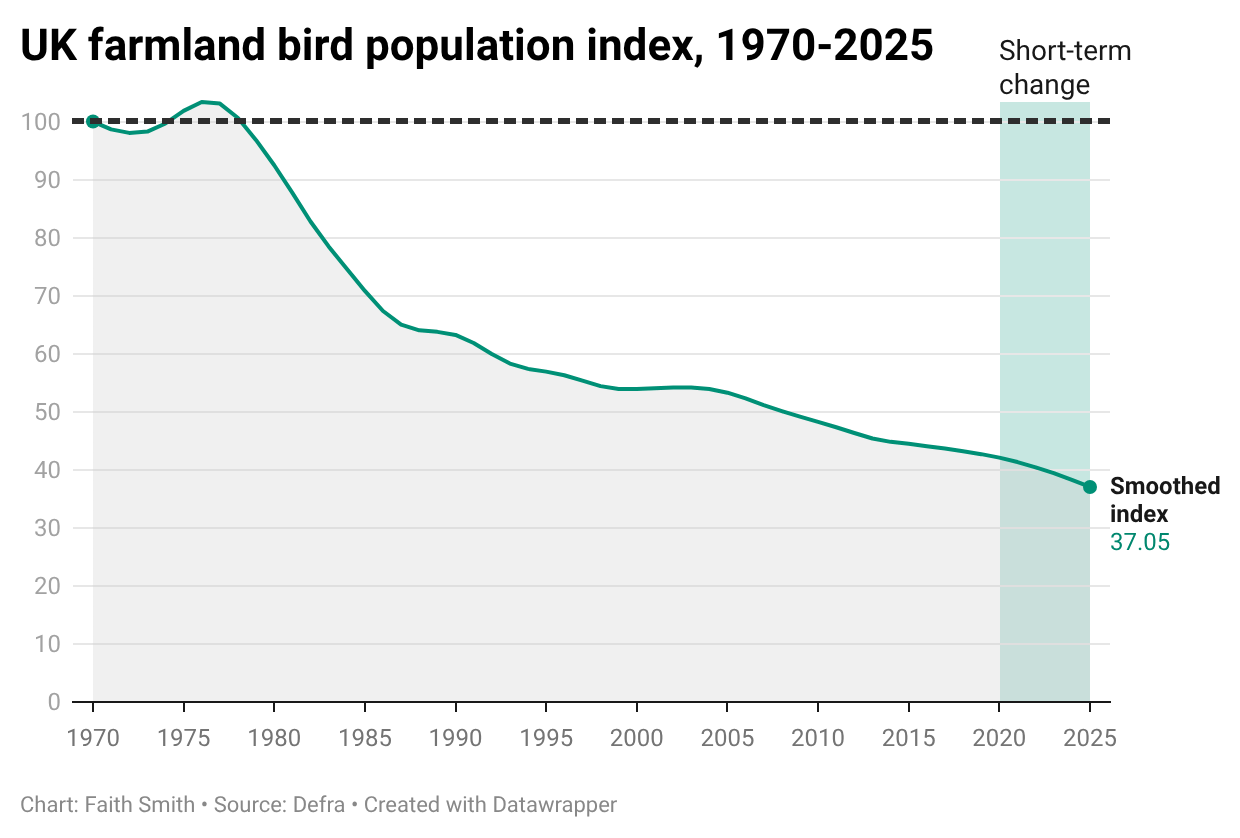
Since 1970 the UK’s farmland bird population has fallen by almost 63% according to latest figures from the Department for Environment, Food and Rural Affairs (Defra). The decline is happening right now, with populations dropping by 12% between 2020 and 2025.
The wider picture is just as concerning, with the UK’s overall breeding population declining by roughly 19% since 1970.
Seabirds are in tow with farmland species, with less than half of the population last year than what was present in the 1980’s. Seabirds have been majorly effected in more recent years with 22% population fall since 2020.
Defra’s figures also show a decline in all other habitats including wintering waterbirds, which boomed in population between 1975 and 2001, increasing by 127%, but have now also succumb to the decline, with a 40% drop between 2001 and 2024.
For some, the change is very noticeable, particularly for those who have grown up alongside the statistics. Sarah Smith who works at a college set within 350 acres of protected land, remembers hearing birds a lot more in the past.
“A big memory I have from my childhood, being out in the countryside, is the birdsong.” She recalls growing up identifying birds with an RSPB I-SPY book. She now uses the Merlin app to identify bird calls when out on walks. Sarah exclaims: “given the diversity of the area, I would have expected to hear and identify more birds than I do”.
She suspects that changing weather patterns may be affecting the birds habitats and food sources, adding: “there definitely appears to be a noticeable decline compared to what I remember from my childhood, which is very sad”.
The sheer scale of the decline becomes even more striking when observing individual species. The Turtle Dove which wasonce a familiar symbol of love and devotion, is now a symbol of quite the opposite. It has experienced a bleak population decline of more than 99% since 1970. It now sits on the UK’s Red List of concern, and is among the country’s most threatened farmland species.
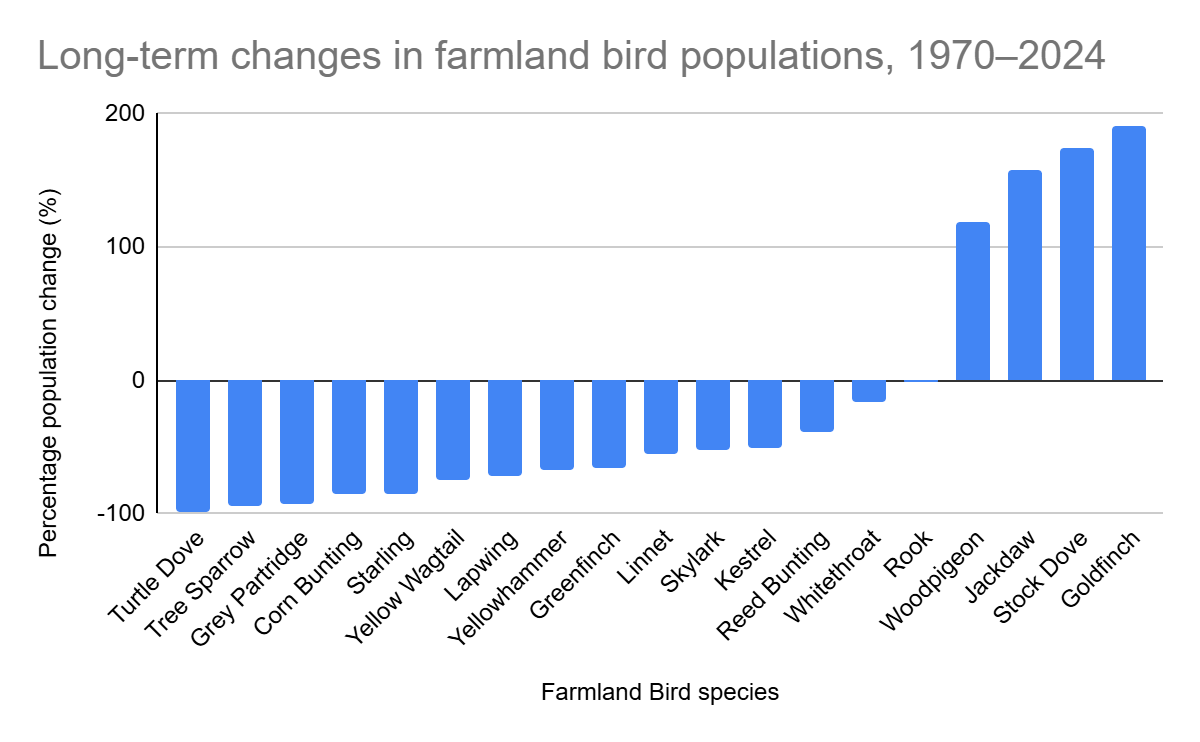
Following suit is the Tree Sparrow, whose population has fallen by almost 95% over the same period. The Grey Partridge is similar, with numbers dropping by more than 93%, while Corn Buntings and Starlings have both experienced declines of around 85%.
And the decline is far from being something of the past. Between 2019 and 2024, Turtle Dove numbers fell by a further 53% and Tree Sparrow populations dropped by almost 45%. Yet the picture is not entirely horrifying. Over the same five years, Corn Buntings increased by almost 25% and Stock Doves by 19%, displaying a glimpse of recovery among some farmland species.
Of the 19 farmland species in Defra’s long-term dataset, 13 are classified as being in decline, and two show little change. Only four show a strong increase, including the Goldfinch, whose population has grown by 191% since 1970. The figures show that yet some species are thriving in this climate, others are becoming increasingly threatend.
So why is this all happening?
The answer is found in the way in which farmland has been managed over the last half a century. According to Defra, around 70% of the UK is farmland, meaning that land used for agriculture has a huge influence on biodiversity. This farmland provides a plethora of semi-natural habitats such as hedgerows and field margins which provide food, shelter and nesting places for many birds, meaning: their fate rests in the hands of land owners.
The farmland habitat is being put under increasing pressure due to changes in agricultural protocols in recent decades. Defra identifies multiple reasons for this: the loss of mixed farming, changes in grassland management, increased pesticide and fertiliser use, alongside the removal of hedgerows and other non-cropped features.
For many birds, these changes mean there are fewer places to raise their young and less food to sustain them. According to the RSPB, the turtle dove for example, relies on a diet of seeds from wildflowers and weeds as well as needing hedgerows and scrub to nest in; mostly all found in field margins. So therefore changes made to these green spaces can significantly affect their way of life making it difficult for them to survive.
For Turtle Doves, the struggle doesn’t just start in the UK, with unsustainable levels of hunting across southern Europe also contributing to the dwindling population. Operation Turtle Dove, an organisation devoted to saving this species launched the European Turtle Dove Action Plan in 2018 to tackle the issues facing these birds.

Where conservation makes a difference
Although the overall situation appears to be deeply concerning, it can be reassuring to know that there are conservation effort trying to help.
Susan Douglas, the owner of a farm situated nearby to the RSPB’s Otmoor in Oxfordshire, has noticed an abundance of birdlife in the surrounding area. The nearby reserve was acquired by the RSPB in 1997 and has been transformed from agricultural land into a habitat of wet meadows, wetland and reedbeds.
She believes that the way in which farmland is managed can make a considerable difference.
“Here on my 200 acres, we have never used fertiliser or insecticides deliberately, and at one point have been part of stewardship schemes”. She states that elsewhere “the creep of urbanisation destroys habitats, and renders suburbia and the outskirts of towns bird free.”
“Roads, motorways and general pollution have definitely reduced numbers,” she adds, going on to compare the area with her partners much larger landholding of 2,500 acres in Cumbia where she has noticed a considerable difference in wildlife present. She questions whether it is possibly due to limited bird protection schemes alongside “increasing urbanisation and busier transport networks”.
What needs to change?
Reversing these declines is going to take a considerable effort. The figures show that farmland specialists birds whom depend most heavily on agricultural habitats, have seen their populations fall by 75% since 1970. Generalist populations, which are able to make use of a wider range of habitats, have declined by a smaller 25% over the same period. It highlights just how vulnerable birds can be when their survival is so closely tied to the way farmland is managed.

But there are practical ways to help. The Game and Wildlife Conservation Trust, which organises the Big Farmland Bird Count, recommends providing seed feeders throughout winter, planting and maintaining hedgerows, and creating field margins. These measures can offer birds valuable sources of food, shelter and protection from predators. Much of this can also be supported through agri-environment schemes.
However, access to this support remains a challenge. The Government’s Sustainable Farming Incentive for 2026 (SFI26), which pays farmers for carrying out environmentally beneficial work, such as providing winter bird food, closed to new applications on 22nd September after its funding was allocated.
The RSPB has made it clear that nature-friendly farming needs a substantial amount of investment. With almost 1.5 million hectares of farmland covered by high-tier agreements due to expire over the next few years, change needs to be happening now. The UK government needs to supply ‘well-designed schemes, high-quality advice and clear routes’ for farmers.
Increases in certain farmland species show that recovery is possible. The countryside can once again be filled with birdsong, but only with the right support.