


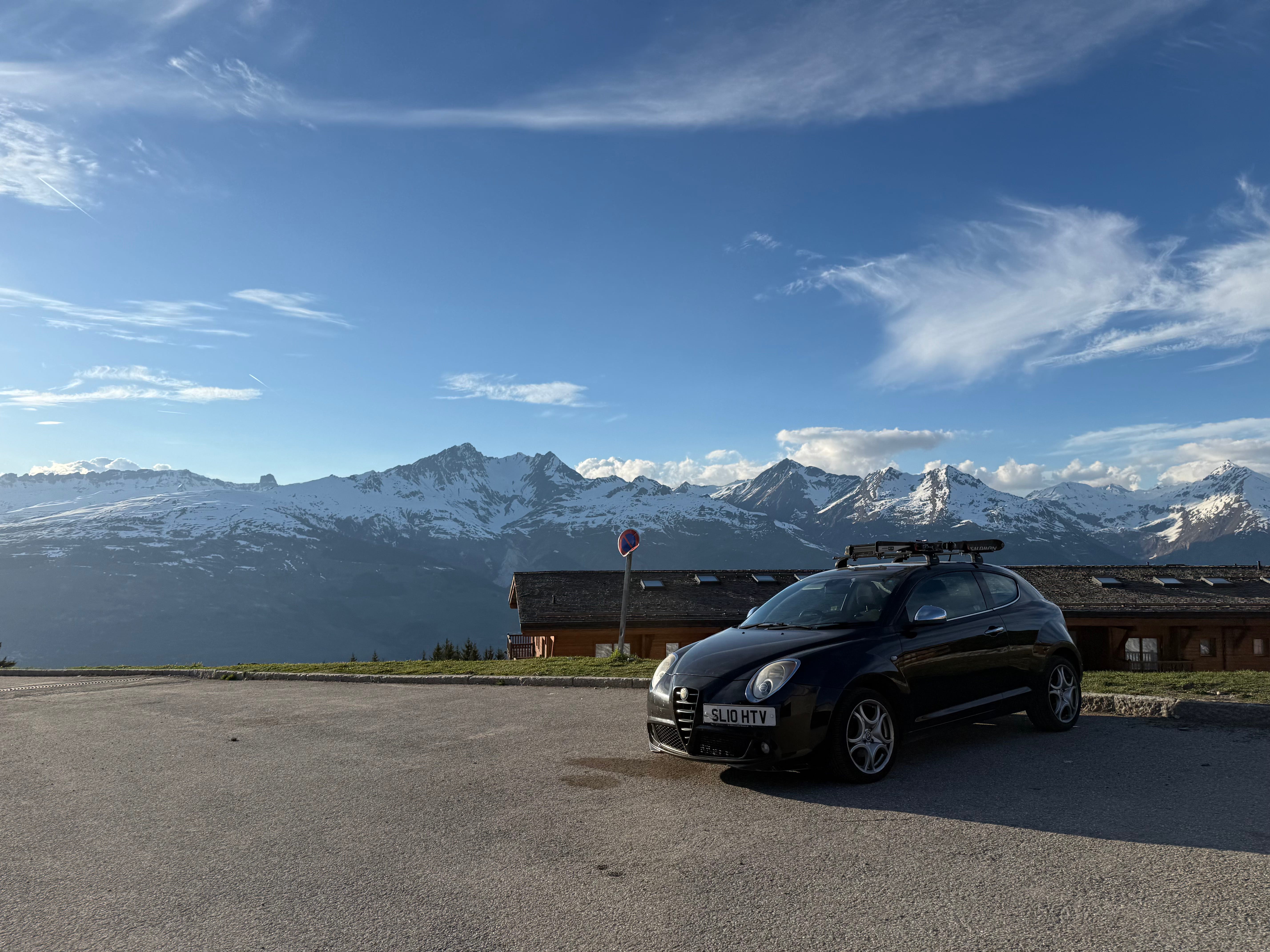
You’re immediately cornered by countless Range Rovers and Mercedes GLs when you arrive at the Eurotunnel, all loaded to the brim with bikes, skis, and extremely excited children. Amongst the towering silhouettes sat my 16 year old Alfa Romeo MiTo, which felt a bit like bringing a pocket knife to a grenade fight. Nevertheless, it was about to undergo exactly the same task of driving hundreds of miles through continental Europe.
Why an SUV?
Britain’s roads are currently ruled by chunky Sports Utility Vehicles, with parking spaces and country lanes being dominated by tall, wide cars. Some sleek and refined, others towering and outdated, most expensive to purchase and maintain. Despite this, people have shifted away from the appeal of the city-friendly ‘supermini’ and now prefer to be cocooned within their two tonne SUVs.
They are seen as the most safe, comfortable, and versatile cars on the road, with partial reason for their success being found upon the requirement of British drivers to have a vehicle that could deal with any possible situation. Taking the dogs to the vets, loading the weekly shop, dropping the kids to school, dealing with our one day of snow per year. The SUV has all situations covered.
Are they needed, though?
One of the most rigorous testing grounds for any car is the ski holiday; luggage space, fuel economy, and creature comforts all become essential for a journey that can span thousands of miles.
For reference, my MiTo is a Lusso Multiair. For the uninitiated, that essentially means the least ‘sporty’ of the ‘sporty’ models. It comes with a, mostly reliable, 1.4 litre turbocharged four-cylinder engine, pushing just over 150 horsepower; more than enough considering the MiTo weighs just over a ton. It comes with a five-speed manual gearbox - brilliant for the 30 miles of mountain passes, not so brilliant for the 770 miles of French autoroute that comes before them.
Not many options seem to have been selected from the factory. It’s equipped with standard cloth seats and regular air conditioning, and that’s about it (in fairness, the car only cost me £1,200). Apart from the aftermarket Apple CarPlay unit I installed, it’s as bog standard as you could imagine. No cruise control, no lane assist, no head-up display, no gizmos of any kind.
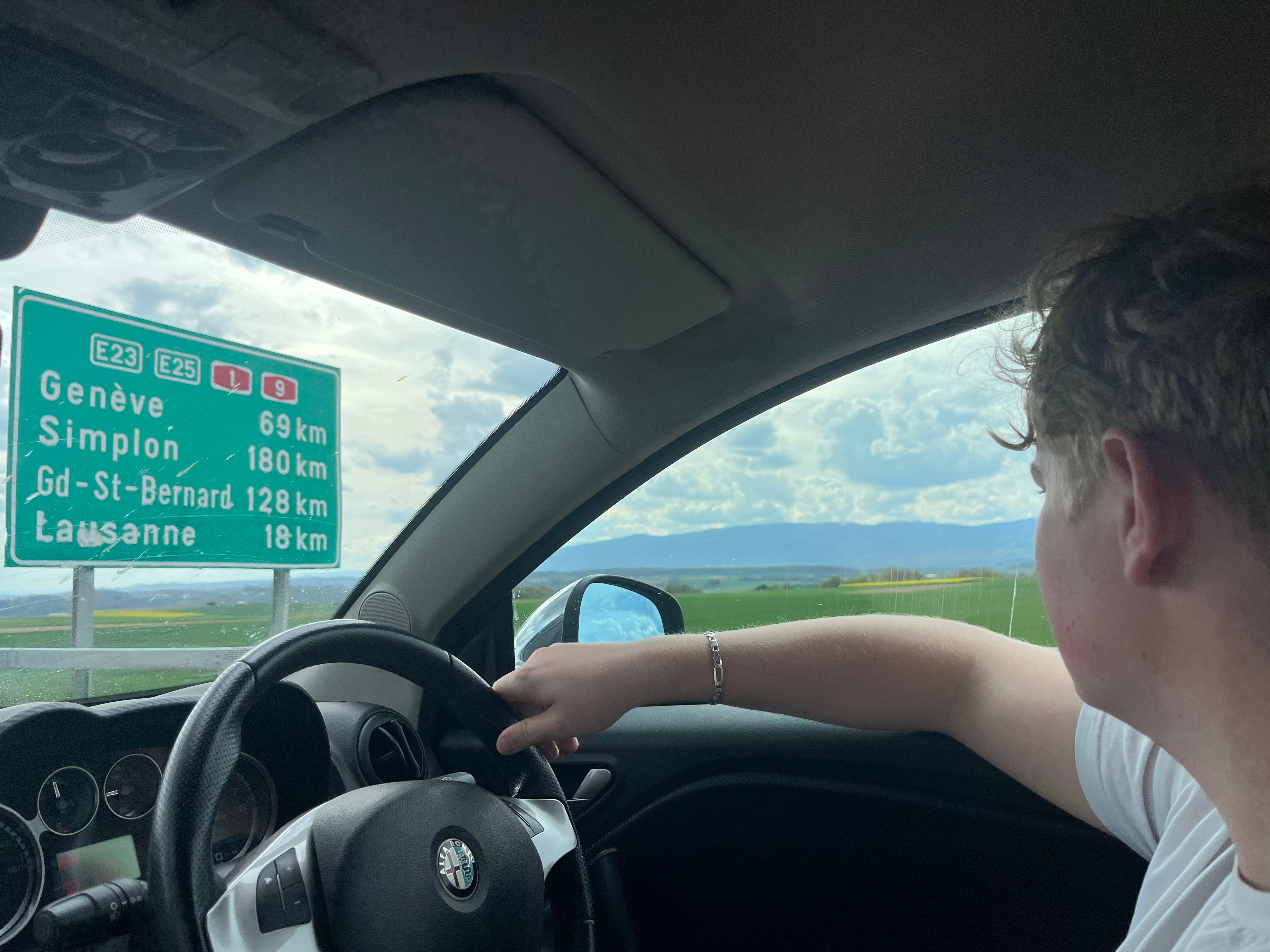
This was certainly a consideration before the journey began, worried that I could spend the next nine hours with cramp in my ankle from constantly balancing the accelerator.
So, how did it go?
I can certainly concede that there are a variety of SUVs on the market that would have completed that journey without lifting a finger, the Volvo XC60 or Audi Q5, for example. Both would not have been as space-limited as the MiTo, and both would have cruise control, meaning that the driver to wouldn’t be required to hold their ankle at a perfect 45-degree angle to stay within the French speed limits.
A refined, quiet SUV would have been perfect for the long trek, but would they have been as enjoyable to drive up steep mountain passes as a turbocharged Italian supermini? Not a chance.
And that sums it up, really. I had much more fun driving a car I bought for a fraction of a new Range Rover, without fancy technology or ergonomic design, and that’s the spirit of a motoring adventure. It was more satisfying than if I had just simply switched on cruise control and lane assist in a brand new Mercedes, and let the car do all the actual driving.
Cars are getting further and further away from analogue simplicity, and there are many benefits to that. But I think as the modern era of software and screens beds itself into cars for good, the romance and excitement of driving across the continent will begin to fade away.