



In the words of the Secretary of State for the Home Department, Shabana Mahmood, ‘as part of the most sweeping reforms to tackle illegal migration since the Second World War’, the UK government announced on 2 March, 2026 that refugee protection would become temporary.
Under these changes, adults and accompanied children claiming asylum will receive a 30-month period of protection. At a 30-month review, refugees with a continuing need of sanctuary will have their protection renewed, while those whose countries are now deemed safe will be expected to return home.
According to Mahmood, earlier protection status and benefits were amongst the most generous offers to refugees in any country in Western Europe. These benefits, she claims, had become a ‘pull-factor’ which saw asylum claims in Britain rise steeply, including ‘tens of thousands of illegitimate claims each year, while they fell across the rest of the continent’.
Furthermore, under reforms announced last autumn, refugees in the UK will have to wait 20 years for settlement, unless they switch to a legal visa route, as part of the ‘core protection’ model.
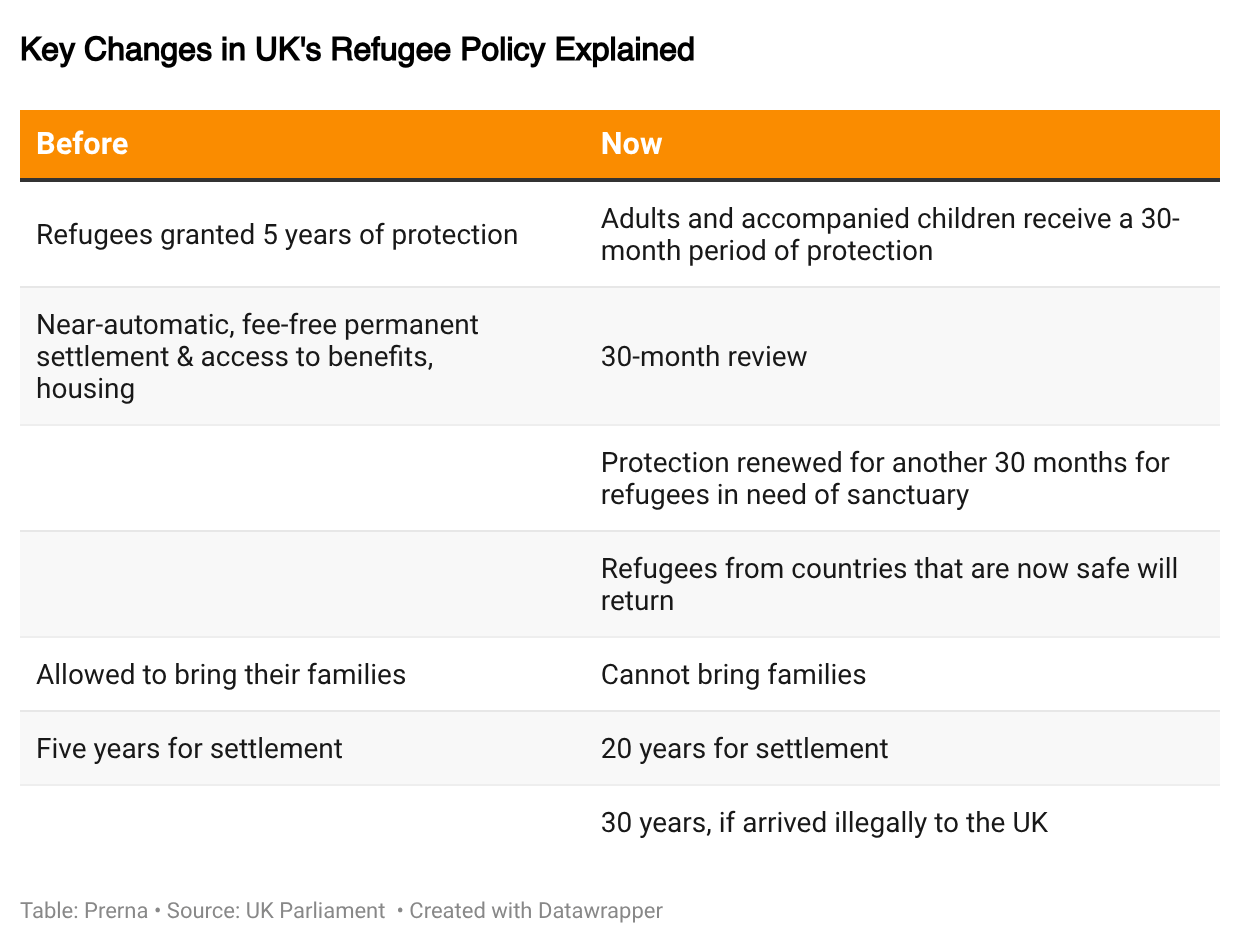
While some of the changes are already being implemented from March 2026, as they require no Parliamentary vote, the changes to settlement from five years to 20 years will require Parliamentary scrutiny and vote.
Challenges with implementing these changes
A report from The Migration Observatory states, that several key factors attract asylum seekers to the UK, irrespective of government policy, such as the English language or the presence of friends and family in the country. In addition, reaching the UK – which lacks access to shared asylum databases after Brexit – may be a final chance at gaining protection for people who have already been refused asylum in the EU.
Dr. Esteban Devis-Amaya, Senior Lecturer in Spanish and Latin America Studies at Oxford Brookes University, concurs with this.
The government also says it wants to curtail status and return people to their country of origin once conditions improve. However, as pointed out in the report by the Migration Observatory regarding Denmark, it is unclear how many refugees were ordered to leave Denmark in recent years as a result. One report indicated that several hundred Syrian refugees had their status revoked after a little over 1,000 of a total of 30,000 cases were reassessed.
Dr. Tamsin Barber, Associate Professor in Sociology, and Chair of the Migration & Refugees Network at Oxford Brookes University, also points out that many asylum seekers already wait up to two years for a decision. That two and half years or 30 months will fly by.
‘Living with uncertainty is already a huge burden. Reporting requirements, constant contact with lawyers, constant accountability to the system — it’s stressful and time‑consuming. This policy prolongs and intensifies that. It’s a form of re‑traumatisation.
‘They’ll feel like they’re rolling the dice every two and a half years. This policy could push more people into irregularity.’
Both Dr. Barber and Dr. Devis- Amaya points out this change in policy creates a lot more work for the Home Office itself, rendering the policy ineffective.
Regression of human rights commitments
Amnesty International UK in a statement, reacted by calling the package a historic weakening of refugee protection, including turning refugee status into a temporary and precarious system, removing the state’s duty to support people who would otherwise be destitute.
The human rights organisation further warned that ministers are undermining the European Convention on Human Rights while claiming they want to remain within it. Amnesty said this erodes respect for the UK’s human rights obligations and opens the door for future governments to withdraw from them completely.
‘This is headline chasing, not problem solving - a Government bowing to anti-immigrant, anti-rights politics instead of standing up for the basic principles that protect us all’, says Steve Valdez-Symonds, Amnesty International UK’s Refugee and Migrant Rights Director, in a statement by Amnesty International UK (see here)
Dr. Barber points out that the political electoral compulsions the Labour government is playing with is at the cost of refugees.
‘We’ve had a shift in government since [2024], but no improvement in policy. In fact, it’s disappointing to see the Home Secretary pandering to the far right. The justification seems to be that unless they shift policy, Reform UK will gain votes. So Reform is effectively calling the shots on immigration.’
Reform UK in its manifesto mentions ‘leave the European Convention on Human Rights, repeal the Human Rights Act and pass the Illegal Migration (Mass Deportation) Bill to ensure that anyone who enters the country illegally will be ineligible for asylum.’
Recent migration data show that the Labour government has been successful in bringing down net migration to 171,000 in 2025. This is 48% lower than a year before, and 82% below the 2023 peak.
The recent changes in refugee protection policy are not reflected in this data.
It remains to be seen whether the experts are correct in their assessment, and what impact this shift in protection policy will have on asylum claims in the UK.