


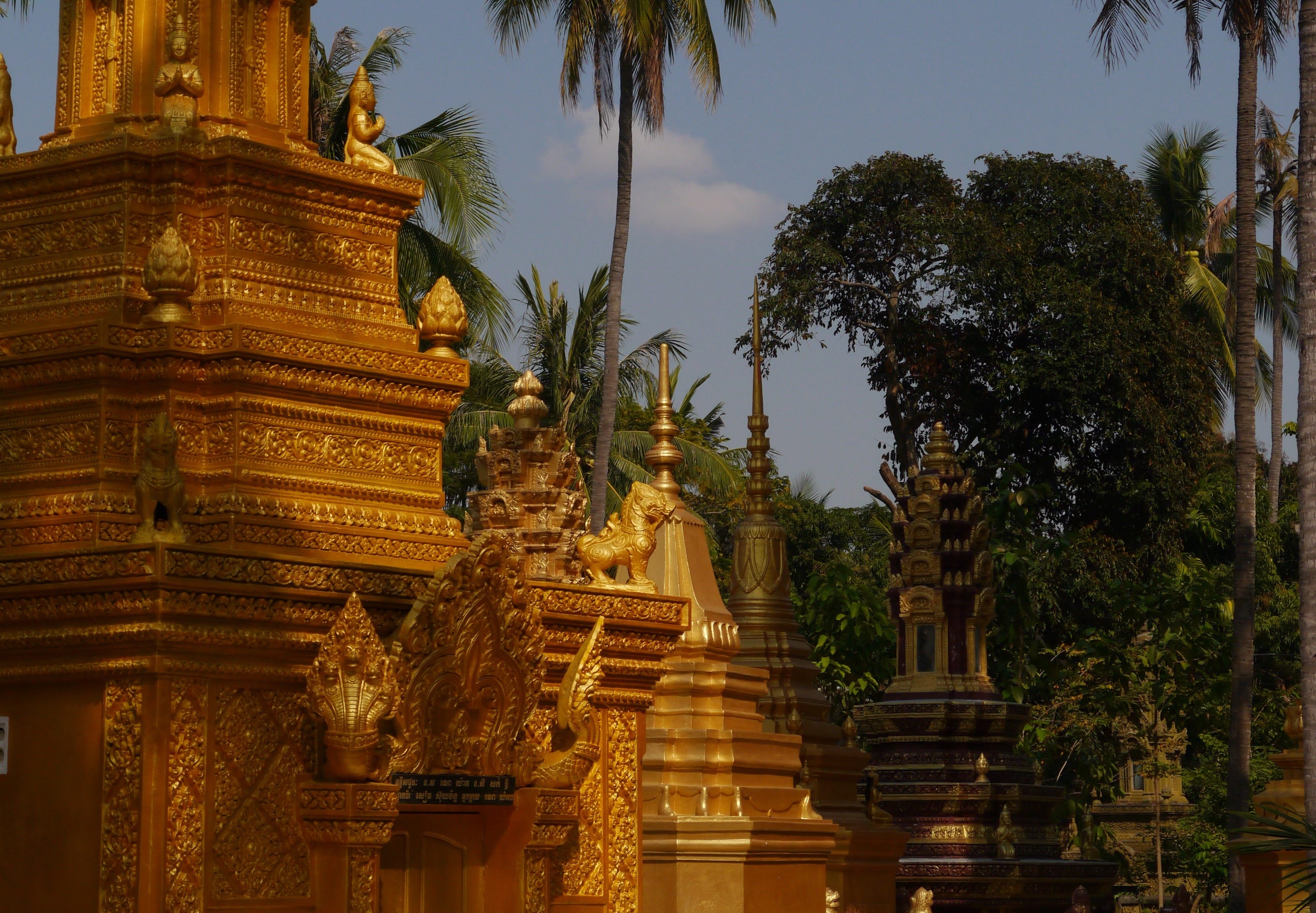
Travelling across Cambodia reveals the harsh economic and environmental differences. Ellie German recounts her experience with culture shock, religious tourism and fluctuating landscapes in Cambodia.
Cambodia is most famous for its world-renowned ancient temples, Angkor Wat, Angkor Thom and Ta Prohm. The detailed stone carvings that display Khmer architecture are breathtaking; these UNESCO World Heritage Sites are an influential component of Cambodia’s cultural identity.
With Angkor Wat being the largest religious monument in the world, Cambodia is a popular destination when travelling to Southeast Asia. Popular on group tours, solo trips and weekend excursions, this landmark is favoured by backpackers for its affordability and its natural beauty. Boosting tourism and highlighting Cambodia’s religious heritage, Angkor Wat is a must-visit location while in Cambodia.
Angkor Wat is renowned for its beauty at sunrise. The Buddhist temple at dawn is a sight to see, as the pink, orange and purple hues rise over the temple’s silhouettes, creating a picture-perfect scene. This breathtaking view is a bucket-list moment: as the sun rises and illuminates the temples, their deep curves and ridges become more defined. Reflected in the lotus pond, this work of art is mesmerising. This popular experience gets busy, but the lively crowd makes it even more magical.


Student Ellie German travelled to Cambodia in 2023 as part of a volunteering abroad scheme. During her time in Cambodia, she saw a diverse range of Cambodia’s culture, history and landscapes. During a weekend visit to Siem Reap, Ellie explored the famous temples, visited tourist markets and learnt more about Cambodia’s historical and religious background.
“It was incredible to watch the sunrise at 5am in the morning. You just can’t forget it, sitting there with everyone and then watching the sunrise and then having to climb the temples, that is something I’ll never forget. Honestly, it was a once-in-a-lifetime moment.”
As the sky transforms and the temples are fully lit, you can see the remarkable detail carved throughout the walls. As you explore the temples, you’re transported back in time by the 3,000 carved apsaras depicting Buddhist mythology. The galleries and hidden chambers throughout Angkor Wat showcase intricate carvings of historical battles, mythical creatures, and artistry and religious themes. You are encapsulated by history, as you weave through the temples’ corridors and tunnels, you truly appreciate the remarkable efforts and centuries of devotion that went into their creation. You are completely awed by its ability to withstand the test of time.
Just 2km north of Angkor Wat, the neighbouring Temple Angkor Thom resides. Adorned with 200 smiling stoned faces, this beautiful congregation of temples and monuments displays more of Cambodia’s rich history and culture. Known as the ‘great city’, this collection of religious structures is home to hundreds of Macaques. Don’t be fooled by their big doe eyes and adorable furry faces; these hyperactive, thieving animals will cause havoc. Known for being bold and aggressive around travellers, it is advised to keep your distance and keep your belongings close. These mini pick pockets roam free, perching on temple walls and climbing the statues and archways. With the Bayon temple at its centre, this is a hub for tourists and Macaques, known for its striking towers and detailed facial carving. The Baroque architecture is breathtaking. Whilst in Siem Reap, Ellie also had the opportunity to visit Angkor Thom.


“The other temples were really impressive, even the walk up to it, you can just think back to how, in ancient times, how phenomenal it would have been. They are incredibly steep, and the views you see from them are just incredible.”
This beauty extended to Ta Prohm, renowned for its unique appearance, where nature takes over the historic temple walls. Most known as the ‘Tomb Raider’ temples, tourists visit it to see the iconic filming location of Lara Croft. The silk-cotton trees and strangler fig trees grow in obscure directions, as nature takes over and grows freely, creating these unique shapes, fantastic for photos.
Although Cambodia holds all this beauty, there is a striking difference when going off the beaten path. All places have their good and bad, but Cambodia suffers from poverty, alarming deforestation and growing pollution issues. Still in recovery from the Genocide in the 1970s, this historic land holds pain and cultural memory. These remembrance sites are a major part of Cambodia’s tourism, attracting visitors who want to pay their respects and understand the country’s history.
Cambodia itself is a deeply religious country, with many of its tourist attractions centred on religion, as tourists flock to historic places of worship and immerse themselves in its beliefs. From temples to monuments and memorial sites, the sacred grounds in Cambodia that you walk on are historic and full of meaning. This meaningful travel destination is brimming with emotionally immersive experiences. These emotional settings and contrasting landscapes can cause culture shock and a shift in perspective. Ellie expressed how these harsh realities affected her and what she took away from these experiences:
“I personally found it really difficult. We got to the official killing caves, where they had all these monuments, showing what they did. It was awful, and it really struck me quite badly. I was really taken aback by it, and you just think and realise how lucky you are.”
Tourist areas, specifically Phnom Penh, Sihanoukville, and Siem Reap, have recovered from the economic and environmental impacts of the regime; however, the rural areas throughout Cambodia are still recovering, and some are even struggling. During Ellie’s time in Cambodia, she volunteered in Battambang, a large province in Cambodia. Here, she stayed in group accommodation whilst volunteering at a primary school to improve the quality of education. Whilst in Cambodia, Ellie was fortunate enough to explore the contrasting landscapes of Battambang. Although Battambang is the 3rd-largest city in Cambodia, it remains underdeveloped and is considered relatively poor.


“It’s a completely different environment...seeing how people were living on the streets and going to the markets was a huge culture shock. The conditions that the children were having to go to school in, and the fact that some of them weren’t able to go to school, shocked me.”
Tourists typically don’t come across these areas and are blissfully unaware of the small, struggling towns. By going off the beaten path, you enter a different world. This slower style of travel allows for more authentic and meaningful experiences. Supporting smaller establishments and visiting smaller communities has a positive economic impact. Although Battambang faces the harsh reality of how others are living, it has its good and bad areas. Beauty can be found in the most desolate corners of the world. Get out of the tourist bubble and explore the unknown.
Battambang is famous for its Bat Caves, Bamboo railway, the killing caves and multiple religious monuments and temples, some of which Ellie was fortunate enough to see. The Bat Caves are located at the bottom of Phnom Sampeau, just outside Battambang. Phnom Sampeau is a limestone mountain, which houses the Bat caves and the Killing caves. Although beautiful, this sombre location holds great pain and emotion. The mountain itself is adorned with religious carvings and statues. As you climb to the top, you are faced with more Macaques and golden temples. Along the climb, you are faced with the killing caves and more statues commemorating the country’s loss.
Once you reach the top, you are surrounded by fields of green with panoramic views of the Cambodian countryside. Away from the city, it is truly peaceful, allowing you to reflect and immerse yourself in these experiences. As Ellie climbed down the mountain, reflecting on the beauty and the beast she just experienced, the sun set, allowing the bat show to begin. Bats swarm the night sky, taking flight. They migrate out of the cave. This natural phenomenon is incredible, although scary, as they soar above you; it is an unforgettable experience.


“The bat caves are phenomenal because you see thousands of bats flying out at a certain time; it was just a sight to behold.”
The contrasting landscapes are hard to keep up with, and the diversity throughout the country is extraordinary yet sombre. Despite the devastation they have faced, this beautiful country is recovering, full of religious monuments and heritage sites, and is home to unmatchable natural beauty; its tourism sector is flourishing. This can be quite the culture shock, but it puts into perspective how tourism helps countries thrive and how destinations rely on tourists for income. Tourism boosts sales, increases business and helps both small and large businesses. So next time you’re travelling, consider going off the beaten track to uncover beauty and immerse yourself in a new culture, all while supporting businesses and boosting tourism.