


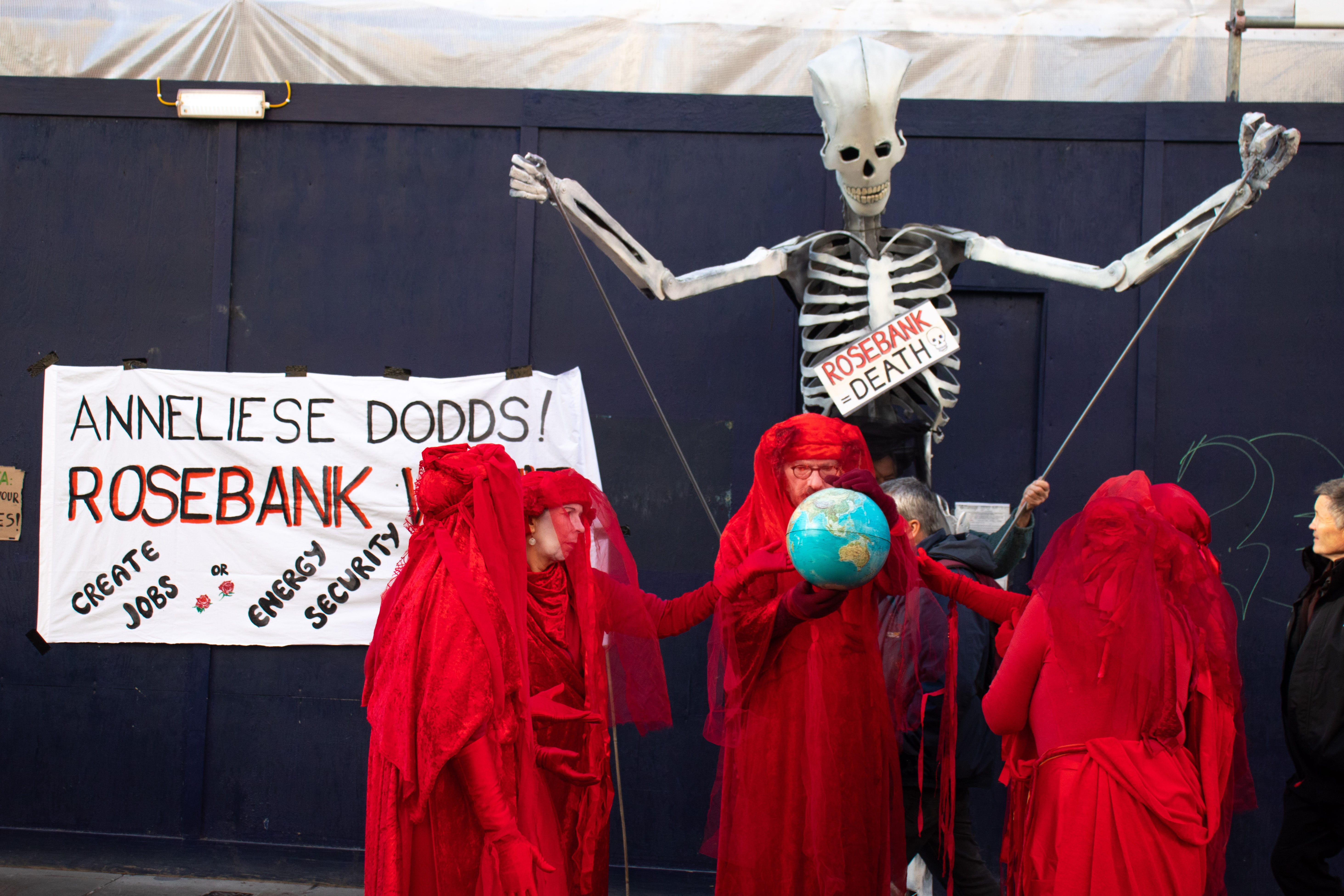
On 14 November, members of Extinction Rebellion (XR) and Christian Climate Action protested against the drilling permits and licensing of Rosebank.
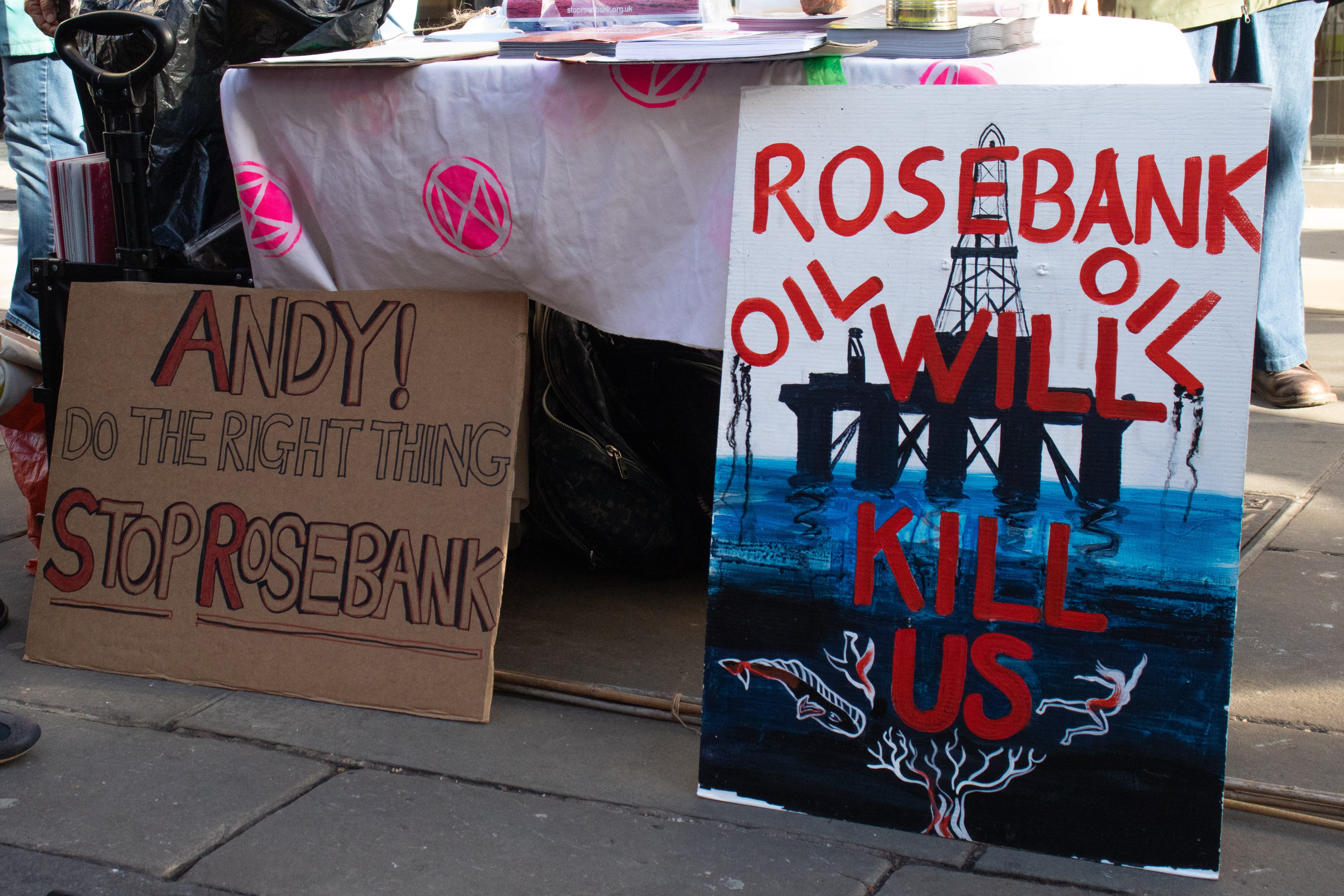
Protesters took over Cornmarket Street with flags, signs, drums, costumes and even performances that alluded to the possible environmental consequences of the permit.

Joined by the Red Rebels, Canary, an anonymous member of XR, explained: “They represent the living creatures that we have lost already because of the climate crisis.
“We use all we can, creative arts, paintings, singing, drumming, because we need people to take notice of this. To stop and look at what is happening around them. Rosebank cannot happen.”
The participants used these creative tactics to call on the government to stop Rosebank before it is too late.
For years, the licensing of Rosebank has been in dispute. Since its discovery in 2004, it has remained the UK’s largest undeveloped oil and gas field in the North Atlantic. Ten years after its discovery, Chevron said it did not offer an economic value that justified the investment.
In 2023, the field was green-lit by the UK Government, but months later the project was halted over environmental risks related to emissions. Last year, the project was presented once more by its owner, but the Court of Session in Edinburgh ruled it unlawful. If it goes ahead, the drill would become the deepest field ever developed on the UK’s continental shelf.
The project is mainly owned by Adura, a joint effort between Shell and Norwegian state-backed Equinor, while 20% is owned by British energy company Ithaca Energy.
Ithaca Energy is majorly owned by the Israeli fuel conglomerate Delek Group, which is expected to receive over £200 million in revenue from Rosebank. The group was named on a UN list of businesses in 2023 whose activities “raised particular human rights concerns” in the Palestinian territory.
According to the Guardian, Delek Group also provides fuel, via a subsidiary, to the Israeli Defence Forces.
Canary stated that the link to the Israeli company Delek and Israeli controversial occupation of the West Bank was “another reason to stop this.”
The protesters addressed the public to say oil extracted from the field would be sold on the international market, contributing to Europe’s economy but having no real effect on British fuel prices.
They also mentioned UK taxpayers would finance most of its development costs through tax, while its primary financial beneficiaries, such as Equinor and Shell, declared zero UK tax in 2024.
Canary added: “The argument that is being made is that it will help energy prices for the households that are struggling to pay their energy bills and help employment.
“But both notions are completely erroneous, because the employment in the fossil fuel industry has been decreasing, decreasing and decreasing, because that’s the trend.”
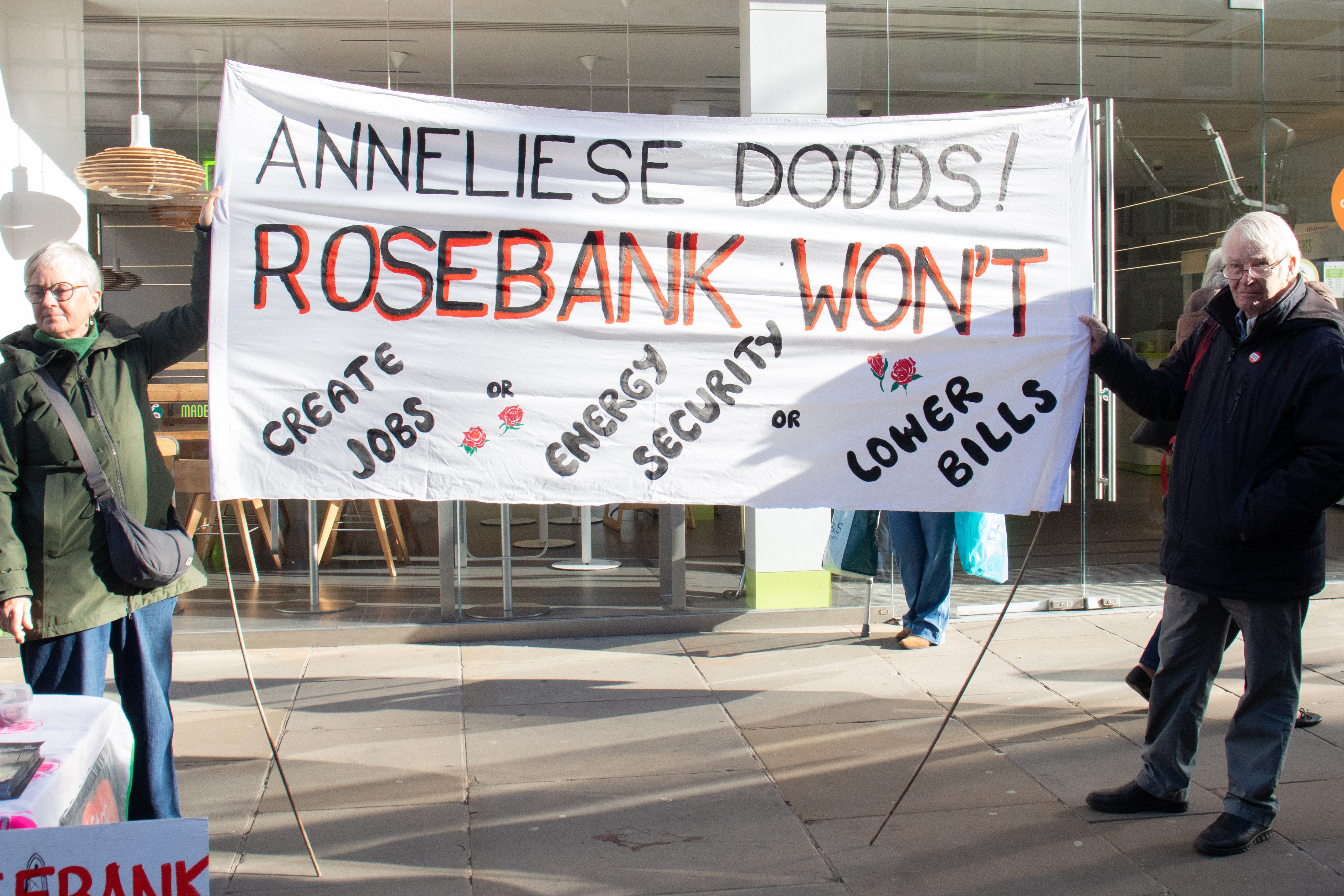
In 2022, UK household bills rose after the Ukrainian war began, which destabilised the market. Former Conservative Energy Secretary Claire Coutinho publicly admitted that new North Sea drilling would not necessarily bring bills down.
This comes as UK energy prices are set by global market prices, not by the volume of oil and gas extracted at the field, which won’t have an effect in British soil.
In addition, Adura has stated: “Rosebank will be among the lowest emissions developments in the UK Continental Shelf.”
However, according to Greenpeace, nearly 250 million tonnes of CO2 would be released from the field if the project is approved. By comparison, the UK’s emissions in 2025 were 70% of the estimated total of emissions from the field.
Greenpeace also says Rosebank would violate the Paris Agreement’s goal of limiting warming to 1.5C, since new fields like Rosebank exceed what can be safely burned under the agreement.
The International Energy Agency and the UN Secretary-General have both spoken out against new fossil fuel development. The Climate Change Committee acknowledges the UK will need some oil and gas until it reaches net-zero, but has said this “does not in itself justify the development of new North Sea fields.”
Canary added: “We have seen what happened in the summer. We know about the wildfires, the heatwaves.”
As of today, Adura runs a pipeline from Rosebank through the Faroe-Shetland Sponge Belt. This Marine Protected Area is home to marine ecosystems and creatures such as whales, deep-sea sponges and dolphins. A major oil spill from the field would seriously damage these protected areas.
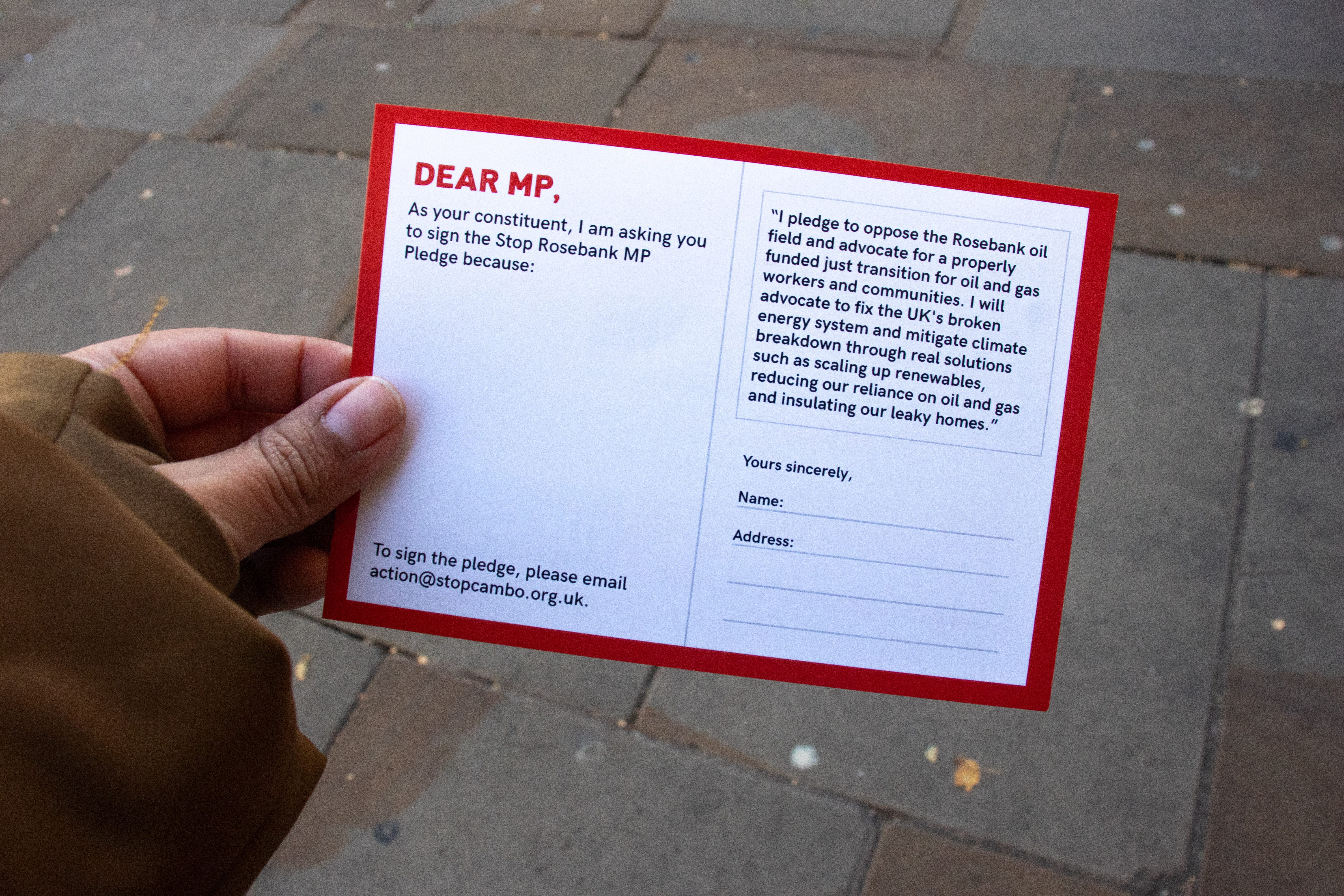
During the protest, XR provided a written letter urging people to contact Oxfordshire’s MPs, express support for the cause and demand they take a stance against the development of the oil and gas field.
Meanwhile, 75 Labour MPs have signed a private letter to Prime Minister Andy Burnham opposing Rosebank, and reports suggest the support could soon reach 100. The letter warns that Britain’s credibility as a global climate leader would be destroyed if Rosebank is approved.
Now, a new government decision is imminent.
Prime Minister Andy Burnham is set to decide the next steps for the oil and gas field after COP31, which ends tomorrow. Will Rosebank live up to its expectation?